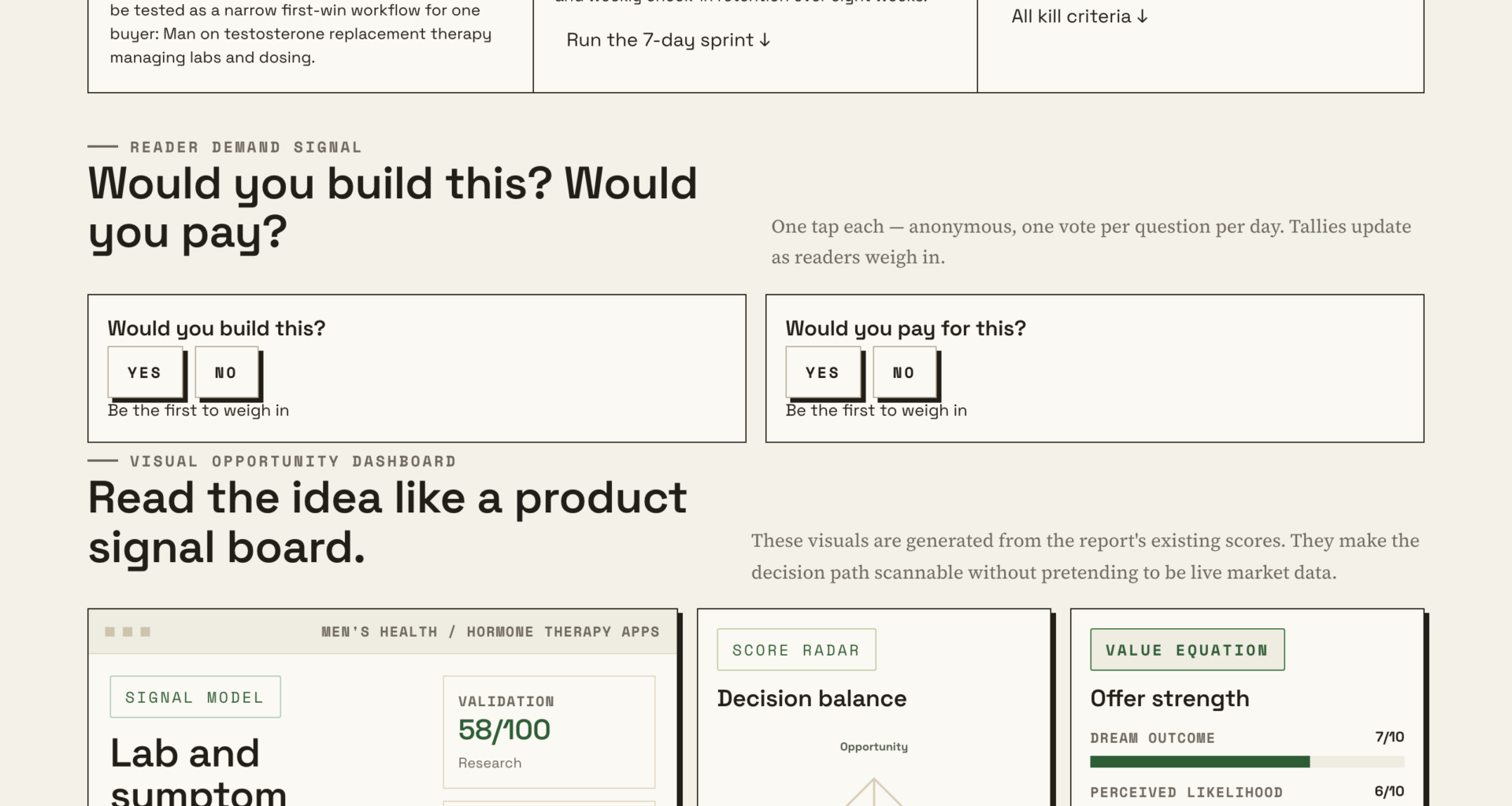
📊 Full opportunity report: TRT Patients: How To Keep A Record Of Labs And Symptoms on IdeaNavigator AI — validation score, market gap, and execution plan.

Prime made for students and young adults
- Fast, free delivery for dorm and study essentials
- Prime Video and Amazon Music included
- Member-only deals
TL;DR
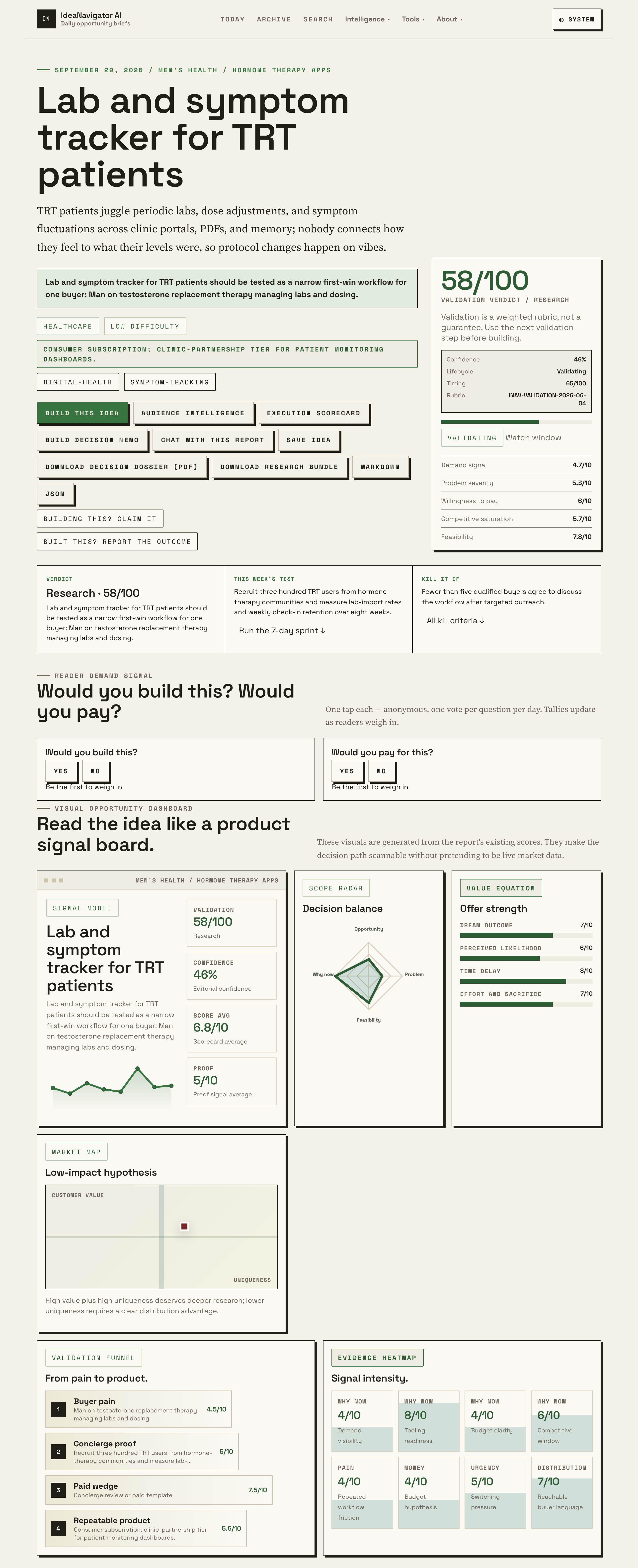
A product proposal calls for testing a lab and symptom tracker for men on testosterone replacement therapy (TRT). The suggested app would combine imported lab results, dose changes and daily symptom check-ins, but no trial results or evidence of patient demand are provided.
IdeaNavigator AI has proposed testing a tracking app for men on testosterone replacement therapy (TRT), designed to bring lab results, dose changes and symptom reports into one record. The proposal outlines an eight-week test with 300 TRT users; it does not report that the app has been built, that recruitment has begun or that the product’s effectiveness has been demonstrated.
The proposed minimum product would let patients import laboratory reports as PDFs, chart hormone results over time, record dose changes and complete daily symptom check-ins. It would also produce summaries for clinic visits and flag results that move outside target ranges. The proposal does not specify which lab measures or target ranges the app would use, or who would set and review those thresholds.
The stated problem is that patients may have lab reports in clinic portals or PDFs while tracking doses and symptoms separately, or relying on memory. The proposal argues that this separation makes it harder to see how symptoms and hormone levels relate over time. That is the rationale for the product, not a finding from a patient study included in the proposal.
For validation, IdeaNavigator AI suggests recruiting 300 TRT users from hormone-therapy communities and measuring lab-import rates and weekly check-in retention over eight weeks. The business model under consideration is a consumer subscription, with a possible clinic partnership tier offering patient-monitoring dashboards. No pricing, participating clinics, recruitment details or test results are given.
Connecting Results With Daily Symptoms
If developed and adopted, a shared timeline could give patients and clinicians a clearer record of lab results, reported symptoms and dose changes during treatment. Summaries prepared for appointments could help structure discussions around what changed and when. Those are intended uses described in the proposal; there is no evidence here that the app improves clinical decisions or treatment outcomes.
The suggested retention measures would address a practical challenge: patients would need to keep entering symptoms and importing results for the record to be useful. For clinics, a dashboard could make patient-reported information easier to review, but it could also add another system to existing care workflows. The proposal does not establish whether patients or clinics would pay for or regularly use it.
A Proposal for Fragmented TRT Records
TRT care can involve periodic lab testing and changes to a treatment plan, while patients may receive care and records through different providers or digital portals. IdeaNavigator AI describes this as a fragmented recordkeeping problem for people managing treatment. The supplied proposal offers no independent market data to quantify how many patients face this issue or how often records are split across systems.
The product is framed as a narrow first test for one group: men on TRT who manage lab results and dosing. Its suggested sequence is to import reports, record doses and symptoms, then review trends with a clinic. The proposed community-based recruitment and eight-week observation period are plans for evaluating use, not evidence that the approach has already been tested.
Demand and Clinical Safeguards
No patient results are available, so it is unknown whether users can reliably import varied lab PDFs, keep up with daily check-ins or find the summaries useful in appointments. The proposal does not say how participants would be selected, how many would complete the test, or what retention level would count as success.
It is also unclear how the app would handle lab values from different laboratories, establish target ranges or respond to flagged results. The proposal does not describe privacy protections, clinician oversight, or whether flags would be informational rather than medical advice. Those details matter for an app handling health records and presenting hormone measurements to patients.
Eight-Week Test Proposed
The next step described is to recruit 300 TRT users and track lab imports and weekly symptom-check-in retention for eight weeks. No launch date, recruitment link or named clinic partner is provided. Any assessment of the idea will depend on reported results from that test, including whether participants use the core features consistently and whether clinics find the visit summaries practical.
Key Questions
Has the TRT tracking app launched?
The proposal describes an MVP to build and test. It does not confirm that an app is available or that a test has started.
What would the app track?
It is proposed to combine imported lab reports, dose changes and daily symptom check-ins, then chart trends and prepare summaries for clinic visits.
How would the idea be tested?
IdeaNavigator AI proposes recruiting 300 TRT users from hormone-therapy communities and measuring lab-import rates and weekly check-in retention over eight weeks.
Would the app recommend treatment changes?
The proposal mentions flagging results outside target ranges, but it does not explain how targets would be set or say that the app would recommend dose changes.
Source: IdeaNavigator AI
Fall Picks
fall essentials
As an affiliate, we earn on qualifying purchases.