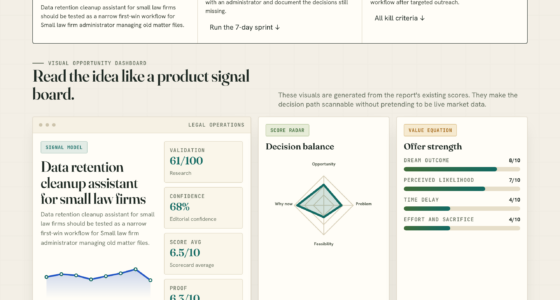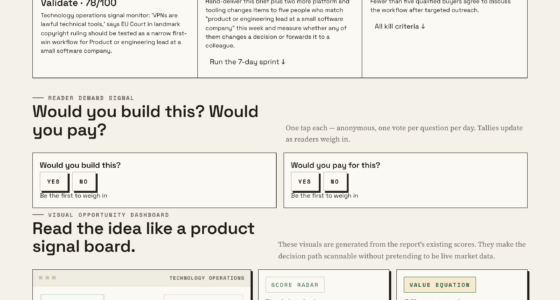
📊 Full opportunity report: Parental Consent And Compliance In Youth-Focused Software on IdeaNavigator AI — validation score, market gap, and execution plan.

Prime made for students and young adults
- Fast, free delivery for dorm and study essentials
- Prime Video and Amazon Music included
- Member-only deals
TL;DR
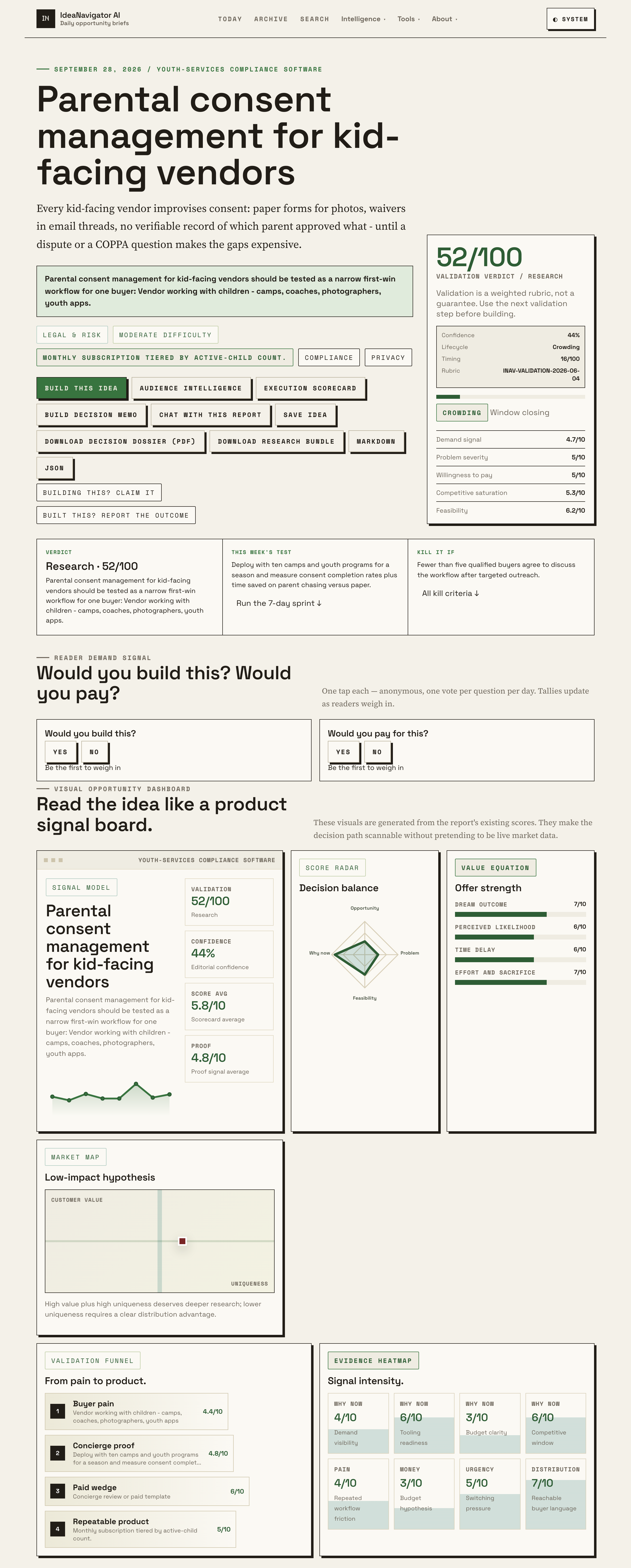
A proposal for youth services software would give camps and other child-facing vendors mobile consent forms, per-child records and audit exports. It is a product opportunity, not a reported launch or regulatory action, and its effectiveness has not been tested.
A proposal for parental consent management software would help camps, coaches, photographers and youth apps collect and track approvals from parents through phone-friendly forms. The idea responds to vendors’ reported reliance on paper forms and email, but no product launch, pilot results or regulatory action is described.
The proposal describes a workflow that would let vendors create branded consent forms for photo use, data collection, medical information and liability. Parents would complete them on their phones, while vendors would keep a per-child record of which permissions were granted and when they expire.
The concept also calls for identity checks matched to the risk level of each request and an option to export records for an audit. The proposal does not specify how identity would be checked, what information the system would retain, or which legal requirements its forms would address.
Its suggested business model is a monthly subscription priced by the number of active children. To test demand, the proposal recommends a seasonal deployment with ten camps and youth programs, measuring consent completion and staff time spent following up with parents compared with paper processes. It identifies no participating programs or measurements.
The Cost of Missing Consent Records
The proposal argues that organizations working with children can struggle to show whether a parent agreed to a specific use of a child’s image or information when approvals are scattered across paper forms and email. A shared record could help staff see which permissions are current and provide documentation if a family questions how material was used.
The proposal also cites privacy compliance as a potential reason for vendors to improve their recordkeeping. However, software alone cannot establish that a vendor has obtained valid consent or met every applicable legal duty. The value would depend on the accuracy of the forms, the way records are handled and whether the workflow fits each organization’s actual obligations.
Paper Forms to Phone-Based Records
The proposal describes a potential operational problem: youth programs may collect photo permissions on paper, keep waivers in email threads and lack a clear record linking each approval to a child and a particular use. It frames the resulting gaps as a potential business risk during disputes or privacy questions.
It cites changes to the Children’s Online Privacy Protection Act (COPPA) and state laws, along with parents’ challenges to photo and data use, as reasons the issue may be more pressing. The source does not identify a particular rule, enforcement case or effective date, so it does not establish which legal changes would apply to a given camp, coach or photographer.
Pilot Results and Legal Fit
The proposal provides no working product, vendor commitments, customer interviews, completion rates or time-savings figures. Its suggested ten-program season is a validation plan, not evidence that the system has been deployed or that vendors will pay for it.
Questions also remain about how consent would be verified, how long records would be retained, whether parents could revoke permissions, and how the system would handle separate legal requirements across locations and services. The proposal names COPPA and state laws generally but does not identify specific laws or show that one standard workflow would suit every use case.
A Seasonal Test With Youth Programs
The proposal recommends testing the workflow with ten camps and youth programs during one season. It suggests measuring consent completion rates and staff time spent chasing approvals compared with paper methods. No schedule, recruitment status or reporting date is given.
Evidence from such a trial could clarify whether mobile forms reduce administrative work and whether vendors find the records useful. Until results or a product announcement are available, the concept remains an early proposal for youth-services compliance software.
Key Questions
Has a parental consent product launched?
No launch is described. The IdeaNavigator AI proposal outlines a possible product and workflow.
Who is the proposed software for?
The IdeaNavigator AI proposal targets camps, coaches, photographers, youth apps and other vendors working with children.
What would the proposed system do?
As described in the proposal, it would collect phone-based permissions, keep per-child consent records, track expiry and provide audit exports. Identity checks would vary by the risk level of a request.
Has the idea been tested with programs?
The proposal reports no pilot results. It recommends a seasonal test with ten camps and youth programs.
Source: IdeaNavigator AI
Halloween Picks
halloween
As an affiliate, we earn on qualifying purchases.