Stem-cell heart patches work by introducing specialized cells that can rebuild damaged tissue after a heart attack, encouraging the growth of new muscle and improving heart function. Advanced biomaterials support cell survival, integration, and reduce immune responses to minimize rejection. Although progress has been promising in preclinical studies, challenges like immune rejection and cell sustainability remain. If you want to explore how these innovations could transform heart recovery, there’s more to discover below.
Key Takeaways
- Stem-cell patches deliver specialized cells to damaged heart tissue, promoting regeneration and restoring function after heart attacks.
- They utilize biomaterials that support cell survival, integration, and communication with native heart tissue.
- Differentiated stem cells secrete growth factors that reduce scarring and enhance tissue repair.
- Advanced immune-modulating strategies minimize rejection and inflammation, improving long-term healing outcomes.
- Future innovations focus on adaptive scaffolds and bioresponsive materials to improve cell integration and durability.
The Science Behind Stem-Cell Heart Patches
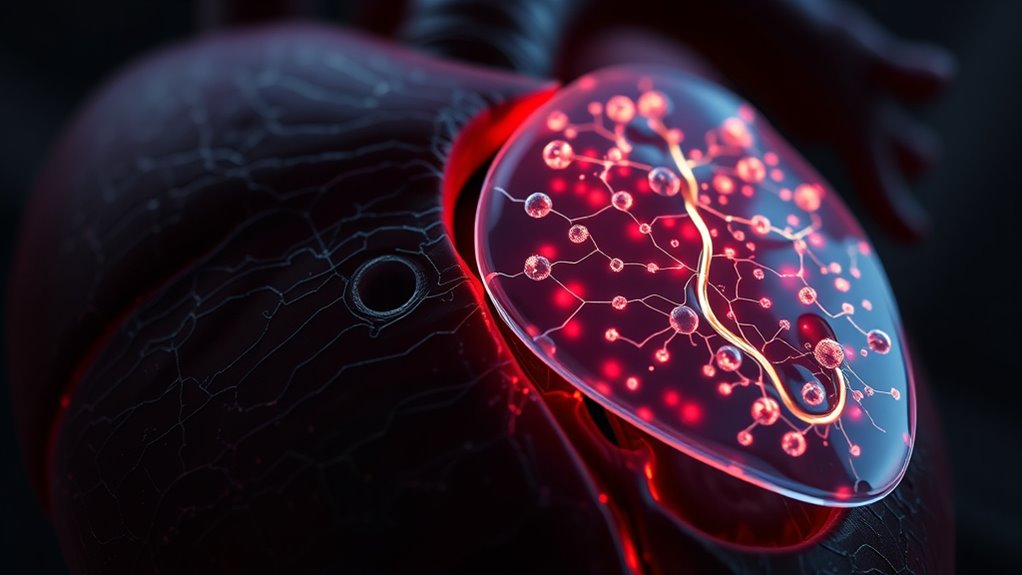
Stem-cell heart patches are designed to repair damaged heart tissue by promoting regeneration at the cellular level. When applied, stem cells within the patch undergo differentiation, transforming into specialized heart cells that integrate with existing tissue. This process relies on precise signaling pathways to guide stem cell differentiation effectively. Additionally, these patches are engineered to modulate the immune response, minimizing rejection and inflammation that could hinder healing. By controlling the immune response, the patches create an environment conducive to cell survival and tissue regeneration. Understanding the immune response is crucial for improving the success of regenerative therapies. This combination of targeted differentiation and immune regulation forms the foundation of how stem-cell heart patches work, aiming to restore heart function after injury and reduce the long-term effects of heart attacks.
How These Patches Promote Heart Repair

These patches promote heart repair by directly delivering healthy, regenerative cells to damaged areas, where they can rebuild lost tissue. The key is sourcing stem cells ethically and effectively, often from donor tissues or induced pluripotent stem cells (iPSCs). This guarantees a reliable supply while addressing ethical considerations around embryonic cells. Once implanted, the cells secrete growth factors that encourage tissue regeneration and reduce scarring. The process also involves supporting the natural healing mechanisms of your heart. To understand the different approaches, consider this table:
| Stem Cell Sourcing | Ethical Considerations |
|---|---|
| Donor tissues | Embryonic origin concerns |
| Induced pluripotent cells | Avoids embryo use |
| Self-derived cells | Minimal ethical issues |
This combination helps maximize heart repair while respecting ethical boundaries.
Advances in Material Technology for Heart Regeneration

Recent advances in material technology are transforming how heart patches support regeneration. You’ll see how innovative biomaterials enhance the design and improve cell integration within damaged tissue. These developments are key to creating more effective treatments for heart repair. For example, incorporating advanced biomaterials can improve the durability and biocompatibility of the patches, leading to better healing outcomes.
Innovative Biomaterials Design
Advances in material technology are transforming how you approach heart regeneration by enabling the design of innovative biomaterials that better mimic the natural environment of cardiac tissue. These materials focus on optimizing biomaterial durability to withstand the heart’s dynamic forces while minimizing immune response to avoid rejection. Researchers are developing composites that balance flexibility and strength, promoting long-term stability. They also incorporate bioactive cues to encourage tissue integration. The table below highlights key features of these biomaterials:
| Feature | Benefit | Challenge |
|---|---|---|
| Enhanced durability | Withstands mechanical stress | Maintaining biocompatibility |
| Immune response modulation | Reduces rejection risk | Achieving precise control |
| Bioactive components | Promotes cell growth and repair | Ensuring stability over time |
Additionally, ongoing research emphasizes the importance of considering biocompatibility in the development of these advanced materials to ensure successful integration with native tissue.
Enhanced Cell Integration
Enhancing cell integration within heart tissue is crucial for successful regeneration, and innovative biomaterials play a key role in this process. These materials support effective cell signaling, which guides stem cells to connect with existing tissue and develop proper function. By improving the bioactivity of scaffolds, you can promote better communication between transplanted cells and native heart cells, increasing repair efficiency. Additionally, advanced biomaterials are designed to modulate the immune response, reducing inflammation and preventing rejection. This creates a more favorable environment for stem cells to engraft and mature within damaged tissue. Incorporating market research can help identify the most effective materials and strategies for specific patient needs. As a result, optimized materials facilitate stronger integration, faster healing, and improved overall heart function, bringing you closer to regenerative therapies that restore heart health after attacks.
Successes From Preclinical Studies

Preclinical studies have demonstrated promising results for stem-cell-based heart patches, showing that they can improve heart function and promote tissue repair. These studies reveal that stem cell therapies can regenerate damaged tissue effectively, boosting cardiac performance after injury. Despite these successes, stem cell ethics remain a concern, particularly regarding the source and use of certain cell types. Funding challenges also persist, limiting large-scale research and translation into human trials. Additionally, ongoing research into waterproofing camper canvas techniques can help protect the patches from environmental damage during implantation. Nonetheless, these preclinical findings provide a strong foundation for future development, encouraging further investigation into safe and effective treatments. As researchers refine techniques and address ethical issues, the potential for stem-cell heart patches to revolutionize cardiac care becomes increasingly tangible. Your continued support and research are essential for turning these successes into real-world solutions.
Challenges and Future Directions in Treatment Development
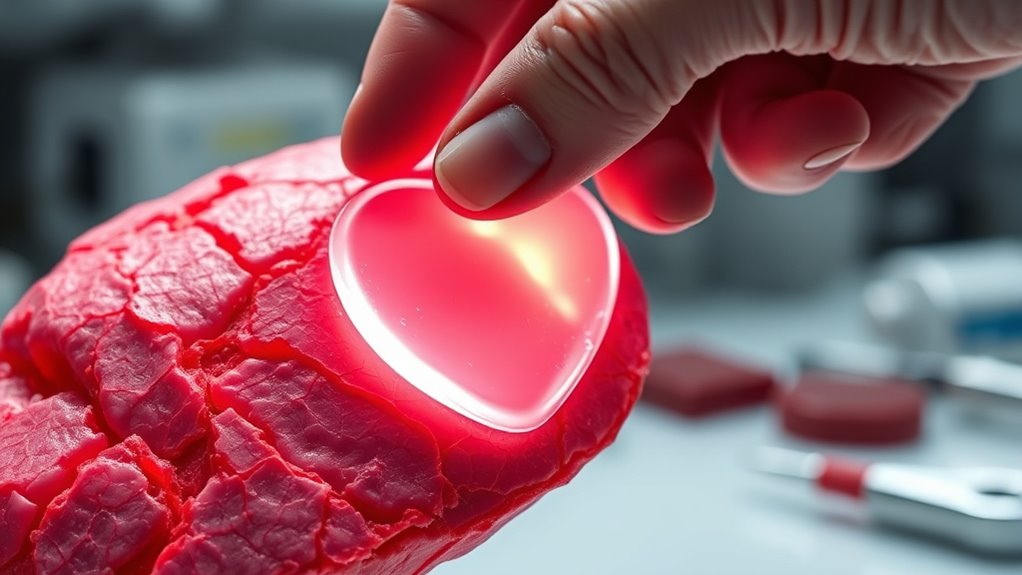
You need to address the challenge of keeping stem cells alive once implanted, as many don’t survive long enough to be effective. Improving how these cells integrate with existing heart tissue is also essential for successful treatment. Focusing on these areas will guide future research and bring us closer to reliable therapies. Additionally, exploring cell viability techniques can significantly enhance the success rate of stem-cell-based heart repair.
Overcoming Cell Survival Barriers
Despite advances in stem-cell heart patch development, ensuring the survival of transplanted cells remains a significant challenge. The harsh environment of damaged heart tissue often reduces cell viability, making it difficult for cells to thrive and repair effectively. Additionally, the immune response can target transplanted cells, causing rejection or cell death. To overcome these barriers, researchers are exploring strategies like immunosuppressive therapies and biomaterials that protect cells from immune attack. Optimizing the delivery method can also improve cell survival by minimizing trauma and supporting nutrient exchange. Furthermore, understanding and mitigating AI vulnerabilities such as immune rejection is essential for increasing the effectiveness of stem-cell heart patches. Addressing these issues is vital for increasing the long-term success of regenerative treatments. By focusing on enhancing cell viability and managing immune responses, you can help improve long-term outcomes for patients.
Enhancing Integration Techniques
Enhancing integration of stem-cell heart patches remains a critical hurdle in advancing regenerative therapies. To improve this, researchers focus on optimizing biomaterial scaffolds that support better attachment and communication between the patch and native tissue. These scaffolds need to mimic the heart’s natural environment, encouraging cell growth and vascularization. Managing the immune response is equally important; excessive immune activation can reject or weaken the patch’s integration. Strategies include designing scaffolds with biocompatible materials and incorporating immune-modulating agents to reduce inflammation. Future directions involve developing smarter scaffolds that adapt to the heart’s dynamics and immune signals, fostering seamless integration. Considering dog names can also serve as inspiration for naming innovative bioengineering techniques or products. Overcoming these challenges will bring us closer to reliable, long-lasting heart repair solutions using stem-cell patches.
Potential Impact on Heart Attack Patient Care
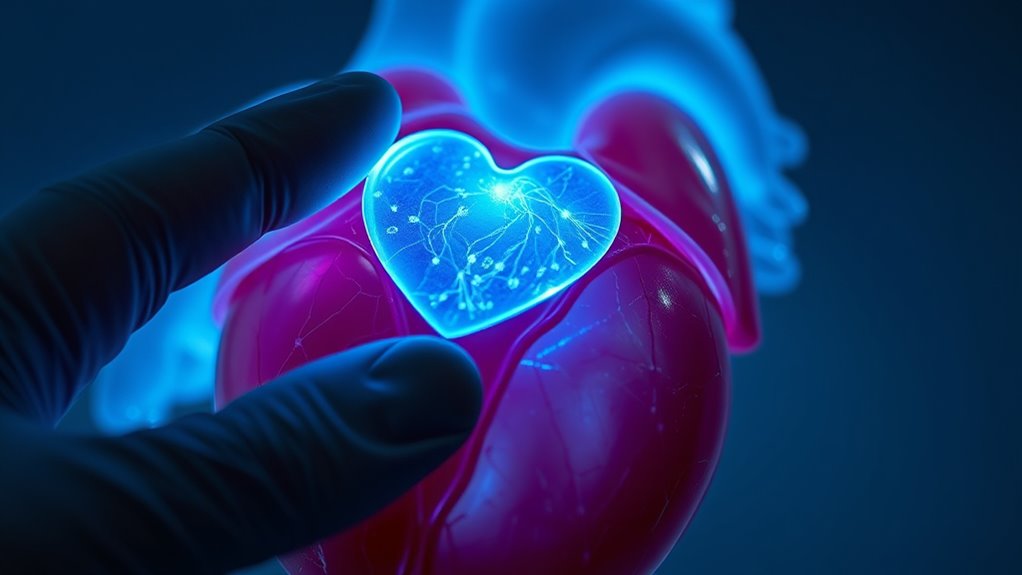
Stem-cell heart patches could revolutionize how you treat heart attack patients by promoting tissue repair and restoring heart function. This advancement offers hope for faster recovery and improved quality of life. However, ethical considerations come into play, such as sourcing stem cells responsibly and ensuring patient safety. Regulatory hurdles also pose challenges, as these innovative treatments must undergo rigorous testing and approval processes before widespread use. You’ll need to stay informed about evolving guidelines and ethical standards to navigate these complexities effectively. Despite these obstacles, the potential to transform patient care is significant. With continued research and responsible development, stem-cell heart patches could become a standard part of post-heart attack treatment, offering renewed hope for many. Understanding regulations surrounding stem-cell therapies is essential for ensuring safe and effective implementation.
Frequently Asked Questions
How Long Do Stem-Cell Heart Patches Typically Last Inside the Body?
You might wonder about the durability lifespan of stem-cell heart patches. Typically, these patches last several months to a few years inside your body, depending on factors like the materials used and your health. They gradually integrate with your heart tissue, supporting healing. While they don’t last forever, ongoing research aims to extend their durability lifespan, improving long-term outcomes for heart repair.
Are There Any Known Side Effects or Risks Associated With These Patches?
Did you know that stem-cell heart patches have a 5-10% risk of adverse effects? You should be aware that these patches can trigger an immune response, potentially leading to rejection or inflammation. There’s also a small chance of tumor formation if the cells proliferate uncontrollably. While promising, it’s crucial to consider these risks with your healthcare provider to ensure safe and effective treatment.
Can Stem-Cell Patches Be Used for Other Types of Heart Diseases?
You might wonder if stem-cell patches could be used for other heart diseases. These patches offer promising alternative therapies by promoting heart regeneration, potentially helping with conditions like heart failure or cardiomyopathy. While research is ongoing, using stem-cell patches beyond attack-related damage could revolutionize treatment options. You should stay informed about new developments, as these innovative therapies may soon provide broader solutions for various heart conditions.
What Is the Cost of Treatment With Stem-Cell Heart Patches?
Imagine buying a car—cost varies based on features. Similarly, stem-cell heart patch treatment costs can differ greatly. A recent cost analysis shows prices range from $50,000 to $100,000 per procedure. Insurance coverage varies, with some plans covering part of the cost and others not. You should consult your provider to understand coverage options and potential financial assistance, ensuring you’re prepared before pursuing this innovative treatment.
How Soon Can Patients Expect to See Improvements After Treatment?
Timing expectations vary, but most patients start noticing improvements within a few weeks to months after treatment. Your recovery timeline depends on factors like the extent of heart damage and overall health. While some may experience gradual improvements in heart function and energy levels, others might see more significant changes sooner. Stay patient and follow your healthcare provider’s guidance, as consistent care can help optimize your recovery process.
Conclusion
Imagine a future where your heart can heal itself after a attack. Stem-cell heart patches are showing promise, with preclinical studies demonstrating up to a 50% improvement in heart function. While challenges remain, advancements in material technology and ongoing research bring hope. If successful, these patches could revolutionize heart attack treatment, giving millions a chance for faster recovery and better quality of life. The potential for such breakthroughs is truly inspiring.