Breath-test technology now allows you to detect certain diseases within 60 seconds by analyzing exhaled gases for unique biomarkers like hydrogen, methane, or nitric oxide. These rapid diagnostics use advanced sensors, algorithms, and metabolic profiling to identify health issues without invasive procedures. As technology improves with miniaturization and better accuracy, you’ll see faster, on-the-spot results that support quicker treatment decisions. Discover how this innovative approach is transforming healthcare and diagnosing more conditions quickly.

Prime made for students and young adults
- Fast, free delivery for dorm and study essentials
- Prime Video and Amazon Music included
- Member-only deals
Key Takeaways
- Breath tests analyze exhaled gases like hydrogen, methane, and nitric oxide to detect diseases rapidly.
- Advanced sensors and nanomaterials enable quick, accurate detection within seconds at the point of care.
- Sophisticated algorithms interpret gas patterns swiftly, providing results typically in under a minute.
- Rapid diagnostics facilitate immediate clinical decisions, reducing invasive procedures and testing delays.
- Continuous innovations aim to enhance sensor sensitivity and integration, making 60-second disease detection increasingly feasible.
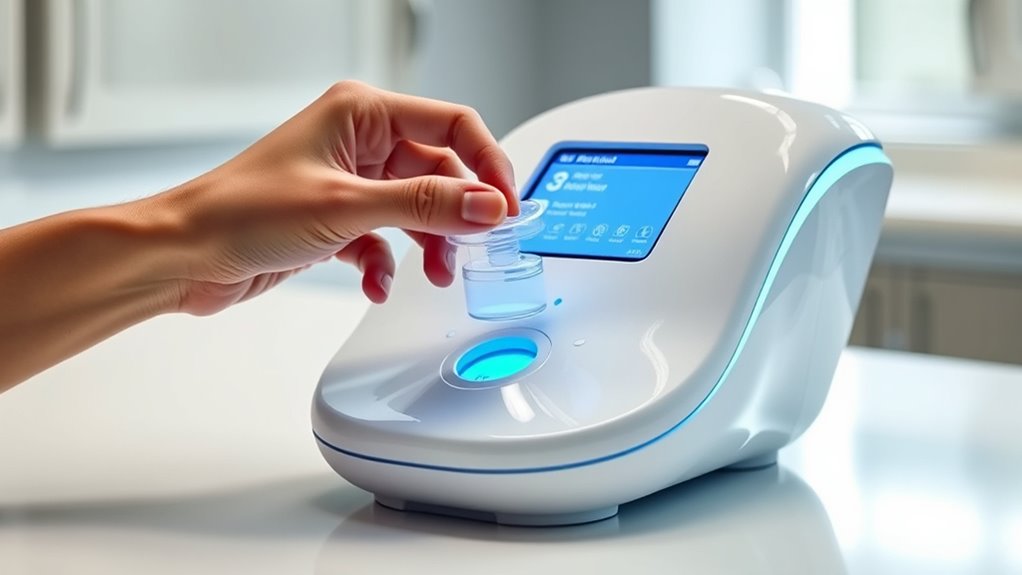
home breathalyzer for health testing
As an affiliate, we earn on qualifying purchases.
As an affiliate, we earn on qualifying purchases.
The Science Behind Breath-Test Technology

Breath-test technology relies on detecting specific gases in your breath that indicate the presence of certain diseases. It works by analyzing the air quality you exhale, which contains volatile compounds linked to your body’s metabolic processes. Through metabolic profiling, scientists identify unique patterns of gases that serve as disease markers. When your body metabolizes substances like sugars or amino acids, it produces gases such as hydrogen, methane, or nitric oxide, which are measurable in your breath. Advanced sensors and analytical tools, like mass spectrometry or gas chromatography, detect these gases quickly and accurately. This approach allows for non-invasive, real-time insights into your health, making breath tests a powerful tool for early detection and continuous monitoring of various medical conditions. Proper calibration of detection equipment ensures the accuracy of the results and is essential for reliable diagnosis instruments.
rapid disease detection breath test device
As an affiliate, we earn on qualifying purchases.
As an affiliate, we earn on qualifying purchases.
How Rapid Diagnostics Are Changing Healthcare

Rapid diagnostics are transforming healthcare by providing quick, accurate results that enable prompt decision-making. With advancements like breath tests, you can now detect diseases in seconds, saving valuable time. These diagnostics analyze genetic markers and lifestyle factors, giving a personalized picture of your health. By identifying genetic predispositions, doctors can recommend targeted treatments early. Lifestyle factors, such as diet and habits, also influence results, helping you understand how daily choices impact your health. This rapid approach reduces the need for invasive procedures and lengthy lab work. As a result, healthcare becomes more proactive, allowing for earlier interventions and better patient outcomes. Overall, rapid diagnostics are making healthcare faster, more precise, and more tailored to individual needs.
As an affiliate, we earn on qualifying purchases.
The Process of a Breath-Based Disease Detection

Advancements in breath-based diagnostics streamline disease detection by allowing quick, non-invasive analysis. You breathe into a device that captures volatile compounds linked to specific genetic markers and environmental factors. These molecules reflect your body’s health status. The device analyzes your breath using sensors and advanced algorithms to identify patterns indicative of disease. The process is fast, often delivering results in seconds. Here’s a simple overview:
| Step | What Happens | Key Factors |
|---|---|---|
| 1 | Breath collection | Environmental factors influence compounds |
| 2 | Sensor analysis | Detects genetic markers and volatile molecules |
| 3 | Data processing | Algorithms interpret results |
| 4 | Result output | Quick diagnosis |
| 5 | Follow-up | Further testing if needed |
This process leverages your body’s unique genetic and environmental signals for rapid diagnosis, utilizing rapid diagnostic technology to improve healthcare outcomes.
non-invasive health diagnostic device
As an affiliate, we earn on qualifying purchases.
As an affiliate, we earn on qualifying purchases.
Common Diseases Detected Through Breath Analysis

Many common diseases can be detected through breath analysis because their associated compounds leave distinct signatures in your breath. These signatures come from specific breath biomarkers that are unique to each condition, providing high disease specificity. For example, elevated levels of acetone can indicate diabetes, while certain volatile organic compounds (VOCs) point to lung infections or cancers. Similarly, the presence of nitric oxide often signals airway inflammation, such as asthma. Breath analysis allows you to identify these biomarkers quickly and non-invasively, enabling early detection of diverse diseases. Because each disease has a unique pattern of biomarkers, clinicians can accurately distinguish between different conditions. This precision makes breath analysis a powerful tool for diagnosing a range of common illnesses efficiently and reliably. Incorporating mindfulness techniques during testing may also help reduce patient stress, improving the accuracy of results.
Benefits of Speedy Diagnosis for Patients and Doctors

Getting results quickly means you can start treatment sooner, which often leads to better health outcomes. It also helps reduce the stress and uncertainty that come with waiting for diagnosis. Both you and your doctor benefit from faster insights, making the whole process smoother and more effective. Paint sprayer technology continues to advance, enabling rapid testing and diagnosis methods like breath tests to identify spot disease efficiently.
Rapid Treatment Initiation
When diagnosis happens quickly, both patients and doctors benefit from the ability to start treatment promptly. The high sensor accuracy of modern breath-test devices guarantees reliable results, giving you confidence in the diagnosis. Plus, the device’s portability means you can perform tests almost anywhere—clinics, bedside, or even remote locations—without delay. This rapid turnaround allows your healthcare provider to develop and initiate treatment plans immediately, reducing disease progression risks. Speedy diagnosis minimizes waiting times, which can be critical in preventing complications. With fast, accurate results from portable devices, you get peace of mind and quicker access to effective treatment. For doctors, it streamlines workflow and enhances decision-making, ensuring patients start the right therapy without unnecessary delays. Honda Tuning knowledge highlights how performance upgrades and precise tuning can optimize engine responsiveness, which aligns with the importance of accurate diagnostics for tailored treatments.
Reduced Diagnostic Anxiety
Rapid diagnosis considerably reduces the anxiety patients feel while waiting for results, giving you peace of mind sooner. When you receive quick results, it minimizes uncertainty and helps you move forward with confidence. This improved process enhances patient comfort, making the experience less stressful and more manageable. Faster diagnostics also promote cost efficiency for healthcare providers by reducing the need for multiple appointments or additional tests. You spend less time in limbo, which can alleviate emotional strain and prevent unnecessary worry. For doctors, swift results mean more accurate and timely decision-making, improving overall care quality. Additionally, dream symbols can sometimes provide subconscious insights into health concerns, supporting a comprehensive diagnostic approach. Ultimately, reducing diagnostic anxiety benefits everyone involved, creating a smoother, more reassuring healthcare experience that’s both patient-centered and economically sensible.
The Development and Innovation of Breath-Test Devices

Advances in sensor technology have made breath-test devices more accurate and sensitive than ever before. Portable devices now integrate seamlessly with diagnostic algorithms, enabling quick analysis anywhere. These innovations are transforming how you detect diseases, making testing faster and more accessible.
Sensor Technology Advances
Recent innovations in sensor technology have markedly enhanced the accuracy and portability of breath-test devices. Advances in sensor accuracy guarantee precise detection of disease markers, reducing false results. Device miniaturization allows these tools to become compact and user-friendly, making testing quick and accessible. Breakthroughs in nanomaterials and sensor design have led to smaller, more sensitive components. These improvements mean you can now perform rapid diagnostics with minimal equipment, facilitating point-of-care testing. The table below highlights key aspects of these sensor innovations: sensor development
| Feature | Benefit | Impact |
|---|---|---|
| Sensor Accuracy | Precise detection of biomarkers | Reliable diagnoses |
| Device Miniaturization | Smaller, portable devices | Increased accessibility |
| Fast Response Time | Rapid results | Faster clinical decisions |
| Enhanced Sensitivity | Detects low biomarker levels | Early disease identification |
| Durability | Long-lasting sensors | Cost-effective testing |
Portable Device Integration
The integration of portable breath-test devices has revolutionized disease diagnosis by bringing testing directly to patients and healthcare providers. These portable devices enable immediate analysis outside traditional labs, increasing accessibility and speed. However, integrating these devices into clinical settings presents challenges. Ensuring consistent accuracy across different environments requires robust calibration and validation. Additionally, miniaturizing sophisticated sensors while maintaining sensitivity demands innovative engineering solutions. Compatibility with existing healthcare systems and data security are other hurdles that need addressing. Despite these integration challenges, advancements in miniaturization and wireless connectivity are making portable devices more reliable and user-friendly. As a result, healthcare providers can deliver faster, on-site diagnostics, improving patient outcomes and streamlining clinical workflows.
Rapid Diagnostic Algorithms
Integrating portable breath-test devices into clinical practice has paved the way for developing rapid diagnostic algorithms that quickly interpret complex data. These algorithms analyze breath compounds by leveraging sensor sensitivity to detect specific biomarkers associated with various diseases. Advanced sensors can identify subtle variations in breath compounds, enabling near-instantaneous results. By automating data analysis, these algorithms reduce reliance on manual interpretation, increasing accuracy and speed. This innovation allows clinicians to diagnose conditions within seconds, improving patient outcomes and streamlining workflows. As sensor technology advances, the algorithms become more precise, further enhancing diagnostic confidence. Creativity in designing these algorithms fosters innovative approaches to early disease detection. Ultimately, these rapid diagnostic algorithms transform breath testing into a powerful tool for early detection, making disease diagnosis faster, more reliable, and accessible at the point of care.
Challenges and Limitations of Breath-Based Testing

Despite its promising potential, breath-based testing faces several challenges that can limit its effectiveness. One major issue is breath test limitations, which can affect diagnostic accuracy. Variability in individual metabolism and environmental factors can lead to inconsistent results. Additionally, the sensitivity of these tests may not detect early or subtle disease markers, risking false negatives. External influences like diet, medications, or smoking can further skew outcomes. To understand these challenges better, consider this:
| Challenge | Impact | Emotion evoked |
|---|---|---|
| Variability in metabolism | Inconsistent results | Frustration |
| External factors | Reduced reliability | Uncertainty |
| Limited sensitivity | Missed early disease | Anxiety |
| Technological constraints | Diagnostic inaccuracies | Disappointment |
| Standardization issues | Inconsistent application | Doubt |
| Integration of AI into testing | Could improve accuracy and consistency | Hope |
Future Prospects and Expanding Applications

As breath-based testing continues to evolve, its future promises broader applications across medical diagnostics and personalized healthcare. AI integration will play a key role, enabling rapid data analysis and identifying subtle biomarkers that might escape traditional methods. This advancement could make diagnoses even faster and more accurate, expanding beyond current disease detection. Additionally, Empathetic Guides can help clarify these complex developments for parents, ensuring they feel confident and informed about emerging health technologies. However, regulatory hurdles remain a significant challenge. Ensuring safety, efficacy, and standardization will require thorough validation and collaboration with authorities. Despite these obstacles, ongoing research and technological progress suggest that breath tests will become more widespread, offering non-invasive, quick, and reliable diagnostic tools. As these developments unfold, you’ll see breath analysis transforming how we approach health monitoring and disease management.
Real-World Examples and Case Studies

Recent real-world examples highlight how breath-test technology is already making an impact in medical settings. In one case, clinicians used breath tests to quickly diagnose Helicobacter pylori infections, factoring in genetic influences that affect susceptibility. Environmental influences, such as diet and pollution exposure, also play a role, and breath tests help identify these impacts on individual health. For instance, patients with certain genetic markers show distinct breath patterns, enabling tailored treatments. In another case, breath tests detected early signs of metabolic issues linked to environmental factors, allowing for prompt intervention. These examples demonstrate how understanding genetic factors and environmental influences enhances diagnostic accuracy, making breath tests a powerful tool for personalized medicine. This approach is transforming disease detection and management in real-world clinical environments.
The Impact on Global Health and Accessibility

Breath-test technology has the potential to particularly improve global health by providing affordable, non-invasive, and rapid diagnostics accessible in diverse healthcare settings. This innovation can help overcome cultural barriers by simplifying testing procedures, making it easier for communities hesitant about invasive methods. Additionally, breath tests can address economic disparities by reducing costs associated with traditional diagnostics, enabling underserved populations to receive timely care. In regions with limited infrastructure, portable breath-test devices can be deployed easily, expanding access to early disease detection. By bridging gaps caused by cultural differences and economic challenges, this technology promotes equitable healthcare and enhances disease management worldwide. Ultimately, it empowers healthcare providers to deliver quicker, more inclusive diagnostics, saving lives across varied global contexts.
Frequently Asked Questions
How Accurate Are Breath Tests Compared to Traditional Diagnostic Methods?
When considering diagnostic accuracy, breath tests often provide quick results, but they can sometimes lead to false positives, affecting reliability. You might find them helpful for initial screenings, yet they shouldn’t replace traditional methods like blood tests or biopsies for definitive diagnosis. Be aware that while breath tests are efficient, their accuracy varies depending on the disease and testing conditions, so confirmatory tests are usually recommended.
Can Breath-Test Devices Detect Multiple Diseases Simultaneously?
Imagine a device so powerful it can detect multiple diseases simultaneously, like a super-sleuth in your pocket. Breath-test devices are advancing rapidly, enabling multi-disease detection with impressive breath test accuracy. While they may not be as all-encompassing as some traditional methods yet, these devices are closing the gap, offering quick, non-invasive results. This technology could revolutionize diagnostics, making early detection faster and easier for everyone.
What Are the Costs Associated With Implementing Breath-Test Technology?
When considering the costs of implementing breath-test technology, you’ll need to conduct a thorough cost analysis to understand expenses like equipment, training, and maintenance. Implementation challenges, such as integrating new devices into existing workflows and ensuring staff proficiency, can also add to costs. While the upfront investment might seem high, the long-term benefits of quick, accurate diagnoses could outweigh these initial expenses, making it a valuable addition to healthcare settings.
Are Breath Tests Suitable for Pediatric or Elderly Patients?
When considering if breath tests suit pediatric considerations and elderly patient safety, you find they are often suitable because the procedure is non-invasive and quick. For children, you may need to adjust breath collection techniques, ensuring comfort. For elderly patients, you focus on safety and ease of use, making sure they can comfortably participate without risk. Overall, breath tests are a practical, safe option for both groups when properly adapted.
How Do Environmental Factors Influence Breath-Test Results?
Environmental factors like air pollution and indoor allergens can substantially influence your breath-test results. When you breathe in polluted air or allergens, they may alter your breath composition, leading to inaccurate readings. You should make certain your testing environment is clean and free of contaminants. Minimizing exposure to indoor allergens and avoiding high pollution areas before testing helps you get precise, reliable results, making diagnoses more accurate and effective.
Conclusion
Imagine diagnosing diseases in just 60 seconds with a simple breath test—you could revolutionize your healthcare experience. Currently, breath analysis can detect conditions like lung infections and diabetes, often faster than traditional methods. In fact, rapid diagnostics like these could reduce diagnosis times by up to 90%, meaning quicker treatment and better outcomes. As technology advances, you’ll benefit from more accessible, efficient care, transforming how you and millions worldwide manage health.
Columbus Day / Indigenous Peoples' Day Picks
long weekend sales
As an affiliate, we earn on qualifying purchases.