
AI-enhanced prosthetics are transforming how you move by responding intuitively to your body. These devices integrate advanced sensors that detect muscle signals and adjust in real time, mimicking natural limb movements. Innovations in material technology make them lighter, stronger, and more comfortable, while customizable designs boost your confidence and self-image. With these developments, your daily activities become smoother and more engaging. Discover how these breakthroughs can further improve your mobility and lifestyle.

Prime made for students and young adults
- Fast, free delivery for dorm and study essentials
- Prime Video and Amazon Music included
- Member-only deals
Key Takeaways
- AI integration in prosthetics enables real-time adaptation to user movements, enhancing responsiveness and intuitive control.
- Advanced sensors detect muscle signals and movement angles, mimicking natural limb behavior for seamless interaction.
- Smart materials adjust their properties, providing optimal support and flexibility for various activities, improving comfort and functionality.
- Personalization options allow users to customize aesthetics, fostering a sense of identity and boosting self-confidence.
- Continuous technological advancements promise further enhancements in functional independence and overall quality of life for users.
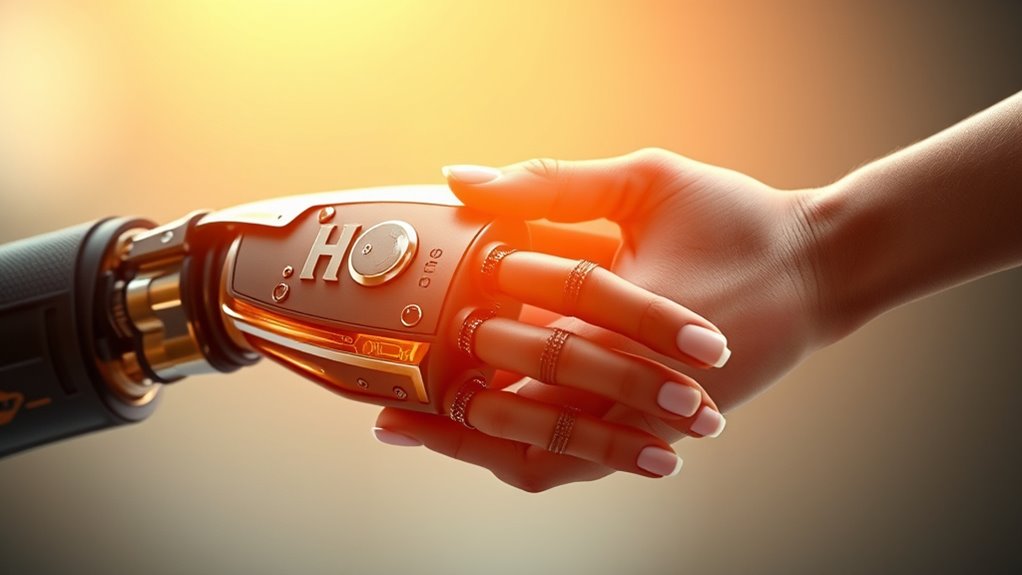
As technology advances, you might find yourself amazed by how AI-enhanced prosthetics are transforming lives. These innovations are not just about replacing lost limbs anymore; they’re about creating a seamless connection between the user and their prosthetic, enhancing mobility, comfort, and functionality. One of the most significant breakthroughs in this field is sensor integration, which allows these devices to respond intuitively to the user’s movements. Imagine being able to control your prosthetic with just a thought or a slight shift in balance—these advancements are making that a reality.
With advanced sensor integration, the prosthetics can detect changes in muscle signals, pressure, and even the angle of movement. This means that when you walk or reach for an object, your prosthetic limb can adapt in real-time, mimicking the natural movement of a biological limb. You won’t have to think about every little action; the device learns your patterns and adjusts accordingly, making daily tasks easier and more fluid. This technology not only enhances functionality but also restores a sense of normalcy to users, allowing them to engage more fully in their lives.
Material innovation is another game-changer in the sphere of AI-enhanced prosthetics. The materials used in these devices have evolved considerably, making them lighter, stronger, and more comfortable. You might be surprised to learn that many modern prosthetics utilize composites and smart materials that can change their properties in response to different conditions. For instance, some materials can adjust their stiffness depending on the activity—becoming more rigid when you need support and more flexible during casual movement. This adaptability means you can walk, run, or even dance without feeling hindered by your prosthetic.
Moreover, the aesthetics of prosthetics have improved dramatically due to these material innovations. You can choose from a range of colors and designs, making your prosthetic feel like a part of your identity rather than just a medical device. This personalization can boost your confidence and encourage a positive self-image.
In essence, AI-enhanced prosthetics equipped with sensor integration and material innovation are reshaping how you experience mobility. These advancements not only help you regain functional independence but also empower you to embrace life’s challenges with renewed vigor. Just imagine what the future holds as technology continues to evolve, promising even greater enhancements to quality of life. Additionally, the integration of state-specific benefits into healthcare solutions can further support users in their journey toward enhanced mobility and independence.
As an affiliate, we earn on qualifying purchases.
Frequently Asked Questions
How Do Ai-Enhanced Prosthetics Improve User Experience Compared to Traditional Prosthetics?
AI-enhanced prosthetics improve your experience by using sensor integration and machine learning algorithms to adapt to your movements in real-time. Unlike traditional prosthetics, these advanced devices learn from your actions, providing more natural and intuitive control. They can adjust resistance and grip based on your activity, making tasks easier and more efficient. You’ll find that daily activities become smoother, enhancing your overall comfort and confidence in using them.
What Materials Are Used in Ai-Enhanced Prosthetics for Durability?
Think of AI-enhanced prosthetics as a bridge, built with durable materials for strength and flexibility. They often use advanced composites, which combine multiple materials for enhanced performance, ensuring longevity and resilience. Biocompatible polymers also play a vital role, making the prosthetics comfortable and safe for your body. These materials not only withstand daily wear and tear but also adapt to your unique needs, providing a seamless experience as you navigate your world.
Are Ai-Enhanced Prosthetics Covered by Insurance Plans?
Yes, many insurance plans do cover AI-enhanced prosthetics, but it varies widely. You’ll want to check your specific policy for details on insurance coverage, as some plans may only cover basic devices. Affordability concerns are common, so consider reaching out to your provider to discuss options. They might have additional resources or payment plans to help make these advanced prosthetics more accessible for you.
How Long Does It Take to Adapt to Using Ai-Enhanced Prosthetics?
Adapting to AI-enhanced prosthetics can feel like learning to dance with a new partner. At first, it may be clumsy, but with time, you’ll find your rhythm. Generally, it takes a few weeks to several months for most people to adjust. You’ll experience neural adaptation as your brain learns to interpret sensor integration, making movement more natural. With practice, you’ll feel more in sync, turning frustration into fluidity, and reclaiming your freedom.
Can Ai-Enhanced Prosthetics Be Customized for Different Activities or Sports?
Yes, you can personalize AI-enhanced prosthetics for different activities or sports. These devices often feature activity-specific designs, allowing you to switch between settings that optimize performance for running, swimming, or cycling. With sports customization, you can enhance your experience and improve your capabilities, making it easier to engage in your favorite activities. The adaptability of these prosthetics ensures you get the most out of every sporting endeavor you pursue.
sensor-integrated prosthetic arm
As an affiliate, we earn on qualifying purchases.
As an affiliate, we earn on qualifying purchases.
Conclusion
In a world where technology meets humanity, AI-enhanced prosthetics usher in a new era of mobility and independence. These remarkable devices don’t just restore functionality; they redefine possibilities, allowing users to navigate life’s challenges with newfound ease. Embracing this innovation isn’t merely about adaptation; it’s about celebrating resilience and reclaiming agency. As we stand on the threshold of a more connected future, the potential for these advanced prosthetics to enhance lives is nothing short of inspiring.
As an affiliate, we earn on qualifying purchases.
As an affiliate, we earn on qualifying purchases.
Columbus Day / Indigenous Peoples' Day Picks
long weekend sales
As an affiliate, we earn on qualifying purchases.