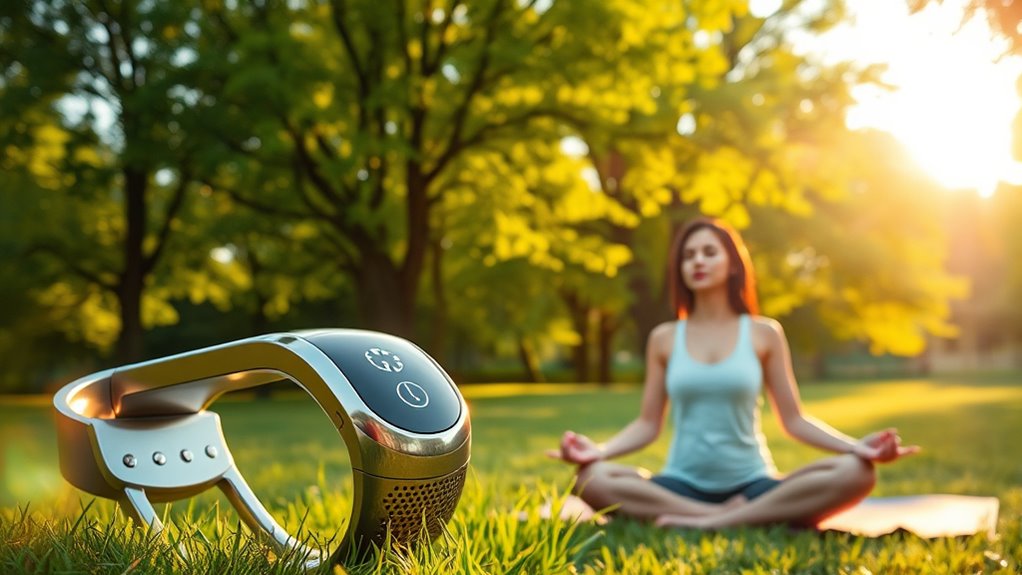

Biofeedback wearables help you manage stress on the go by providing real-time insights into your body’s responses. You can monitor heart rate, skin temperature, and muscle tension, allowing you to identify and respond to stress spikes. These devices encourage mindfulness techniques like breathing exercises whenever stress arises, helping you regain control. By enhancing your self-awareness and understanding your body’s signals, you can improve your well-being. Discover more ways to use these tools for a balanced life.

Prime made for students and young adults
- Fast, free delivery for dorm and study essentials
- Prime Video and Amazon Music included
- Member-only deals
Key Takeaways
- Biofeedback wearables monitor physiological responses, providing real-time insights into stress and relaxation signals for effective on-the-go management.
- Alerts from these devices prompt users to practice mindfulness techniques, like breathing exercises, during stress spikes.
- Wearables analyze sleep patterns, helping identify disruptions that affect rest quality and support better overall health.
- Integrating short mindfulness practices with wearable data enhances their effectiveness, promoting proactive stress management wherever you are.
- Consistent use of biofeedback devices fosters self-awareness, improving control over physiological responses and overall stress handling.
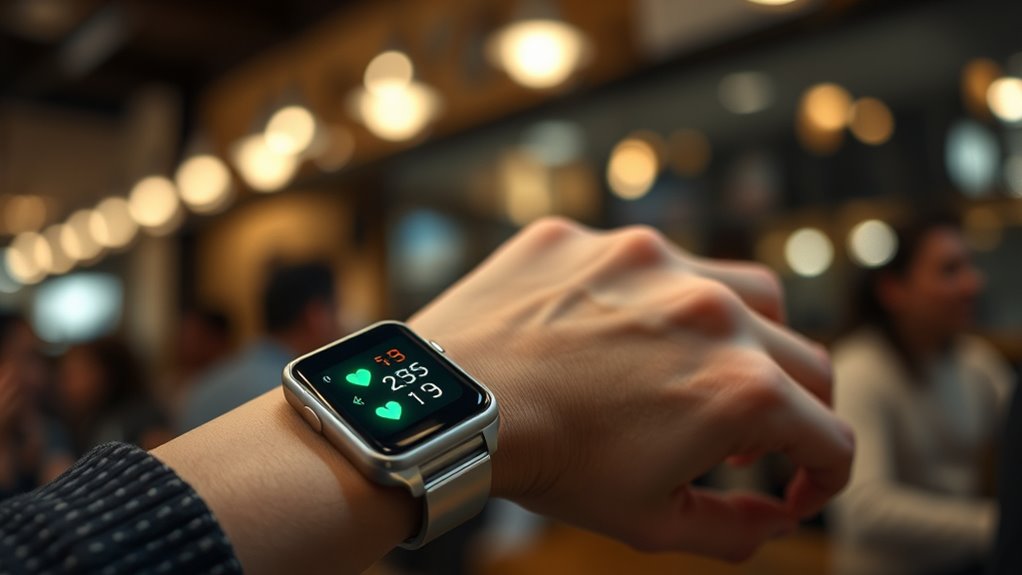
Have you ever wondered how your body responds to stress or relaxation? You might not realize it, but your body constantly communicates its state through various signals. This is where biofeedback wearables come into play. These nifty gadgets help you tap into your body’s responses, allowing you to take control of your stress levels and improve your overall well-being. By monitoring factors like heart rate, skin temperature, and muscle tension, these devices provide you with real-time data, enabling you to understand your body better.
Discover how biofeedback wearables can empower you to understand and manage your body’s stress signals for improved well-being.
Imagine putting on a wearable device that tracks your physiological responses throughout the day. As you go about your routine, you receive alerts that encourage you to practice mindfulness training when your stress levels spike. By simply taking a few moments to focus on your breath or engage in a short meditation, you can effectively calm your mind and body. These small yet impactful practices help you regain control, even in high-pressure situations.
What’s more, biofeedback wearables can also optimize your sleep. Many of us struggle to get quality rest, which can compound stress and anxiety. By analyzing your sleep patterns, these devices provide insights into your sleep quality, helping you identify factors that may be disrupting your rest. With this information, you can make adjustments to your nighttime routine, enhancing your sleep optimization. You’ll find that with better sleep, your resilience to stress improves markedly.
Moreover, the integration of mindfulness training into your daily routine can enhance the effectiveness of these wearables. You don’t have to set aside hours for meditation; even a few minutes of focused breathing can have profound effects. When your wearable indicates that your heart rate has elevated due to stress, you can use those moments to recalibrate. By practicing mindfulness in conjunction with the data you receive, you’re not just reacting to stress; you’re proactively managing it.
As you embrace the use of biofeedback wearables, you’ll discover that they’re not just tools but companions in your journey toward better health. They empower you to understand your body’s signals and respond with intention. With consistent practice, you’ll notice a shift in how you handle stress, leading to a more balanced and fulfilling life. Additionally, incorporating portable camping toilets can enhance your outdoor relaxation experience by providing convenient stress-free solutions. So, why not give it a try? Embrace the technology and realize the potential of mindfulness and sleep optimization for your well-being.
biofeedback stress management wearable
As an affiliate, we earn on qualifying purchases.
As an affiliate, we earn on qualifying purchases.
Frequently Asked Questions
Can Biofeedback Wearables Be Used During Exercise?
Yes, you can absolutely use biofeedback wearables during exercise. These devices provide real-time feedback on your body’s responses, helping you track your heart rate, stress levels, and overall performance. As you work out, you can adjust your intensity based on the data you receive, ensuring you’re not overexerting yourself. This combination of exercise tracking and biofeedback can enhance your workout experience, making it more effective and enjoyable while managing stress levels.
Are Biofeedback Wearables Suitable for Children?
Yes, biofeedback wearables can be suitable for children, especially those designed with child-friendly features. These devices often include engaging interfaces and gamified experiences that make learning about stress management fun. Additionally, parental controls allow you to monitor your child’s usage and data, ensuring they use the device safely and effectively. By choosing the right wearable, you can help your child develop healthy stress management habits while keeping everything age-appropriate.
How Accurate Are Biofeedback Wearables?
Biofeedback wearables can be quite accurate, but their performance hinges on sensor calibration. When you wear one, it measures various physiological signals, like heart rate and skin temperature, to give insights into your stress levels. However, it’s crucial to take into account data privacy; make sure the device securely handles your information. While these devices offer valuable feedback, remember that accuracy can vary based on factors like your activity level and the environment.
Do Biofeedback Wearables Require a Subscription?
Yes, many biofeedback wearables require subscription plans for full access to their features. While the device itself may offer basic functionalities without a subscription, you’ll often need one to gain advanced analytics and personalized insights. Additionally, device compatibility can vary; some wearables work better with specific apps or platforms that require a subscription to maximize their potential. Always check the terms before purchasing to guarantee you get the most out of your device.
Can I Sync Multiple Devices With One App?
Yes, you can sync multiple devices with one app, but it depends on the app’s device compatibility. Most modern apps are designed to handle multiple connections, allowing you to track data from various wearables seamlessly. Just make sure your devices are compatible with the app you’re using. Once everything’s set up, you’ll enjoy a more all-encompassing overview of your health and stress management right at your fingertips.
heart rate monitor stress tracker
As an affiliate, we earn on qualifying purchases.
As an affiliate, we earn on qualifying purchases.
Conclusion
In a world where stress often feels overwhelming, biofeedback wearables can empower you to take control of your mental well-being. By tuning into your body’s signals, you can make real-time adjustments to manage stress effectively. Imagine the relief of having a tool that helps you find calm amidst chaos. Isn’t it time you embraced this technology? After all, the journey to a more balanced life might just be a heartbeat away.
As an affiliate, we earn on qualifying purchases.
As an affiliate, we earn on qualifying purchases.
Fall Picks
fall essentials
As an affiliate, we earn on qualifying purchases.


![Terence Tao: Math 2.0 [Pdf]](https://thegeniusfactory.net/wp-content/uploads/2026/10/terence-tao-math-2-0-pdf-featured-260x140.jpg)