
📊 Full opportunity report: Capital: The Lever Beneath the Levers on ThorstenMeyerAI.com — validation score, market gap, and execution plan.

Get school and study supplies delivered free — and shop member deals
- Fast, free delivery on millions of items
- Access to Prime Big Deal Days deals on October 6–7
- Prime Video, Amazon Music and more included
TL;DR
In 2026, the largest private AI companies are going public, transferring risk to the market. The cycle of capital flow creates vulnerabilities in AI infrastructure growth, with key players controlling the chokepoint.
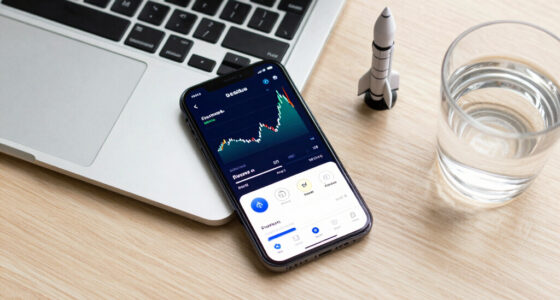
In June 2026, SpaceX, which now includes xAI, listed on the Nasdaq with a valuation near $1.77 trillion, briefly surpassing $2 trillion. Simultaneously, Anthropic filed confidentially for a valuation of around $965 billion, and OpenAI is expected to seek a listing valued between $730 billion and $850 billion. These moves mark the largest wave of private AI company IPOs in history, transferring hundreds of billions of dollars of risk from early investors to public markets, highlighting how capital is the fundamental chokepoint behind AI’s explosive growth and fragility.
The public listings of SpaceX (with xAI), Anthropic, and OpenAI represent a combined approximate $4 trillion in private valuation entering the public market within 18 months. These IPOs are part of a larger cycle described by Bank of America as a massive transfer of risk from early-stage investors to the public, with many insiders selling billions of dollars worth of stock beforehand. This pattern underscores how funding decisions and capital flow are central to the development and sustainability of AI infrastructure.
Furthermore, the flow of money is highly circular: Microsoft, Amazon, Google invest heavily in Nvidia, which supplies AI hardware, while Nvidia’s revenue feeds back into AI companies like OpenAI and Anthropic. This loop creates a financial ouroboros, where demand and investment reinforce each other, but also introduce systemic risks if demand falters or capacity is mispriced.
Capital: The Lever Beneath the Levers
Every chokepoint costs money — so whoever can fund the buildout decides who builds at all. In 2026 the bill came due in public: a trillion-dollar IPO wave, financed by a circle of firms paying each other, now sold to everyone else.
The meta-chokepoint: it gates the other five, because you can’t build any of them without clearing the capital bar. A synchronized machine has no natural brake — no one can slow first — and the IPO wave moves the risk to the public as insiders take gains. The hedge is solvency that doesn’t depend on the music playing: sane burn, own what’s cheap, self-host where you can.
Implications of Capital Concentration in AI Growth
The concentration of capital among a small group of tech giants and the circular nature of investments make the AI ecosystem highly fragile. A slowdown or pullback by key players could cascade across the entire infrastructure, risking a broader economic impact. The reliance on debt-financed infrastructure and a limited paying customer base heightens these vulnerabilities, raising concerns about sustainability and potential market shocks.
As an affiliate, we earn on qualifying purchases.
How Capital Buildout Shapes AI Development
Over the past few years, private AI companies have rapidly grown in valuation, with major firms preparing for public listings in 2026. This cycle involves early risk-taking, followed by risk transfer to the public at high valuations. The interconnected investments—Microsoft’s Azure credits funding OpenAI, Nvidia’s hardware sales to AI firms, and cloud providers’ backing—form a tightly coupled system that accelerates growth but also amplifies systemic fragility. Economists warn that this model’s dependence on debt and thin demand makes the entire AI infrastructure vulnerable to shocks.
“There is more greed than fear in the market right now, and liquidity remains abundant as long as optimism persists.”
— Goldman Sachs CEO
enterprise AI data storage solutions
As an affiliate, we earn on qualifying purchases.
As an affiliate, we earn on qualifying purchases.
Unresolved Risks and Market Fragility Indicators
While the IPOs and capital flows are confirmed, it remains unclear how sustained the current demand will be, especially if macroeconomic conditions change or if demand for AI services remains limited. The potential for a sharp correction or systemic failure due to demand collapse or capacity mispricing has not yet materialized but is a significant concern among economists and industry insiders.
As an affiliate, we earn on qualifying purchases.
Upcoming Market Movements and Regulatory Scrutiny
In the coming months, further public listings and investor participation will reveal how resilient the current funding cycle is. Monitoring the performance of these newly public AI firms and the response of regulators to the concentrated capital structure will be key. A slowdown in demand or a market correction could trigger reassessments of valuation and risk, potentially reshaping the AI funding landscape.
AI infrastructure investment tools
As an affiliate, we earn on qualifying purchases.
As an affiliate, we earn on qualifying purchases.
Key Questions
Why are AI companies going public now?
They aim to raise large amounts of capital to fund infrastructure growth and capitalize on high valuations before potential market corrections.
What risks does this cycle pose to the broader economy?
The reliance on debt-financed infrastructure, circular investment demands, and limited paying customers create systemic vulnerabilities that could trigger broader economic shocks if demand weakens or valuations deflate.
Who controls the flow of capital in AI development?
Major tech giants like Microsoft, Amazon, and Google, along with hardware providers like Nvidia, form a small group that directs most of the funding, creating a concentrated chokepoint.
What could cause this cycle to break?
A sudden decline in demand, regulatory intervention, or a market correction could disrupt the circular flow of capital, leading to a reevaluation of valuations and investment strategies.
Source: ThorstenMeyerAI.com
Halloween Picks
halloween
As an affiliate, we earn on qualifying purchases.