
TL;DR

Prime made for students and young adults
- Fast, free delivery for dorm and study essentials
- Prime Video and Amazon Music included
- Member-only deals
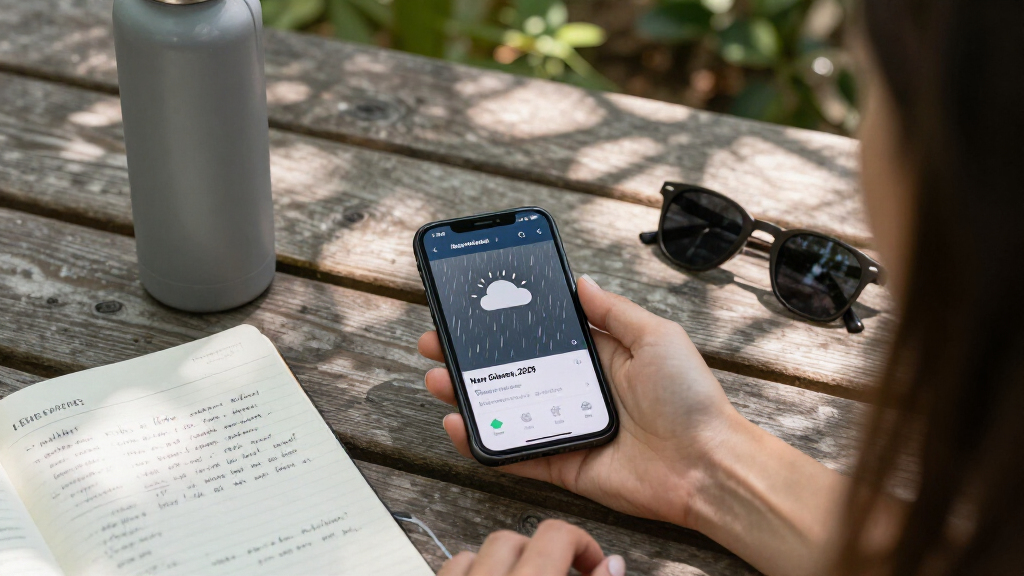
A market for predicting rain in New Orleans on September 14, 2026, has seen significant activity, but no official weather forecast is available. The event’s certainty remains uncertain and is based on trend signals rather than confirmed data. See Bengaluru weather updates.
There is currently no confirmed weather forecast for rain in New Orleans on September 14, 2026, but market activity on predictive platforms suggests increasing speculation about the possibility. Check the forecast for rain in New Orleans.
According to data from the Kalshi trading platform, 28 recent trades are linked to the question of whether it will rain in New Orleans on September 14, 2026. This indicates a notable level of interest among traders and speculators, despite the absence of any official meteorological forecast or scientific prediction for that date.
Weather forecasting models, which rely on current atmospheric data, satellite imagery, and climate patterns, do not provide any specific predictions for that far ahead. Learn about tornado risk in New Orleans. Standard meteorological forecasts typically extend up to 7-10 days and are unreliable beyond that window. As a result, no confirmed forecast exists for September 14, 2026.
The spike in market activity is likely driven by speculation, trend signals, or general interest in long-term climate patterns, rather than concrete weather predictions. Experts caution that such markets are speculative and should not be considered reliable indicators of actual weather events.
Implications of Market Activity on Long-Term Weather Predictions
The increased trading activity around the question of rain in New Orleans on September 14, 2026, highlights a growing public interest in long-term weather prediction markets. While these markets can reflect collective sentiment or speculative bets, they are not scientifically validated sources of weather forecasting.
This trend underscores the challenge of predicting specific weather events months in advance, especially in a region like New Orleans that is prone to sudden weather changes and hurricanes. It also raises questions about the role of prediction markets in public perception of climate and weather risks, despite their speculative nature.
For residents and stakeholders, the key takeaway is that no confirmed forecast exists, and reliance should remain on official meteorological agencies for weather planning and safety measures.
As an affiliate, we earn on qualifying purchases.
Why Long-Term Weather Predictions Are Uncertain
Weather forecasts are generally reliable up to about 7 to 10 days ahead, based on current atmospheric data and advanced modeling techniques. Beyond that timeframe, predictions become increasingly uncertain due to the chaotic nature of weather systems.
The current spike in interest is linked to a broader trend of using prediction markets and crowdsourcing for forecasting, but these methods lack scientific validation for specific dates several years in advance. Historically, long-range weather forecasts tend to be vague and probabilistic, especially for specific locations like New Orleans, which is influenced by complex factors such as Gulf of Mexico activity and hurricane seasons.
While climate models can project broader trends over decades, they cannot specify day-to-day weather with certainty so far in advance. The current activity on the prediction market reflects speculation rather than scientific consensus or forecast.
As an affiliate, we earn on qualifying purchases.
Unconfirmed Nature of Long-Term Weather Predictions
There is no verified scientific forecast for rain in New Orleans on September 14, 2026. The current market activity is based on trend signals and speculation rather than validated meteorological data. It remains unclear whether any credible weather prediction will emerge as the date approaches, and experts warn against relying on such markets for planning or safety decisions.
As an affiliate, we earn on qualifying purchases.
Monitoring Official Forecasts as Date Approaches
As September 14, 2026, nears, meteorological agencies will update forecasts based on the latest atmospheric data. It is expected that reliable predictions will become available within the standard forecast window, typically 7-10 days before the date. Stakeholders and residents should follow official sources like the National Weather Service for accurate, science-based information.
Meanwhile, the prediction market activity will likely fluctuate, reflecting ongoing speculation rather than concrete meteorological developments. Experts advise caution in interpreting these signals and recommend waiting for official forecasts for any weather-related planning.
As an affiliate, we earn on qualifying purchases.
Key Questions
Can prediction markets reliably forecast weather several years in advance?
No, prediction markets are based on collective speculation and do not provide scientifically validated forecasts, especially for dates several years ahead.
Will there be a confirmed weather forecast for September 14, 2026, before that date?
Yes, official weather forecasts are generally available up to 7-10 days before the date. Accurate predictions for September 14, 2026, are unlikely until early September 2026.
Why is there increased interest in predicting weather so far in advance?
The trend reflects broader public curiosity about climate and long-term weather patterns, as well as the growth of prediction markets, but it does not imply reliable forecasting.
Should residents plan based on the current market activity?
No, residents should rely on official meteorological sources for safety and planning, as current market activity is speculative and not scientifically validated.
Source: kalshi
Halloween Picks
halloween
As an affiliate, we earn on qualifying purchases.