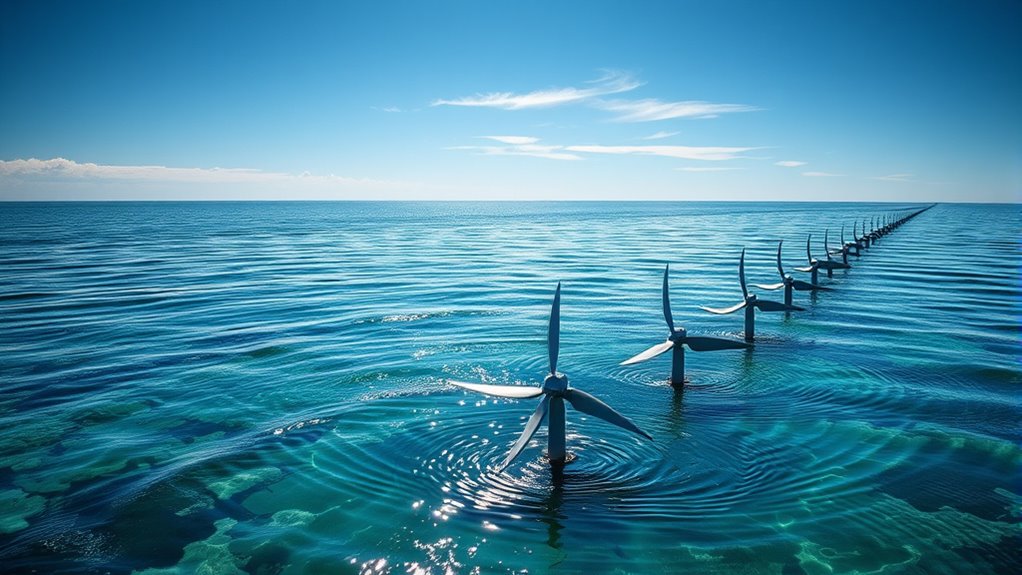

Osmotic power lets you harness the energy from the interaction between freshwater and saltwater, using salinity gradients to generate renewable electricity. By utilizing membranes, fresh water flows through while salt ions are filtered out, creating osmotic pressure that can be converted into energy. This clean energy source is ideal for coastal regions where river and ocean meet. You’ll discover how advances in membrane technology are making this sustainable solution even more effective and accessible.
Key Takeaways
- Osmotic power generates electricity by harnessing the energy from freshwater-seawater interactions at estuaries.
- Membranes selectively allow water to pass while managing salt ions, creating osmotic pressure for energy conversion.
- Advances in membrane technology have improved efficiency and reduced costs, making osmotic power more viable for large-scale use.
- Ideal locations for osmotic power generation are coastal regions where rivers meet oceans, providing consistent energy sources.
- This renewable energy solution supports sustainability by producing electricity without harming ecosystems or relying on fossil fuels.

Osmotic power, a fascinating renewable energy source, harnesses the natural energy generated when freshwater meets seawater. This process relies on salinity gradients, which occur in estuaries where rivers flow into oceans. The difference in salt concentration between the two bodies of water creates a potential energy source that can be tapped for electricity. As you explore this innovative technology, you’ll discover how osmotic power can play a significant role in the pursuit of sustainable energy solutions.
Imagine the potential of using membrane technology to capture this energy. Essentially, membranes act as selective barriers, allowing water to pass through while preventing the movement of salt ions. When freshwater flows through these membranes and encounters the seawater, the osmotic pressure generates energy. This energy can then be converted into electricity, providing a clean alternative to fossil fuels. You’ll find that this method not only harnesses a natural phenomenon but also minimizes environmental impacts compared to traditional energy sources.
Harnessing osmotic pressure through advanced membrane technology offers a clean, sustainable alternative to fossil fuels.
In recent years, researchers have made significant strides in improving membrane technology. Innovations in materials and design have increased the efficiency of osmotic power systems, making them more viable for large-scale implementation. You might be surprised to learn that these advancements have the potential to reduce costs and enhance the overall energy output. As the world seeks cleaner energy options, the role of osmotic power is becoming increasingly important.
When considering the feasibility of osmotic power, think about the locations where salinity gradients are abundant. Coastal regions, where rivers meet the ocean, are ideal candidates for osmotic power generation. By strategically placing osmotic power plants in these areas, you can tap into a reliable and consistent energy source. Moreover, as global energy demands continue to rise, the importance of diversifying energy portfolios cannot be overstated. Osmotic power offers a promising addition to the mix.
As you explore more deeply into osmotic power, it’s essential to recognize its potential benefits. With the ability to produce electricity without harming ecosystems, this renewable source stands out in the quest for sustainability. By investing in research and development, you can be part of the movement that propels osmotic power into the mainstream. Embracing this innovative technology could lead to a cleaner, greener future, where energy is derived from the very forces of nature itself. Additionally, advancements in membrane technology could further enhance the efficiency of osmotic power systems. So, as you consider the possibilities, keep osmotic power on your radar—it just might be the solution we’ve been looking for.
Membrane Technology for Osmotic Power Generation by Pressure Retarded Osmosis
As an affiliate, we earn on qualifying purchases.
As an affiliate, we earn on qualifying purchases.
Frequently Asked Questions
What Are the Environmental Impacts of Osmotic Power Generation?
The environmental impacts of osmotic power generation can be significant. You might notice changes in the marine ecosystem, as the process can alter habitats and affect local wildlife. Additionally, fluctuations in water quality could occur, potentially harming aquatic life. It’s vital to carefully manage these effects to guarantee a balance between energy production and environmental health. By considering these factors, you can help promote sustainable practices in osmotic energy generation.
How Does Osmotic Power Compare to Traditional Energy Sources?
They say, “Don’t put all your eggs in one basket.” When you compare osmotic power to traditional energy sources, you’ll see its renewable potential shines bright. While it’s still developing, osmotic power could become more cost competitive as technology advances. Unlike fossil fuels, it harnesses natural processes for energy, reducing environmental impact. Embracing this innovative energy source alongside traditional methods could diversify your energy portfolio and support a sustainable future.
What Is the Efficiency Rate of Osmotic Power Systems?
The efficiency rate of osmotic power systems typically ranges from 20% to 30%. You’ll find that energy conversion largely depends on advanced membrane technology, which plays a vital role in optimizing the process. By harnessing the salinity gradient between freshwater and saltwater, these systems can convert osmotic pressure into usable energy. While still developing, improvements in membrane technology could boost efficiency rates, making osmotic power a more viable energy source in the future.
Are There Any Commercial Osmotic Power Plants in Operation?
Yes, there are a few commercial osmotic power plants in operation, focusing on harnessing marine energy from salt gradients. One notable example is the pilot plant in Norway, which demonstrates the technology’s potential. While these plants are still in the early stages, they show promise for sustainable energy production. As they develop, you’ll likely see more facilities utilizing this innovative method to generate electricity from the natural differences in salinity.
What Materials Are Used in Osmotic Power Membranes?
Think of membranes as the gatekeepers of energy, filtering potential from the sea. In osmotic power systems, you’ll find membrane materials like polyamide and cellulose acetate, engineered for peak salt rejection. These materials guarantee that fresh water and saltwater don’t mix, harnessing the natural gradient effectively. By using advanced polymers, you can maximize energy production while maintaining efficiency in separating the two types of water, making these membranes vital for the technology’s success.
salinity gradient energy generator
As an affiliate, we earn on qualifying purchases.
As an affiliate, we earn on qualifying purchases.
Conclusion
In the dance between fresh and saltwater, osmotic power emerges as a promising player in our energy future. By harnessing the natural flow of these contrasting worlds, you can tap into a renewable source that’s both sustainable and innovative. As the tides turn, let’s embrace this technology and ride the wave of change, transforming the way we power our lives. With each drop of potential, osmotic power could light the way to a greener tomorrow.
osmotic power plant equipment
As an affiliate, we earn on qualifying purchases.
As an affiliate, we earn on qualifying purchases.
desalination and osmotic energy devices
As an affiliate, we earn on qualifying purchases.
As an affiliate, we earn on qualifying purchases.