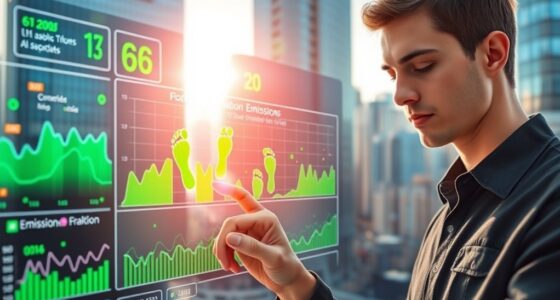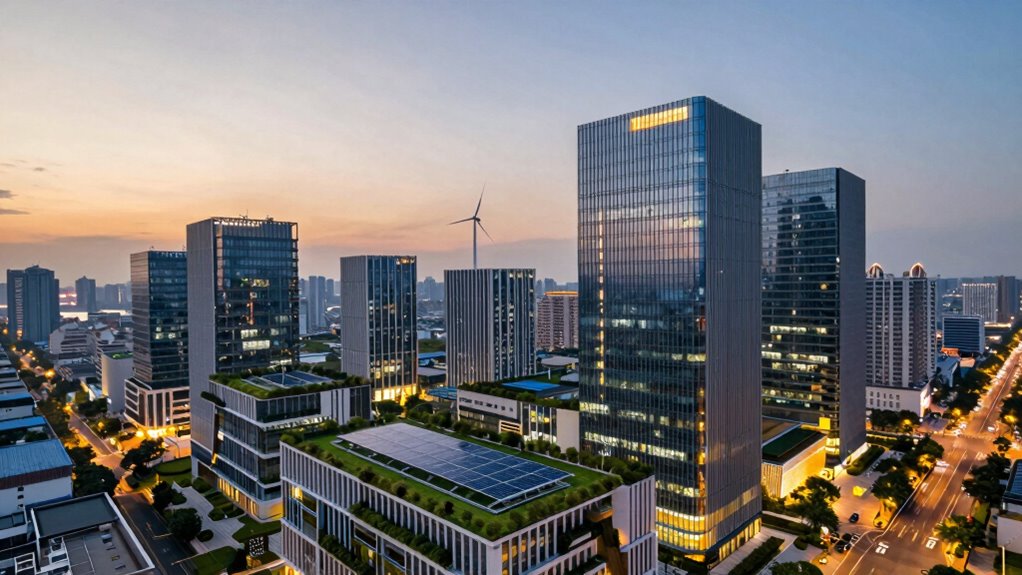

Green building tech helps you reduce energy waste in cities by using renewable materials and smart sensors that continuously monitor temperature, light, and occupancy. These systems automatically adjust lighting, heating, and cooling to save energy and lower costs. Automated controls learn your habits and optimize performance, preventing overuse. Combining these innovations creates efficient, durable buildings that contribute to urban sustainability. Keep exploring how these technologies transform cities into greener, more livable places.

Prime made for students and young adults
- Fast, free delivery for dorm and study essentials
- Prime Video and Amazon Music included
- Member-only deals
Key Takeaways
- Using renewable materials enhances insulation, lowering heating and cooling energy needs.
- Smart sensors enable real-time adjustments, reducing unnecessary energy consumption.
- Automation optimizes climate control based on occupancy, minimizing energy waste.
- Integrating renewable materials with smart technology improves overall building efficiency.
- Green building innovations support urban sustainability by decreasing city-wide energy consumption.

Have you ever wondered how modern buildings can be both functional and environmentally friendly? The answer lies in green building technology, which aims to reduce energy waste and promote sustainability in urban areas. One of the key strategies involves using renewable materials that have a lower environmental impact. These materials, such as bamboo, recycled steel, or reclaimed wood, help cut down on the energy used during manufacturing and construction. By replacing traditional, resource-intensive materials, you can considerably lessen the building’s carbon footprint. Additionally, renewable materials often improve insulation and durability, reducing the need for heating, cooling, and maintenance. This makes your building more energy-efficient over its lifespan.
But green building tech goes beyond just materials. Smart sensors play an essential role in optimizing energy use within buildings. These sensors continuously monitor factors like temperature, humidity, light levels, and occupancy patterns. When integrated with building management systems, they enable real-time adjustments to lighting, heating, and cooling. For instance, if a room is unoccupied, smart sensors can automatically dim lights or shut off HVAC systems, preventing unnecessary energy consumption. For example, automated controls can significantly enhance a building’s energy efficiency by responding swiftly to changing conditions. This intelligent control guarantees that energy is only used when needed, reducing waste and lowering utility costs.
You also benefit from advanced automation that adapts to your daily routines. Smart sensors can learn occupancy patterns, adjusting climate control systems for maximum efficiency without sacrificing comfort. This proactive approach helps prevent energy loss from overheating or overcooling spaces, which often occurs in traditional buildings that rely on fixed schedules or manual controls. By dynamically managing energy demands, these technologies keep urban buildings running smoothly while conserving resources. Furthermore, implementing energy-efficient design principles alongside sensor technology can maximize the benefits and further reduce overall consumption. Incorporating innovative building materials can enhance thermal performance even more, making the structures inherently more sustainable.
Furthermore, integrating renewable materials with smart sensor technology creates a synergistic effect. Renewable materials improve the building’s thermal performance, reducing the overall energy demand for heating and cooling. Incorporating innovative building materials can further enhance this effect by increasing insulation and durability. Additionally, employing energy monitoring systems allows for ongoing assessment and optimization of energy use, ensuring that sustainability efforts are maintained over time. Smart sensors then fine-tune this environment, ensuring that energy consumption stays minimal. Together, they promote a more sustainable urban landscape where buildings aren’t just places to work or live but also active contributors to city-wide energy conservation efforts.
In short, green building tech leverages innovative materials and intelligent systems to combat energy waste. By choosing renewable materials and implementing smart sensors, you help create cities that are not only more livable but also more respectful of our planet’s resources. This combination fosters a future where urban growth and environmental responsibility go hand-in-hand, making your city a model of sustainable development.
smart building energy management system
As an affiliate, we earn on qualifying purchases.
As an affiliate, we earn on qualifying purchases.
Frequently Asked Questions
How Cost-Effective Are Green Building Technologies Initially?
Green building technologies can be somewhat costly initially, but you’ll find that the initial costs are often offset by long-term savings. While upgrades like solar panels or energy-efficient systems may require a higher upfront investment, they markedly reduce your energy bills over time. So, you’re not just spending more now; you’re saving money later, making green building tech a cost-effective choice in the long run.
What Are the Main Challenges in Retrofitting Existing Urban Buildings?
You’ll face retrofit design challenges like integrating new green technologies with existing structures, which can be complex and costly. Building material selection is essential; you need materials that improve energy efficiency without compromising the building’s integrity. Additionally, you may encounter logistical hurdles, budget constraints, and outdated infrastructure. Overcoming these challenges requires careful planning, expert assessment, and innovative solutions to successfully retrofit urban buildings and maximize their green potential.
How Do Green Buildings Impact Urban Biodiversity?
You might think green buildings harm urban wildlife, but they actually boost urban biodiversity. By incorporating green roofs, native plants, and natural habitats, you help support urban wildlife and promote ecosystem enhancement. These sustainable structures provide safe spaces for birds, insects, and other species, creating a healthier, more resilient city environment. Embracing green building tech isn’t just about energy savings—it’s about fostering a thriving, balanced urban ecosystem.
Are There Specific Policies Supporting Green Building Adoption?
Yes, there are specific policies supporting green building adoption. You’ll find renewable incentives that encourage sustainable construction practices and reduce costs for builders and owners. Certification programs like LEED or BREEAM motivate you to meet high environmental standards, ensuring buildings are energy-efficient and eco-friendly. These policies aim to make green building practices more accessible, helping you contribute to urban sustainability while benefiting from financial incentives and recognition for your efforts.
How Do Green Building Standards Vary Across Cities Globally?
You’ll notice that green building standards differ globally, shaped by local urban planning priorities and climate conditions. Cities in Europe often emphasize material innovation for sustainability, while Asian cities may focus on energy efficiency and resilience. These variations reflect how local policies, cultural values, and technological advancements influence standards, encouraging architects to adapt sustainable practices accordingly. Understanding these differences helps you optimize green building projects to meet regional environmental and urban development goals.
As an affiliate, we earn on qualifying purchases.
Conclusion
By embracing green building tech, you cut energy waste and boost sustainability. You see cities grow greener, smarter, more efficient—yet the challenge remains. As buildings become more eco-friendly, the contrast with outdated, wasteful infrastructure sharpens. This shift isn’t just about saving energy; it’s about shaping a future where cities thrive in harmony with the environment. You hold the power to turn these innovations into lasting change, forging a cleaner, brighter urban world.
occupancy sensor lighting control
As an affiliate, we earn on qualifying purchases.
As an affiliate, we earn on qualifying purchases.
automated HVAC system for buildings
As an affiliate, we earn on qualifying purchases.
As an affiliate, we earn on qualifying purchases.
Fall Picks
fall essentials
As an affiliate, we earn on qualifying purchases.