You can see Direct Air Capture (DAC) as a key part of broader climate strategies, working alongside renewables, energy efficiency measures, and natural sinks. It’s especially valuable for removing residual emissions from hard-to-abate sectors like aviation and heavy industry. While its technology and costs are still evolving, supportive policies and market mechanisms can boost its role. To understand how DAC can help bridge current gaps and support a sustainable future, keep exploring these connections.

Prime made for students and young adults
- Fast, free delivery for dorm and study essentials
- Prime Video and Amazon Music included
- Member-only deals
Key Takeaways
- DAC complements renewable energy and natural sinks by removing residual CO₂ emissions from hard-to-abate sectors.
- It serves as a critical tool for achieving negative emissions targets necessary for climate neutrality.
- Policy support and market mechanisms are essential to integrate DAC into broader climate strategies effectively.
- Technological advancements are improving DAC’s scalability and cost-efficiency, enhancing its role in climate mitigation.
- DAC provides flexibility for balancing emissions and can help offset emissions from sectors difficult to decarbonize.
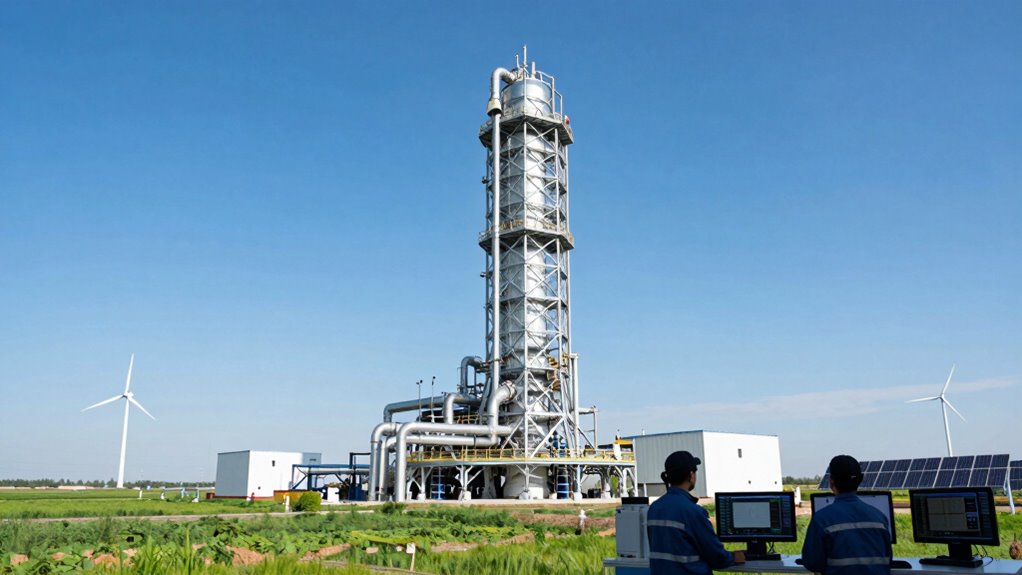
As the urgency to combat climate change grows, direct air capture (DAC) emerges as a promising technology to remove carbon dioxide directly from the atmosphere. You might wonder whether this technology is ready to play a significant role in global efforts. The answer hinges on its technological feasibility and economic viability. Right now, DAC systems are technically capable of capturing CO₂ efficiently, with several pilot projects demonstrating that the process works at a small scale. These systems use chemical processes to trap CO₂ from ambient air, and advances in materials and engineering are continuously improving their performance. However, scaling up these solutions to meet the world’s needs remains a challenge. You need to regard whether current technologies can be expanded cost-effectively and reliably, which is still under development. The good news is that ongoing research and investment are making DAC more feasible, but it’s not yet a mass-market solution. Additionally, innovations in project scalability are crucial to expanding these systems to cover broader geographic areas and higher capture volumes. Moreover, technological feasibility continues to improve as new materials and methods are developed, making future deployments more practical. As more research is directed toward overcoming these challenges, the potential for DAC to become a mainstream component of climate strategies increases.
Economic viability is perhaps the more pressing concern. For DAC to be a meaningful part of climate strategies, it must be financially sustainable. Right now, the cost of capturing a ton of CO₂ ranges widely, often making it more expensive than other mitigation options like renewable energy or energy efficiency measures. You might think that costs will decrease with advancements, and that’s likely, but it’s not guaranteed without strong policy support and technological innovation. Governments and private investors need to see clear economic incentives—such as carbon pricing or subsidies—that make DAC financially attractive. The potential for DAC to generate revenue through carbon credits or utilization offers some hope, but these markets are still developing. As market mechanisms evolve, they could help make DAC a more economically viable solution for large-scale deployment. It’s essential to foster a supportive policy environment to accelerate the development of these economic incentives.
Integrating DAC into broader climate strategies involves balancing its current limitations with its potential. You shouldn’t see DAC as a standalone solution but as a complementary tool alongside renewable energy, energy efficiency, and natural carbon sinks. It’s especially valuable in removing residual emissions from hard-to-abate sectors like aviation or heavy industry. As you contemplate DAC’s role, remember that both its technological feasibility and economic viability are evolving. Continued innovation, supportive policies, and market mechanisms are essential to making DAC a practical and scalable component of holistic climate action. Although it’s not a silver bullet, with the right investments and research, DAC can help bridge the gap toward a sustainable, low-carbon future.
Direct Air Capture carbon removal system
As an affiliate, we earn on qualifying purchases.
As an affiliate, we earn on qualifying purchases.
Frequently Asked Questions
What Are the Main Costs Associated With Direct Air Capture Technology?
The main costs of direct air capture technology include high energy consumption and expensive infrastructure, which impact its economic feasibility. You’ll face technological challenges in developing efficient, scalable systems that can capture CO₂ cost-effectively. These costs make it difficult to deploy widely without significant investments or policy support. Overcoming these barriers is essential for making direct air capture a viable part of broader climate strategies.
How Scalable Is Direct Air Capture Compared to Other Climate Solutions?
You might think direct air capture (DAC) isn’t scalable, but cost analysis and technological feasibility suggest otherwise. Advances in equipment and process efficiency are making DAC more adaptable, allowing for larger deployments. While it may not match the rapid scalability of renewable energy, ongoing innovations are steadily increasing its capacity. So, with continued investment, DAC’s scalability is improving, making it a viable component in broader climate strategies.
What Are the Potential Environmental Impacts of Large-Scale Direct Air Capture?
Large-scale direct air capture can impact the environment by requiring significant energy and resources, which may affect eco-friendly materials and biodiversity preservation if not managed carefully. You might see habitat disruption or increased land use, but with responsible planning, you can prevent these effects. Prioritizing eco-friendly materials and integrating biodiversity preservation efforts ensures that direct air capture contributes positively without harming ecosystems or depleting natural resources.
How Does Direct Air Capture Integrate With Existing Carbon Markets?
Ever wonder how direct air capture (DAC) fits into carbon markets? You can use DAC to generate carbon offsets, which are bought and sold through existing market incentives. This integration allows you to reduce your carbon footprint more effectively and supports the growth of sustainable practices. By investing in DAC, you’re actively participating in a market that promotes innovation and accelerates reaching climate goals. Isn’t that a smart move for impactful climate action?
What Policies Are Needed to Support Direct Air Capture Deployment?
You need strong policies like carbon pricing and policy incentives to support direct air capture deployment. Implementing carbon pricing makes capturing CO₂ financially attractive, encouraging investment. Policy incentives, such as grants or tax credits, lower upfront costs for DAC projects. Together, these policies create a favorable environment that accelerates DAC technology, helping reduce emissions faster and making large-scale carbon removal more economically viable and attractive for private companies.
CO2 capture technology for industry
As an affiliate, we earn on qualifying purchases.
As an affiliate, we earn on qualifying purchases.
Conclusion
Remember, Rome wasn’t built in a day, and tackling climate change requires patience and persistence. Direct air capture is just one piece of the puzzle, complementing renewable energy, policy changes, and conservation efforts. By working together and staying committed, you can help create a sustainable future. Every action counts, and as the saying goes, “Many hands make light work.” Stay informed, stay involved, and keep pushing for a healthier planet.
carbon credit marketplace platform
As an affiliate, we earn on qualifying purchases.
As an affiliate, we earn on qualifying purchases.
renewable energy storage solutions
As an affiliate, we earn on qualifying purchases.
As an affiliate, we earn on qualifying purchases.
Fall Picks
fall essentials
As an affiliate, we earn on qualifying purchases.