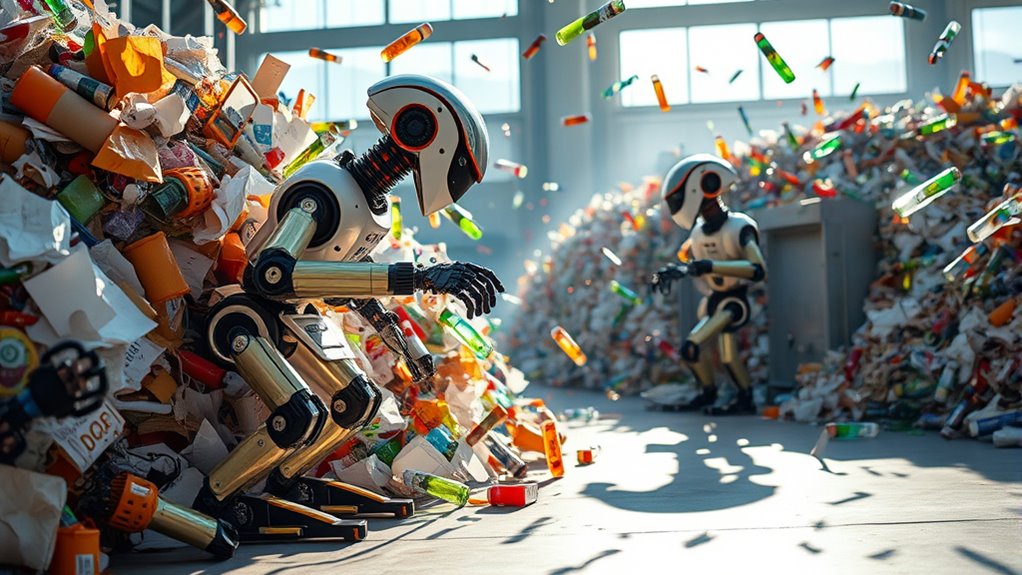

AI-driven recycling robots are changing waste sorting for the better. They use advanced algorithms to quickly identify and separate recyclables, outpacing human sorters. These robots improve sorting accuracy, reduce contamination rates, and enhance overall recycling efficiency. By continuously processing large volumes of materials, they help facilities meet growing waste demands while lowering operational costs. With their ability to optimize recycling processes, you’ll discover how these innovations are reshaping waste management practices.
Key Takeaways
- AI-driven recycling robots use advanced algorithms to identify and sort various recyclables more efficiently than humans.
- These robots significantly enhance sorting accuracy and reduce contamination rates, improving overall recycling output quality.
- Continuous operation without fatigue allows robots to handle large volumes of waste, increasing throughput in recycling facilities.
- Automation leads to lower operational costs, making recycling operations more economically viable and sustainable.
- Improved material recovery from AI sorting contributes to reduced energy consumption and lower greenhouse gas emissions.
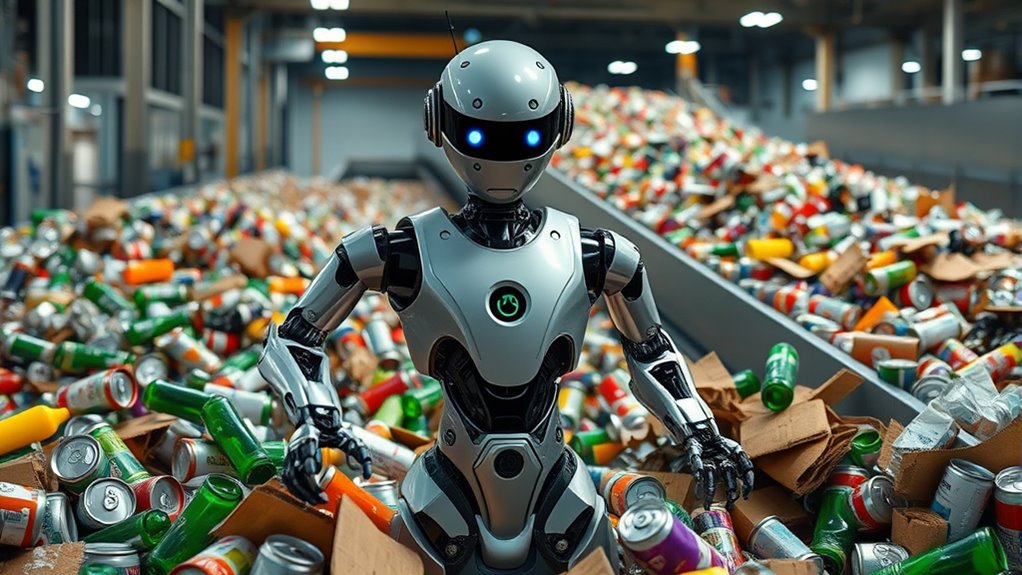
As the world grapples with increasing waste management challenges, AI-driven recycling robots are stepping in to revolutionize the way we sort and process materials. These robots utilize advanced algorithms and machine learning to identify, separate, and efficiently process recyclables, markedly improving material recovery rates. You might be surprised to learn how these machines can analyze various items at lightning speed, far surpassing human capabilities. This efficiency is vital, especially as global waste continues to rise, putting more pressure on landfills and recycling facilities.
AI-driven recycling robots are revolutionizing waste management, improving sorting efficiency and material recovery rates like never before.
By integrating AI technology, these robots not only enhance the accuracy of sorting but also reduce contamination rates in recycling streams. You know how frustrating it can be when a non-recyclable contaminates an entire batch; it often leads to more waste ending up in landfills. With AI’s ability to distinguish between different materials—like plastics, metals, and paper—waste management facilities can achieve higher purity levels in their recycled output. This precision in sorting not only boosts material recovery but also maximizes the overall effectiveness of the recycling process.
The environmental impact of adopting AI-driven recycling robots is profound. When you think about it, better material recovery directly translates into reduced extraction of raw materials, less energy consumption, and lower greenhouse gas emissions. By recycling more efficiently, you contribute to conserving natural resources and minimizing the carbon footprint associated with manufacturing new products. It’s a win-win scenario: you help the planet while fostering sustainable practices. Additionally, optimizing processes through high refresh rates can further improve operational efficiency in recycling facilities.
Moreover, these robots can operate continuously, handling large volumes of waste without the fatigue and errors that human workers might face. This capability means that recycling facilities can work at full capacity, processing more materials in less time. Consequently, the increased throughput helps address the growing demands for recycled materials in various industries, from packaging to construction. If you think about the economic benefits, this automation can also lead to lower operational costs for recycling plants, making them more viable in today’s competitive market.

Robot PU – Adorable AI Humanoid | STEM Toy Supports Micro:bit | Programmable, Interactive & Upgradable | Walks, Dances, Talks & Sings | Self-Balancing | Remote & Autopilot | 30+ Free Online Classes
Electrifying AI-Powered Dance: Moonwalks, spins, splits, and syncs to music with dazzling lights and expressive eyes.
As an affiliate, we earn on qualifying purchases.
As an affiliate, we earn on qualifying purchases.
Frequently Asked Questions
How Much Do Ai-Driven Recycling Robots Cost to Implement?
Implementing AI-driven recycling robots typically costs between $100,000 to $500,000, depending on your specific needs. You’ll need to conduct a thorough cost analysis to account for installation, maintenance, and training. Keep in mind that there are implementation challenges, like integrating the robots with your existing systems and ensuring they’re effective in sorting. By addressing these issues early, you can better manage costs and improve your recycling efficiency in the long run.
What Types of Materials Can These Robots Sort?
These robots can sort various materials, including plastics, metals, and even paper. They excel at plastic separation, efficiently identifying different types of plastics for recycling. Additionally, they utilize advanced metal detection to recognize and separate metals from other waste. By automating this process, you can markedly increase the efficiency of recycling operations, ensuring that valuable materials are properly sorted and processed for reuse in manufacturing.
How Do These Robots Communicate With Each Other?
These robots communicate using advanced collaboration protocols that enable seamless interaction. They share data about the materials they’re sorting, adjusting their actions based on real-time feedback from each other. By utilizing wireless connections, they can quickly relay information, ensuring efficient waste sorting. This teamwork minimizes errors and optimizes performance, so you can trust that the sorting process is precise and effective. You’ll see a significant improvement in recycling efficiency through their coordinated efforts.
What Is the Lifespan of an Ai-Driven Recycling Robot?
An AI-driven recycling robot can typically last around 7 to 10 years with proper care. Imagine a busy recycling facility where these robots tirelessly sort materials day in and day out. To keep them running smoothly, you’ll need regular robot maintenance and occasional technology upgrades to adapt to new materials and improve efficiency. By staying proactive with upkeep, you can maximize their lifespan and guarantee they perform at their best for years to come.
Are There Any Environmental Impacts From Using These Robots?
Yes, there are environmental concerns related to using these robots. While they improve waste sorting efficiency, energy consumption can be significant, especially if powered by non-renewable sources. You’ll want to weigh the carbon footprint of their operation and maintenance. However, if designed with sustainability in mind, these robots can reduce landfill waste and enhance recycling rates, ultimately benefiting the environment. Balancing their energy use with positive outcomes is essential.

Reverse Vending Machine, Smart Bottle Recycling Machine, Fast Can Return Kiosk, Deposit Return, Automated Plastic Aluminum Glass Sorting in Retail Stores Malls Campuses
Customizable Options – Our Reverse Vending Machines come in a variety of sizes, models and colors, and are…
As an affiliate, we earn on qualifying purchases.
As an affiliate, we earn on qualifying purchases.
Conclusion
So, as you watch those snazzy AI-driven recycling robots whirring around, sorting your trash like it’s a high-stakes game show, remember: we’ve come a long way from the days of tossing everything in a bin and hoping for the best. Sure, they might not fetch your morning coffee, but hey, they’ve got recycling down to a science! Who knew saving the planet could look so chic? Embrace the robots—they’re here to clean up our mess, one can at a time!
Table Tennis Robot, PUSUN Ping Pong Machine with Ball Recycling Facility, AI Voice Control, Built-in Preset Training Drills,EAL-time Spin/Speed/Landing Point Adjustment,Easy to Install
PUSUN table tennis robot is equipped with Triple serving moters, which ensures the stable and precise serving landing…
As an affiliate, we earn on qualifying purchases.
As an affiliate, we earn on qualifying purchases.
industrial waste sorting robot
As an affiliate, we earn on qualifying purchases.
As an affiliate, we earn on qualifying purchases.