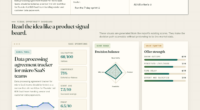
📊 Full opportunity report: The Coding Singularity Is Real — and Steeper Than Clark Presented on ThorstenMeyerAI.com — validation score, market gap, and execution plan.

TL;DR

Recent updates confirm AI models now perform core coding tasks at near-human levels, accelerating the coding singularity. Deployment realities are more complex, with significant progress but uneven adoption across industries.

Recent data confirms that AI systems now perform core software coding tasks at levels approaching or surpassing human capability, accelerating the realization of the coding singularity. This development is more advanced and widespread than previously estimated by Jack Clark, with capability and deployment trends pointing to a faster and broader impact.

Two key measures—SWE-Bench scores and METR time horizons—have been updated since Clark’s May 2026 publication, showing AI models like Mythos Preview achieving 93.9% on routine coding tasks, a significant increase from late 2023. Meanwhile, the METR forecast for AI task completion times has shortened from 100 hours to a median of around 24 hours, indicating capabilities are advancing faster than earlier projections suggested.

Clark’s assertion that most frontier lab engineers code predominantly through AI remains valid for routine tasks, but deployment across the broader industry is more bifurcated. While AI handles a large portion of familiar, routine coding, complex, unfamiliar, or architectural tasks still pose challenges, especially outside controlled benchmark environments. The data shows that AI’s proficiency is primarily in well-defined, routine coding, with performance gaps widening as problem complexity increases.

The Coding Singularity Is Real — and Steeper Than Clark Presented
DISPATCH / MAY 2026 CLARK EXTENDED · CODING SINGULARITY · THE OUTSIDE READ
▲ The Outside Read Coding Singularity · May 2026
The Coding Singularity · Read From Outside the Frontier Lab

The coding singularity is real —
and steeper than Clark presented.

Clark’s data is accurate. The trajectory is plausibly steeper. The deployment is bifurcated. The labor consequence is empirical. The substance is recursive self-improvement.

Jack Clark’s Import AI #455 has a section called “The coding singularity – capabilities over time” that does the heavy lifting for his automated AI R&D thesis. This is the read on Clark’s section from outside the frontier lab. The headline finding: the capability data is real and possibly understated, the deployment reality is more bifurcated than “everyone codes through AI” suggests, and the substantive event is not the coding part — it’s the opening of the recursive self-improvement loop the coding capability makes operational.

codeAI R&Drecursion The wedge · The mechanism · The singularity
The structural read
“Coding singularity” is the right name. Coding is the wedge. The thing on the other side of the wedge is automated AI R&D. The substantive event is recursive self-improvement, which the coding capability makes operational.
93.9%
SWE-Bench Verified · Claude Mythos Preview
From ~2% Claude 2 in late 2023 · ~47× in 30 months
16+ hr
METR 50% time horizon · Mythos Preview · May 8 2026
“Measurements above 16 hrs unreliable with current task suite”
4.3mo
Post-2023 doubling time · METR 1.1 methodology
Faster than Clark’s 7-month figure · 20% steeper curve
−20%
Software dev employment · ages 22-25 · Stanford
From late-2022 peak · age-inverted hiring · empirical
SWE-BENCH 2% → 93.9% IN 30 MONTHS · MYTHOS PREVIEW SATURATING THE BENCHMARK METR 30s → 12hr → 16+hr IN 4 YEARS · TASK SUITE BEING OUT-GROWN BY THE MODELS CURVE STEEPENING POST-2023 DOUBLING TIME RECALCULATED TO 4.3 MONTHS · COTRA REVISED UP DEPLOYMENT 74% GLOBAL DEV ADOPTION · CLAUDE CODE $2.5B RUN-RATE · CURSOR $1.2B ARR LABOR MARKET JUNIOR POSTINGS DOWN 40-50% · STANFORD 22-25 EMPLOYMENT −20% THE STRUCTURAL READ CODING IS THE WEDGE · RECURSION IS THE SINGULARITY SWE-BENCH 2% → 93.9% IN 30 MONTHS · MYTHOS PREVIEW SATURATING THE BENCHMARK METR 30s → 12hr → 16+hr IN 4 YEARS · TASK SUITE BEING OUT-GROWN
The capability data · confirmed and updated

Clark’s numbers check out. Post-publication data is sharper.

Both benchmark trajectories Clark cites are publicly verifiable. Both have moved meaningfully in the week since Import AI #455 was published. The trajectory is plausibly steeper than the essay presents.

The two capability charts · post-publication state
SWE-Bench at saturation noise floor; METR running out of measurement headroom.
▲ FIG. 01A · SWE-BENCH VERIFIED
Real GitHub issues · saturating
Late 2023 · Claude 2~2%
Dec 2025 · Opus 4.580.9%
Apr 2026 · GPT-5.3 Codex85.0%
Apr 2026 · Opus 4.787.6%
May 2026 · Mythos Preview93.9%
Update Clark doesn’t include: on SWE-Bench Pro (harder problems), Mythos 77.8%, Opus 4.6 53.4%, GPT-5.4 57.7%. The gap widens substantially as task difficulty rises. Private-codebase subset drops scores another 5-10 points.
▲ FIG. 01B · METR TIME HORIZONS
50% reliability task duration · out-growing the suite
2022 · GPT-3.5~30 sec
2023 · GPT-4~4 min
2024 · o1~40 min
2025 · GPT-5.2 (High)~6 hr
Feb 2026 · Opus 4.6 (corrected)~12 hr
May 8 2026 · Mythos Preview≥16 hr
End 2026 · Cotra revised median~24 hr
METR 1.1 update: post-2023 doubling time recalculated to 130.8 days (4.3 months) — 20% faster than Clark’s 7-month figure. “Measurements above 16 hours are unreliable with current task suite.” The measurement instrument is the rate-limiter.
The curve is steeper than Clark presented. And the measurement is the rate-limiter.
The deployment reality · outside the frontier lab
AI VoiceWriter – Smart Dictation & AI Writing Assistant for Windows & Mac | USB Dongle & Mobile App for Voice Input, Proofreading, Rewriting & Multilingual Support

AI VoiceWriter – Smart Dictation & AI Writing Assistant for Windows & Mac | USB Dongle & Mobile App for Voice Input, Proofreading, Rewriting & Multilingual Support

🎙️ Hands-Free Voice Typing for Windows & Mac – Powered by iOS & Android dictation technology, AI VoiceWriter…

As an affiliate, we earn on qualifying purchases.

As an affiliate, we earn on qualifying purchases.
Five-tool consolidated stack. Bifurcated by segment.

Clark: “frontier-lab researchers code entirely through AI systems.” Correct for frontier labs. Partially correct across the broader market — with substantial segment-level variance. The Cambrian explosion of 2024 has consolidated to five production-grade tools.

The five-tool consolidated stack · May 2026
Concentrated oligopoly with strong brand moats, high switching costs, and platform-grade revenue.
Claude CodeAnthropic · terminal-native
MCP-deep terminal agent. Strongest on hard tasks. The senior-engineer surface. CSAT 91%, NPS 54.
$2.5Brun-rate
18% global
24% US/CA
CursorAnysphere · IDE-native
VS Code fork with Composer 2. The default IDE agent. Credit-based billing the persistent complaint.
$1.2BARR
18% global
50%+ F500
GitHub CopilotMicrosoft · multi-model since Feb
Widest reach, slowest growth. Enterprise default. Now backs Claude + Codex in addition to GPT.
$$$est large
29% global
40% large ent
OpenAI CodexGPT-5.5 · post-Windsurf rebrand
Cloud-task-runner pattern. Async delegation surface. Acquired Windsurf for ~$3B in late 2025.
growing2026
~60% of
Cursor usage
DevinCognition · async autonomous
Most autonomous. Submit task → return PR. Highest demand on review discipline. $20 + $2.25/ACU.
nichegrowing
~5-10%
professional
Adoption by segment · the bifurcation
Frontier labs (Anthropic, OpenAI, DeepMind)
~100%
AI-native startups + Bay Area tech
~90%
Big tech (FAANG-adjacent)
60-75%
Mid-market enterprise
40-55%
Regulated industries (health/finance/gov)
15-35%
Long-tail enterprise + small IT shops
10-25%
The labor market consequence · observable, not theoretical
Amazon

programming AI tools for developers

As an affiliate, we earn on qualifying purchases.
As an affiliate, we earn on qualifying purchases.

Stanford data confirms what Clark’s data implies.

Junior software engineering postings down 40-50% since 2024. Age-inverted hiring relative to historical software engineering patterns. The data is unambiguous on the entry-level segment. The longer-term consequences are unresolved.

The labor market data · current as of May 2026
Total dev employment up moderately; composition shifted toward mid-career and senior workers.
−40 to −50%
Junior dev postings since 2024
Junior dev job postings on major platforms. Some companies eliminated the role entirely. Bootcamp placement rates have cratered. CS graduates taking significantly longer to find first roles.
Source · multiple platforms · aggregated
−50%
Big Tech fresh-grad hiring 3-year decline
Big Tech hired 50% fewer fresh graduates over 2022-2024 than prior three years. Companies adopting AI cut junior dev hiring 9-10% within six quarters. Pattern is statistically robust.
Source · Harvard research · SignalFire
6.1 / 7.5%
CS / CompEng graduate unemployment
Computer science 6.1% · computer engineering 7.5%. Higher than fine arts (3%), nursing (1.4%), elementary education (1.8%), civil engineering (1%). CS unemployment was below 3% for most of the prior decade.
Source · Federal Reserve · 2025
−6 / +9%
Age-inverted hiring 22-25 vs 35-49
AI-exposure occupations: 22-25 cohort employment −6%, 35-49 cohort +9%. Software engineering historically favored younger workers. Now older workers gaining hiring share. Stanford 22-25 dev employment −20% from late-2022 peak.
Source · Stanford Digital Economy Lab
The structural read · coding is the wedge
Amazon

automated code generation software

As an affiliate, we earn on qualifying purchases.

As an affiliate, we earn on qualifying purchases.

“Coding singularity” is the right name.

Clark calls it “the coding singularity.” The phrase is correct. The framing implies the significance is about coding. The actual significance is what the coding capability enables. Coding is the wedge. The thing on the other side is the singularity.

The recursive loop · what the coding singularity opens
Same capability that produces SWE-Bench saturation is the capability that produces automated AI R&D.
automates produces trains LOOP code SWE-BENCH 93.9% AI R&D METR 16+ HR HORIZON recursion SUCCESSOR TRAINS SUCCESSOR code’ NEXT GEN · BETTER the singularity RECURSIVE SELF-IMPROVEMENT

SWE-Bench saturating means the broader AI engineering capability has reached saturation. AI R&D is engineering with model training as the target output. The coding singularity is what you see. The recursive self-improvement loop is what you are looking at.

What this means · five audiences
Amazon

AI-powered code review tools

As an affiliate, we earn on qualifying purchases.

As an affiliate, we earn on qualifying purchases.

Five audiences. Five different obligations.

The coding singularity has specific implications by stakeholder. The institutional response cycle in most democracies is longer than the cadence the data implies.

Stakeholder implications by audience
Calibrated to the empirical data, not to either techno-optimist or doomer framings.
▲ FOR SOFTWARE
ENGINEERS
Bilingual engineer beats monolingual engineer.
“Code quality” is depreciating; “code review quality” is appreciating. Skills that retain value: engineering judgment, architecture, regulatory understanding, agent supervision. AI tool fluency is table stakes, not differentiation. Develop agent orchestration skills now. The bilingual (direct coding + agent orchestration) engineer outperforms either monolingual extreme.
▲ FOR SOFTWARE
BUSINESSES
Engineering capacity stops being the moat.
30-50% productivity gains in serious AI-tool deployments. Competitive advantages that depended on engineering capacity are eroding. What replaces them: distribution, data network effects, domain specialization, regulatory expertise, customer relationships, brand. SaaS moat strategy needs explicit re-examination. The middleware layer (Cursor, Claude Code) is the new moat-rich position.
▲ FOR POLICY
PROFESSIONALS
The empirical question is resolved.
Labor market data resolves whether AI is affecting cognitive-work employment. It is. The policy response — reskilling, transition support, social safety net, education updates — needs to operate on the cadence the data implies. “Missing generation” problem is the near-term concrete consequence. Public sector tech employment may need to maintain pipelines private sector employers are cutting.
▲ FOR
INVESTORS
Productivity story misses the structural story.
(a) Frontier-lab equity captures upside if alignment is solved. (b) AI coding platforms are the immediate value-extraction layer — Cursor $1.2B ARR, Claude Code $2.5B run-rate. Moat real, defensibility against new model entrants the open question. (c) Human-labor-heavy software businesses face structural margin pressure. The thesis reading this as a productivity story underperforms the thesis reading it as structural reorganization.
▲ FOR
EVERYONE ELSE
If you wanted unambiguous evidence, this is it.
Public benchmark data + labor market data + deployment data + tool revenue data is the strongest available evidence that the AI transition is operational rather than speculative. The window for understanding and positioning is the same 32-month window the Clark series synthesis describes. Institutional response cycles in most democracies are longer than 32 months. What gets built during the window determines the equilibrium.

The coding singularity is the canary. The mine is what matters. Software engineers and developer-tool investors are paying attention. Alignment researchers and policymakers are paying less attention than the math suggests they should.

— The structural read · May 2026

Implications of Accelerated AI Coding Capabilities

The rapid improvement in AI coding ability signifies a near-term shift in software development, potentially automating a large portion of routine engineering work. This could reshape labor markets, influence software industry productivity, and prompt policy discussions on AI regulation. However, the uneven deployment and remaining technical challenges mean the full impact will unfold over the next 12 to 24 months.

Recent Data and Evolving Capabilities in AI Coding

Since Clark’s initial May 2026 analysis, updated benchmarks and forecasts have emerged. SWE-Bench scores now consistently show models like Mythos Preview reaching near 94% on routine tasks, with the difficulty gap widening at higher levels of challenge. The METR forecast, revised by Cotra, indicates AI task completion times are shortening, with a median of 24 hours predicted for the end of 2026, compared to earlier estimates of 100 hours based on outdated doubling times. These updates reflect a faster pace of AI capability growth than previously understood, emphasizing the importance of monitoring deployment in real-world settings.

“The capability data confirms that AI systems now handle routine software engineering at near-human levels, and the pace of improvement is faster than earlier projections suggested.”

— Thorsten Meyer

Unresolved Questions About Deployment and Complexity

It remains unclear how quickly AI capabilities will translate into widespread industry adoption, especially for complex, proprietary, or architectural coding tasks. The current data primarily reflects performance on benchmarked, routine tasks, and real-world deployment may lag or face unforeseen obstacles. Additionally, the pace at which AI can autonomously improve and self-replicate beyond current models is still uncertain.

Next Steps for Monitoring AI Coding Progress and Adoption

Researchers and industry observers will focus on tracking deployment trends across diverse software sectors, especially for complex projects. Upcoming benchmark updates and real-world case studies over the next 12 to 24 months will clarify how quickly AI can handle more sophisticated engineering tasks and whether the recursive self-improvement loop accelerates further. Policy discussions and workforce planning will also intensify as these developments unfold.

Key Questions

How close are AI systems to replacing human software engineers?

AI systems are currently capable of handling routine coding tasks at near-human levels, but complex, architectural, and proprietary work still require human expertise. Full replacement is not imminent, but automation will significantly reshape workflows.

What are the main barriers to broader deployment of AI coding systems?

Technical challenges in handling unfamiliar or complex codebases, integration into existing workflows, trust and safety concerns, and the need for robust validation are primary barriers to widespread adoption.

Will AI-driven coding lead to significant job displacement?

While some routine roles may diminish, experts expect a transformation of software engineering roles, emphasizing oversight, architecture, and integration tasks, rather than outright job elimination.

How reliable are current benchmarks in predicting real-world performance?

Benchmarks like SWE-Bench provide valuable insights into AI capabilities but may overestimate performance in uncontrolled, real-world environments. Deployment will depend on how well models adapt to diverse, complex tasks.

What are the ethical considerations surrounding autonomous AI coding?

Ensuring safety, accountability, transparency, and preventing misuse are key concerns, especially as AI systems gain more autonomy in critical software development processes.

Source: ThorstenMeyerAI.com

You May Also Like

AI is being used to resurrect the voices of dead pilots

The NTSB temporarily paused public access after AI-generated voices of pilots killed in a 2025 crash circulated online, raising safety and ethical concerns.

Robotic Swarms: Coordinated Bots for Complex Tasks

Harness the power of robotic swarms for efficient task coordination—discover how these innovative bots could revolutionize industries and what lies ahead.

DNA Data Storage: Archiving the Digital World in Molecules

Learn how DNA data storage revolutionizes digital archiving with unparalleled capacity and longevity, leaving you to wonder about its future implications.

Smart Locks Are Convenient, but Here’s What Really Matters First

Protect your home with the right smart lock by focusing on battery life and installation ease—discover what truly matters first.