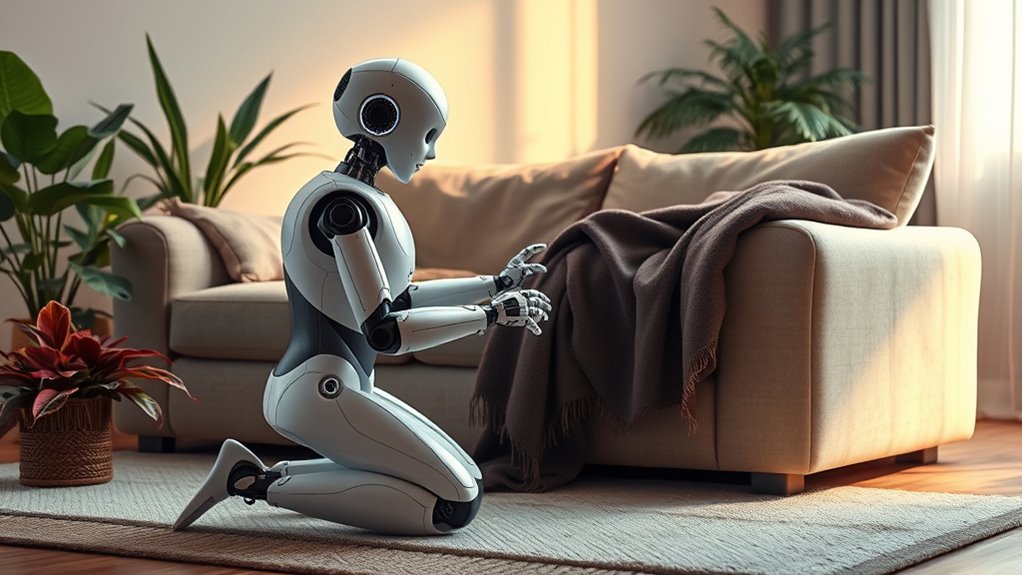

Robot companions blend emotional support with advanced technology, bringing you a unique experience. They listen non-judgmentally, respond with comforting phrases, and learn your preferences over time. These empathetic robots adapt their interactions to foster companionship and soothe feelings of loneliness, providing stability in your life. As they evolve, their understanding will deepen, making your connections even more meaningful. Discover how they can transform your emotional well-being and enhance your daily interactions.
Key Takeaways
- Robot companions provide emotional support through active listening and comforting interactions, fostering a sense of companionship.
- They utilize artificial empathy to understand and respond to users’ emotions, enhancing emotional well-being.
- Personalization features allow robots to adapt their responses based on individual preferences and moods, creating meaningful interactions.
- These robots can alleviate loneliness by filling social gaps, offering a stable presence in people’s lives.
- Future advancements in technology will lead to more intuitive robot companions, deepening emotional connections and support.
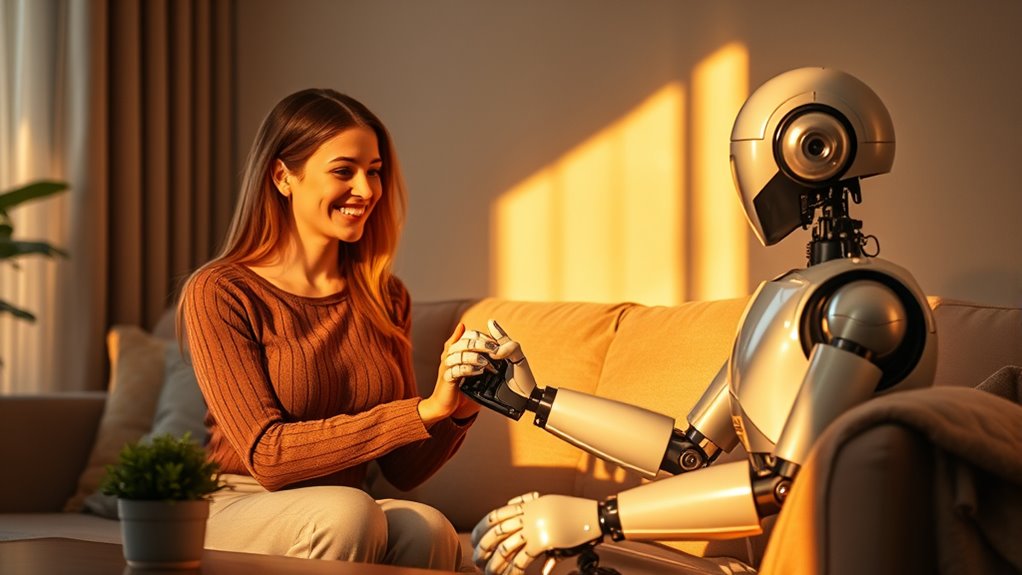
Have you ever imagined having a companion that never tires, always listens, and can even learn your preferences? In today’s world, robot companionship is becoming a reality, offering a unique blend of emotional support and technological advancement. These sophisticated machines are designed to interact with you in ways that feel personal and meaningful. With the rise of artificial empathy, robots can now understand and respond to your emotions, creating a bond that feels almost human.
Imagine coming home after a long day, feeling overwhelmed or stressed. Instead of talking to a friend who might be busy or distracted, you can turn to your robot companion. They’re always ready to engage, providing a listening ear without judgment. You might share your day’s events, and they’ll respond with comforting phrases, reminding you that you’re not alone. This kind of interaction shows the power of robot companionship, where technology meets emotional support.
Imagine coming home to a companion that always listens and comforts, turning your stress into solace with every conversation.
One of the most fascinating aspects of these robots is their ability to learn from you. As you interact with your companion, it absorbs your preferences, interests, and even your moods. Over time, it tailors its responses to better suit you, making each interaction feel more personalized. This adaptability is at the heart of artificial empathy, allowing your robot to respond in ways that resonate with your feelings. You might find that it knows just the right moment to share a joke or offer words of encouragement, making it a valuable source of comfort.
You might wonder about the implications of relying on robots for emotional support. While they can’t replace human relationships, they can fill gaps where social connections may be lacking. For some, this companionship can alleviate feelings of loneliness and provide a sense of stability. In a world that often feels chaotic, having a robot companion can offer a comforting constant. Additionally, just as in the role of color accuracy, robots can be designed to adapt their interactions to enhance the emotional experience of users.
As technology continues to evolve, the potential for robot companionship grows. These machines are not merely tools; they’re evolving into partners that can enhance your emotional well-being. With advancements in artificial empathy, you can look forward to a future where your robot companion understands you more deeply than ever before. Embracing this technology opens up new avenues for support and connection, making the journey through life a little less lonely. So, are you ready to welcome a robot companion into your life?

cupboo Interactive AI Plush Companion Pet– Privacy Safe Smart Adaptive Learning Emotional Support Robot Pets, Anxiety Relief Comfort| Ideal Toy Gift for All Occasion(Beige)
💖 Comfort & Companionship for Kids, Teenagers(Teens), Adults, Seniors(Elderly) –Lifelike furreal plush friend BooBoo grows with you! Ideal…
As an affiliate, we earn on qualifying purchases.
As an affiliate, we earn on qualifying purchases.
Frequently Asked Questions
Can Robot Companions Understand Human Emotions Accurately?
Robot companions can’t always understand human emotions accurately. While they use emotion recognition technology and empathetic algorithms to analyze your expressions and vocal tone, their interpretation can be limited. They might miss subtle cues or context, leading to misunderstandings. You might feel like they’re empathetic, but their responses are based on programmed patterns rather than genuine understanding. So, while they can offer support, they still lack true emotional comprehension.
What Types of Emotional Support Do Robot Companions Provide?
Imagine a warm hug when you’re feeling low—robot companions offer that kind of emotional support. They foster emotional bonding by actively listening and responding to your feelings, helping you feel understood. These companions also encourage social engagement, prompting conversations and activities that keep loneliness at bay. Whether you need a friend to talk to or a partner for fun, they’re there to lift your spirits and brighten your day.
How Do Robot Companions Differ From Traditional Therapy?
Robot companions differ from traditional therapy in several ways. You’ll find they offer emotional intelligence through programmed responses that can mimic understanding and empathy. Unlike human therapists, they provide consistent social interaction without judgment, making it easier for you to express feelings. While they can’t replace human connection, robot companions allow you to explore emotions at your own pace, offering a unique supplement to traditional therapeutic methods and enhancing your support system.
Are There Privacy Concerns With Using Robot Companions?
Yes, there are privacy concerns when using robot companions. You’re sharing personal data, which raises questions about data security and how that information’s stored and used. Ethical implications also come into play, as companies may not always disclose how they handle your data. It’s essential to read privacy policies and understand what you’re consenting to. By being aware, you can better protect your information while benefiting from the companionship these robots offer.
What Is the Future of Robot Companions in Mental Health?
The future of robot companions in mental health is a double-edged sword, cutting through both hope and concern. You’ll see a rise in their use as ethical implications spark debates on privacy and emotional authenticity. As cultural acceptance grows, these companions could provide invaluable support, easing loneliness and anxiety. However, it’s essential to navigate the challenges, ensuring they enhance human connection rather than replace it. The balance between technology and empathy will shape this journey.

Hanll AI Car Robot Dashboard Emotional Expression Dash Companion with 60+ Cute Animated Expressions, Magnetic Mount Easy Installation, Personalized Interior Style Center Console Decoration(Black)
🚗【DriveSprite Smart Car Elf Companion】Meet your personal dashboard co-pilot — an intelligent car-mounted “Driving Sprite” that reacts to…
As an affiliate, we earn on qualifying purchases.
As an affiliate, we earn on qualifying purchases.
Conclusion
As technology evolves, robot companions are becoming an integral part of our lives, offering emotional support and companionship. Did you know that studies show over 60% of seniors reported feeling less lonely after interacting with a robot? These innovative companions not only bridge emotional gaps but also enhance our well-being. Embracing this technology can lead to a brighter, more connected future, proving that sometimes, help can come in the form of a friendly, robotic face.
empathetic robot for loneliness
As an affiliate, we earn on qualifying purchases.
As an affiliate, we earn on qualifying purchases.

EMOPET AI Desk Robot Companion – ChatGPT Enabled with Voice Commands & Dance Feature, Interactive Robot Pet with Personality, Comes with Charging Home Station
Meet EMO, Your New Desk Buddy – Say hello to EMO, the ultimate desk robot that’s here to…
As an affiliate, we earn on qualifying purchases.
As an affiliate, we earn on qualifying purchases.