
TL;DR
Get ready for Prime Big Deal Days — try Prime free
Exclusive member deals on October 6–7, plus fast free delivery. Cancel anytime.
As an affiliate, we earn on qualifying purchases.
Michael Wooldridge, a leading AI expert, states he does not worry about a robot takeover. He emphasizes the importance of understanding AI and game theory in assessing risks and interactions with big tech.
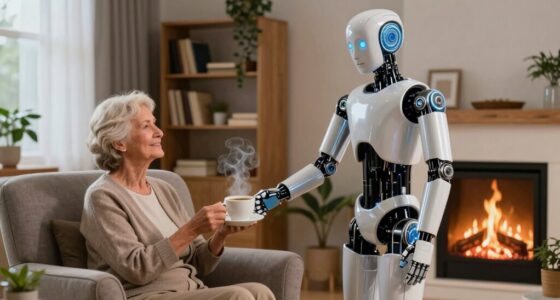
Oxford professor Michael Wooldridge has publicly stated that he does not worry about a robot takeover, countering common fears about artificial intelligence and emphasizing the importance of understanding AI’s capabilities and limitations.
In an interview with The Guardian, Wooldridge explained that fears of AI causing a robot uprising are largely unfounded, citing the current state of AI technology and its constraints. He highlighted that AI systems, including those developed by big tech companies, are designed with safety and control measures and that the notion of autonomous, malicious robots is a misconception.
Wooldridge, an expert with over 30 years of experience in artificial intelligence and game theory, emphasized that AI’s development is guided by human oversight and ethical considerations. He pointed out that the focus should be on understanding AI’s strategic interactions, rather than sensational fears of machine rebellion. Wooldridge also discussed how game theory models, such as the ‘zero-sum game,’ are often misunderstood and misapplied in public discourse, leading to exaggerated fears about AI and tech dominance.
Why It Matters
This statement matters because it offers a measured perspective amid widespread anxiety about AI and automation. Wooldridge’s expertise provides reassurance that current AI developments are manageable and that fears of a robot uprising are largely unfounded. It also underscores the importance of informed public debate and responsible AI development, especially as big tech firms continue to advance AI capabilities.
As an affiliate, we earn on qualifying purchases.
Background
Public fears about AI have surged in recent years, fueled by media portrayals and speculative scenarios of autonomous robots taking over. However, experts like Wooldridge argue that actual AI systems remain narrow and task-specific, lacking the general intelligence or autonomy depicted in science fiction. The discussion around AI safety and regulation is ongoing, with policymakers increasingly interested in establishing frameworks to prevent misuse or unintended consequences. Wooldridge’s comments come at a time when AI development is accelerating, but concrete evidence of imminent danger remains absent.
“I don’t worry about a robot takeover. The fears are exaggerated; current AI is far from autonomous or malicious.”
— Michael Wooldridge
“Game theory shows us that most interactions, including those involving big tech, are complex but manageable, not zero-sum or catastrophic.”
— Michael Wooldridge
game theory strategy board games
As an affiliate, we earn on qualifying purchases.
As an affiliate, we earn on qualifying purchases.
What Remains Unclear
It remains unclear how big tech companies will continue to develop AI and whether future innovations might introduce new risks. Wooldridge acknowledges that AI safety is an ongoing concern but emphasizes that current systems are under human control. The possibility of unforeseen developments or misuse by malicious actors is still a subject of debate and research.
As an affiliate, we earn on qualifying purchases.
What’s Next
Next steps include ongoing regulation and oversight of AI development by policymakers, as well as continued research into AI safety and ethics. Wooldridge suggests that public education about AI’s actual capabilities will help mitigate fears and promote responsible innovation. Monitoring how big tech implements safety measures will be critical in the coming years.
AI and machine learning educational kits
As an affiliate, we earn on qualifying purchases.
As an affiliate, we earn on qualifying purchases.
Key Questions
Does Wooldridge believe AI will ever become autonomous enough to threaten humans?
Wooldridge states that current AI systems are not autonomous or malicious and that fears of a robot takeover are exaggerated. He believes that future risks depend on how AI is developed and managed.
What does Wooldridge say about the role of big tech in AI development?
He emphasizes that big tech companies are responsible for implementing safety measures and that their development of AI should be guided by ethical considerations and oversight.
How does game theory relate to AI and big tech interactions?
Wooldridge explains that game theory models, such as the ‘zero-sum game,’ help understand strategic interactions between parties, including corporations and nations, but are often misunderstood in public discourse.
What are the main concerns about AI safety right now?
The main concerns include misuse by malicious actors, unintended consequences, and the need for effective regulation to ensure AI systems remain under human control.
Source: Guardian Life
Fall yard work Picks
leaf blowers
As an affiliate, we earn on qualifying purchases.