
📊 Full opportunity report: How Vision-Model Inspections Can Reduce Food Safety Risks on IdeaNavigator AI — validation score, market gap, and execution plan.

Get school and study supplies delivered free — and shop member deals
- Fast, free delivery on millions of items
- Access to Prime Big Deal Days deals on October 6–7
- Prime Video, Amazon Music and more included
TL;DR
A new approach using AI vision models to verify kitchen safety inspections is being tested in multi-unit restaurants. Early results suggest it can improve accuracy and accountability, reducing food safety risks.
Multi-unit restaurant groups are beginning to test vision-model kitchen walk-through inspections, which could verify safety compliance more reliably than traditional checklist methods. This development aims to address longstanding issues with unverified safety checks and improve food safety standards across the industry.
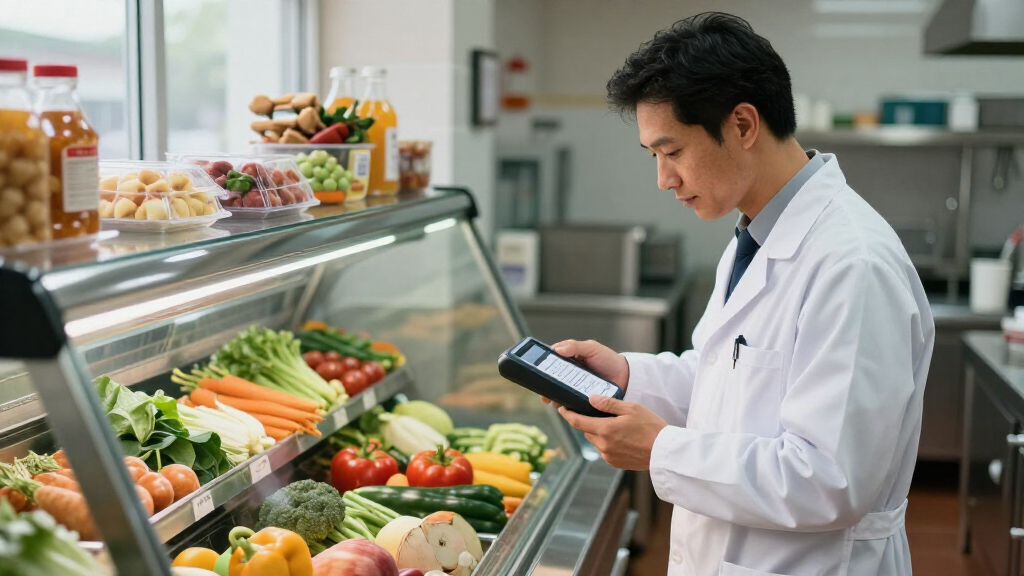
The proposed system involves managers taking photographs during morning safety inspections, covering prep stations, storage areas, and sinks. For more on safety standards, see Pesticide-Residue Compliance As A Pillar Of Food Safety And Trust. A vision-model AI then analyzes these images to identify violations such as uncovered containers, propped cooler doors, or missing date labels. The AI flags violations with severity ratings and generates timestamped reports for each location, enabling trend analysis across multiple sites.
According to an anonymous source involved in the pilot, the system is designed to turn routine walk-throughs into verifiable data, reducing reliance on subjective checklists. Ensuring pesticide residue compliance is also crucial for food safety here. The pilot will run for two weeks across five restaurant locations, with results compared against findings from a hired health-inspection consultant to assess accuracy and effectiveness. Learn more about food safety standards and compliance here.
Potential Impact on Food Safety Verification Processes
If successful, this AI-driven inspection method could significantly improve the accuracy of daily safety checks, reducing the incidence of overlooked violations. It offers a way to create objective, timestamped records that can be reviewed and analyzed over time, helping restaurant groups meet compliance standards more reliably and potentially lowering the risk of foodborne illnesses.
As an affiliate, we earn on qualifying purchases.
Current Challenges in Restaurant Food Safety Checks
Traditional safety inspections rely on manual checklists filled out by staff, which are often prone to inaccuracies and unverified claims. Managers may tick boxes without thoroughly inspecting, leading to overlooked violations that only surface during official health inspections. Recent industry reports highlight persistent gaps in daily safety monitoring, contributing to food safety risks and regulatory penalties.
The introduction of AI vision models aims to address these issues by providing automated, verifiable assessments based on photos taken during routine inspections. This approach leverages advances in AI image analysis that can reliably identify common violations in kitchen environments.
“Transforming walk-through photos into verifiable inspection data could revolutionize how restaurants ensure food safety.”
— an anonymous researcher
As an affiliate, we earn on qualifying purchases.
Uncertainties Surrounding AI Inspection Accuracy
It is not yet clear how well the vision-model AI will perform across diverse kitchen environments or with different image quality levels. The pilot’s results will determine whether the system can reliably flag violations without false positives or negatives, and whether staff can seamlessly integrate photo-taking into their routines.
As an affiliate, we earn on qualifying purchases.
Next Steps for Validation and Adoption
The two-week pilot will compare AI-flagged violations with expert assessments. If results show high accuracy, the restaurant group plans to expand testing to more locations and refine the system. Further validation could lead to broader industry adoption, potentially transforming routine safety checks into automated, verifiable processes.
restaurant safety compliance monitor
As an affiliate, we earn on qualifying purchases.
As an affiliate, we earn on qualifying purchases.
Key Questions
How does the AI vision model identify safety violations?
The AI analyzes photographs taken during inspections to detect common violations such as uncovered food, improper storage, or missing labels, assigning severity ratings based on the findings.
Will this system replace human inspectors?
Currently, the system is intended to supplement human inspections, providing verifiable data that can enhance accuracy and accountability. It is not expected to fully replace human judgment at this stage.
What are the benefits of using AI for kitchen safety checks?
Benefits include objective, timestamped records of inspections, reduced reliance on subjective checklists, and the ability to identify violations more consistently across multiple locations.
When will this technology be widely available?
The pilot results will determine the timeline for broader deployment. If successful, the technology could be offered commercially within the next year.
Are there privacy concerns with taking photos in kitchens?
Privacy considerations are being addressed by focusing on safety violations and ensuring photos are stored securely and used solely for inspection purposes.
Source: IdeaNavigator AI
Halloween Picks
halloween
As an affiliate, we earn on qualifying purchases.