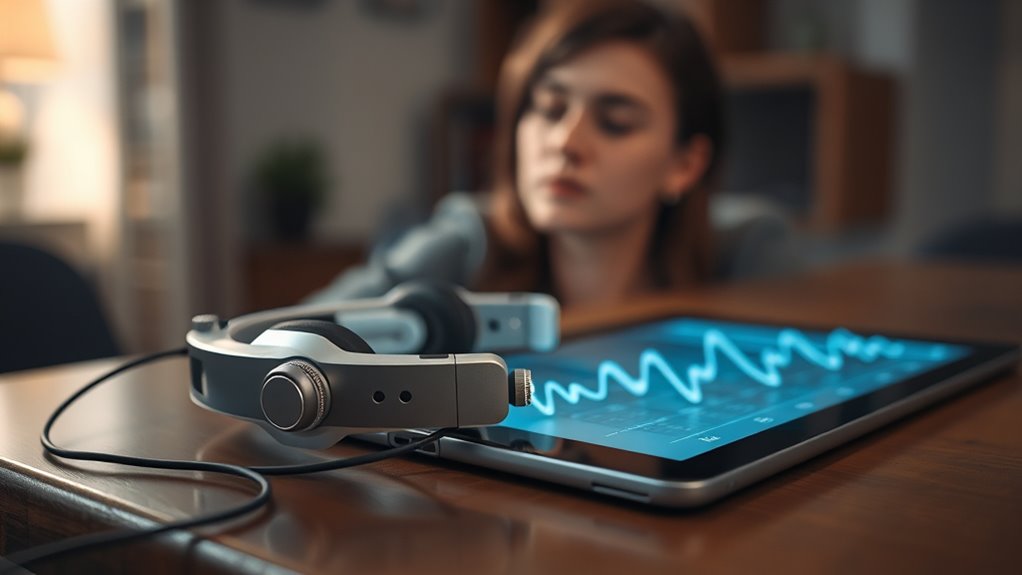

Brain-computer interfaces (BCIs) let you control devices with just your thoughts. By detecting your brain’s electrical signals, BCIs translate your neural activity into commands for computers, allowing you to move cursors, type messages, and interact with technology more naturally. This innovative technology can markedly improve accessibility for those with mobility impairments and open up new avenues for communication and control. Discover the exciting implications and ethical considerations that come with this groundbreaking advancement.
Key Takeaways
- Brain-Computer Interfaces (BCIs) translate brain signals into commands, allowing users to control devices through thought alone.
- Sensors detect electrical impulses from the brain, which are processed and interpreted by algorithms to execute specific actions.
- BCIs enhance accessibility for individuals with mobility impairments, enabling them to interact with technology independently.
- Ethical considerations include privacy concerns and the need for guidelines to protect users’ neural data from misuse.
- Future advancements may enhance cognitive abilities, but equitable access and ethical frameworks are essential to prevent societal divides.
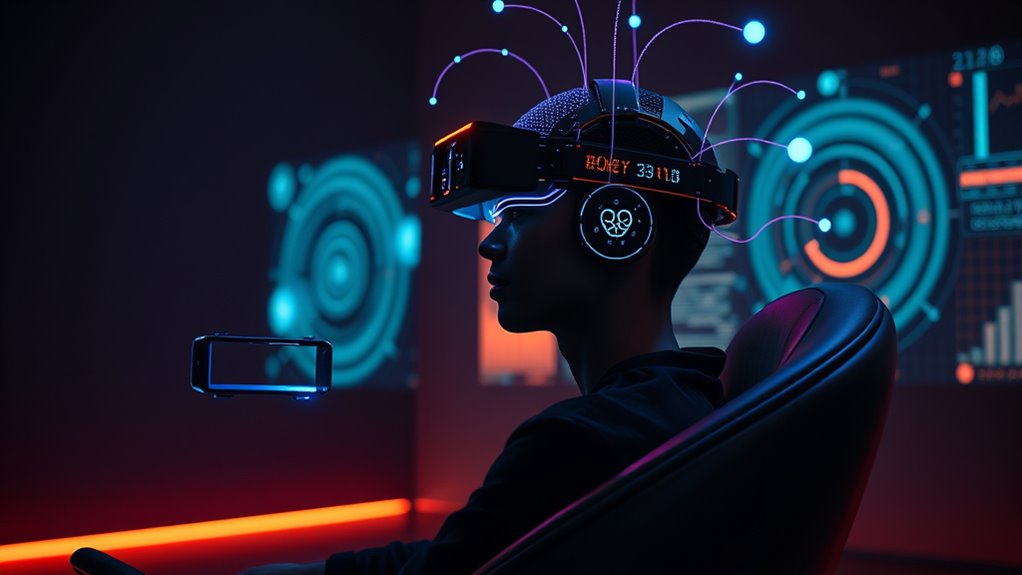
Have you ever wondered how your thoughts could directly control a computer? Imagine sitting in front of a screen, and with just a flicker of your mind, you’re able to move the cursor, select options, or even type messages. This isn’t just a sci-fi fantasy; it’s the reality of brain-computer interfaces (BCIs). These innovative technologies harness neural signal processing to translate your brainwaves into actions that computers can understand. By detecting electrical impulses in your brain, BCIs enable a direct line of communication between you and the digital world.
Imagine controlling a computer with just your thoughts—brain-computer interfaces make this astonishing possibility a reality.
The process begins with sensors that pick up neural signals. These signals are then processed and interpreted using sophisticated algorithms. As you think about moving your hand, for instance, the BCI detects the corresponding neural activity and translates it into a command for the computer. This incredible technology opens up new avenues for controlling devices, particularly for individuals with mobility impairments. You could change the way people interact with technology, enhancing accessibility and independence. Recently, support hours for various entertainment platforms have begun to incorporate BCI technology for improved user interaction.
But with great power comes great responsibility, and that brings us to ethical considerations. As BCIs continue to evolve, questions arise about privacy, consent, and the potential for misuse. Who owns the data generated by your thoughts? If a third party accesses your neural signals, can they manipulate your decisions or invade your privacy? These are critical issues that society needs to address as we move forward with this technology. It’s essential to establish guidelines to protect users and guarantee that BCIs are developed responsibly.
Moreover, consider the implications of enhancing cognitive capabilities through BCIs. While the idea of boosting memory or processing speed sounds appealing, it raises concerns about fairness and equality. If only a select few have access to enhanced cognitive functions, could it lead to a divide in society? Ethical frameworks must be established to guarantee that these technologies are accessible and beneficial for everyone, not just a privileged few.
As you explore more in the world of brain-computer interfaces, you’ll discover a blend of excitement and caution. While the potential for improving lives is immense, it’s vital to navigate the ethical landscape thoughtfully. The future of BCIs holds promise, but it’s up to all of us to guarantee that this promise is realized in a responsible and equitable manner. So, are you ready to embrace the power of your thoughts?

Brain–Computer Interfaces Made Practical: Signal Processing, ML Models, and Real-Time BCI Systems for Engineers
As an affiliate, we earn on qualifying purchases.
As an affiliate, we earn on qualifying purchases.
Frequently Asked Questions
What Are the Ethical Implications of Brain-Computer Interfaces?
The ethical implications of brain-computer interfaces revolve around privacy concerns and consent challenges. You’ve got to consider how these technologies might invade personal thoughts or data. Ensuring that users fully understand what they’re consenting to is essential, as people might not grasp the risks involved. Furthermore, issues like data ownership and potential misuse can complicate matters. It’s critical to address these concerns to create a responsible framework for using such powerful technology.
How Do Brain-Computer Interfaces Affect Mental Health?
Brain-computer interfaces can both positively and negatively affect mental health. For instance, studies show that 70% of users report improved emotional regulation, helping them manage anxiety and depression. However, reliance on these technologies might lead to cognitive enhancement expectations, creating pressure to perform. Balancing the benefits with potential dependency is essential. As you explore these tools, be mindful of how they influence your mental well-being and endeavor for a healthy relationship with technology.
Can Brain-Computer Interfaces Be Hacked?
Yes, brain-computer interfaces can be hacked. They’re susceptible to cybersecurity vulnerabilities, which means malicious actors might exploit weaknesses to access sensitive data. This raises significant privacy concerns since your thoughts and intentions could potentially be intercepted or manipulated. As these technologies evolve, you need to stay informed and vigilant about the security measures in place to protect your personal information and guarantee your mental privacy remains intact.
What Are the Costs Associated With Brain-Computer Interfaces?
When you consider brain-computer interfaces, the costs can be quite surprising. A thorough cost analysis reveals not only the hefty price tag of the technology itself but also the significant infrastructure requirements. You might need specialized facilities, trained personnel, and ongoing maintenance, all adding up quickly. As you dive deeper into this field, you’ll uncover hidden expenses that could catch you off guard. Are you ready for the financial commitment?
How Long Does It Take to Train a Brain-Computer Interface?
Training a brain-computer interface typically takes several weeks to months, depending on the individual’s learning curve and the system’s complexity. You’ll spend time practicing and refining your skills to improve accuracy and responsiveness. As you engage with the system, you’ll notice gradual improvements, but patience is key. Everyone’s experience varies, so don’t get discouraged if it takes longer than expected; consistency will help you achieve better results in the end.
neural signal BCI headset
As an affiliate, we earn on qualifying purchases.
As an affiliate, we earn on qualifying purchases.
Conclusion
In the dance between mind and machine, brain-computer interfaces bridge the gap, turning thoughts into actions like whispers becoming roars. Imagine the thrill of controlling devices with just a flicker of intention, opening doors to possibilities once confined to dreams. As technology weaves itself into the fabric of our consciousness, we stand on the cusp of a new era, where the power of thought can reshape our world, making the impossible, possible. Embrace the future—it’s just a thought away.

Nulea M501 Wireless Trackball Mouse, Rechargeable Ergonomic, Easy Thumb Control, Precise & Smooth Tracking, 3 Device Connection (Bluetooth or USB Receiver), Compatible for PC, Laptop, Mac, Windows.
Ergonomic Design with Smooth Thumb Control: Move your cursor by the smooth trackball instead of moving your wrist…
As an affiliate, we earn on qualifying purchases.
As an affiliate, we earn on qualifying purchases.

Neurable Explained for Beginners: A Practical Guide to How Brain-Computer Interfaces Are Revolutionizing Gaming, Healthcare, and Accessibility
As an affiliate, we earn on qualifying purchases.
As an affiliate, we earn on qualifying purchases.