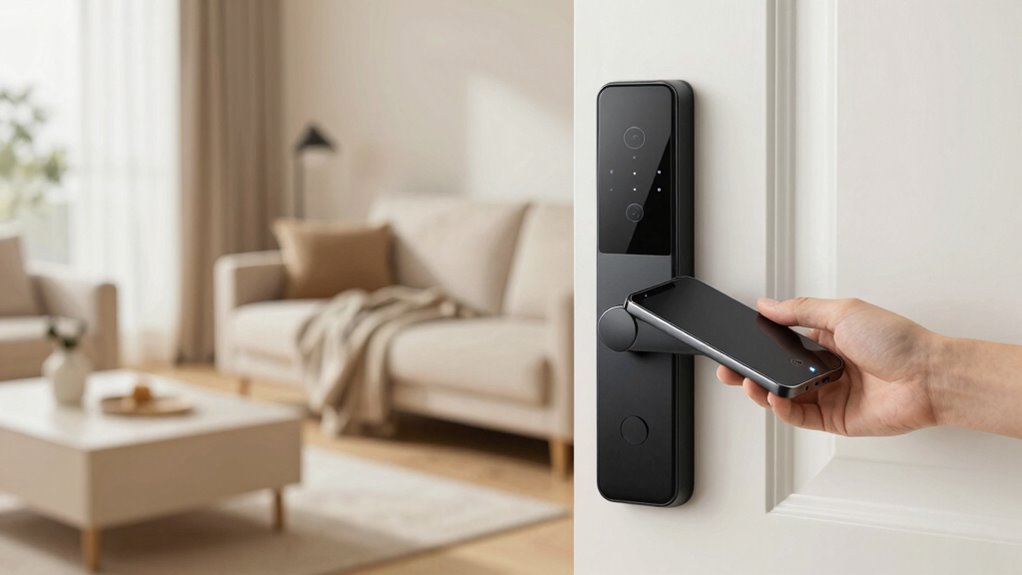

When choosing a smart lock, focus first on battery life and efficiency, as these guarantee reliable performance and reduce maintenance. Look for models with long-lasting batteries or alerts for low power, and check how easily they can be replaced or recharged. Also, consider installation ease—you want a model that’s quick to set up without hassle. By prioritizing these factors, you’ll enjoy a dependable smart lock that fits seamlessly into your life, with more tips waiting if you look further.
Key Takeaways
- Prioritize battery life and alerts to ensure reliable operation without frequent maintenance.
- Choose energy-efficient models to extend battery longevity and reduce replacements.
- Consider installation simplicity for quick, hassle-free setup and ongoing maintenance.
- Assess power consumption to optimize performance and prolong device lifespan.
- Verify ease of setup to promote proper use and long-term reliability.
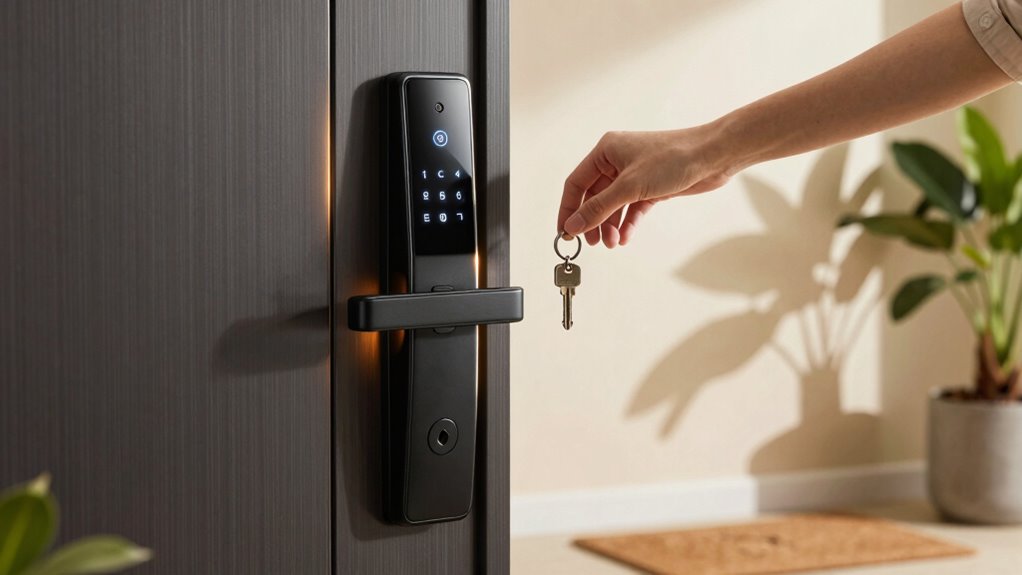
Are you overwhelmed by the countless options when choosing a smart lock? With so many brands, features, and styles available, it’s easy to feel lost before even making a decision. But before you get caught up in the bells and whistles, there are a few key factors you should focus on first. Two of the most important are battery life and the installation process. These elements can make or break your experience, so understanding their significance will help you choose a lock that truly fits your needs. Battery life is vital because it directly impacts how reliable your smart lock will be. You don’t want to find yourself locked out because the batteries died unexpectedly. Look for models that offer long-lasting batteries or have low-battery alerts. Some locks use standard batteries, like AA or AAA, which are easy to replace, while others have rechargeable options. Knowing how often you’ll need to change or recharge the batteries can save you headaches down the road. If a lock’s battery life is short, it might require frequent maintenance, which defeats the purpose of having a convenient smart lock in the first place. So, prioritize those with good battery longevity and clear indicators for when batteries need replacing. Additionally, understanding battery management features can help you better plan for maintenance and avoid surprises. This is especially important because battery technology continues to evolve rapidly, offering more efficient options. A good understanding of battery efficiency can guide you toward more sustainable choices. It’s also helpful to consider how the lock’s power consumption impacts overall performance and longevity. Next, consider the installation process. You want a smart lock that’s straightforward to install without needing special tools or professional help. Many models are designed for DIY installation, fitting directly over your existing deadbolt or door latch. But some can be more complex, requiring drilling or modifications to your door. Read reviews and product descriptions carefully to gauge how easy or difficult the installation will be. A complicated setup can delay your use of the lock and cause frustration. Ideally, you should be able to set up your new smart lock within minutes, without extensive technical knowledge. This not only saves you time but also ensures you’re more likely to keep the lock properly maintained and updated.

Wyze Auto-Lock Bolt v2, Fingerprint Keyless Entry Smart Lock, AI Learning Scanner with Wi-Fi Front Door Lock Deadbolt, Auto-Lock, 8 Months Battery, BHMA2, IP53, Anti-Peep Keypad, Backup Keys
Effortless Entry, Lasting Clarity: Unlock in 0.5 seconds with Wyze Lock Bolt v2's fingerprint scanner. Its scratch and…
As an affiliate, we earn on qualifying purchases.
As an affiliate, we earn on qualifying purchases.
Frequently Asked Questions
Are Smart Locks Vulnerable to Hacking or Cyber Threats?
Yes, smart locks can be vulnerable to hacking or cyber threats. Cybersecurity risks like hacking vulnerabilities exist, especially if you don’t update firmware regularly or use weak passwords. Cybercriminals might exploit these weaknesses to gain unauthorized access to your smart lock, risking your home’s security. To protect yourself, make certain you choose reputable brands, enable two-factor authentication, and keep your device’s software up-to-date.
What Is the Typical Battery Life of a Smart Lock?
Typically, a smart lock’s battery life ranges from six months to a year, depending on usage and model. You can prolong battery longevity through effective power management, like disabling unnecessary features or using low-power modes. Regularly check the battery status via the app or lock’s indicator, and replace batteries promptly to prevent lockouts. Proper power management ensures your smart lock remains reliable and functional without frequent battery replacements.
Can Smart Locks Be Used With Existing Traditional Locks?
Surprisingly, many smart locks can be used with your existing traditional locks. You’ll want to check key compatibility first, ensuring the smart lock fits your current deadbolt. Plus, look for models offering a mechanical fallback—so if the electronic system fails, you can still use your key. This seamless integration means you don’t have to replace your entire lock system, combining convenience with reliability effortlessly.
How Do Smart Locks Impact Home Insurance Policies?
Smart locks can positively impact your home insurance policies by improving home security, which many insurers recognize. Installing smart locks may qualify you for insurance discounts, as they reduce the risk of unauthorized entry. Be sure to inform your insurer about your smart lock system, as it can lead to better coverage options or lower premiums. Overall, smart locks enhance your home security and can save you money on insurance.
Are Smart Locks Suitable for Rental or Commercial Properties?
Smart locks are highly suitable for rental and commercial properties, especially since 85% of tenants prefer keyless entry for convenience. They enhance rental security by allowing remote access management, making it easy to grant or revoke permissions. For commercial access, they streamline employee entry and improve security protocols. Overall, smart locks offer flexible, reliable control that benefits both renters and business owners, making them an excellent choice for these settings.

TEEHO TE001 Keyless Entry Door Lock with Keypad – Smart Deadbolt Lock for Front Door with 2 Keys – Auto Lock – Easy Installation – Matte Black
Passcode Entry: This keypad lock offers 20 access codes for family use and a temporary code for single-use…
As an affiliate, we earn on qualifying purchases.
As an affiliate, we earn on qualifying purchases.
Conclusion
While smart locks offer convenience, remember that security and reliability come first. Imagine a neighbor’s smart lock failing during a break-in, leaving their home vulnerable. Prioritize choosing a reputable brand with strong encryption and backup options. By doing so, you guarantee your home’s safety isn’t compromised by flashy features. Ultimately, smart locks should give you peace of mind—so focus on their security qualities first, and the convenience will follow effortlessly.

Tapo Smart Wi-Fi Door Lock, Deadbolt | Keyless Entry, Fingerprint Recognition, Touchscreen Keypad & in-App Monitoring with Scheduled Access|1-Year Rechargeable Battery | BHMA Grade 2 | DL110
6 Ways to Securely Access: Access in six different ways: by fingerprint recognition, using custom passcodes on the…
As an affiliate, we earn on qualifying purchases.
As an affiliate, we earn on qualifying purchases.

Philips Wi-Fi Door Lock, WiFi Smart Lock Keyless Entry Deadbolt for Front Door, Compatible with Alexa & Google Assistant, Remote Control, Built-in WiFi, APP Fingerprint Passcode Unlock, Auto Locking
𝐅𝐥𝐞𝐱𝐢𝐛𝐥𝐞 𝐖𝐚𝐲𝐬 𝐭𝐨 𝐔𝐧𝐥𝐨𝐜𝐤: Unlock the way you want: app, passcode, fingerprint, physical key, or voice via Alexa/Google…
As an affiliate, we earn on qualifying purchases.
As an affiliate, we earn on qualifying purchases.