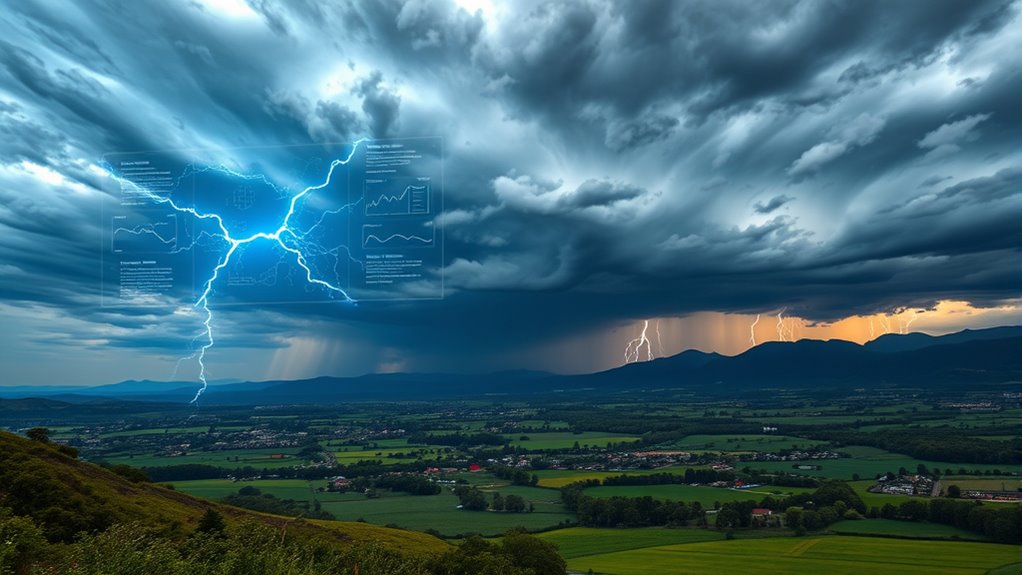

AI is revolutionizing climate modeling by using machine learning to predict extreme weather events with remarkable accuracy. It integrates real-time data from satellites and sensors, allowing for instant updates and continuous model refinement. You’ll see how AI identifies patterns in vast datasets, helping to simulate potential climate scenarios. This empowers communities to prepare better for threats like hurricanes and floods. Discover how these advancements are changing our approach to climate resilience and decision-making.
Key Takeaways
- AI enhances climate modeling by utilizing machine learning to analyze vast historical and real-time data for improved accuracy in predicting extreme weather events.
- Dynamic data integration from satellites and sensors allows for real-time updates, increasing responsiveness to changing climate patterns and refining predictions continuously.
- Machine learning algorithms identify risk patterns and correlations that human analysts might miss, aiding in more effective scenario simulations for extreme weather.
- Advanced predictive capabilities empower communities with timely warnings, enabling proactive measures to mitigate impacts from events like hurricanes, floods, and droughts.
- Collaboration among climate scientists is strengthened through AI, promoting transparent data sharing and informed decision-making for sustainable practices and climate resilience.

AI in climate modeling is revolutionizing how we comprehend and forecast environmental changes. By harnessing the power of machine learning and data assimilation, you can gain insights that were previously unimaginable. These technologies enable you to analyze vast amounts of historical and real-time data, which helps create more accurate models of our planet’s climate systems. As a result, you can better predict extreme weather events, such as hurricanes, floods, and droughts.
AI is transforming climate modeling, enabling unprecedented insights and accurate predictions of extreme weather events through advanced data analysis.
When you think about traditional climate models, you may recall that they often relied on simpler algorithms and static datasets. But with the advent of machine learning, you’re now able to incorporate dynamic data streams into your models. This means that as new data comes in—whether from satellite observations or ground sensors—it can be instantly processed and integrated. This data assimilation allows you to refine your predictions continuously and respond to changes in real-time, providing a more exhaustive understanding of climate patterns.
Imagine a scenario where a predictive model indicates an uptick in hurricane activity. With AI, you could analyze historical data and recognize patterns that suggest a specific geographic area is at higher risk. Machine learning algorithms can sift through massive datasets, finding correlations that human analysts might miss. By doing this, you not only enhance the precision of your forecasts but also empower communities to take preemptive measures, potentially saving lives and resources.
Moreover, AI in climate modeling helps you simulate various scenarios based on different variables, such as carbon emissions or land use changes. This capability enables you to visualize the potential impacts of human actions on the climate. If you’re a policymaker or a business leader, these simulations can inform your decisions and strategies, guiding you toward sustainable practices. Additionally, embracing the importance of celebrating relationships within communities can foster cooperative efforts to tackle climate challenges effectively.
The integration of AI into climate modeling isn’t just about improving accuracy; it’s also about enhancing collaboration among scientists and stakeholders. You can share findings more rapidly and transparently, facilitating a collective response to climate challenges. By leveraging machine learning and data assimilation, you’re not just forecasting weather; you’re taking a proactive role in shaping a sustainable future.

Geospatial Data Analysis : A Hands-On Guide to Processing Satellite Imagery with Python and Managing Spatial Data with PostGIS.
As an affiliate, we earn on qualifying purchases.
As an affiliate, we earn on qualifying purchases.
Frequently Asked Questions
How Does AI Improve Traditional Climate Modeling Techniques?
AI improves traditional climate modeling techniques by utilizing machine learning to analyze vast datasets more efficiently. You’ll notice that it enhances climate simulation accuracy by identifying patterns and making predictions that traditional models might miss. By integrating real-time data, AI adapts to changing conditions, which helps you anticipate extreme weather events better. This means you can make more informed decisions about climate resilience and mitigation strategies, ultimately leading to a deeper understanding of our environment.
What Are the Limitations of AI in Climate Predictions?
AI isn’t a magic bullet for climate predictions. One major limitation is algorithm bias, which can skew results if the data used isn’t diverse or representative. Plus, data scarcity can hinder AI’s effectiveness, especially in areas with limited historical weather information. You might think AI could solve everything, but it still relies on quality data and fair algorithms to provide accurate insights. So, it’s essential to address these limitations for better predictions.
Can AI Predict Weather Events Years in Advance?
AI can’t reliably predict weather events years in advance. While it uses historical accuracy to inform models, long-term forecasts often suffer from uncertainties. The algorithms might show patterns, but their transparency can be lacking, making it tough to understand how predictions are made. You’ll find that short-term forecasts are more accurate, while long-term predictions remain a challenge, requiring continuous data and evolving models to improve their reliability over time.
How Is Data Quality Ensured in AI Climate Models?
Think of data quality as the backbone of a strong structure; without it, everything collapses. You guarantee data quality in AI climate models through rigorous data validation and bias correction techniques. This means checking data for accuracy and consistency while eliminating any biases that might skew results. By maintaining high-quality inputs, you can trust the model’s predictions, making it a reliable tool for understanding our planet’s changing climate.
What Are the Ethical Implications of AI in Climate Forecasting?
The ethical implications of AI in climate forecasting include concerns about data privacy and algorithmic bias. You need to ensure that personal data is handled responsibly to protect individuals’ information. Additionally, algorithms can unintentionally favor certain groups or regions, leading to unequal access to resources and support during extreme weather events. It’s vital to address these issues to promote fairness and transparency, ultimately guiding the development of more equitable climate solutions.

La Crosse Technology Wireless Outdoor Temperature & Humidity Sensor – Wall Mounted, Accurate, Weather Resistant, Wide Temperature & Humidity Gauge Transmission Range (330ft Range), Battery Powered
*PLEASE VERIFY compatibility ~ ONLY WORKS with model clock/weather stations (not limited to): 308-1414B, 308-1414W, 308-1414MB-INT, 308-1711BL, 308-1425B-INT,…
As an affiliate, we earn on qualifying purchases.
As an affiliate, we earn on qualifying purchases.
Conclusion
In harnessing AI for climate modeling, you’re not just predicting extreme weather events—you’re enhancing preparedness, improving response strategies, and fostering resilience. You’re transforming data into actionable insights, turning uncertainty into informed decisions, and paving the way for a sustainable future. As you embrace these advancements, you’re not only protecting communities but also safeguarding ecosystems. With AI, you’re empowering yourself to face the challenges of climate change head-on, ensuring a safer world for generations to come.

Artificial Intelligence and Data Science in Agriculture: Specialty Crops and Climate Change Modeling
As an affiliate, we earn on qualifying purchases.
As an affiliate, we earn on qualifying purchases.
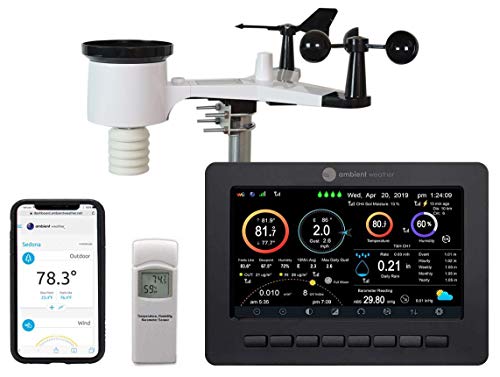
Ambient Weather WS-2000 Smart Weather Station with WiFi Remote Monitoring and Alerts
Allows you to monitor your home and backyard weather conditions with TFT color display
As an affiliate, we earn on qualifying purchases.
As an affiliate, we earn on qualifying purchases.