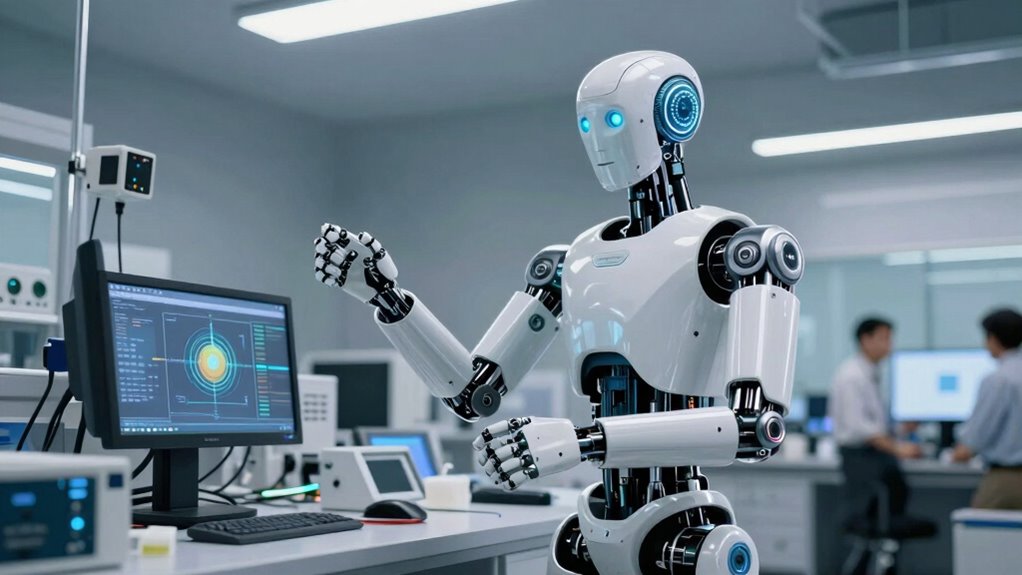

Robotics is becoming more adaptive than scripted because modern systems now learn from experience, using machine learning and sensor data to respond to real-time changes. Instead of following fixed instructions, you see robots that can recognize objects, navigate complex environments, and adjust their actions on the fly. This shift allows robots to handle unpredictable situations more effectively. Keep exploring to discover how these technological advances are shaping the future of intelligent automation.

Prime made for students and young adults
- Fast, free delivery for dorm and study essentials
- Prime Video and Amazon Music included
- Member-only deals
Key Takeaways
- Robots are shifting from static instructions to learning-based systems that adapt to new situations.
- Machine learning enables robots to recognize patterns and improve performance over time.
- Sensor integration provides real-time environmental data, allowing dynamic responses and perception.
- Combining sensors with machine learning broadens application scope and enhances resilience in unpredictable environments.
- Advances in these areas lead to faster, more nuanced decision-making, making robots more autonomous and adaptable.
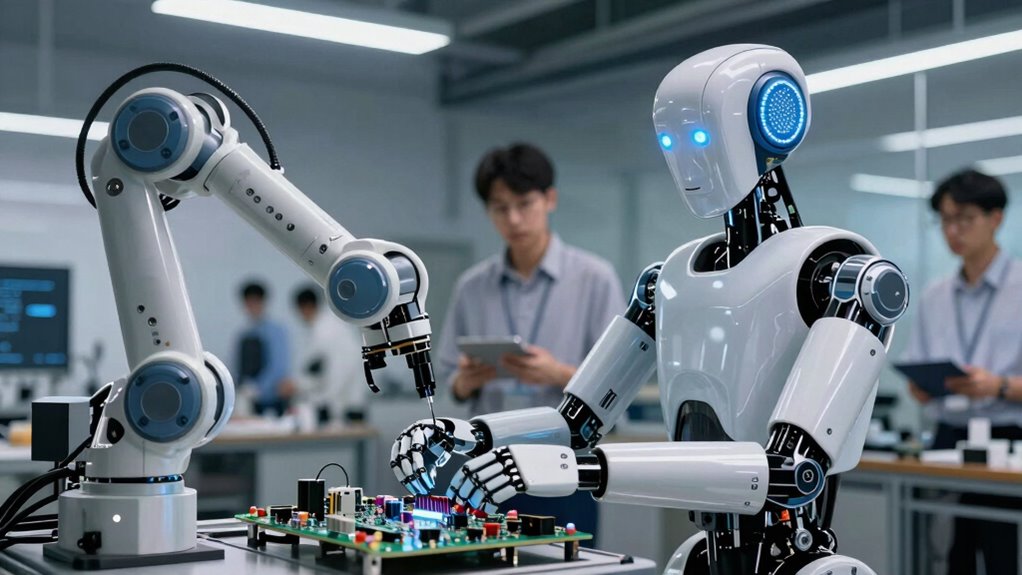
Have you noticed how robots are increasingly able to adapt to new tasks and environments? It’s no coincidence. The key behind this rapid evolution lies in the shift from rigid, scripted behaviors to more flexible, intelligent systems powered by machine learning and sensor integration. Unlike traditional robots that follow pre-programmed instructions, these new machines learn from their experiences, allowing them to handle unfamiliar situations more effectively.
Robots now adapt seamlessly through machine learning and sensor integration, moving beyond pre-programmed routines to true autonomous flexibility.
Machine learning is at the heart of this transformation. Instead of relying on static rules, robots now analyze vast amounts of data to recognize patterns and make decisions on the fly. For example, a robot trained with machine learning algorithms can identify objects, navigate complex terrains, or even adjust its actions based on real-time feedback. This ability to learn and adapt means that robots are no longer limited to specific tasks—they can improve their performance over time, becoming more efficient and versatile with each interaction.
Sensor integration plays an essential role in supporting this adaptive behavior. Modern robots are equipped with a range of sensors—visual cameras, tactile sensors, proximity detectors, and more—that feed continuous streams of information into their processing systems. These sensors allow robots to perceive their surroundings with a level of detail that static programming simply cannot match. When combined with machine learning, sensor data enables robots to interpret environments, detect changes, and respond appropriately. For instance, if a robot encounters an obstacle, sensors provide immediate data, and the machine learning algorithms determine the best way to navigate around it. This dynamic feedback loop is what makes robots increasingly capable of functioning autonomously in unpredictable settings.
The integration of machine learning with sensor technology creates a feedback-rich environment where robots can learn from their mistakes and successes alike. They’re no longer just executing predefined sequences but are instead continuously adapting their behavior based on new information. This shift markedly broadens the scope of what robots can accomplish—whether in manufacturing, healthcare, or service industries—making them more resilient and capable than ever before. Additionally, advancements in sensor technology are further enhancing the speed and accuracy of these adaptive systems. These improvements are driven by ongoing innovations in sensor design and data processing, which allow for faster and more precise environmental perception. Furthermore, as sensor data becomes more abundant and sophisticated, robots can leverage real-time analytics to make even more nuanced decisions.
Ultimately, it’s this combination of machine learning and sensor integration that’s driving the move toward more adaptive robotics. You’re beginning to see robots that can learn from experience, adjust to novel circumstances, and operate with a level of autonomy that was once thought impossible. As these technologies advance, the line between programmed automation and intelligent adaptability continues to blur, paving the way for a future where robots are more responsive, flexible, and useful in a wide range of environments.
As an affiliate, we earn on qualifying purchases.
Frequently Asked Questions
How Do Adaptive Robots Learn From Their Environment?
You can see how adaptive robots learn from their environment through sensor integration, which gathers real-time data, and behavioral algorithms that process this information. These algorithms allow the robot to adjust its actions based on new inputs, making it more responsive and flexible. By continuously interpreting sensor data and updating behaviors, the robot learns from its surroundings and improves performance without needing explicit reprogramming.
What Role Does Artificial Intelligence Play in Robotics Adaptability?
Artificial intelligence acts like a wise navigator guiding your robot through uncharted waters, enabling it to adapt seamlessly. By harnessing machine learning, your robot learns from each wave and current, refining its actions. Sensory integration serves as its compass, gathering real-time data. Together, AI empowers your robot to evolve dynamically, making it more responsive and intuitive—transforming rigid scripts into fluid, intelligent responses that adapt to any environment.
Are Adaptive Robots More Cost-Effective Than Traditional Scripted Robots?
Yes, adaptive robots are often more cost-effective than traditional scripted ones because they require less frequent updates and can handle a wider range of tasks. This efficiency helps you stay competitive in the market. However, consider robotic ethics to guarantee responsible use, especially as adaptive systems become more complex. Embracing adaptability can give you an edge in market competition, ultimately saving costs and enhancing productivity.
How Quickly Can Adaptive Robots Update Their Behaviors?
Adaptive robots can update their behaviors almost in real-time, like a chameleon changing colors to match its surroundings. Thanks to robot learning, they modify their behaviors swiftly when faced with new data or tasks. This rapid behavior modification allows them to adapt on the fly, often within seconds or minutes, ensuring they stay effective and responsive in dynamic environments. Their quick learning makes them invaluable across various industries.
What Industries Benefit Most From Adaptive Robotic Systems?
You’ll find that industries like industrial automation and healthcare innovation benefit most from adaptive robotic systems. In industrial settings, these robots optimize manufacturing processes, improve efficiency, and handle complex tasks with ease. Meanwhile, in healthcare, adaptive robots assist in surgeries, diagnostics, and patient care, offering personalized, real-time responses. Their ability to learn and adjust makes them invaluable in environments where precision and flexibility are essential.
As an affiliate, we earn on qualifying purchases.
Conclusion
You see, as robotics become more adaptive, they think like humans, learn like humans, and act like humans. They’re no longer just following scripts—they’re evolving, adjusting, and responding. With every new innovation, they become more intuitive, more flexible, more capable. Imagine a world where robots mirror your every move, anticipate your needs, and adapt seamlessly. This is the future, where robotics don’t just perform tasks—they understand, they connect, they transform our world.
As an affiliate, we earn on qualifying purchases.
adaptive robotics development kit
As an affiliate, we earn on qualifying purchases.
As an affiliate, we earn on qualifying purchases.
Fall Picks
fall essentials
As an affiliate, we earn on qualifying purchases.