🔍 Read the full analysis: A 2026 Desk Setup Checklist For AI Automation Projects on ThorstenMeyerAI.com

Prime made for students and young adults
- Fast, free delivery for dorm and study essentials
- Prime Video and Amazon Music included
- Member-only deals
TL;DR
ThorstenMeyerAI.com published a checklist for assembling a desk setup for AI development and automation. It names a Dell Precision 7780 laptop and NVIDIA Jetson Orin Nano Developer Kit, while leaving several other hardware slots without a specified product and advising buyers to check compatibility and project needs.
ThorstenMeyerAI.com’s 2026 desk setup checklist names a Dell Precision 7780 laptop and NVIDIA Jetson Orin Nano Developer Kit for people working on AI development, automation and hands-on experiments, while leaving other hardware choices open. The checklist advises readers to match equipment to planned workloads and verify specifications and compatibility before buying; it does not provide benchmark results or establish that any item is required for AI work.
According to the ThorstenMeyerAI.com checklist, equipment is grouped by role: a primary computer, hardware for local experimentation, desk connectivity and portable storage. The guide lists a Dell Precision 7780, described as a 17.3-inch FHD mobile workstation with an Intel Core i9-13, as its laptop pick. It does not specify the full processor configuration or the memory, storage and operating system of a particular unit, and tells readers to check the seller’s exact listing.
For embedded experimentation, the checklist names the NVIDIA Jetson Orin Nano Developer Kit. It advises reviewing official product documentation and establishing which software, accessories and host setup a planned project needs. The supplied source excerpt ends during this section, so it does not provide the complete checklist for the board.
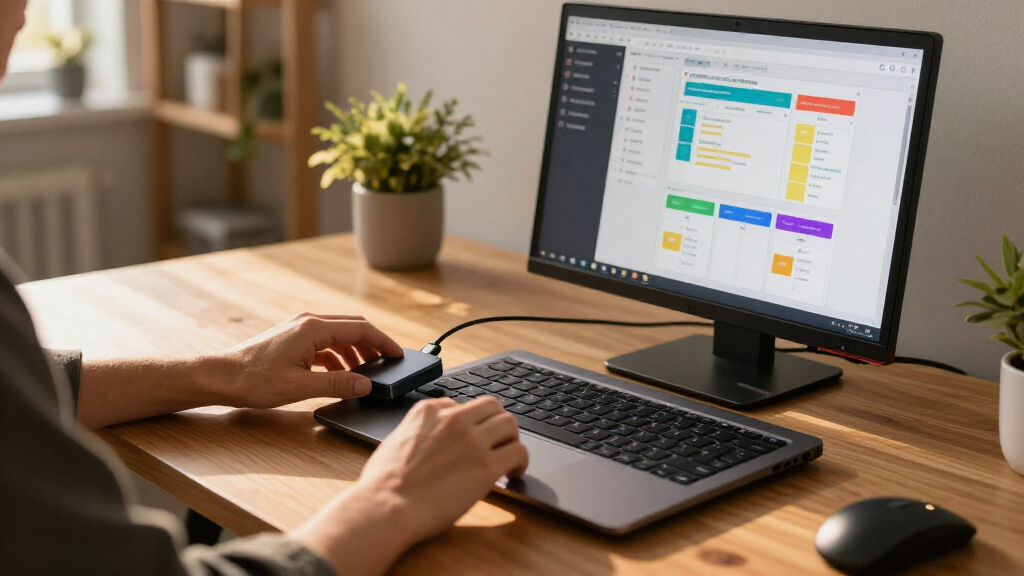
The checklist presents three other slots without named products: a USB AI accelerator, a local AI server and a portable NVMe SSD. It also lists a Thunderbolt docking station. For the accelerator and server, the guide recommends starting with a defined use case, then checking supported software, operating system, connections, power and physical requirements. It provides no specifications or particular product recommendation for these slots.
Dell Precision 7780 17.3-inch FHD Mobile Workstation, Intel Core i9-13950HX, 128

A professional mobile workstation built for engineering, design, software development, data analysis, and content creation. It includes an Intel Core i9-13950HX processor, NVIDIA RTX 3500 Ada graphics with 12GB VRAM, Windows 11 Pro with AI Copilot, and a Dell manufacturer warranty through March 2031.
Pros:
- High-performance processor for demanding applications
- 128GB RAM and 1TB NVMe SSD
- Professional NVIDIA graphics with 12GB VRAM
- ISV-certified for professional software
Cons:
- The 17.3-inch size may make it less portable than smaller laptops
Best for: A desk-centered setup that can accommodate a 17.3-inch laptop.
Not ideal for: A compact workspace or frequent travel if the size does not suit you.
Bottom line: Choose this workstation only after confirming the exact configuration and checking that its size and ports fit your setup.
Buying Around the Workload
The checklist’s practical message is that an AI desk setup depends on the work being done. A laptop, accelerator, server and development board serve different purposes; buying them based on a broad label such as “AI” does not establish that a project will use them. The guide emphasizes that software support and exact hardware configuration can determine whether a device fits the intended workflow.
That advice matters for both cost and desk planning. The checklist notes that a 17.3-inch laptop takes more room than a compact notebook, while a separate server brings its own power, cooling, network and placement needs. It advises readers to start with equipment they already have when it can handle an initial project, and add optional hardware when a specific requirement emerges.
A Checklist With Open Slots
ThorstenMeyerAI.com presents the material as a buyer’s checklist, not a report on new product launches or a test of competing hardware. The article combines two named picks with several categories that readers are expected to research for themselves. The supplied material includes no prices, release details, independent evaluations or performance comparisons.
The checklist’s recurring instructions are to verify the exact listing, check operating system and port compatibility, measure available desk space and consult manufacturer documentation for power, cooling and accessory requirements. For the board, the excerpt says to check what the listing includes and what must be supplied separately, but cuts off before completing that advice.
Specifications Still Need Checking
The supplied ThorstenMeyerAI.com source does not state the exact configuration of the Dell laptop, identify products for the USB accelerator, local server, docking station or portable SSD, or provide prices. It also does not specify which AI frameworks, models or workloads the named devices support. Those details must be checked against current seller listings and official documentation before purchase.
The provided material ends partway through the development-board section. It is unclear whether the complete checklist includes further accessory recommendations or additional compatibility guidance. The source presents no testing evidence showing how the listed picks perform on particular AI tasks.
Check Listings Before Buying
The checklist advises readers to define a project, identify what their current computer can support and then compare exact hardware configurations. It points readers to seller listings and manufacturer documentation for specifications, compatibility, power, cooling, dimensions and included accessories. The source gives no purchase timetable or announced follow-up.
Key Questions
What laptop does the checklist name?
ThorstenMeyerAI.com’s checklist names the Dell Precision 7780, described as a 17.3-inch FHD mobile workstation with an Intel Core i9-13. It says to confirm the exact processor configuration, memory, storage, operating system and ports in the seller’s listing.
Which development board is listed?
The checklist names the NVIDIA Jetson Orin Nano Developer Kit. It recommends checking official documentation and confirming the software, accessories and host setup required for the intended project.
Does the checklist specify a USB AI accelerator or local server?
No. ThorstenMeyerAI.com lists those as categories without naming products. The guide advises readers to determine a specific workload and check software support and hardware requirements before choosing a device.
Does the guide say every AI project needs this equipment?
No. The checklist says to match equipment to the actual workload, check compatibility and add optional hardware only when it supports a project the reader expects to do. It suggests starting with an existing computer if it can handle the work.
Source: ThorstenMeyerAI.com
Halloween Picks
halloween
As an affiliate, we earn on qualifying purchases.