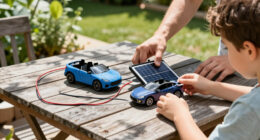
This guide helps you select, organize, and facilitate the use of educational science kits for children. It covers choosing age-appropriate kits, setting up activities, and ensuring safety. Ideal for parents, teachers, or caregivers looking to encourage scientific curiosity and hands-on learning in kids.

Prime made for students and young adults
- Fast, free delivery for dorm and study essentials
- Prime Video and Amazon Music included
- Member-only deals
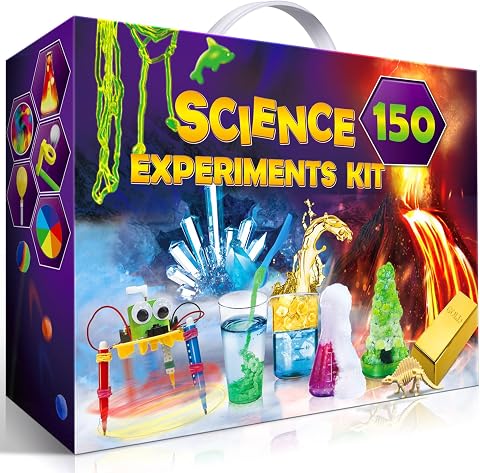
UNGILINGA 150 Experiments Science Kit for Kids STEM Chemistry Lab Toys
- ✔ Number of Experiments: 150
- ✔ Age Range: 6-15 years
- ✔ Included Components: Experiments, tools, materials

National Geographic Science Magic Kit for Kids with 100+ Experiments and Tricks
- ✔ Number of Experiments: >100
- ✔ Included Components: Experiments, magic tricks
- ✔ Safety Standards: Child-safe materials

Butterfly EduFields Girls Science Kit with 100+ Experiments for Kids Age 4-8
- ✔ Age Range: 4-8 years
- ✔ Number of Experiments: 100+
- ✔ Safety Standards: ASTM F963-17 compliant
Difficulty: Beginner | Time: 30-60 minutes
What You’ll Need
Tools & Materials:
- Basic household safety supplies (gloves, goggles)
- Access to a clean workspace
Knowledge:
- Basic understanding of safety precautions when handling science materials
- Ability to supervise children during experiments
Review the age recommendations and ingredient lists on the science kit packaging before starting.
UNGILINGA 150 Experiments Science Kit for Kids STEM Chemistry Lab Toys
<p>The <strong>UNGILINGA 150 Experiments Science Kit</strong> stands out for its vast array of 150 experiments covering chemistry, physics, and earth sciences. Compared with other kits, it offers the most comprehensive experience, fostering curiosity across multiple scientific disciplines. However, its broad scope means some experiments may require adult supervision or household items not included in the kit. This kit is ideal for children aged 6 and up who are ready for a challenge and eager to explore multiple science fields. The included tools are of high quality and designed for safe use, but it may be too advanced or overwhelming for very young children or beginners.</p>
Pros:
- Offers 150 experiments covering diverse science topics
- Includes kid-safe tools and materials
- Encourages curiosity, learning, and STEM skills
Cons:
- Requires supervision for safety and complexity
- Some experiments depend on household items not provided
- May be too advanced for children under 6
Best for: Kids aged 6+ with strong curiosity and some prior experience with science projects
Not ideal for: Very young children or families looking for simple, quick experiments without supervision
Bottom line: Ideal for curious kids ready to explore multiple science fields with a broad set of experiments, though it demands adult oversight.
“Ideal for curious kids ready to explore multiple science fields with a broad set of experiments, though it demands adult oversight.”
National Geographic Science Magic Kit for Kids with 100+ Experiments and Tricks
<p>The <strong>National Geographic Science Magic Kit</strong> offers over 100 experiments combined with magic tricks that stimulate creativity and STEM thinking. Compared to more traditional science kits, it emphasizes fun through magical illusions and engaging projects that make science approachable and playful. While detailed experiment descriptions are lacking, the kit’s award-winning reputation and focus on imagination make it ideal for children who thrive on interactive, hands-on activities. It does not specify an age range or difficulty level, which might require parents to gauge suitability based on their child’s interest and skill level.</p>
Pros:
- Includes over 100 experiments and magic tricks
- Encourages creativity and STEM learning
- Award-winning and highly engaging
Cons:
- Limited detail on specific experiments or complexity
- No clear age recommendations, requiring parental judgment
- Some activities may be more about tricks than science
Best for: Kids who love magic, creative experiments, and imaginative STEM activities
Not ideal for: Children seeking detailed scientific exploration or those who prefer straightforward experiments
Bottom line: A top choice for kids who enjoy magic and creative STEM projects, though it might lack depth for serious science learners.
“A top choice for kids who enjoy magic and creative STEM projects, though it might lack depth for serious science learners.”
Butterfly EduFields Girls Science Kit with 100+ Experiments for Kids Age 4-8
<p>The <strong>Butterfly EduFields Girls Science Kit</strong> is tailored for young girls aged 4-8, offering over 100 simple, hands-on experiments designed to introduce basic science concepts. It emphasizes safety and ease of use, with high-quality, ASTM-standard tools like spray bottles and masks. Compared with more comprehensive kits, this one focuses on age-appropriate content and straightforward instructions, making it ideal for early science enthusiasts. However, its limited scope and gender-specific branding might not appeal to all children, and some experiments require adult supervision to ensure safety and understanding.</p>
Pros:
- Over 100 engaging, age-appropriate experiments
- Easy-to-follow instructions suitable for young children
- High safety standards and high-quality tools
Cons:
- Limited to girls, may not appeal universally
- Requires adult supervision for some experiments
- Scope may be narrow for advanced learners
Best for: Young girls aged 4-8 just starting their science journey, or parents seeking a safe, engaging gift
Not ideal for: Older children or those seeking a broad or gender-neutral science experience
Bottom line: An excellent beginner science kit for young girls, emphasizing safety and simplicity, though it may feel limited for more experienced or gender-neutral needs.
“An excellent beginner science kit for young girls, emphasizing safety and simplicity, though it may feel limited for more experienced or gender-neutral needs.”
As an Amazon Associate we earn from qualifying purchases.
Before You Start
Ensure the workspace is well-ventilated and free of clutter. Read all instructions and safety warnings supplied with the kit. Confirm that you have all components before beginning.
Step-by-Step Instructions
Step 1: Select the appropriate science kit
Choose a kit suited for the child’s age, interests, and skill level. Check the packaging for age recommendations and content descriptions.
Tip: Opt for kits with clear instructions and safety features. Avoid kits with small parts for younger children prone to swallowing.
Check: You have a kit that matches the child’s age, interests, and includes all necessary components.
Step 2: Organize the workspace and gather supplies
Set up a clean, flat surface in a well-lit area. Gather all tools, safety gear, and ingredients included in the kit.
Tip: Use disposable or easily cleaned surfaces to prevent messes. Have paper towels or cleaning supplies ready.
Check: Workspace is prepared, and all materials are within reach, ready for use.
Step 3: Read the instructions thoroughly
Review the experiment guide or activity instructions fully before starting. Familiarize yourself with each step and safety warnings.
Tip: Highlight or note any steps that require adult supervision or special handling.
Check: You understand each step and safety precautions before proceeding.
Step 4: Prepare safety gear and supervise children
Put on safety goggles and gloves if required. Explain safety rules to children and supervise closely during activities.
Tip: Emphasize the importance of not ingesting or mishandling materials.
Check: Children are wearing safety gear and understand safety guidelines.
Step 5: Follow the experiment instructions step-by-step
Proceed with the activities exactly as described, measuring, mixing, and observing as instructed.
Tip: Do not skip steps or modify instructions unless guided by the kit. Keep a watchful eye for unexpected reactions.
Check: Experiments are completed correctly, with expected reactions or results observed.
Step 6: Record observations and discuss results
Help children record what they see, hear, or feel during each experiment. Discuss the scientific principles involved.
Tip: Use a notebook or worksheet to document findings, encouraging curiosity and understanding.
Check: Children can explain what happened and why, demonstrating comprehension.
Step 7: Clean up and store materials properly
Wash and dry reusable tools, and store leftover materials as directed. Dispose of waste safely.
Tip: Label storage containers and keep leftover chemicals or supplies out of children’s reach.
Check: Workspace is clean, and materials are stored correctly for future use.
Common Mistakes to Avoid
- Using the wrong age-appropriate kit or materials — Always check the recommended age and content suitability on the packaging.
- Skipping safety steps or supervision — Always wear safety gear and supervise children closely during experiments.
- Not reading instructions thoroughly before starting — Review all instructions and safety warnings at the outset to prevent errors or hazards.
Troubleshooting
Problem: Experiment does not produce expected results
Solution: Verify measurements and steps taken; ensure all materials are correct and procedures followed exactly.
Problem: Materials cause unexpected reactions or spills
Solution: Wear safety gear, work in a well-ventilated area, and handle chemicals carefully. Stop activity if reactions are unsafe.
Problem: Child becomes uninterested or overwhelmed
Solution: Keep explanations simple, engage with questions, and take breaks if needed.
What Success Looks Like
You have successfully completed experiments that produce expected reactions, with children understanding basic scientific concepts. All safety precautions are followed, and materials are properly stored afterward.
Next Steps
Repeat similar experiments to reinforce learning, explore more advanced kits as skills grow, or combine activities for extended projects. Always supervise new experiments and review safety procedures regularly.
Frequently Asked Questions
What age range are educational science kits suitable for?
Most kits specify an age range on the packaging. Choose one appropriate for the child’s age and maturity level to ensure safety and engagement.
Are all science kits safe for children?
No. Always select kits with safety features, read all warnings, and supervise children during use, especially with chemicals or small parts.
How can I make science activities more engaging for kids?
Encourage questions, relate experiments to real-world phenomena, and involve children in planning or explaining outcomes to boost interest.
What safety equipment should I have on hand?
Use safety goggles, gloves, and a well-ventilated workspace. Keep a first aid kit nearby for minor accidents.
Halloween Picks
halloween
As an affiliate, we earn on qualifying purchases.