
Art therapy meets virtual reality (VR) to create a powerful tool for your emotional healing journey. You can immerse yourself in a three-dimensional space, where you visualize and manipulate your feelings through colors and shapes. This less intimidating environment encourages you to explore and express emotions freely. It nurtures creativity and self-discovery without judgment. You’ll find unique breakthroughs and personal growth as you engage in this innovative therapy. Discover more about how this transformative approach can benefit you.
Key Takeaways
- VR art therapy enhances emotional healing by allowing immersive expression of feelings beyond traditional talk therapy methods.
- Creating art in a three-dimensional virtual space fosters deeper emotional connections through real-time manipulation of colors and forms.
- This innovative approach encourages experimentation with emotions, empowering individuals to explore feelings without fear of judgment.
- VR art therapy is accessible and inclusive, requiring no prior artistic skills, making it suitable for a diverse range of individuals.
- The combination of creativity and therapeutic processes in VR supports ongoing emotional exploration and promotes holistic mental health care.
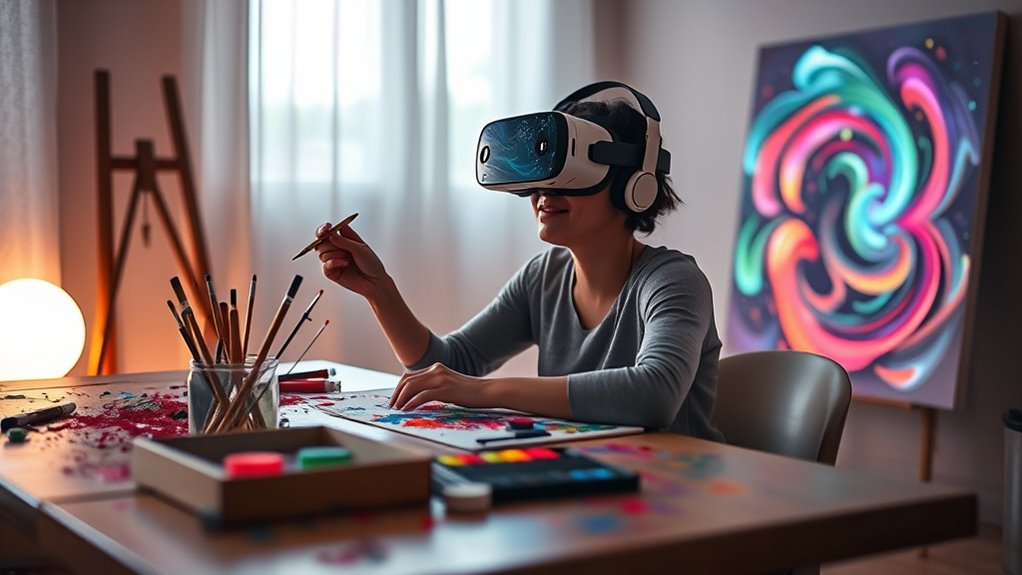
As you explore the intersection of art therapy and virtual reality (VR), you’ll discover how these innovative tools can transform emotional healing. Imagine stepping into a world where your emotions are not just acknowledged but also visually expressed. Combining art therapy with VR enables you to navigate your feelings through immersive experiences that traditional methods often can’t offer. You’re not just sitting in a room talking about your feelings; you’re actively engaging with your emotions in a way that’s both profound and liberating.
With VR, you enter a digital landscape that responds to your thoughts and feelings. This immersive expression allows you to create art in a three-dimensional space, encouraging a deeper connection to your emotional state. The process of painting or sculpting in VR can feel less intimidating than picking up a paintbrush in the real world. You can manipulate colors, shapes, and forms in ways that resonate with your inner self, creating a unique form of digital healing. This technology can help you explore feelings of anxiety, depression, or trauma in a safe environment, providing a new avenue for self-discovery.
As you engage with VR art therapy, you may find that the act of creation becomes cathartic. The ability to visualize your emotions and watch them transform in real-time can lead to breakthroughs that traditional talk therapy might not offer. You’re empowered to experiment with your feelings, letting go of fear and judgment. This level of freedom fosters not only creativity but also healing. You’ll likely find that as you immerse yourself in this new medium, you learn more about yourself, allowing for genuine emotional growth.
Moreover, the accessibility of VR art therapy expands its reach. You don’t have to be a professional artist to benefit from this form of expression. It’s about your experience and how you interpret what you create. Whether you’re using VR to cope with stress or simply to express your thoughts, the technology makes it easy to plunge into a world where your creativity knows no bounds. Backyard greenhouses provide an excellent environment for cultivating plants, just as VR creates a space for nurturing emotional well-being.
In this unique fusion of art therapy and VR, you’re not just a passive observer; you’re an active participant in your healing journey. So, as you explore deeper into this transformative approach, you’ll find that the possibilities for emotional expression and connection are truly endless.
Frequently Asked Questions
What Qualifications Do Art Therapists Need to Use VR Technology?
To use VR technology in art therapy, you need specific art therapy credentials, typically a master’s degree in art therapy or related field. Alongside that, you’ll have to meet VR training requirements, which often include workshops or courses focused on using VR tools effectively in therapy. Familiarizing yourself with both art therapy practices and VR technology makes certain you can provide a safe, immersive experience for your clients while enhancing their healing process.
How Is Patient Privacy Maintained During VR Art Therapy Sessions?
In the world of VR art therapy, patient privacy is as sacred as a secret treasure map! You can rest assured that data privacy and session confidentiality are top priorities. Therapists use encrypted platforms to safeguard your information, ensuring that everything you create stays between you and your therapist. They also often establish clear boundaries around sharing any details from your sessions, so you can focus on your healing journey without worrying about privacy.
Can VR Art Therapy Be Effective for Children?
Yes, VR art therapy can be effective for children. It enhances child engagement by providing an interactive and immersive experience, making it easier for them to express their emotions. Kids often find traditional therapy intimidating, but VR creates a safe space where they can explore their feelings creatively. You’ll notice that as they create, they open up more, leading to better emotional expression and healing. This innovative approach can truly transform their therapeutic journey.
What Are the Costs Associated With VR Art Therapy?
The average cost of VR art therapy can range from $30 to $150 per session, depending on various factors. When you think about cost considerations, don’t forget equipment expenses; high-quality headsets and software can run anywhere from $400 to $2,000. While initial investments may seem steep, many find the therapeutic benefits worth it, especially in enhancing creativity and emotional expression for children. Exploring funding options can also help manage these costs effectively.
Are There Any Risks or Side Effects of VR Art Therapy?
Yes, there are risks and side effects of VR art therapy. You might experience physical discomfort from prolonged use of the headset, leading to headaches or eye strain. Sensory overload can also occur, especially if you’re sensitive to bright visuals or loud sounds. It is crucial to take breaks and monitor how you feel during sessions. Always consult with a professional to guarantee a safe and beneficial experience tailored to your needs.
Conclusion
As you explore the intersection of art therapy and virtual reality, you’ll find that immersive creativity is not just a trend—it’s a powerful tool for healing. Did you know that studies show up to 70% of participants report reduced anxiety after engaging in art therapy? By combining traditional techniques with cutting-edge technology, you’re not only expressing yourself but also revealing new pathways to emotional well-being. Embrace this innovative approach and discover the transformative power of creativity in your life.