Interactive murals respond to your movements by blending art, technology, and community engagement to create lively, immersive spaces. As you approach or move around, sensors detect your presence, triggering visual, auditory, or digital responses that bring the artwork to life. They often use motion sensors, touch-sensitive surfaces, or augmented reality to deepen your experience. Curious how these innovations transform public spaces? Keep exploring to discover more about this exciting fusion of art and technology.
Key Takeaways
- Interactive murals use motion sensors to detect viewer movements and trigger visual or auditory responses.
- Touch-sensitive surfaces and proximity sensors enable direct, physical interactions with the artwork.
- Augmented reality tools enhance murals with digital animations that respond to user gestures and positioning.
- Technology allows murals to adapt dynamically, creating personalized and immersive experiences for viewers.
- These interactive features foster community engagement, transforming public spaces into lively, participatory art environments.
interactive motion sensor mural art
As an affiliate, we earn on qualifying purchases.
As an affiliate, we earn on qualifying purchases.
The Evolution of Public Art: From Static to Interactive
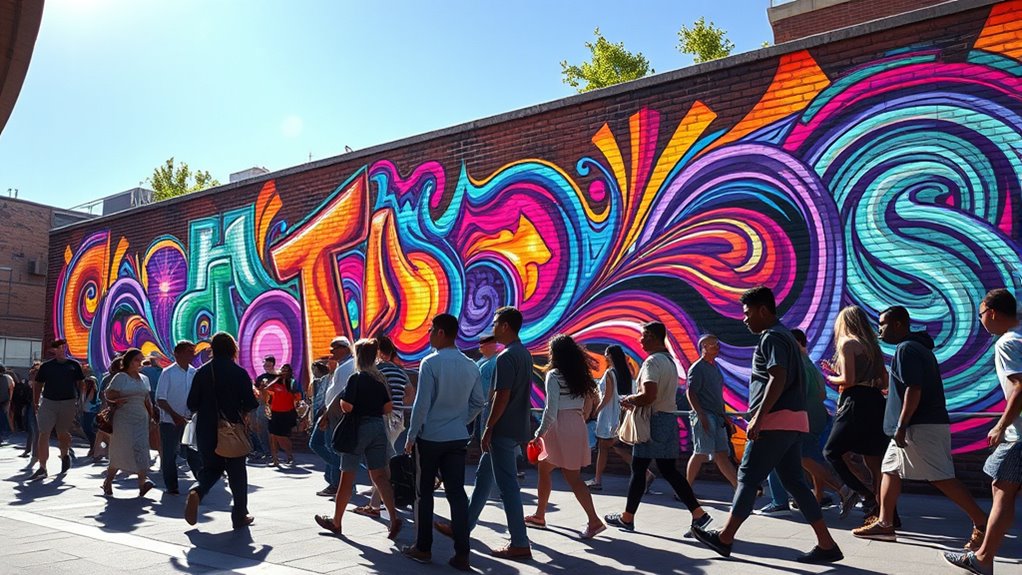
Public art has come a long way, shifting from simple, static displays to dynamic, interactive experiences. Historically, public murals served as storytelling tools, reflecting community values and cultural identity. During the early 20th century, murals became symbols of social movements, conveying powerful messages about history and change. Over time, their cultural significance deepened, transforming from mere decoration into platforms for activism and education. This evolution was driven by a desire to engage viewers more directly, making art part of everyday life. As public art grew more inclusive and participatory, murals began to invite interaction, fostering a sense of community ownership. Understanding this historical context helps you appreciate how murals have become essential cultural landmarks, shaping communal identities and inspiring dialogue. Additionally, vetted Halloween product reviews demonstrate how themed art and decorations can also foster community engagement during celebrations.
As an affiliate, we earn on qualifying purchases.
How Technology Brings Murals to Life

Technology has revolutionized murals by transforming static images into immersive, interactive experiences. By integrating sensors, artists enable murals to respond dynamically to your movements, creating a sense of connection. When you approach or gesture, sensor integration detects these actions, triggering visual or auditory responses that bring the artwork to life. This synergy of technology and art emphasizes user interaction, making each encounter unique. Color accuracy plays a vital role in ensuring the visual responses are vibrant and true to the artist’s intent. This seamless integration of sensors and user interaction turns murals into living art pieces, inviting you to become part of the artwork itself. It’s a powerful way to engage audiences and redefine the purpose of public murals.
touch-sensitive digital art display
As an affiliate, we earn on qualifying purchases.
As an affiliate, we earn on qualifying purchases.
Types of Interactive Elements in Modern Murals
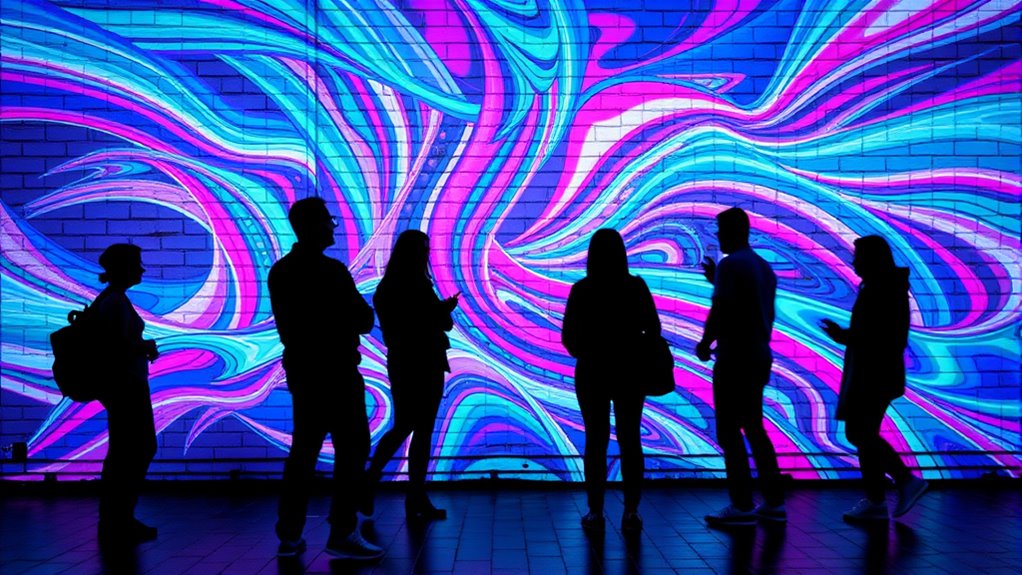
Interactive murals utilize a variety of elements to engage viewers in dynamic ways. Sensor technology plays a key role, enabling murals to respond seamlessly to your movements. Motion detection sensors track your position and gestures, triggering visual or auditory changes within the artwork. For example, as you approach, colors might intensify or shift, or digital elements could animate in real-time. Some murals incorporate touch-sensitive surfaces, allowing direct interaction, while others use proximity sensors to detect your presence without physical contact. These elements create a truly immersive experience, making you an active participant rather than just a spectator. By integrating sensor technology and motion detection, modern murals transform static art into engaging, interactive environments that respond uniquely to each viewer. Additionally, understanding the emotional impact of interactive art can deepen your connection and appreciation for these innovative creations.
movement-activated public art installation
As an affiliate, we earn on qualifying purchases.
As an affiliate, we earn on qualifying purchases.
The Creative Process Behind Designing Responsive Art
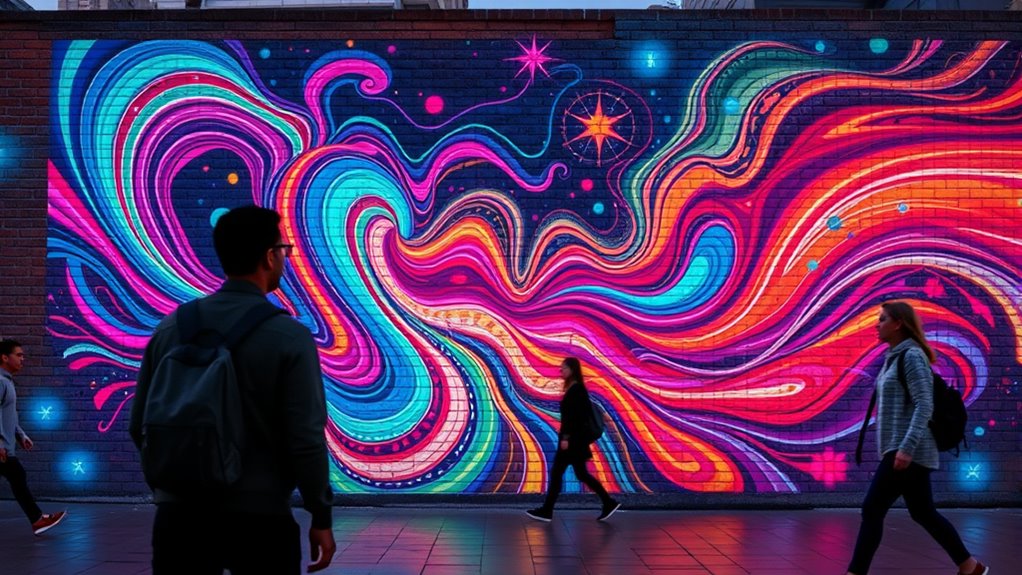
Designing responsive art begins with a clear vision of how viewers will interact with the mural and what experiences you want to evoke. You draw from artistic inspiration to craft a concept that seamlessly integrates movement and technology. Color theory plays a vital role, helping you select colors that respond dynamically to user interactions, enhancing engagement. To develop your idea, consider these key steps:
- Define the emotional response you want to trigger
- Choose a color palette that reacts meaningfully to movement
- Incorporate interactive elements that align with your artistic vision
- Embrace curiosity about new techniques and technologies to continually innovate your interactive murals to expand your creative possibilities.
Examples of Notable Interactive Murals Around the World
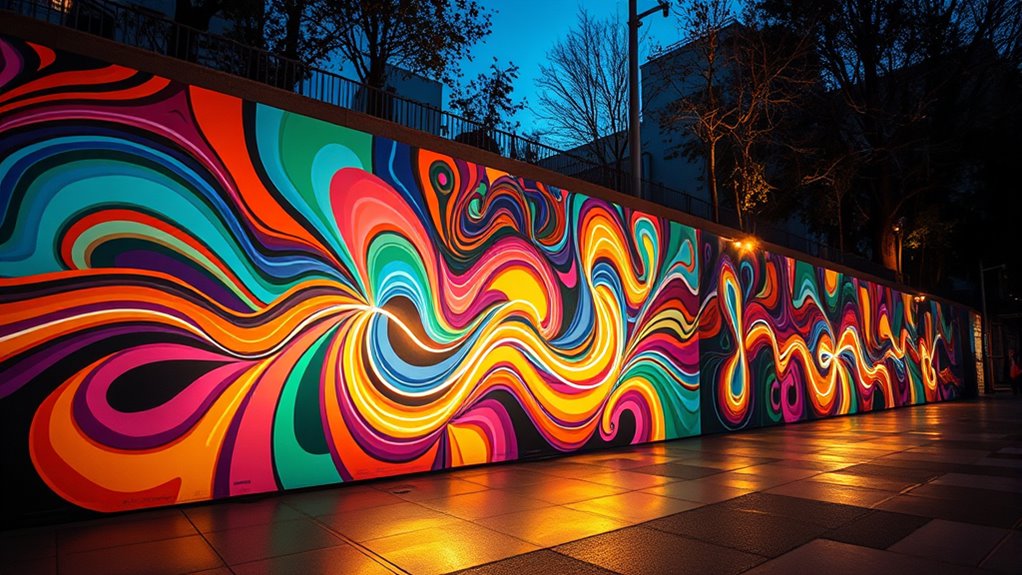
Around the world, artists have created murals that respond to viewers and their environment, transforming public spaces into dynamic art experiences. In cities undergoing urban renewal, these interactive murals breathe new life into neglected areas, inviting community engagement and revitalization. For example, in Buenos Aires, a mural uses motion sensors to animate local cultural storytelling, showcasing stories of neighborhood history and traditions. Similarly, in Seoul, a large-scale interactive mural reacts to movement, blending technology with cultural themes to foster community pride. These artworks don’t just beautify—they create immersive experiences that connect people to their surroundings, making urban spaces more vibrant and meaningful. By integrating cultural engagement into their design, these murals promote a deeper connection between communities and their environment. Through these innovative murals, art becomes a tool for cultural expression and urban transformation, engaging residents and visitors alike.
The Impact of Movement-Responsive Art on Communities

Movement-responsive art profoundly impacts communities by fostering a sense of connection and engagement. When you interact with these murals, you become part of a shared cultural experience that promotes community engagement. This art encourages residents to participate actively, breaking down barriers and inviting diverse voices to express themselves creatively. It also highlights cultural expression, showcasing local stories and traditions in a dynamic way. Moreover, engaging with these murals can inspire individuals to embrace self-reflection and growth, motivating personal development through interactive art experiences.
Key ways movement-responsive murals influence communities include:
- Enhancing social cohesion through shared experiences
- Promoting pride and ownership of public spaces
- Inspiring collaborative projects and local creativity
Challenges and Considerations in Developing Interactive Murals
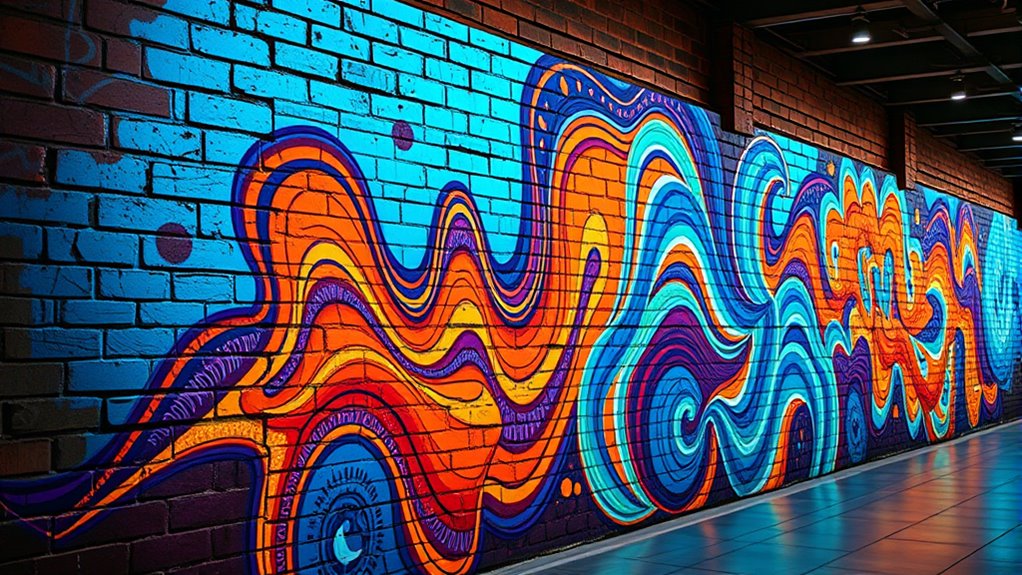
Creating interactive murals presents several challenges that developers must carefully navigate. Material durability is essential because murals face weather, vandalism, and frequent touch. Selecting resilient materials ensures longevity without frequent repairs. Privacy concerns also arise, especially with sensors collecting data on viewers’ movements. You need to balance interactivity with respect for personal privacy, avoiding intrusive data collection. Consider the following:
| Challenge | Solution | Impact |
|---|---|---|
| Material durability | Use weather-resistant, vandal-proof materials | Extends mural lifespan |
| Privacy concerns | Implement anonymous sensors and clear privacy policies | Builds public trust |
| Technical complexity | Opt for reliable, user-friendly tech | Reduces maintenance issues |
| Cost considerations | Prioritize scalable, cost-effective solutions | Ensures project viability |
Addressing these challenges helps create engaging, respectful, and sustainable interactive murals. Incorporating user engagement strategies can also enhance the overall effectiveness and popularity of the murals.
Future Trends in Digital and Public Art Integration
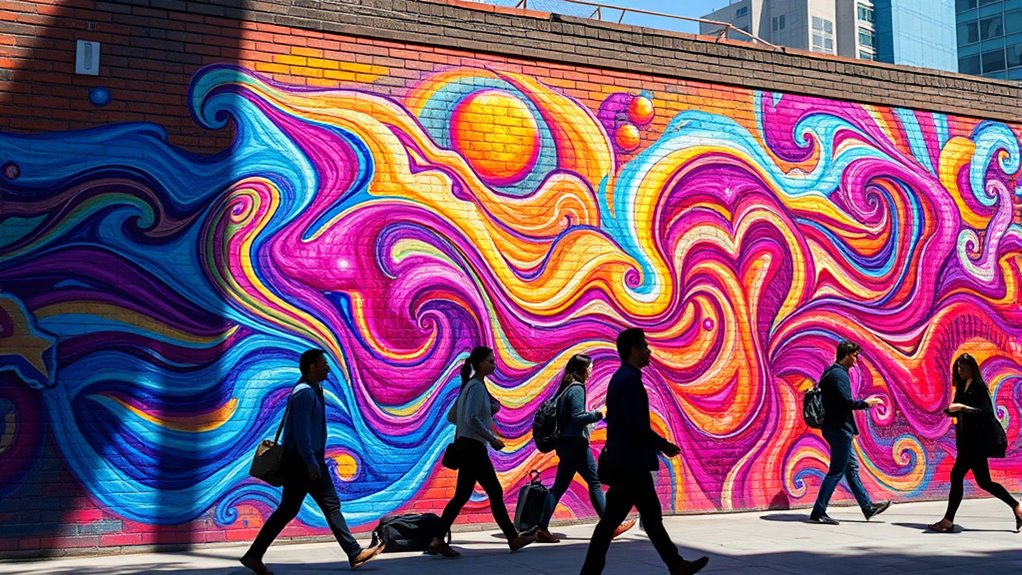
Future trends in digital and public art will likely transform how you experience murals through augmented reality enhancements. You might find public spaces becoming more interactive, inviting you to engage with art in new ways. Additionally, AI-driven artistic experiences could personalize encounters, making each interaction unique and memorable. The integration of interactive technology will further deepen the connection between viewers and the artwork.
Augmented Reality Enhancements
Augmented reality (AR) is transforming how we experience public art by blending digital elements with physical murals. With AR, you can see vibrant animations, interactive stories, and layered visuals that enhance the mural’s message. This technology increases sensory engagement, making the experience more immersive and memorable. As you view the mural through your device, AR creates a seamless connection between the physical and digital worlds.
Key benefits include:
- Enhancing viewer interaction and curiosity
- Providing deeper context or storytelling
- Offering personalized experiences based on your movements
AR enhancements are pushing public art beyond static visuals, making murals lively, dynamic, and more engaging. These innovations promise to redefine how you connect with art in shared spaces.
Interactive Public Spaces
How will public spaces evolve as digital and interactive art become more integrated? You’ll notice sensor technology playing a vital role in transforming these areas into dynamic environments. Interactive public spaces will respond to your movements, sounds, and even gestures, creating immersive experiences. These spaces foster community engagement by encouraging participation and shared creativity. As people gather, the art becomes a reflection of collective interaction, making public areas more lively and meaningful. Local governments and artists will work together to design installations that adapt in real-time, fostering a sense of ownership and connection among visitors. This evolution will make public spaces more than just places to pass through—they’ll become active, engaging hubs for cultural expression and community building. sensor technology will be essential in enabling these responsive environments to thrive and continuously evolve.
AI-Driven Artistic Experiences
Have you ever imagined art that adapts instantly to your presence or emotions? AI-driven artistic experiences make this possible by harnessing sensor technology and user interaction. These innovations allow murals to respond dynamically, creating personalized and immersive environments. As you approach, sensors detect your movements or emotional cues, triggering visual or auditory changes that reflect your state. This seamless integration enhances engagement and blurs the line between observer and creator. Additionally, AI in marketing techniques can be employed to analyze viewer responses, further refining the interactive experience.
How to Experience and Engage With Interactive Murals

To truly experience interactive murals, you need to activate the art by engaging directly with it. Use your mobile device to unfasten features or participate in the artwork’s story. Your involvement can even extend to creating or influencing the mural, making your interaction memorable.
Move to Activate Art
Ever wonder what it’s like to become part of a mural rather than just observe it? With sensor activation and motion sensors, you can. When you move in front of an interactive mural, these sensors detect your presence and trigger visual or audio responses. To truly engage, try these tips:
- Stand close to activate different parts of the artwork
- Move deliberately to change the mural’s colors or animations
- Explore various angles and distances for varied effects
Use Mobile Devices
Curious about how mobile devices can enhance your experience with interactive murals? By using your phone or tablet, you can boost mobile engagement and deepen device interaction. Many murals have QR codes or dedicated apps that *unlock* additional visuals, sounds, or animations. Simply scan or open these tools to connect directly with the artwork. This seamless interaction allows you to explore layers of meaning and participate actively. Here’s a quick look at common ways to engage:
| Method | Benefit |
|---|---|
| QR Code Scanning | Instantly access extra content |
| Dedicated Apps | Customize your experience and interact more deeply |
| Augmented Reality | Bring murals to life around you |
Using your mobile device transforms passive viewing into a dynamic art experience.
Participate in Creations
By engaging your mobile device to access additional content, you can move beyond passive observation and become an active participant in the mural experience. Interactive murals use sensor technology to detect your movements and reactions, allowing your user participation to influence the artwork directly. To fully participate, try these approaches:
- Use your device to send commands that alter the visual or auditory elements of the mural.
- Move around or gesture in front of the sensor technology to trigger different interactive responses.
- Experiment with different angles and distances to discover new layers of the experience.
This active involvement transforms the mural from a static image into a dynamic, collaborative creation, making your engagement a essential part of the art’s evolution. Your participation shapes the mural’s response and enhances its interactive nature.
Frequently Asked Questions
How Do Artists Ensure Accessibility for All Audiences?
Artists guarantee accessibility for all audiences by designing inclusive experiences that consider diverse needs. You can incorporate features like tactile elements for those with visual impairments and offer alternative formats, such as audio descriptions or braille. By doing so, you make art more engaging and accessible, allowing everyone to enjoy and connect with it. Thoughtful planning and understanding audience needs help create welcoming spaces that celebrate diversity.
What Maintenance Is Required for Interactive Murals?
Your interactive mural needs constant care to stay mesmerizing. You’ll want to regularly check lighting maintenance to ensure everything shines brightly, like a star. Software updates are vital to keep the technology running smoothly and prevent glitches. Routine inspections help catch issues early, saving you from potential chaos. With consistent upkeep, your mural will wow visitors endlessly, maintaining its magic and engaging everyone who experiences it.
Can Interactive Murals Be Customized for Specific Locations?
You can definitely customize interactive murals for specific locations by incorporating location-specific features and custom artwork. This allows you to tailor the design to reflect local culture, landmarks, or themes, enhancing engagement. When planning, consider the environment and audience to make sure the mural resonates well. Customization makes the mural more meaningful and memorable, creating a unique experience that draws visitors and encourages interaction with the space.
How Do Privacy Concerns Influence Interactive Mural Designs?
Privacy problems profoundly influence interactive mural designs. You need to navigate privacy regulations carefully, making certain that personal data collection complies with legal standards. Data security becomes vital, as safeguarding user information builds trust and prevents breaches. By prioritizing privacy, you create compelling, customizable murals that respect individual rights, fostering positive public perception. Thoughtful considerations of privacy concerns ensure your interactive art appeals to audiences without compromising their personal privacy or security.
Are There Environmental Impacts Associated With Digital Murals?
Environmental impacts of digital murals mainly involve energy consumption, which affects environmental sustainability. You might not realize that these murals require electricity, often from non-renewable sources, increasing your carbon footprint. While they enhance visual appeal, they also contribute to environmental concerns. To minimize this, you can choose energy-efficient displays or use renewable energy sources, helping you enjoy digital art while supporting eco-friendly practices.
Conclusion
As you step into these interactive murals, it’s no coincidence that technology and community intertwine, transforming public spaces into lively, responsive artworks. By engaging with movement, you become part of a creative cycle that blurs the line between artist and audience. These murals aren’t just art—they’re experiences that evolve with you, proving that sometimes, the most unexpected inventions can turn a simple wall into a shared moment of wonder.