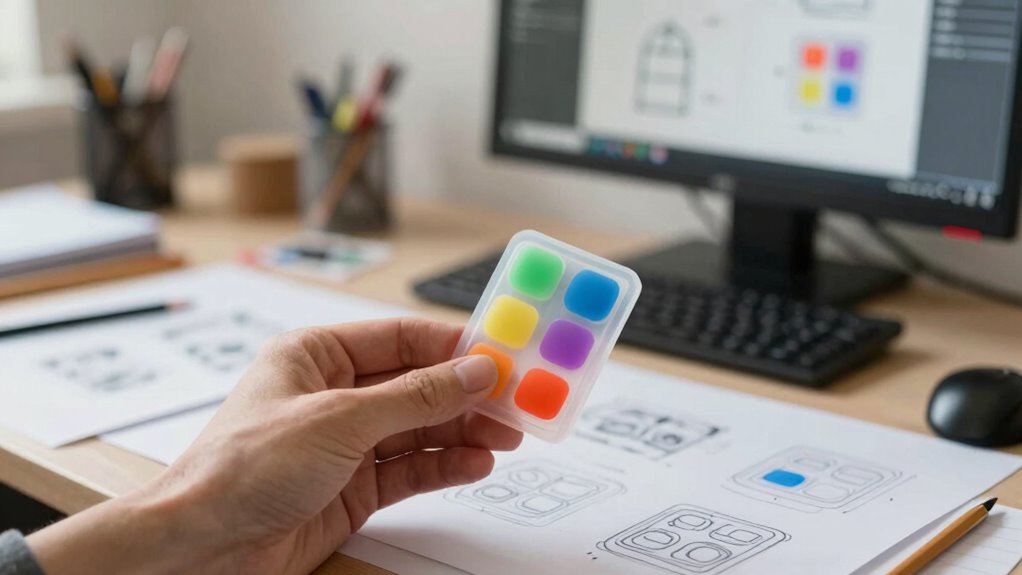

Prototyping early helps you test ideas faster, catch flaws sooner, and adapt without wasting endless planning time. It shifts your focus from perfect plans to real-world insights, saving resources and reducing risks. By involving users early, you can refine features that truly matter and spot issues before they grow. This approach fosters collaboration, accelerates learning, and keeps your product aligned with actual needs. Stay with us to explore how this strategy can give you a competitive edge.

Prime made for students and young adults
- Fast, free delivery for dorm and study essentials
- Prime Video and Amazon Music included
- Member-only deals
Key Takeaways
- Early prototyping enables tangible testing and real user feedback, leading to faster, more effective product improvements.
- It exposes flaws early, reducing costly revisions and avoiding endless planning cycles.
- Prototyping fosters rapid iteration and learning, unlike static plans that can become outdated.
- It encourages collaboration and shared understanding, aligning development with actual user needs.
- Strategic early experimentation accelerates market adaptation and competitive advantage over prolonged planning.
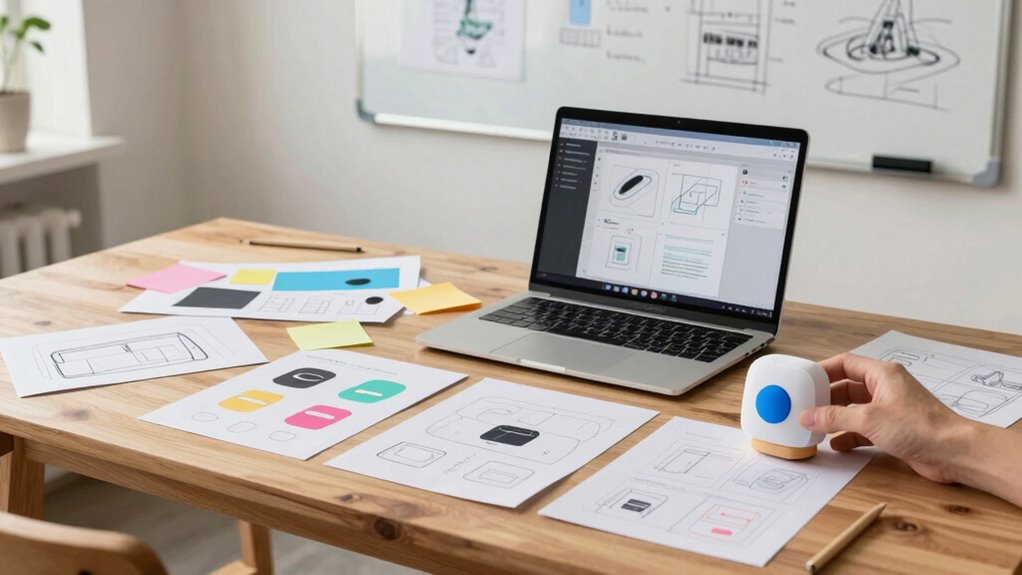
Have you ever wondered why some products succeed while others fail? The key often lies in how quickly and effectively you test ideas, which brings us to the importance of prototyping early. When you start with a prototype, you’re not just imagining your product; you’re creating a tangible version that lets you see, touch, and interact with it. This immediate focus on user experience allows you to gather real feedback from users right away. Instead of spending months planning every detail, you get a practical sense of what works and what doesn’t. Rapid iteration becomes your best friend, letting you refine your product step by step, based on actual user insights rather than assumptions.
Prototyping early shifts your emphasis from theoretical design to practical application. It’s tempting to want everything perfect before showing anyone, but that often leads to endless planning. By creating a simple prototype quickly, you expose flaws or gaps early, saving you time and resources later. You get to see how users actually interact with your product, which can be very different from what you envisioned. This real-world data helps you prioritize features that truly matter and discard those that don’t add value. The faster you prototype, the faster you learn, and the more informed your decisions become. Additionally, understanding the importance of feedback loops in iterative development can significantly enhance your ability to adapt effectively. Recognizing the value of early testing is crucial to avoiding costly revisions in later stages. Incorporating user-centered design principles during prototyping ensures your product aligns more closely with actual user needs. Moreover, being aware of exfoliation benefits can help you understand how iterative refinement removes unnecessary complexities, leading to a more streamlined product.
Creating quick prototypes reveals flaws early, saving time and resources while guiding smarter, more informed decisions.
Moreover, early prototyping fosters a culture of continuous improvement. Instead of trying to perfect your product in isolation, you involve users early and often. Their feedback guides your development process, making your product more aligned with actual needs. This approach also encourages collaboration within your team, as everyone can see progress and contribute ideas based on real prototypes. When you leverage rapid iteration, you reduce the risk of investing heavily in features or designs that may not resonate with users. It’s about creating a cycle where each iteration brings you closer to a product that genuinely solves a problem.
In addition, understanding the importance of contrast ratio in projectors can help you optimize your visual experience—just as early prototyping helps refine product usability. In essence, prototyping early isn’t about rushing; it’s about smart, strategic experimentation. It allows you to learn quickly, adapt swiftly, and optimize your user experience. Instead of endlessly planning and debating, you’re actively building and refining, which accelerates your path to success. The sooner you start prototyping, the sooner you uncover what works and what doesn’t—giving your product the best chance to thrive in a competitive market.
prototyping tools for product design
As an affiliate, we earn on qualifying purchases.
As an affiliate, we earn on qualifying purchases.
Frequently Asked Questions
How Early Is Too Early to Start Prototyping?
You should start prototyping when you have enough understanding of the user experience and core concepts, but before finalizing designs. Early prototyping allows you to gather feedback and inform design iteration, preventing costly changes later. Starting too soon might lead to unnecessary work, but waiting too long can hinder insights. The key is to find the balance where your prototypes effectively inform your design process without premature effort.
What Tools Are Best for Rapid Early Prototyping?
Wondering what tools work best for rapid early prototyping? You should choose user-friendly options that boost engagement without overwhelming you. Tools like Figma and InVision allow quick, interactive designs, fostering collaboration and feedback. Keep in mind, tool limitations might restrict complexity, but they’re perfect for testing concepts early. Don’t get caught up in perfection; focus on tools that streamline your process and help you gather valuable insights fast.
How Do I Manage Stakeholder Expectations During Early Prototyping?
You manage stakeholder expectations during early prototyping by actively engaging them in the process. Share prototypes frequently to boost user engagement and encourage honest feedback. Use feedback loops to clarify that the prototype is a work in progress, setting realistic expectations. Keep communication transparent, emphasizing that adjustments are part of refining the design. This approach builds trust, aligns goals, and guarantees stakeholders remain invested throughout the development cycle.
What Common Pitfalls Should I Avoid When Prototyping Early?
When prototyping early, avoid rushing through design iteration without gathering meaningful user feedback. Skipping this step can lead to misaligned solutions and wasted effort. Don’t neglect clear communication about the prototype’s purpose, as it might cause stakeholders to expect too much. Also, be cautious of over-complicating prototypes; keep them simple to focus on core ideas and facilitate quick, effective user feedback.
How Does Early Prototyping Impact Project Timelines?
Early prototyping accelerates your project timelines by quickly identifying user experience issues and refining ideas. As you develop prototypes early, you can better estimate costs, avoiding surprises later. This approach allows you to make informed adjustments without extensive rework, saving time. By focusing on user experience from the start, you streamline development, reduce delays, and deliver a more polished product faster.
As an affiliate, we earn on qualifying purchases.
Conclusion
So, next time you’re tempted to spend eternity planning, remember: you could be building a prototype instead. Why drown in endless specs when you can actually see, touch, and tweak your ideas? Think of your project as a fine wine—better sampled early than served stale after a hundred revisions. Embrace the chaos of early prototyping; it’s like a rollercoaster, not a carousel—more fun, fewer predictable spins. Get started already!
As an affiliate, we earn on qualifying purchases.
As an affiliate, we earn on qualifying purchases.
Halloween Picks
halloween
As an affiliate, we earn on qualifying purchases.