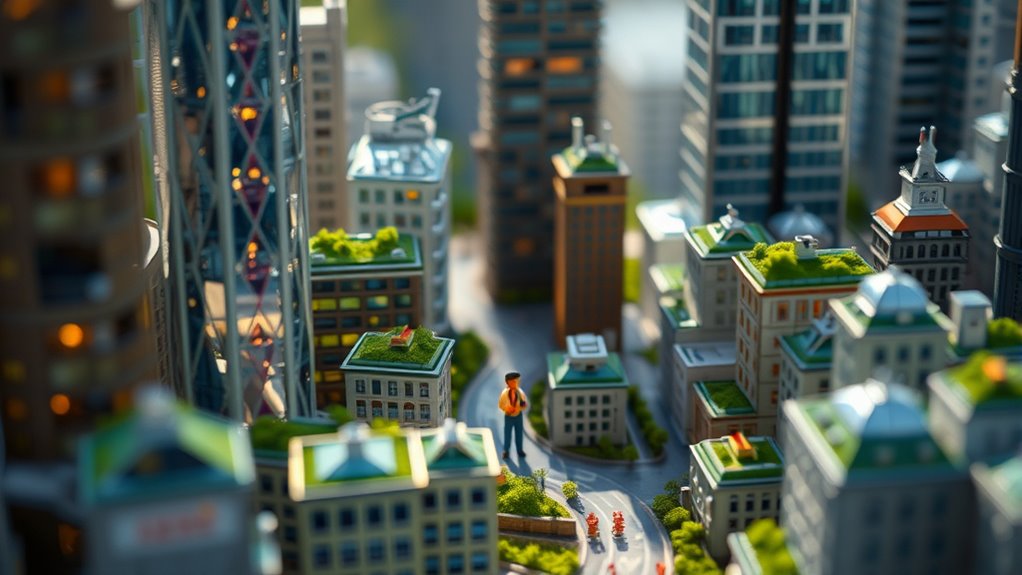

Nano-architecture blends microscopic elements with innovative design to create structures that push boundaries. You’ll find that it focuses on using molecular design and nanoscale fabrication to build lighter, stronger materials. This approach not only enhances aesthetic appeal but also promotes sustainability and energy efficiency. With features like self-repairing walls and adaptive spaces, it transforms how buildings interact with their environment. If you’re curious about the future of architectural innovation, there’s much more to uncover.

Prime made for students and young adults
- Fast, free delivery for dorm and study essentials
- Prime Video and Amazon Music included
- Member-only deals
Key Takeaways
- Nano-architecture harnesses molecular design to create innovative materials that transform traditional building practices and enhance structural capabilities.
- Nanoscale fabrication results in lighter, stronger structures, enabling self-repairing walls and energy-generating roofs that adapt to their environment.
- By focusing on material properties at the atomic level, architects can tailor resilient, aesthetically pleasing materials for specific design applications.
- Eco-friendly materials developed through nano-architecture minimize resource depletion, promoting energy-efficient buildings with reduced ecological impact.
- The future of nano-architecture envisions redefining spatial concepts, inspiring new forms that blend functional and aesthetic qualities seamlessly.

Have you ever wondered how the tiniest elements can transform architecture as we comprehend it? In recent years, the world of architecture has begun to embrace concepts like molecular design and nanoscale fabrication, creating an entirely new frontier. This innovative approach focuses on the microscopic aspects of building materials, allowing architects and designers to rethink how they create structures. By manipulating materials at the molecular level, you can achieve durability, sustainability, and aesthetic appeal that traditional methods simply can’t match.
When you consider nanoscale fabrication, it’s fascinating to see how it enables the construction of materials that are lighter, stronger, and more versatile than ever before. Imagine building walls that can self-repair or roofs that can generate energy from sunlight. With nanoscale techniques, you’re not just designing a building; you’re creating a living entity that interacts with its environment in real time. This revolutionary approach allows you to create spaces that adapt to changing conditions, providing comfort and efficiency while minimizing environmental impact.
Molecular design plays an essential role in this process. By understanding the properties of materials at the atomic level, you can tailor them for specific applications. For instance, you might engineer a polymer that’s not only aesthetically pleasing but also incredibly resilient against harsh weather conditions. This kind of precision opens up endless possibilities in architectural design, letting you explore forms and functions that were previously unimaginable. You’re no longer bound by conventional constraints; you can push the limits of what’s possible, crafting spaces that inspire and captivate.
One of the most exciting aspects of nano-architecture is its potential for sustainability. Traditional construction methods often rely on materials that deplete natural resources or generate significant waste. But with nanoscale fabrication, you can create materials that are not only eco-friendly but also efficient in terms of energy consumption. You might find yourself designing buildings that require minimal energy for heating or cooling, thanks to intelligent materials that respond to environmental changes. Additionally, this approach can lead to breakthroughs in energy-efficient designs, revolutionizing the way we think about architectural sustainability.
As you explore further into the world of nano-architecture, you’ll discover that it’s not just about the materials you use; it’s about the vision you bring to life. It’s about reimagining the spaces we inhabit and creating structures that not only serve a purpose but also inspire us to think bigger. Embrace this microscopic revolution, and watch as your designs take on new dimensions, transforming the very fabric of architecture itself.
As an affiliate, we earn on qualifying purchases.
Frequently Asked Questions
What Materials Are Commonly Used in Nano-Architecture?
You’ll commonly find materials like carbon nanotubes, graphene, and metal nanoparticles in nano-architecture. These materials are prized for their impressive nanomaterial durability and unique properties. When you apply nano structuring techniques, you can manipulate these materials at an atomic level, enhancing their performance for various applications. This precision allows for innovative designs, improving strength and flexibility while reducing weight, making them ideal for a range of cutting-edge technologies.
How Does Nano-Architecture Impact Sustainability?
Imagine a world where buildings bloom like flowers, using less energy and fewer resources. Nano-architecture considerably impacts sustainability by enhancing energy efficiency and promoting resource conservation. You’ll find that its innovative materials allow structures to consume less energy, reducing their carbon footprint. By harnessing the power of the tiny, you’re not just building; you’re paving the way for a greener future, where every square inch contributes to a healthier planet.
Can Nano-Architecture Be Applied in Landscape Design?
Yes, you can apply nano-architecture in landscape design. By using biomimicry applications, you’ll create designs that mimic nature’s efficiencies and aesthetics. This approach allows you to integrate tiny structures seamlessly into larger landscapes, enhancing both functionality and beauty. Think about how natural forms can inspire your designs, making them not only visually appealing but also sustainable. Your landscapes could become models of innovation, blending art and science in a harmonious way.
What Are the Health Implications of Nano-Architecture?
Nano-architecture can pose health implications, particularly through nano robotic health risks. You should consider how these tiny structures interact biologically with humans and the environment. Potential risks include toxicity and unintended biological interactions, which could affect cellular functions. It is crucial to evaluate these risks carefully, as the long-term effects of exposure to nanomaterials aren’t fully understood. Staying informed about ongoing research will help you navigate these health concerns effectively.
How Can Nano-Architecture Influence Urban Planning?
Imagine a city where every building whispers secrets to the environment. Nano-architecture can revolutionize urban planning by integrating smart sensors and energy harvesting technologies. You’ll find structures that monitor air quality and optimize energy use, creating sustainable ecosystems. These tiny innovations can transform urban spaces into efficient, responsive habitats, making cities not just livable but thriving. With such advancements, you can shape a future where urban life harmonizes with nature seamlessly.
energy-generating solar roof tiles
As an affiliate, we earn on qualifying purchases.
As an affiliate, we earn on qualifying purchases.
Conclusion
In the domain of nano-architecture, you’re not just creating structures; you’re sculpting the future, one tiny world at a time. These miniature marvels invite you to dream big, reminding you that even the smallest details can spark revolutionary ideas. As you explore this vibrant field, remember that innovation lies in the little things, where imagination and precision intertwine like threads in a grand tapestry. Embrace the power of the small, and watch your visions soar to new heights.
nano-structured building materials
As an affiliate, we earn on qualifying purchases.
As an affiliate, we earn on qualifying purchases.
eco-friendly nanoscale construction materials
As an affiliate, we earn on qualifying purchases.
As an affiliate, we earn on qualifying purchases.
Halloween Picks
halloween
As an affiliate, we earn on qualifying purchases.