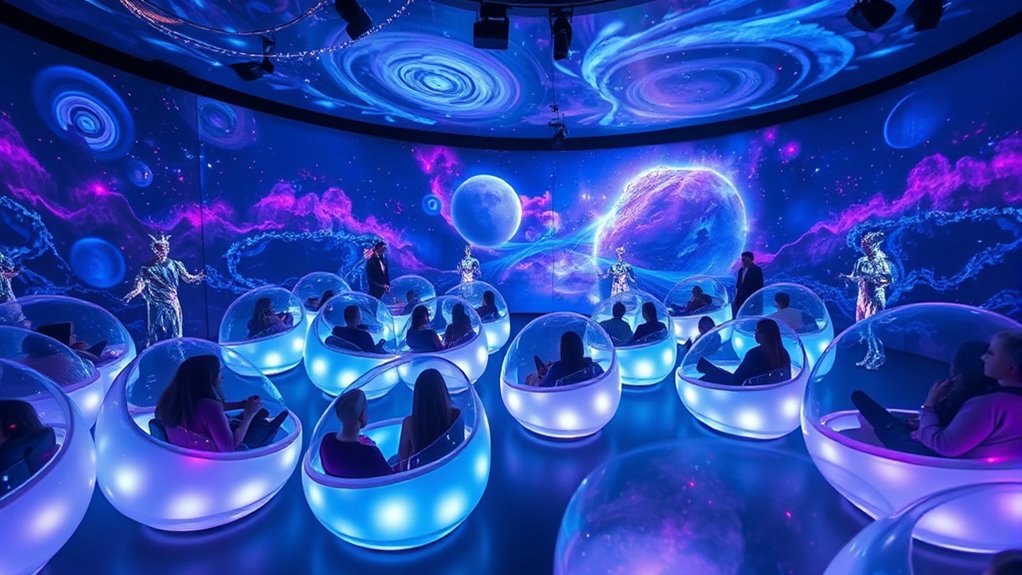

The future of immersive theater will see you experiencing more dynamic, technology-driven storytelling through AR and VR that let you become part of the narrative. These innovations will create personalized, sensory-rich environments where your choices influence the show. Venues will be flexible and responsive, encouraging spontaneous interaction and participation. Digital marketing and cultural collaborations will make these experiences more accessible and engaging. Keep exploring to discover how these exciting changes will shape your next immersive adventure.
Key Takeaways
- Technological innovations like AR and VR will deepen storytelling, creating more immersive and interactive audience experiences.
- Flexible, adaptive theater spaces will allow for personalized and spontaneous audience participation.
- Digital marketing and online engagement will expand reach, fostering global communities around immersive theater.
- Collaborations between cultural institutions and artists will diversify narratives and techniques, enhancing innovation.
- Continued integration of technology and community input will lead to more memorable, boundary-pushing performances.

The future of immersive theater is poised for rapid transformation as technology and audience expectations continue to evolve. You’ll notice that more people are seeking interactive, engaging experiences that go beyond traditional performances. As a result, theaters are adopting innovative methods to meet this demand, making the experience more personalized and enthralling. With advancements like augmented reality (AR) and virtual reality (VR), immersive theater is stepping into a new era where storytelling becomes more dynamic and sensory-rich. These technologies allow you to become part of the story, exploring environments and interacting with elements that feel remarkably real. For example, AR can project virtual objects onto the physical space around you, creating layered visual narratives, while VR transports you into entirely fabricated worlds, making you feel as if you’re truly inside the story. The industry anticipates continued growth in immersive experiences, driven by technological innovations and changing audience preferences. Traditional theaters are evolving to accommodate these new formats by transforming their spaces into flexible, multifunctional venues. Instead of fixed stages, you’ll find venues designed for fluid movement and spontaneous interaction, blurring the line between performers and spectators. This shift encourages you to participate actively rather than passively watch. It’s about creating a shared experience where everyone contributes to the unfolding narrative. These innovations also allow for complex, adaptive storytelling environments that respond to your choices, making each experience unique. You’re no longer just a witness but an integral part of the performance, shaping the outcome through your actions. Technology isn’t the only factor shaping the future; digital marketing and engagement strategies play a crucial role too. Theater companies are leveraging social media to promote immersive productions, building excitement and anticipation among audiences like you. Virtual events and online campaigns extend reach beyond physical venues, inviting more people to participate regardless of location. Data analytics help organizers understand your preferences and tailor marketing efforts, ensuring you get personalized recommendations and updates. This digital approach fosters a community of theater enthusiasts, encouraging ongoing engagement and shared enthusiasm for immersive experiences. Collaborative efforts are also fueling growth. Partnerships between theaters, artists, and cultural institutions bring fresh perspectives and innovative ideas. These collaborations often include cultural exchange programs that diversify the stories and techniques presented on stage. Engagement with local communities ensures that immersive theater remains relevant and accessible, inviting you to be part of a collective creative effort. Additionally, understanding local store hours can help you plan visits around your theater outings. Educational initiatives support the development of new talents and techniques, ensuring the future pipeline of immersive theater remains lively and inventive. As these collaborations deepen, you can expect more diverse, meaningful, and immersive performances that challenge traditional boundaries and redefine your relationship with theater. The future promises a rich landscape where technology, community, and creativity converge to create experiences that are more immersive, interactive, and memorable than ever before.
Frequently Asked Questions
How Will Immersive Theaters Incorporate Artificial Intelligence?
You’ll see immersive theaters incorporate AI to create more personalized, dynamic experiences. AI-driven cameras and sensors analyze your reactions, adjusting lighting, sound, and storytelling in real-time. Interactive elements, like virtual characters and adaptive environments, respond to your choices, making each performance unique. AI also helps craft innovative choreography and set designs, blending technology with human creativity for a truly engaging, seamlessly immersive experience that evolves based on your interactions.
What Are the Challenges in Scaling Immersive Experiences Globally?
You face several challenges when scaling immersive experiences globally. Finding suitable, flexible spaces can be tough, especially since traditional venues often lack the necessary adaptability. Logistics become complex as you manage audience flow and safety across different locations. Additionally, high costs and technical barriers, like equipment and training, hinder expansion. Overcoming these issues requires innovative solutions, modular spaces, and establishing global standards to make immersive experiences more accessible worldwide.
How Will Cost Barriers Affect Access to Immersive Theater?
Cost barriers directly impact your access to immersive theater by making it less affordable and less widespread. High development, maintenance, and licensing costs can limit theaters’ ability to offer these experiences to everyone. When prices stay high, fewer people can participate, especially during economic downturns. As costs decrease through technological advances and new investments, you’ll likely see more accessible, diverse immersive theater options in the future.
What Role Will Virtual Reality Play in Future Productions?
You’re likely to see virtual reality play a central role in future theater productions. It’ll allow you to experience fully interactive and immersive performances from anywhere, breaking physical location barriers. With advancing technology, VR will create more realistic environments, enabling you to participate actively rather than just watch. As costs decrease and accessibility improves, VR will become essential for innovative storytelling, engaging audiences in ways traditional theater can’t match.
How Can Immersive Theater Be Made More Inclusive and Accessible?
Making immersive theater more inclusive is like opening a door to everyone. You can do this by integrating accessible tech, like VR pre-shows, audio descriptions, and sign language. Offer flexible seating and physical support, expand regional venues, and provide virtual options. You’ll reach more diverse audiences, including those with disabilities, sensory or mobility needs, and language barriers, ensuring nobody’s left out and everyone can enjoy the magic.
Conclusion
As you step into the future of immersive theater, prepare to be transported beyond your wildest dreams—this isn’t just entertainment, it’s a revolution. Technologies will blur the lines between reality and fantasy, making every show an unforgettable journey. You’ll find yourself living stories so vividly, they’ll feel like your new universe. Embrace this evolution; it’s not just an experience, it’s a cosmic leap into storytelling’s infinite possibilities. The future of immersive theater will leave your mind forever changed.