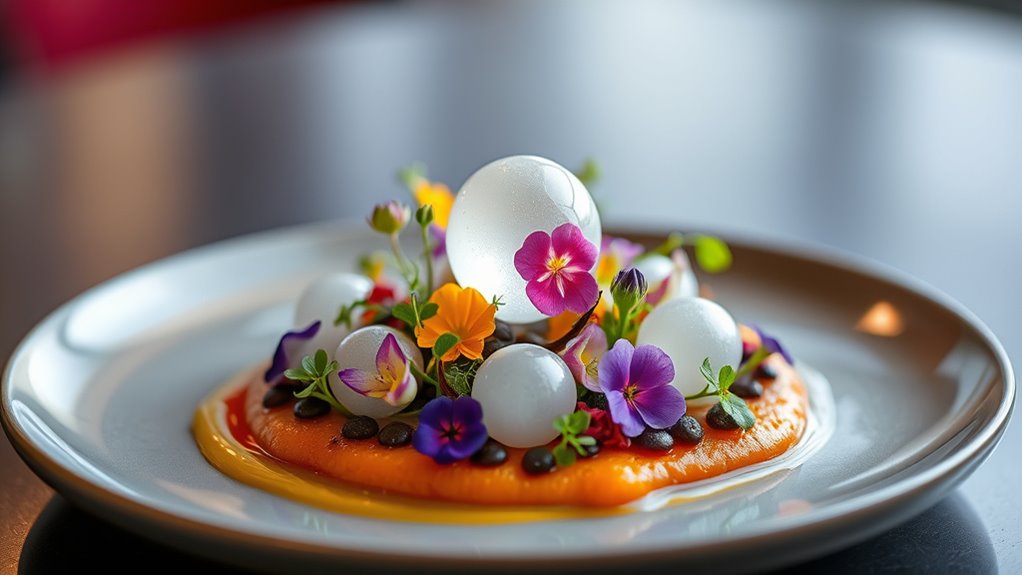

Edible design combines culinary art with scientific innovation, transforming meals into stunning sensory experiences that engage all your senses. By prioritizing fresh, sustainable ingredients, you can create visually appealing dishes that feature vibrant colors and bold flavors. It’s not just for professional chefs; anyone can experiment with textures, shapes, and presentations at home. This approach elevates the joy of cooking and makes each meal a holistic experience. Discover how to unleash your creativity in the kitchen.
Key Takeaways
- Edible design merges artistic aesthetics with culinary science, creating visually stunning and sensory-rich dining experiences.
- It emphasizes the use of sustainable, locally sourced ingredients to enhance flavor and support local agriculture.
- Sensory experiences in cooking engage all five senses, transforming meals into holistic artistic expressions.
- Accessibility encourages home cooks to experiment with flavors, presentation, and innovative techniques, fostering creativity in the kitchen.
- The broader significance lies in celebrating joy, nourishment, and environmental consciousness through artistic culinary creations.

What if your next meal could also be a work of art? Imagine sitting down to a beautifully plated dish that not only tantalizes your taste buds but also captivates your eyes. Edible design is transforming the culinary landscape, blending the aesthetics of art with the science of cooking. You’re not just consuming food; you’re engaging in a sensory experience that appeals to all five senses. This movement encourages chefs and home cooks alike to elevate their meals into something extraordinary.
At the heart of edible design are sustainable ingredients. When you choose to use fresh, locally sourced produce, you’re not only supporting local farmers but also enhancing the quality of your meal. These ingredients bring vibrant colors and bold flavors to your plate, inviting you to explore new culinary possibilities. As you experiment with various textures, colors, and shapes, you’ll discover how even the simplest of ingredients can be transformed into an artistic masterpiece. You might find that a humble carrot can be sliced into delicate ribbons and paired with a rich, savory sauce, creating a dish that’s as visually stunning as it is delicious.
As you dive deeper into edible design, consider the role of sensory experiences in your cooking. Think about how the scents of fresh herbs or the crunch of perfectly roasted vegetables can elevate your meal. When you plate your food, take a moment to visualize the arrangement. A splash of vibrant sauce or a sprinkle of edible flowers can create a visual impact that invites your guests to fully appreciate what’s before them. Every meal becomes an opportunity to engage the senses, from the aroma wafting through the air to the satisfying sound of a crispy bite.
It’s also important to remember that edible design isn’t just for professional chefs. You can bring creativity into your own kitchen, experimenting with flavors and presentations to create unique dishes. Don’t shy away from trying new combinations or techniques. Use your surroundings as inspiration; the colors of a sunset or the shapes of nature can spark ideas for your next culinary creation. Incorporating unique decor styles can also enhance the overall aesthetic appeal of your dining experience.
Ultimately, edible design is about more than just food; it’s about the joy of creation, the celebration of sustainable ingredients, and the sensory experiences that come with each bite. By embracing this approach, you’re not just feeding yourself; you’re crafting a masterpiece that nourishes body and soul alike.
Frequently Asked Questions
What Are the Health Benefits of Edible Design Innovations?
Edible design innovations offer you significant health benefits, primarily through nutritional enhancement and sensory stimulation. By incorporating unique ingredients and presentation techniques, these innovations can boost the nutritional value of meals, making them healthier and more appealing. You’ll enjoy a variety of flavors and textures that excite your senses, leading to a more satisfying eating experience. Plus, these designs can encourage you to try new foods, promoting a balanced diet and overall well-being.
How Can I Start Experimenting With Edible Design at Home?
So, you wanna become a culinary Picasso, huh? Start by experimenting with creative plating—think of your plate as a canvas and the food as your paint. Play with flavor pairing; combine unexpected ingredients to surprise your taste buds. Don’t be afraid to mess up; even the greats had their burnt soufflés. Grab some herbs, a squeeze of citrus, and get to work. Who knows? You might just create the next Instagram-worthy masterpiece!
Are There Any Safety Concerns Regarding Edible Design Materials?
Yes, there are safety concerns regarding edible design materials. You should always consider allergen risks, especially if you’re using ingredients that might trigger reactions in others. Additionally, be mindful of material toxicity; not all items labeled as “edible” are safe for consumption. Research the ingredients thoroughly and verify their safety before experimenting. It’s essential to keep health in mind while exploring your creative culinary endeavors!
What Are the Environmental Impacts of Edible Design Practices?
Edible design practices promote sustainable sourcing and waste reduction, leading to positive environmental impacts. You’ll find that by using locally sourced ingredients, you support local economies while minimizing carbon footprints. additionally, innovative edible materials can help reduce food waste, turning byproducts into creative culinary solutions. You’re not just enjoying delicious creations; you’re actively contributing to a more sustainable future. Engaging in these practices can inspire others to rethink their approach to food and design.
How Does Edible Design Influence Food Sustainability Efforts?
Edible design markedly influences food sustainability efforts by promoting sustainable sourcing and waste reduction. When you embrace edible design, you prioritize ingredients that are locally sourced and produced responsibly, minimizing environmental impact. Additionally, these practices encourage using food byproducts creatively, reducing waste. By integrating innovative culinary techniques, you help create dishes that not only delight the palate but also align with sustainability goals, fostering a more eco-friendly food culture.
Conclusion
As you take a bite of that intricately crafted dish, flavors dance on your palate, like stars twinkling in a night sky. It’s a delightful coincidence that science and art intertwine in your meal, turning every forkful into a celebration of creativity and innovation. You can’t help but marvel at how something so beautiful can also nourish you, reminding you that in the world of edible design, every ingredient has a story, waiting to be savored.