TL;DR
Ukraine’s Defense Ministry is letting selected defense companies train AI systems on annotated combat-drone footage through Avengers Labs and the Brave1 Dataroom. The raw data stays protected, while Ukraine receives the improved models produced by participants.
Ukraine’s Ministry of Defense is offering selected defense companies access to large-scale, annotated combat-drone datasets through Avengers Labs, a partnership platform inside the Brave1 defense-innovation cluster, in a move that could shape how military AI systems are trained for real battlefield conditions.
The program gives participating companies access to millions of annotated frames captured during tens of thousands of combat drone missions, according to the source material citing Ukrainian Defense Ministry reporting and public statements by Mykhailo Fedorov. The footage includes visual and thermal imagery of aerial and ground targets under battlefield conditions, including night, fog, rain, camouflage and electronic-warfare pressure.
Companies do not receive raw combat footage. They work inside the Brave1 Dataroom, a protected environment built by Ukraine’s Defense Ministry, Digital Transformation Ministry, Armed Forces, military-intelligence research institute and Palantir, according to the source material. More than 100 Ukrainian companies are described as already having access, with foreign developers participating through Avengers Labs.
The terms are unusual: companies can use the data to train, validate or fine-tune AI models, but Ukraine keeps the improved finished models. The arrangement is presented as a trade in which firms gain rare real-war training material while Ukraine receives upgraded battlefield AI capability.
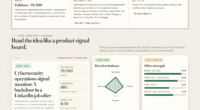
Avengers Labs
Ukraine’s Ministry of Defense is renting access to the world’s only large-scale, real-war computer-vision dataset. The terms: train your model inside the protected Dataroom — Ukraine keeps the finished AI.
Inside the Dataroom
- Structured visual & thermal imagery of aerial and ground targets
- Hard cases: camouflaged armor, night, fog, rain, multiple sensors
- Feeds the Avengers platform inside the DELTA / VEZHA system
- Focus track: automatic detection & interception of enemy drones
The goal
- 100% of frontline drones with onboard machine vision
- Autonomous navigation in GPS-denied / jammed (EW) skies
- Autonomous Shahed interception — human keeps the trigger
- Scaling vs. Shahed launches rising ~35% / month
Combat Data Becomes Leverage
The development matters because high-quality battlefield data is scarce and difficult to replace. Computer-vision systems trained on clean or simulated imagery can fail when targets are obscured, camouflaged, moving at night or seen through degraded sensors. Ukraine’s archive is valuable because it reflects conditions that defense AI systems are expected to handle in combat.
For readers watching defense technology, the program shows how Ukraine is trying to convert wartime experience into a strategic asset. Instead of releasing raw data or relying only on outside suppliers, Kyiv is using controlled access to improve systems it can deploy back to the front.
AI training datasets for drone surveillance
As an affiliate, we earn on qualifying purchases.
As an affiliate, we earn on qualifying purchases.
From Drone War To Dataset
Ukraine’s drone war has produced large volumes of video from reconnaissance, targeting and interception missions. The Avengers platform, developed by the Defense Ministry’s Innovation Center, uses computer vision to detect, classify and track hostile targets in near real time, according to ministry-linked reporting cited in the source material.
The platform is described as feeding the VEZHA streaming module inside DELTA, Ukraine’s battlefield-management system. The ministry has said Avengers flags roughly 12,000 enemy units per week, though that figure depends on official reporting and has not been independently verified in the supplied material.
"Ukraine holds millions of annotated frames gathered across tens of thousands of combat drone sorties."
— Mykhailo Fedorov, Ukraine’s defense minister
As an affiliate, we earn on qualifying purchases.
Verification Still Has Limits
Several details remain unclear from the supplied material. The full list of participating foreign firms has not been identified, and the exact approval process for access to the Dataroom is not described. It is also unclear how finished models are tested before operational use or how performance is measured across different front-line conditions.
The scale of the dataset and the weekly detection figure are attributed to Ukrainian officials and ministry reporting. The supplied material does not include independent audits of those numbers, model accuracy rates, false-positive rates or battlefield outcomes tied directly to Avengers Labs-trained systems.
As an affiliate, we earn on qualifying purchases.
Model Returns Face Testing
The next stage is whether models trained through Avengers Labs can improve detection, navigation and drone-interception performance in combat. Ukrainian officials have described goals that include onboard machine vision for front-line drones, autonomous navigation in jammed environments and assisted Shahed interception with a human retaining fire-control authority.
More information is expected as Ukraine expands access for allied developers and integrates returned models into systems such as Avengers, VEZHA and DELTA. The key measure will be whether controlled data-sharing produces fielded tools that reduce missed detections and help Ukraine respond to rising drone threats.
protected data environment for AI development
As an affiliate, we earn on qualifying purchases.
As an affiliate, we earn on qualifying purchases.
Key Questions
What is Avengers Labs?
Avengers Labs is a partnership platform run through Ukraine’s Defense Ministry and the Brave1 defense-innovation cluster. It lets selected defense companies train AI models using protected Ukrainian combat datasets.
Do companies get Ukraine’s raw drone footage?
No. According to the source material, companies work inside the Brave1 Dataroom and do not take raw combat footage away. Ukraine keeps the data protected and receives the finished improved models.
Why is this data valuable for AI?
The data comes from real drone missions under combat conditions, including night, poor weather, camouflage, multiple sensors and electronic warfare. Those conditions are difficult to reproduce with clean training images or synthetic datasets.
Has the system’s performance been independently verified?
The supplied material cites Ukrainian ministry reporting, including claims about dataset scale and weekly detections. It does not provide independent verification of accuracy rates, false positives or combat results from models trained through the program.
Source: Thorsten Meyer AI