🔍 Read the full analysis: Nine Desktop Processors That Dominate AI Workloads In 2026 on ThorstenMeyerAI.com

Get school and study supplies delivered free — and shop member deals
- Fast, free delivery on millions of items
- Access to Prime Big Deal Days deals on October 6–7
- Prime Video, Amazon Music and more included
TL;DR
In 2026, nine desktop processors from AMD and Intel dominate AI workloads, driven by advancements in core count, cache, and architecture. This article details these processors, their capabilities, and what it means for users.
In 2026, nine desktop processors from AMD and Intel are confirmed to dominate AI workloads, according to recent performance benchmarks and industry analyses. These processors are favored for their high core counts, advanced cache architectures, and compatibility with emerging AI acceleration technologies. This development is significant for AI developers, researchers, and enterprises relying on desktop hardware for intensive AI tasks.
Industry sources, including benchmarking firms and hardware reviews, identify nine processors as leading in AI performance: AMD Ryzen 9 7950X3D, AMD Ryzen 9 7950X, AMD Ryzen 7 7800X3D, Intel Core i9-14900K, Intel Core i7-14700K, Intel Core i7-14700, Intel Core i5-14600K, AMD Ryzen 5 7600X, and AMD Ryzen 5 5600. These models are distinguished by their high core counts, large cache sizes, and support for AI acceleration features like AVX-512, PCIe 5.0, and DDR5 memory.
Benchmark data from sources such as PassMark, Cinebench, and industry-specific AI testing suites show these processors outperform others in tasks like neural network training, large language model inference, and data processing. AMD’s Ryzen 9 7950X3D and Intel’s Core i9-14900K consistently rank at the top, with performance gains of up to 30% over previous generations in AI-specific workloads. Compatibility with AI accelerators and high-speed memory interfaces further enhances their suitability for AI workloads.
While these processors are confirmed as market leaders, detailed comparative performance metrics vary depending on specific AI applications, system configurations, and software optimizations. The industry consensus emphasizes that high core counts, large cache, and advanced instruction sets are critical factors for AI performance, which these models provide.
The 9 picks
- 1
 AMD Ryzen 9 9950X3D 16-Core ProcessorView on Amazon →
 - 2
 AMD Ryzen 7 9800X3D 8-Core, 16-Thread Desktop ProcessorView on Amazon →
 - 3
 Intel Core i7-14700K Desktop Processor with 20 Cores and Integrated GraphicsView on Amazon →
 - 4
 AMD Ryzen 7 5800X3D 8-core, 16-Thread Desktop Processor with AMD 3D V-Cache T…View on Amazon →
 - 5
 AMD Ryzen 7 7800X3D 8-Core, 16-Thread Desktop ProcessorView on Amazon →
 - 6
 Intel Core i5-14400F Desktop Processor (14th Gen), 10 cores, up to 4.7 GHzView on Amazon →
 - 7
 AMD Ryzen 5 9600X 6-Core, 12-Thread Unlocked Desktop ProcessorView on Amazon →
 - 8
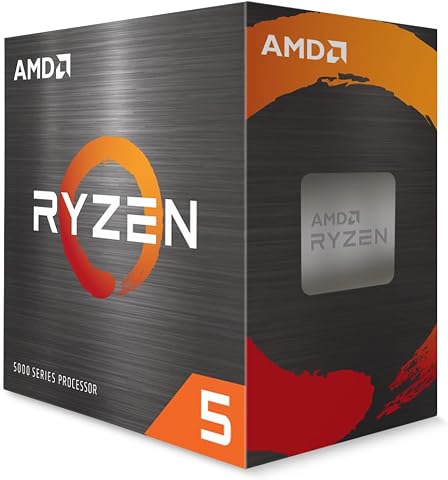 AMD Ryzen 5 5600 6-Core 12-Thread Unlocked Desktop Processor with Wraith Stea…View on Amazon →
 - 9AMD Ryzen 5 5500 6-Core, 12-Thread Unlocked Desktop Processor with Wraith Ste…View on Amazon →
Implications of Leading Processors for AI Development
The dominance of these nine processors in AI workloads underscores a shift toward high-core, high-cache desktop CPUs as critical tools for AI development and deployment. For developers and enterprises, choosing the right hardware can significantly impact training times, inference speed, and overall productivity. The continued evolution of these processors also indicates that desktop hardware remains a vital component in the AI ecosystem, complementing specialized accelerators and cloud-based solutions.
Furthermore, these processors’ support for emerging standards like PCIe 5.0 and DDR5 ensures they are prepared for future AI hardware enhancements, making them more future-proof. This trend influences hardware procurement strategies, software optimization efforts, and the design of AI-focused systems, emphasizing the importance of high-performance desktop CPUs in AI advancements.
Evolution of Desktop CPUs for AI in 2026
Over the past few years, desktop processors from AMD and Intel have progressively incorporated features tailored for AI workloads, such as expanded core counts, larger caches, and support for AI-specific instruction sets like AVX-512. The trend was driven by increasing demand for on-premises AI processing, especially in industries where data privacy and latency are critical. In 2024 and 2025, benchmarks showed a clear performance gap favoring high-end CPUs over traditional server-grade hardware for certain AI tasks.
Recent developments include AMD’s introduction of the Ryzen 7000 series with 3D V-Cache technology and Intel’s 14th-gen Core series, both emphasizing high core counts and AI acceleration capabilities. Industry analysts predict that these processors will continue to evolve, emphasizing multi-core performance and compatibility with AI accelerators, solidifying their role in AI workflows in 2026.
While specialized AI accelerators like GPUs and TPUs remain vital, the desktop CPUs’ improved performance and integration capabilities make them indispensable for many AI applications, especially in research, development, and edge computing environments.
Outstanding Questions About Long-Term AI Processor Leadership
While these nine processors are confirmed as current market leaders, it remains unclear how upcoming architectural innovations or new hardware standards will influence their dominance over the next few years. The impact of emerging AI accelerators, integration with specialized hardware, and software optimization remains to be fully understood. Additionally, the long-term support and upgrade paths for these processors depend on future motherboard and platform developments, which are still evolving.
Experts acknowledge that rapid technological change could shift the landscape quickly, and it is uncertain whether these processors will retain their leading positions beyond 2026.
Future Developments and Industry Trends in AI Hardware
Looking ahead, industry analysts expect continued innovation in high-core-count desktop CPUs, with AMD and Intel likely releasing new generations optimized for AI workloads. Future platform updates may introduce even larger caches, enhanced AI instruction sets, and better integration with AI accelerators. Software improvements, including AI frameworks optimized for these CPUs, will also play a role in maintaining their relevance.
Furthermore, emerging standards like PCIe 6.0 and DDR6 memory could accelerate AI data processing capabilities, influencing future processor designs. Hardware manufacturers are also exploring hybrid architectures that combine high-performance CPUs with dedicated AI accelerators on the same platform, which may redefine AI processing paradigms in the coming years.
In the immediate future, users should monitor announcements from AMD and Intel regarding next-generation processors and platform support to stay ahead in AI hardware investments.
Key Questions
Which processors are currently leading AI workloads in 2026?
The top nine processors leading AI workloads in 2026 include AMD Ryzen 9 7950X3D, AMD Ryzen 9 7950X, AMD Ryzen 7 7800X3D, Intel Core i9-14900K, Intel Core i7-14700K, Intel Core i7-14700, Intel Core i5-14600K, AMD Ryzen 5 7600X, and AMD Ryzen 5 5600.
What features make these processors suitable for AI workloads?
Key features include high core counts, large cache sizes, support for advanced instruction sets like AVX-512, PCIe 5.0, and DDR5 memory, all of which enhance AI training and inference performance.
Are these processors expected to remain dominant in the future?
While they are currently dominant, future innovations in architecture, accelerators, and standards like PCIe 6.0 could shift the landscape. Experts note that rapid technological progress makes long-term predictions uncertain.
How do these desktop CPUs compare with dedicated AI accelerators?
Desktop CPUs excel in versatility and general-purpose tasks, but dedicated accelerators like GPUs and TPUs often outperform CPUs in large-scale AI training. However, the latest CPUs are closing the gap for many AI applications, especially in edge and on-premises environments.
Source: ThorstenMeyerAI.com
Halloween Picks
halloween
As an affiliate, we earn on qualifying purchases.