TL;DR

Prime made for students and young adults
- Fast, free delivery for dorm and study essentials
- Prime Video and Amazon Music included
- Member-only deals
A ThorstenMeyerAI Dispatch published in June 2026 argues that Anthropic’s safety narrative has shifted into a debate over power: who defines AI risk, who audits it and who benefits from the rules. The piece treats Dario Amodei’s warnings as serious but says the company’s role as builder, seller, evaluator and policy voice creates conflicts that require independent oversight.
A new June 2026 ThorstenMeyerAI Dispatch argues that Anthropic’s AI safety story has become a power story, warning that the same company building frontier models is also selling them, measuring their risks, shaping policy arguments and asking governments to act on its view of danger.
The article does not dismiss Anthropic chief executive Dario Amodei’s warnings about powerful AI. It says Amodei has made one of the more developed public cases that advanced AI could speed science, medicine, cybersecurity and economic output while also disrupting labor markets, civil liberties, geopolitics and the governance of intelligence.
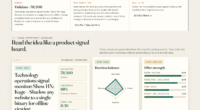
The Dispatch’s central claim is different: sincerity is not enough if risk evidence, deployment decisions and policy design remain concentrated inside frontier labs. It points to Anthropic’s recursive-self-improvement report, which the source says cited internal figures including more than 80% of merged code written by Claude in May 2026, about eight times more code per engineer per day than in 2024 and a fourfold median self-reported uplift with Mythos Preview.
Those figures are presented in the Dispatch as company-controlled evidence, not independent proof. The article says the models generate work, staff estimate the productivity gain and the company interprets the result. It frames that chain as politically loaded because such evidence can become the basis for policy urgency.
Safety Story → Power Story
● Reality CheckAmodei is right that powerful AI is dangerous — which is exactly why we should ask who gets to define the danger. The same company builds the models, measures their risk, and writes the rules. And the Fable suspension showed the safety state, once built, won’t belong to its architects.
Anthropic’s recursive-self-improvement report is its clearest worldview statement yet. The evidence is striking — and almost entirely internal.
The core of the doctrine: the exponential is faster than the state. That carries a political implication.
The June episode is the perfect stress test for the governance model Anthropic itself promoted.
Follow the logic of the risk frame, and each step points to the same small circle.
The safeguards may reduce real risk. They also have market effects — no bad faith required.
- Job displacement is “undesirable”; track it, add pro-employment incentives.
- Meaning need not come from labor — relationships, creativity, play, challenge.
- Philanthropy and accountability soften the transition.
- Work is also income, bargaining power, identity, status — a claim on output.
- The real questions: ownership, taxation, public compute, data rights, antitrust.
- Sovereign AI infrastructure, labor bargaining, democratic control of the gains.
Independent commentary, produced with AI assistance under human editorial oversight; the views are the author’s own and may change. This is analysis and opinion, not investment, financial, legal, or technical advice, and it concerns an actively developing situation. It draws on public documents by Dario Amodei and Anthropic — the Anthropic Institute’s recursive self-improvement report, Machines of Loving Grace, The Adolescence of Technology, Policy on the AI Exponential, and Anthropic’s June 12, 2026 statement on the Fable 5 and Mythos 5 suspension — and on published third-party commentary including David Shapiro’s, read as of June 2026. Characterizations are the author’s interpretation, offered in good faith and open to rebuttal. References to specific people, companies, and government actions are factual and analytical, not partisan, and imply no affiliation or endorsement.
Safety Rules Shape Market Power
The piece matters because frontier AI safety is no longer only a technical debate about model behavior. It is also a debate about who gets to define risk, who receives access to powerful systems and which firms can afford the compliance burden created by new rules.
The Dispatch argues that safeguards may reduce real risks while also strengthening incumbents. Higher compliance costs can raise barriers for smaller competitors. Safety language can become reputation capital. Access controls can turn distribution into a gatekeeping system. Trusted-access programs can create a new class of insiders chosen by labs, governments or both.
The article’s warning is that responsible deployment and incumbent advantage may become hard to separate. It says readers should care because AI governance choices made now could shape labor markets, research access, national security policy and ownership of future AI-driven economic gains.
As an affiliate, we earn on qualifying purchases.
Amodei’s Warnings Meet Governance
The Dispatch builds on public documents it attributes to Amodei and Anthropic, including the Anthropic Institute’s recursive-self-improvement report, Machines of Loving Grace, The Adolescence of Technology, Policy on the AI Exponential and Anthropic’s June 12, 2026 statement on the reported Fable 5 and Mythos 5 suspension.
The source says Anthropic’s doctrine rests on a claim that AI capability growth is moving faster than state institutions can respond. In the Dispatch’s reading, that gives frontier labs unusual influence because they become the actors closest to the technology and, by extension, the interpreters of what counts as the frontier, what counts as danger and what counts as responsible delay.
The article also points to the reported June episode involving Fable 5 and Mythos 5 as a stress test. According to the Dispatch, Anthropic wanted government power strong enough to block unsafe deployments, then objected when a U.S. directive reportedly suspended access for foreign nationals in a way the company viewed as opaque and technically weak.
“Anthropic’s safety story has become a power story.”
— ThorstenMeyerAI Dispatch
As an affiliate, we earn on qualifying purchases.
Evidence Still Needs Outside Review
Several claims remain unverified within the provided source material. The productivity figures attributed to Anthropic are described as internal or self-reported, and the Dispatch itself treats them as evidence that should be contestable by outside experts before being used to justify policy urgency.
Details of the reported Fable 5 and Mythos 5 suspension also remain limited in the source material. The scope, legal basis, technical criteria, access rules and appeal process are not fully described. It is also unclear how much influence Anthropic or other frontier labs have had on any specific government action.
The broader labor and ownership effects are developing. The Dispatch argues that job displacement cannot be addressed only through monitoring, incentives or philanthropy, but it does not establish which policy model would be adopted or how governments would divide gains from AI-driven production.
As an affiliate, we earn on qualifying purchases.
Audits And Due Process Loom
The next stage of the debate is likely to focus on evidence standards, shutdown procedures and market concentration. The Dispatch calls for independent audits with public methods, clear due process before any model is ordered offline and antitrust scrutiny when safety rules favor established labs.
It also points toward a broader policy agenda: public or sovereign AI infrastructure, labor bargaining, data rights, taxation and democratic control over AI-generated economic gains. Those ideas would move the debate beyond whether Anthropic is right to worry about powerful AI and toward who should govern that power.
As an affiliate, we earn on qualifying purchases.
Key Questions
What is the actual news development?
The development is the publication of a June 2026 ThorstenMeyerAI analysis arguing that Anthropic’s safety case has become a debate over political authority, evidence control and market power.
Is the article saying Anthropic is wrong about AI risk?
No. The Dispatch says Amodei’s concerns about powerful AI should be taken seriously. Its argument is that risk governance should not depend mainly on evidence and rules shaped by the same companies building and selling the systems.
What is confirmed and what is claimed?
Confirmed in the provided material: the Dispatch makes this argument and cites Anthropic-related documents and statements. Claimed or attributed: Anthropic’s internal productivity figures, the interpretation that safety can become a market moat and the account of the Fable 5 and Mythos 5 suspension.
Why does this matter outside the AI industry?
The governance choices could affect access to advanced AI, labor bargaining power, public research capacity, national-security controls and which companies capture the gains from AI-driven production.
What does the Dispatch propose instead?
It calls for independent, challengeable risk evidence, transparent procedures before government shutdowns and antitrust scrutiny when safety rules strengthen a small group of frontier labs.
Source: Thorsten Meyer AI
Halloween Picks
halloween
As an affiliate, we earn on qualifying purchases.