

📊 Full opportunity report: Harness AI Automation To Improve Workflows In 2026 on ThorstenMeyerAI.com — validation score, market gap, and execution plan.

Prime made for students and young adults
- Fast, free delivery for dorm and study essentials
- Prime Video and Amazon Music included
- Member-only deals
TL;DR
In 2026, AI automation software is increasingly integrated into workflows across industries, with tools like OpenCode Custom Workflows leading the way. While adoption accelerates, details on implementation challenges and long-term impacts remain developing.
AI automation software is being adopted across industries in 2026, with confirmed improvements in workflow efficiency driven by tools like OpenCode Custom Workflows. This development matters because it could reshape how organizations operate, reducing manual effort and increasing productivity.
Recent industry reports indicate that AI automation tools such as agent builders, coding assistants, and office copilots are becoming standard components in organizational workflows, as detailed in the original analysis. The most prominent tool, OpenCode Custom Workflows, focuses on intelligent agent orchestration, enabling end-to-end automation that aligns with enterprise needs.
Experts like Thorsten Meyer highlight that these tools support multi-step processes, reducing manual intervention and streamlining complex tasks. For more insights, see this comprehensive guide. Meanwhile, specialized solutions for testing, design, and office automation are also gaining traction, especially within organizations already invested in platforms like Microsoft 365.
While these advancements are confirmed, the full scope of long-term integration challenges, such as maintenance, security, and scalability, remains under observation. This overview is supported by industry reports. Industry insiders note that the transition to AI-driven workflows requires careful planning and skill development.
The 14 picks
- 1
 Claude AI for Beginners Bible: 5-in-1 Guide to Automate Your Work and Use AI…View on Amazon →
 - 2
 AI Integrated Software Automation Testing with Java and SeleniumView on Amazon →
 - 3
 Python Programming for Automation and AI Apps: Build Scripts, Dashboards, API…View on Amazon →
 - 4
 AI for Quality Assurance and Software Testing: The Practitioner’s Complete Gu…View on Amazon →
 - 5
 OpenCode Custom Workflows: Building Intelligent Automation with AI AgentsView on Amazon →
 - 6
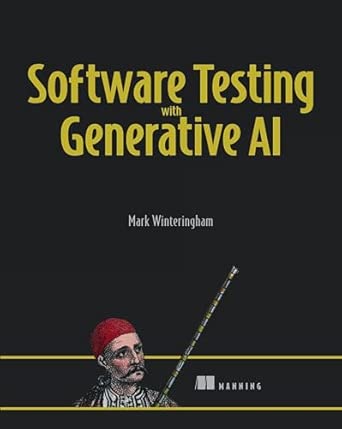 Software Testing with Generative AIView on Amazon →
 - 7
 40 Python Programming Projects for AI Agents and AutomationsView on Amazon →
 - 8
 Learning Generative AI Tools for Excel: Speed Up Your Tasks with Microsoft Ex…View on Amazon →
 - 9
 AI Email Automation for Beginners: Save Time, Increase Productivity, and Auto…View on Amazon →
 - 10
 AI Automation Made SimpleView on Amazon →
 - 11
 Python Automation Systems for AI Applications and Smart ToolsView on Amazon →
 - 12
 Using AI For AutoCAD: Boost Your Drafting, Design, and Workflow with Artifici…View on Amazon →
 - 13
 The Complete Microsoft 365 and Copilot Handbook – Volume II: Advanced Automat…View on Amazon →
 - 14
 Claude Code Advanced: Advanced Agentic Programming for Software Engineers (Cl…View on Amazon →
Impacts of AI Automation on Business Operations in 2026
The widespread adoption of AI automation in 2026 signifies a potential shift in workplace productivity and operational efficiency. Organizations that effectively implement these tools can reduce manual labor, accelerate decision-making, and improve accuracy in routine tasks.
However, this transition also raises concerns about skill gaps, dependency on AI systems, and security vulnerabilities. For employees, it may mean a need for retraining and new workflows, while for management, it demands strategic oversight of AI integration.
Evolution of AI Automation Tools Leading to 2026
Over the past few years, AI automation has evolved from simple task automation to complex, multi-application workflows. Early tools focused on isolated tasks, but recent developments like OpenCode Custom Workflows and Claude Code Advanced demonstrate a shift toward comprehensive agent orchestration.
Industry reports from Thorsten MeyerAI.com note that the focus is now on creating reusable, scalable systems that support end-to-end automation across multiple platforms. This progression reflects a broader trend of integrating AI deeper into enterprise infrastructure, driven by advances in agent orchestration, coding assistants, and no-code/low-code solutions.
“OpenCode Custom Workflows most directly addresses end-to-end automation, supporting multi-step processes with minimal manual intervention.”
— Thorsten Meyer
Challenges and Unknowns in AI Workflow Integration
While AI automation tools are gaining adoption, several uncertainties remain. The long-term effectiveness of these systems, their security implications, and the skills required for maintenance are still being evaluated. Additionally, the impact on employment and organizational structures remains a topic of debate, with some experts cautioning about over-reliance on AI systems.
Future Developments and Adoption Milestones in 2026
Next steps include broader industry adoption, with organizations testing comprehensive AI workflows in real-world environments. Developers and vendors are expected to release more integrated, user-friendly solutions, while research continues into improving AI system robustness and security. Monitoring these developments will be crucial to understanding how AI automation will reshape work in the coming years.
Key Questions
What are the main benefits of AI automation in 2026?
The main benefits include increased efficiency, reduced manual labor, faster decision-making, and improved accuracy in routine tasks.
What tools are leading the AI automation trend in 2026?
Tools like OpenCode Custom Workflows, Claude Code Advanced, and Microsoft 365 Copilot are among the leading solutions supporting enterprise automation.
What challenges do organizations face when adopting AI automation?
Challenges include ensuring system security, maintaining and updating AI workflows, managing skill gaps, and addressing potential dependency risks.
Will AI automation replace human workers in 2026?
While AI automation is automating many routine tasks, it is expected to complement rather than fully replace human workers, with a focus on augmenting productivity.
How can organizations prepare for AI-driven workflows?
Organizations should invest in employee training, develop clear automation strategies, and ensure robust security and maintenance protocols for AI systems.
Source: ThorstenMeyerAI.com
Fall Picks
fall essentials
As an affiliate, we earn on qualifying purchases.