
📊 Full opportunity report: The SSD Squeeze: Why Storage Joined the Party on ThorstenMeyerAI.com — validation score, market gap, and execution plan.
TL;DR
Storage, especially SSDs, is experiencing a significant price increase due to high demand from AI applications and limited manufacturing capacity. Major manufacturers are prioritizing high-margin enterprise products, leading to shortages and higher costs for consumers and industrial buyers.
SSD prices are surging in early 2026 as a result of a supply crunch driven by increased AI storage demands and deliberate capacity constraints by major manufacturers. This marks a departure from the recent past when storage was considered a cheap, abundant resource, and now it is becoming a costly component for both enterprise and consumer markets.
Over the past nine months, contract prices for enterprise SSDs have increased by approximately 53–58%, with SanDisk doubling the price of its enterprise 3D NAND. Consumer SSD prices for 1TB drives have roughly doubled or tripled, reflecting the broader market squeeze. The supply shortage is driven by two main factors: first, NAND production lines are competing with high-margin HBM and DRAM for limited wafer capacity, with leading manufacturers like Samsung, SK Hynix, and Micron reducing their wafer targets. Second, the rapid growth of AI workloads has created an increased demand for high-capacity, high-performance NAND storage, with AI models requiring 16TB or more per GPU and entire data centers demanding over 1,000TB of NAND storage.
Manufacturers such as Micron and Samsung have acknowledged supply constraints, with Micron stating it can meet only 55–60% of customer demand. New fabs are years away, and industry insiders suggest that current capacity cuts are driven more by profit motives than technical limitations. As a result, enterprise buyers are experiencing the most immediate impact, but consumers and industrial users are also feeling the squeeze through higher prices, longer lead times, and product downgrades.
The SSD squeeze: storage joined the party
Storage was the last cheap thing in computing. Not anymore — a 2TB NVMe that was $120–150 in 2024 now lists at $300–480. And this time flash isn’t only collateral damage: AI eats storage directly.
both ways
Flash got hit twice — once as collateral sharing fabs with HBM, once directly as AI inference turned fast storage into something it consumes by the petabyte. That second force won’t fade; it grows with every model, every RAG pipeline, every cache that must live somewhere fast. Buy what you need now; favor TLC with DRAM cache, don’t overpay for Gen 5, watch for counterfeits. Relief isn’t forecast before late 2027. When the cheapest component in computing has a two-year waitlist, “commodity” no longer fits. Next: The High-End PC & Workstation Tax.
Why the Storage Shortage Matters for Consumers and Industry
This shortage indicates changes in the storage market, where NAND is increasingly viewed as a high-value component due to AI and high-performance computing demands. Consumers may face higher costs for SSD upgrades and potential shortages of certain models. Industrial and automotive sectors could experience longer lead times and limited access to specific flash types, affecting infrastructure and storage planning. The current market dynamics also raise questions about future capacity expansion and the balance between supply constraints and production strategies aimed at profitability.

Samsung 990 PRO SSD 2TB NVMe M.2 PCIe Gen4, M.2 2280 Internal Solid State Hard Drive, Seq. Read Speeds Up to 7,450 MB/s for High End Computing, Gaming, and Heavy Duty Workstations, MZ-V9P2T0B/AM
- Next-Gen Performance: Lightning-fast speeds for gaming and tech
- Enhanced Transfer Speeds: 55% better random performance than 980 PRO
- High-Performance Bandwidth: Supports heavy computing and fast loading
As an affiliate, we earn on qualifying purchases.
As an affiliate, we earn on qualifying purchases.
Background of NAND Market and AI Storage Demands
In recent years, NAND flash memory was among the most affordable components in computing, with prices declining and capacity increasing rapidly. However, starting in late 2025 and into 2026, prices began to increase as manufacturers faced dual challenges: competing for limited wafer capacity with high-margin HBM and DRAM, and meeting the growing demand for storage from AI applications. AI models require substantial storage for training and inference, with some data centers demanding over 1,000TB of NAND per rack. Industry insiders note that new fabs take two to three years to become operational, and current capacity reductions are believed to be motivated by profit considerations amid ongoing shortages.
“We can only satisfy about 55–60% of our main customers’ demand due to capacity constraints.”
— A senior executive at Micron
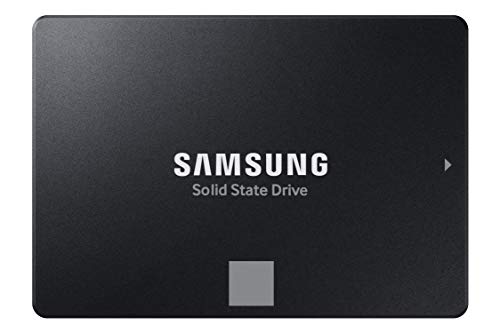
Samsung 870 EVO SATA III SSD 1TB 2.5” Internal Solid State Drive, Upgrade PC or Laptop Memory and Storage for IT Pros, Creators, Everyday Users, MZ-77E1T0B/AM
- Brand and Model: Samsung SSD 870 EVO 1TB
- Performance Speed: Up to 560MB/s read speed
- Technology: SATA III interface
As an affiliate, we earn on qualifying purchases.
As an affiliate, we earn on qualifying purchases.
Extent of Market Manipulation and Future Capacity
The extent to which deliberate capacity constraints are influencing current price increases remains uncertain. Industry sources suggest manufacturers are intentionally limiting wafer targets to sustain profit margins, but specific plans for capacity expansion are not publicly available. The timeline for new fabs to address shortages is estimated to be two to three years.
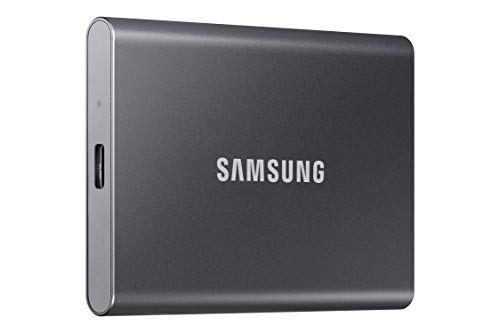
Samsung T7 Portable SSD, 1TB External Solid State Drive, Speeds Up to 1,050MB/s, USB 3.2 Gen 2, Reliable Storage for Gaming, Students, Professionals, MU-PC1T0T/AM, Gray
- Designed for Creators: Fast speeds and durable for creative work
- High-Speed Data Transfer: Up to 1,050MB/s read/write speeds
- Large Capacity Options: Up to 4TB storage for all files
As an affiliate, we earn on qualifying purchases.
As an affiliate, we earn on qualifying purchases.
Expected Developments in NAND Supply and Pricing Trends
Manufacturers are likely to continue prioritizing high-margin enterprise and AI storage products in the near term, with new capacity additions potentially delayed into late 2027. Buyers should anticipate sustained high prices, extended lead times, and possible product downgrades. Industry analysts recommend purchasing only what is necessary at this time and avoiding premium-priced new-generation drives unless essential. Monitoring capacity expansion plans and market signals will be important for future planning.

Kingston NV3 1TB M.2 2280 NVMe SSD | PCIe 4.0 Gen 4×4 | Up to 6000 MB/s | SNV3S/1000G
- High-Speed Storage: Ideal for fast, low power storage
- PCIe 4.0 x4 Performance: Gen 4×4 NVMe PCIe performance
- Large Capacity Options: Capacities up to 4TB
As an affiliate, we earn on qualifying purchases.
As an affiliate, we earn on qualifying purchases.
Key Questions
Why are SSD prices rising so rapidly in 2026?
Prices are increasing due to a combination of supply constraints caused by wafer competition among NAND, DRAM, and HBM, and rising demand from AI workloads requiring large storage capacities.
Are new fabs being built to address the shortage?
While new fabs are planned, they are typically two to three years from operational readiness, and current capacity reductions suggest manufacturers are focusing on profit margins over immediate capacity expansion.
How does AI demand impact storage prices?
AI workloads require large amounts of high-performance NAND, especially for training and inference, which has increased demand and contributed to shortages and price increases.
Should consumers wait for prices to drop?
Given current supply constraints and high demand, waiting may not result in lower prices and could lead to unavailability. It is generally advisable to purchase only what is necessary now.
Source: ThorstenMeyerAI.com