
TL;DR
OpenCV 5 has been released, featuring a new DNN engine, improved ONNX compatibility, hardware acceleration, and better Python integration. This update aims to keep the library at the forefront of computer vision technology.
OpenCV 5 was officially released on June 8, 2023, marking a major update to one of the most widely used computer vision libraries in the world. The new version features a rewritten deep neural network (DNN) engine, expanded ONNX support, and hardware acceleration improvements, aiming to meet the demands of modern AI and vision applications.
OpenCV 5 builds on over two decades of development, serving as a core tool for industries ranging from robotics to medical imaging. The update introduces a graph-based DNN engine capable of better model compatibility, including support for dynamic shapes, control flow, and fused operations like attention mechanisms used in transformers. Its ONNX operator coverage has increased from around 22% to over 80%, significantly reducing compatibility issues with current models.
The release also emphasizes hardware acceleration, with native GPU support in the new DNN engine and plans for non-CPU hardware abstraction layers. Python support has been modernized, with improved bindings and usability. Additionally, the update enhances 3D vision capabilities, documentation, and API cleanliness, aiming to streamline development workflows and performance across diverse platforms.
Impact of OpenCV 5 on Computer Vision Development
This release is a substantial step forward for the computer vision community. It addresses longstanding limitations in model compatibility and performance, enabling developers to deploy advanced AI models more reliably across a range of hardware, from embedded devices to servers. The improved DNN engine and hardware acceleration support will likely accelerate research, industrial applications, and real-time systems, maintaining OpenCV’s position as a foundational library.
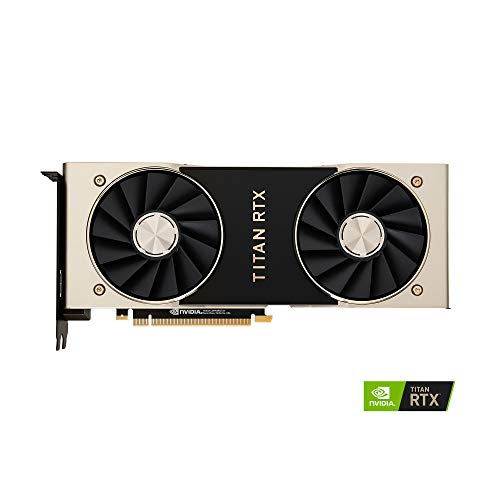
NVIDIA Titan RTX Graphics Card
OS Certification : Windows 7 (64 bit), Windows 10 (64 bit) (April 2018 Update or later), Linux 64…
As an affiliate, we earn on qualifying purchases.
As an affiliate, we earn on qualifying purchases.
OpenCV’s Evolution and Industry Adoption
OpenCV has been a cornerstone of computer vision since its inception, with widespread adoption across research, industry, and academia. Its versatility and extensive algorithm collection have made it a go-to resource for tasks including robotics, medical imaging, and augmented reality. Prior to version 5, the library faced challenges in keeping pace with rapid deep learning developments, especially regarding model compatibility and hardware optimization. The last major update, OpenCV 4, introduced significant improvements but still left gaps in support for modern models and hardware acceleration, which OpenCV 5 now aims to fill.
“OpenCV 5 represents a major modernization of the library, with a focus on performance, compatibility, and hardware support to meet the needs of today’s AI applications.”
— OpenCV.org team
“The new DNN engine’s graph-based approach allows for more efficient model execution and broader compatibility, especially with transformer-based architectures.”
— OpenCV developer

HIWONDER ROS2 ChatGPT Robotic Arm 6DOF Flexible Smart Robot Large AI Models Programming Robot Arm Kit ROS Education AI Vision & Voice Command Scene Understanding, JetArm Ultimate Kit Without Jetson
AI-Driven and Jetson-Powered. JetArm is a high-performance 3D vision robot arm developed for ROS education scenarios. It is…
As an affiliate, we earn on qualifying purchases.
As an affiliate, we earn on qualifying purchases.
Remaining Challenges and Future Developments
While the new DNN engine and hardware acceleration features are promising, it is still early to determine how well they perform across all hardware platforms and with diverse models. Compatibility with some niche or highly custom models may still pose challenges, and real-world benchmarks are awaited to validate performance claims. Additionally, details about upcoming GPU support and non-CPU hardware abstraction layers are still emerging.

Sparkle Intel Arc A310 ECO, 4GB GDDR6, 50W TBP, Short Bracket is Included, Low-Profile, Single Fan, Single Slot, HDMI x1, Mini DisplayPort x2, SA310C-4G
Intel Arc A310 Chipset
As an affiliate, we earn on qualifying purchases.
As an affiliate, we earn on qualifying purchases.
Next Steps for OpenCV 5 and Community Engagement
Developers and users are encouraged to test the new release, especially its DNN capabilities and hardware acceleration features. Future updates are expected to include native GPU support for the DNN engine and expanded documentation. The OpenCV team plans to release further benchmarks and gather community feedback to refine performance and usability, with a focus on supporting emerging hardware and AI models.

GigE 5.0MP 2/3" Color Industrial Camera Machine Vision Global Shutter
Support VC/C++, C++builder, VB6, VB.NET, Delphi, C#, QT, JAVA, Python And Other Programming Languages.
As an affiliate, we earn on qualifying purchases.
As an affiliate, we earn on qualifying purchases.
Key Questions
When will OpenCV 5 be available for installation?
The pip version of OpenCV 5 was officially released on June 8, 2023, and is available for download from PyPI and the official GitHub repository.
What are the main improvements in the new DNN engine?
The new DNN engine is graph-based, supports dynamic shapes, control flow, fused operations like attention, and has significantly increased ONNX operator coverage, enabling better model compatibility and performance.
Will OpenCV 5 support GPU acceleration on all hardware platforms?
Native GPU support is planned for the future, with upcoming releases expected to include GPU acceleration for the DNN engine and hardware abstraction layers for various accelerators.
How does OpenCV 5 improve Python support?
The update modernizes Python bindings, introduces named arguments, and enhances ease of use, making it more accessible for developers working in Python-based workflows.
What is the significance of the improved ONNX support?
Enhanced ONNX support means that more models can be loaded and run efficiently within OpenCV, reducing errors and increasing compatibility with popular deep learning frameworks.
Source: Hacker News