
TL;DR

Prime made for students and young adults
- Fast, free delivery for dorm and study essentials
- Prime Video and Amazon Music included
- Member-only deals
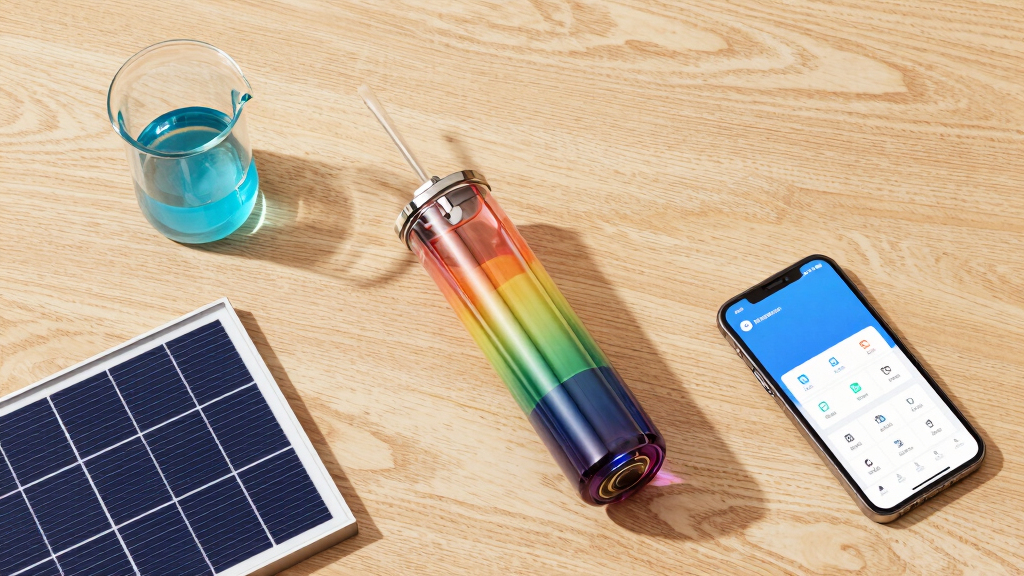
UC Santa Barbara scientists have developed a novel liquid molecule that captures and stores solar energy chemically, acting as a rechargeable ‘sun battery.’ This breakthrough could transform renewable energy storage, especially for off-grid use. The technology has demonstrated the ability to boil water using stored sunlight, marking a significant milestone.
Scientists at UC Santa Barbara have developed a new liquid molecular material capable of absorbing sunlight and storing that energy chemically for later use, a breakthrough that could revolutionize solar energy storage and reduce reliance on large batteries.
The research team, led by Associate Professor Grace Han, described the material in the journal Science. It is based on a modified organic molecule called pyrimidone, inspired by DNA components, which can reversibly change shape when exposed to sunlight, storing energy in chemical bonds. When triggered by heat or a catalyst, the molecule reverts to its original form, releasing stored energy as heat.
The molecule behaves like a rechargeable battery, with an energy density exceeding 1.6 megajoules per kilogram—more than the 0.9 MJ/kg typical of lithium-ion batteries. In experiments, the material demonstrated the ability to generate enough heat to boil water under ambient conditions, a notable achievement in the field of solar thermal storage.
Why It Matters
This development offers a promising alternative to traditional batteries for storing solar energy, especially for off-grid applications such as camping or household water heating. The ability to store sunlight chemically and release it as heat could enable more efficient, scalable, and sustainable renewable energy systems, reducing dependence on the electrical grid and large-scale battery infrastructure.
solar thermal energy storage system
As an affiliate, we earn on qualifying purchases.
As an affiliate, we earn on qualifying purchases.
Background
Current solar energy systems rely heavily on photovoltaic panels combined with large battery banks or grid connection for storage. The challenge has been to develop compact, efficient, and cost-effective storage solutions. Molecular solar thermal (MOST) technology has been under research for years, but previous versions struggled with stability, energy density, or practical demonstration. This new molecule, inspired by DNA, represents a significant step forward, especially with the recent demonstration of boiling water using stored solar energy.
“The concept is reusable and recyclable. Think of photochromic sunglasses. When you’re inside, they’re just clear lenses. You walk out into the sun, and they darken on their own. Come back inside, and the lenses become clear again.”
— Nguyen
“We can boil water under ambient conditions, which is a big achievement for this type of technology.”
— Nguyen
“With molecular solar thermal energy storage, the material itself can store sunlight energy without additional batteries.”
— Baker
As an affiliate, we earn on qualifying purchases.
What Remains Unclear
It is not yet clear how scalable or cost-effective this technology will be for widespread commercial use. Long-term stability, large-scale manufacturing, and integration into existing systems remain to be tested and validated.
As an affiliate, we earn on qualifying purchases.
What’s Next
Researchers plan to optimize the molecule for higher stability and energy density, conduct larger-scale demonstrations, and explore integration into practical applications such as rooftop solar collectors and off-grid heating systems. Further testing will determine commercial viability.
As an affiliate, we earn on qualifying purchases.
Key Questions
How does this new material compare to traditional batteries?
The molecule stores more energy per kilogram than lithium-ion batteries and releases heat directly, which can be used for heating or boiling water, potentially simplifying storage and reducing costs for specific applications.
Can this technology be used for electricity generation?
Currently, the technology stores energy as heat, not electricity. Future developments might enable conversion into electricity, but this is not yet demonstrated.
What are the environmental benefits of this technology?
It offers a potentially cleaner and more sustainable way to store solar energy without relying on large, resource-intensive batteries, reducing environmental impact associated with battery manufacturing and disposal.
When might this technology become commercially available?
It is still in the research and development phase. Commercial deployment could take several years, depending on further testing, scaling, and cost reduction.
Fall Picks
fall essentials
As an affiliate, we earn on qualifying purchases.