
TL;DR
Eclipse Ventures’ recent IPO success with Cerebras has resulted in a $2.5 billion return, underscoring a rising investor interest in physical-world technology sectors like semiconductors and robotics. This development signals a strategic shift in venture capital toward hardware and industrial tech.
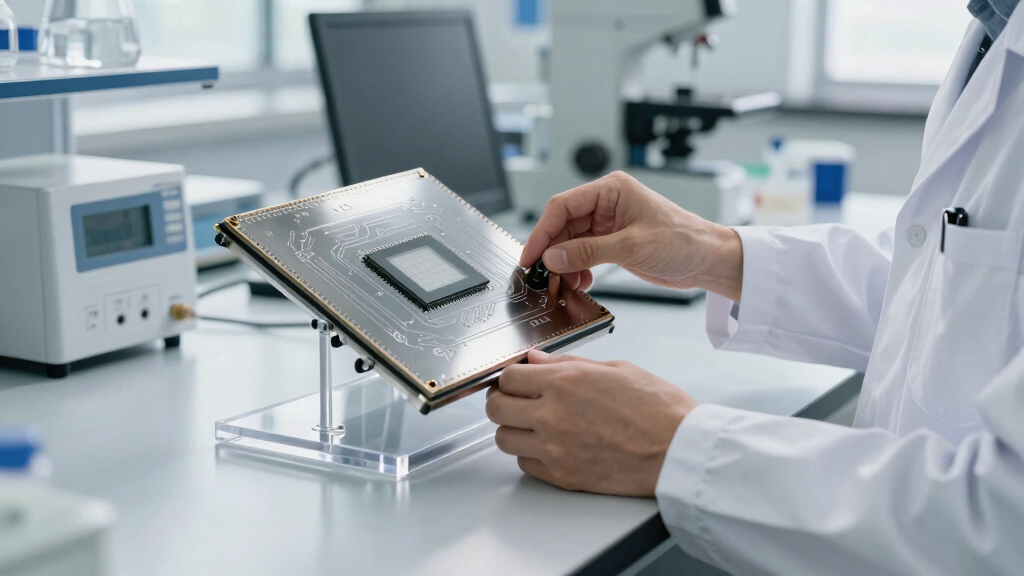
Eclipse Ventures has realized a $2.5 billion return from its early investment in semiconductor company Cerebras Systems, following the company’s recent initial public offering (IPO). This milestone underscores a broader industry trend toward increased investor focus on physical-world technologies, including semiconductors, robotics, and energy infrastructure.
Founded in 2015, Eclipse Ventures invested a total of $147 million in Cerebras Systems over several years, culminating in a 17-fold return at the company’s IPO price of $185 per share. The IPO made Cerebras a significant player in the AI hardware space, with its valuation reflecting strong investor confidence in physical-world tech sectors.
CEO Lior Susan highlighted that this success is just the beginning of Eclipse’s broader strategy to capitalize on the physical economy, which accounts for 85% of global GDP. The firm’s portfolio now includes companies across robotics, energy, and defense, which collectively raised nearly $15 billion last year, with over $4.5 billion in the first quarter of 2026 alone.
While the industry’s enthusiasm is partly driven by AI infrastructure needs, Susan emphasized that factors like government subsidies, regulatory support, and the availability of engineering talent are also fueling this shift. Eclipse’s early investments in hardware and industrial sectors are now paying off as public markets and startups increasingly recognize the value of physical-world innovation.
Why It Matters
This milestone demonstrates a significant shift in venture capital focus toward sectors that build and support the physical infrastructure of technology, such as semiconductors, robotics, and energy. It signals that investors see long-term value in hardware and industrial tech, which could reshape startup funding patterns and industry priorities. For readers, this underscores the growing importance of physical-world assets in the digital economy and the potential for substantial returns in these sectors.
Fundamentals of Semiconductor Manufacturing and Process Control (IEEE Press)
As an affiliate, we earn on qualifying purchases.
As an affiliate, we earn on qualifying purchases.
Background
Since its founding, Eclipse Ventures has focused on ‘digitizing the physical world,’ a strategy that was initially less popular compared to pure software investments. Its early bets on Cerebras in 2016 proved prescient, as the company’s IPO in 2026 marked a turning point for hardware-focused startups. The recent surge in funding for Eclipse’s portfolio companies reflects a broader industry recognition of the strategic importance of physical infrastructure, driven by AI, robotics, and government policy support.
Historically, venture capital has favored software startups, but recent market dynamics suggest a paradigm shift toward hardware and industrial tech, supported by policy initiatives and market demand for tangible assets that underpin digital innovations.
“This is just the beginning of reaping rewards from our belief that the physical world is central to the future of technology.”
— Lior Susan, CEO of Eclipse Ventures
“The real moat in software is gone; manufacturing wafers and silicon require machines, clean rooms, and infrastructure. That’s where the value lies now.”
— Lior Susan, CEO of Eclipse Ventures
LewanSoul Robotic Arm Kit 6DOF Programming Robot Arm with 5 Servo, Handle, Mechanical Claw and More, PC Software APP Control with Tutorial
Spark Your Creativity with LeArm Robotic Arm: LeArm is an elementary 6DOF desktop robot arm outfitted with 6…
As an affiliate, we earn on qualifying purchases.
As an affiliate, we earn on qualifying purchases.
What Remains Unclear
It remains unclear how sustained the current investor enthusiasm for physical-world tech will be, and whether more startups will successfully scale in this space. Additionally, the long-term impact of government policies and technological breakthroughs on this market is still developing.

SQL Server 2025 Unveiled: The AI-Ready Enterprise Database with Microsoft Fabric Integration
As an affiliate, we earn on qualifying purchases.
As an affiliate, we earn on qualifying purchases.
What’s Next
Next steps include monitoring how Eclipse’s portfolio companies perform in subsequent funding rounds and IPOs. Industry observers will also watch whether other venture firms follow Eclipse’s lead into hardware and industrial sectors, and how government policy continues to support this shift.
Advances in Electric Power and Energy Infrastructure: Proceedings of ICPCCI 2019 (Lecture Notes in Electrical Engineering, 608)
As an affiliate, we earn on qualifying purchases.
As an affiliate, we earn on qualifying purchases.
Key Questions
What does the $2.5 billion return mean for Eclipse Ventures?
This return signifies a major success for Eclipse, validating its strategy of investing early in physical-world technology companies like Cerebras and potentially attracting more capital into similar sectors.
Why is there increased investor interest in hardware and industrial tech now?
Factors include the rise of AI infrastructure needs, government subsidies, favorable regulations, and a perception of long-term value in tangible assets that support digital innovation.
Will this trend continue beyond Cerebras and Eclipse’s portfolio?
While current momentum suggests continued interest, it remains uncertain how sustainable this shift will be, and whether it will lead to broader industry transformation.