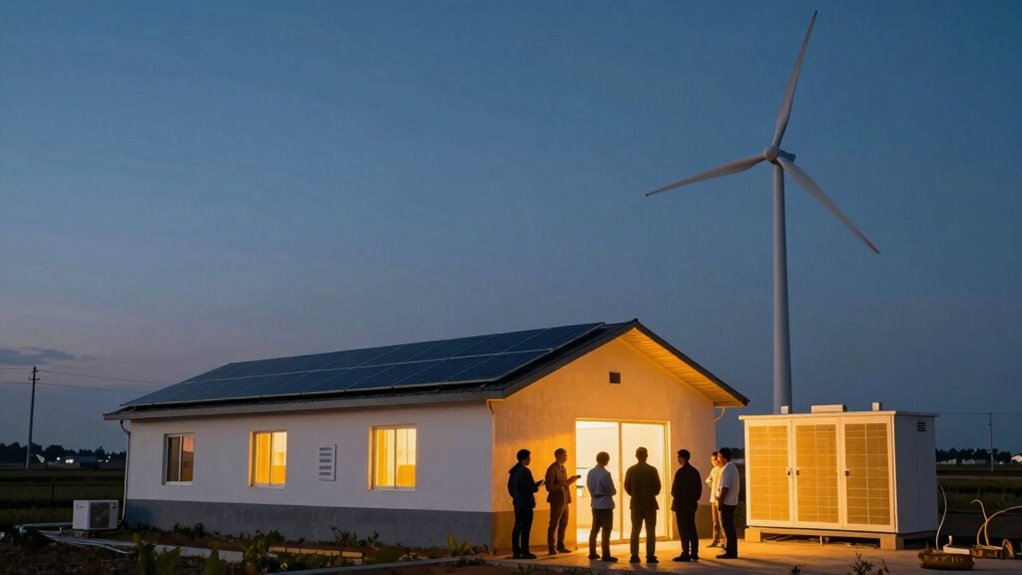

Microgrids improve your resilience during energy disruptions by providing a reliable, localized power source that can operate independently from the main grid during outages. They keep critical services like hospitals and emergency centers running smoothly, reducing downtime and economic losses. By incorporating renewable energy and managing demand locally, microgrids minimize the impact of severe weather or cyberattacks. To discover how they’re shaping a more resilient energy future, keep exploring this innovative solution.
Key Takeaways
- Microgrids can operate independently through “islanding,” ensuring continuous power to critical infrastructure during main grid failures.
- Incorporating renewable energy sources enhances sustainability and reduces reliance on vulnerable traditional power plants.
- Localized demand management minimizes strain on the larger grid, preventing widespread outages.
- Quick response capabilities enable microgrids to isolate disruptions and restore power efficiently.
- Community control over energy sources increases resilience and reduces vulnerability to external disruptions.

Have you ever experienced a power outage that left your community in the dark? If so, you know how disruptive it can be—interrupting your daily routine, affecting businesses, and even compromising safety. Microgrids are changing that reality by providing a way to improve resilience during energy disruptions. These small, localized energy systems can operate independently from the main grid, offering a reliable power source when traditional infrastructure fails. By achieving grid independence, microgrids can keep critical services running, such as hospitals, emergency centers, and communication hubs, ensuring safety and stability even amid widespread outages.
One of the key strengths of microgrids lies in their ability to incorporate renewable energy sources like solar, wind, or biomass. This renewable integration not only makes microgrids more sustainable but also enhances their resilience. When the main grid experiences issues—whether due to storms, cyberattacks, or equipment failures—the microgrid can seamlessly switch to its renewable energy supply and local storage. This independence from the main grid means you won’t have to worry about losing power during a blackout or severe weather event. Instead, your community can maintain essential functions, reducing economic losses and safeguarding lives.
Microgrids use renewable energy to stay resilient during outages, keeping communities powered and safe.
By functioning independently, microgrids also help balance supply and demand locally, lessening the strain on the larger grid during peak times or emergencies. This localized control allows for quicker response times and more effective management of energy resources. When the main grid is compromised, microgrids can isolate themselves through a process called “islanding,” continuing to supply power to nearby homes, businesses, and critical infrastructure. This process ensures that disruptions are contained, preventing widespread outages and fostering a more resilient energy system overall. Additionally, incorporating landscaping and natural features can help improve the microgrid’s environmental resilience and integration within the community.
Furthermore, microgrids foster energy independence, giving communities more control over their power sources. Instead of relying solely on centralized utilities, communities can generate, store, and manage their energy, making them less vulnerable to external disruptions. This autonomy encourages investments in renewable resources, which are often more resilient to extreme weather events than traditional fossil fuel power plants. Over time, this shift helps create a more sustainable and self-sufficient energy landscape, reducing reliance on unpredictable external factors and enhancing overall resilience.
In essence, microgrids strengthen your community’s ability to withstand and recover from energy disruptions. By integrating renewable energy and achieving grid independence, they provide a reliable, sustainable, and flexible solution that keeps power flowing when it’s needed most.
POWER SYSTEMS ANALYSIS FOR BEGINNERS: A Comprehensive Guide to Smart Grid Technologies, Renewable Integration, Traditional Systems and Modern Applications
As an affiliate, we earn on qualifying purchases.
As an affiliate, we earn on qualifying purchases.
Frequently Asked Questions
How Do Microgrids Connect to the Main Power Grid?
You connect microgrids to the main power grid through a process called grid synchronization, ensuring the microgrid’s voltage, frequency, and phase match the main grid. During normal operation, the microgrid stays connected, sharing power. In emergencies, it can switch to power islanding mode, disconnecting from the main grid to operate independently. This seamless connection and disconnection enhance reliability and resilience during energy disruptions.
What Are the Initial Costs of Implementing a Microgrid?
Imagine installing a microgrid at a university campus. The initial costs might range from hundreds of thousands to several million dollars, depending on size and technology. You should consider cost estimation carefully, factoring in equipment, installation, and maintenance. Financing options like grants, loans, or public-private partnerships can ease upfront expenses. While costs vary, strategic planning helps you balance investment with long-term resilience and energy savings.
Can Microgrids Operate Independently During Outages?
Yes, microgrids can operate independently during outages thanks to their islanding capability and autonomous operation. When the main grid fails, you can switch your microgrid to island mode, allowing it to supply power locally. This guarantees continuity of essential services and enhances resilience. With advanced controls, your microgrid seamlessly isolates from the main grid, maintaining stable energy supply and protecting your infrastructure during disruptions.
How Do Microgrids Integrate Renewable Energy Sources?
You integrate renewable energy sources into microgrids by connecting solar panels, wind turbines, or other renewable generators directly to the system. You use renewable integration strategies to optimize their use and guarantee stability. Energy storage plays a key role by storing excess renewable energy for later use, balancing supply and demand. This integration enhances the microgrid’s sustainability and resilience, allowing it to operate efficiently even during energy disruptions.
What Maintenance Is Required for Microgrid Systems?
You need to perform regular preventive inspections on your microgrid system to identify potential issues early. Keep an eye on components like batteries, inverters, and control systems, and upgrade parts as needed to guarantee peak performance. Routine maintenance also includes cleaning, software updates, and testing safety measures. By staying proactive with preventive inspections and component upgrades, you help your microgrid operate reliably and efficiently during energy disruptions.

FellDen Micro Solar Panels with Wire, 5PCS 5V 200mA Photovoltaic Solar Cells Kit 110mmx60mm / 4.33''x 2.36''
[ Package Content ] 5PC 5Voltage 200mA Polycrystalline Solar Panels with Wire
As an affiliate, we earn on qualifying purchases.
As an affiliate, we earn on qualifying purchases.
Conclusion
By embracing microgrids, you’re not just adding a new energy source—you’re building a fortress against disruptions. Think of microgrids as your personal shield, standing resilient amid storms and outages. When the grid falters, your microgrid keeps the lights on and life moving smoothly. Don’t wait for disaster to strike; harness the power of microgrids now and turn vulnerabilities into your greatest strength. After all, resilience isn’t just an option—it’s your best defense.

ECO-WORTHY Powermega 48V 314Ah(2 Pack) LiFePO4 Battery Energy Storage, Active Balancing 200A BMS, Aerosol Fire Protection, LCD with Bluetooth and WiFi, RS485/CAN/RS232 for Off-Grid Solar, Home Backup
Version Update Notice: The former 48V 314Ah V1 is now upgraded to Powermega 48V 314Ah, featuring newly added…
As an affiliate, we earn on qualifying purchases.
As an affiliate, we earn on qualifying purchases.

Renewable Energy Microgrids: A Comprehensive Guide to Small-Scale, Localized Energy Systems
As an affiliate, we earn on qualifying purchases.
As an affiliate, we earn on qualifying purchases.