

Regenerative agriculture uses innovative farming practices that heal the earth by restoring soil health and promoting biodiversity. It focuses on nurturing the land, enhancing natural ecosystems, and improving crop yields while reducing reliance on chemical inputs. You can make a difference through simple actions, whether you’re a seasoned farmer or a gardening newbie. As you explore regenerative techniques, you’ll discover how they contribute to a sustainable future and healthier planet.
Key Takeaways
- Regenerative agriculture focuses on restoring soil health, enhancing biodiversity, and promoting sustainable land relationships for a healthier planet.
- Key practices include cover cropping, reduced tillage, and crop rotation, which improve soil vitality and crop yields.
- Biodiversity is encouraged by integrating diverse crops and livestock, fostering natural pest control and resilient ecosystems.
- These practices combat climate change by restoring degraded landscapes and reducing environmental degradation through nurturing land rather than exploiting resources.
- Small steps in regenerative farming can significantly impact planetary health, making it accessible for both experienced farmers and gardening enthusiasts.
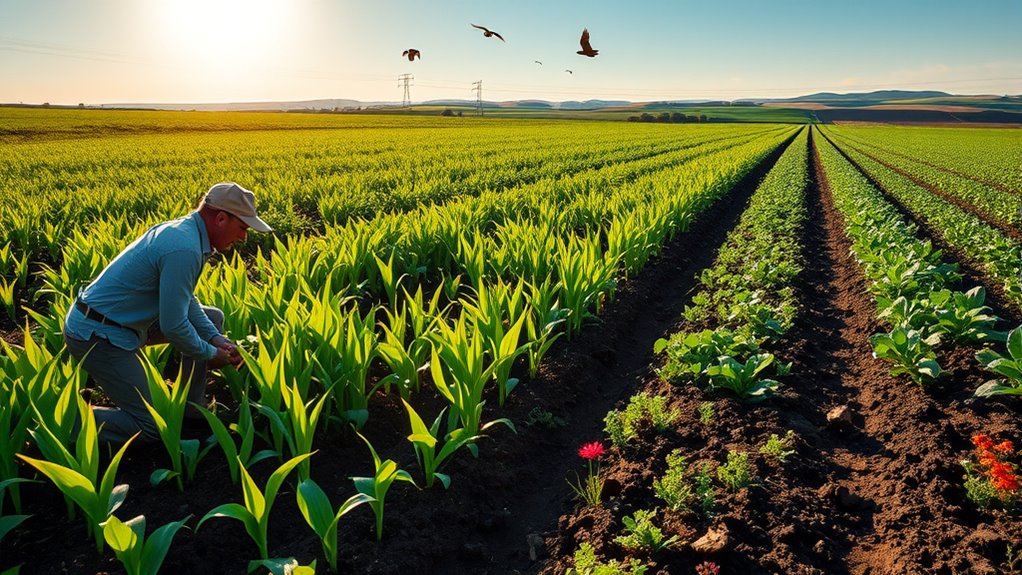
Have you ever wondered how farming can actually heal the planet? It might sound surprising, but regenerative agriculture does just that. This approach to farming focuses on restoring soil health, improving biodiversity, and creating a sustainable relationship between land and people. By adopting these practices, you can contribute to a healthier planet, one farm at a time.
When you think about soil health, you might picture it as just dirt, but it’s so much more than that. Healthy soil is a living ecosystem, teeming with microorganisms that play a vital role in nutrient cycling. By utilizing regenerative techniques like cover cropping, reduced tillage, and crop rotation, you enhance the soil’s capacity to retain moisture and nutrients. This not only leads to better yields but also reduces the need for chemical fertilizers and pesticides, which often harm the environment. You’ll notice how richer soil contributes to stronger plants, which in turn support a diverse array of wildlife.
Biodiversity conservation is another pillar of regenerative agriculture. When you cultivate a variety of crops and incorporate livestock into your farming system, you create a more resilient ecosystem. This diversity attracts beneficial insects, birds, and other wildlife, which help control pests naturally and enhance pollination. As you embrace these practices, you’re not just growing food; you’re fostering a habitat for countless species, each playing its part in the health of the ecosystem.
You might think that traditional farming methods are the only way to feed the world, but embracing regenerative practices can lead to a paradigm shift. By focusing on soil health and biodiversity, you’re actively participating in a movement that combats climate change and restores degraded landscapes. The more you learn about these techniques, the more empowered you’ll feel to make a difference. It’s about shifting your mindset from merely extracting resources from the land to nurturing and regenerating them. Seasonal hours can affect access to local produce and farmer’s markets that support regenerative practices.
In this journey toward healing the planet through farming, every small step counts. Whether you’re a seasoned farmer or just starting your gardening adventure, consider incorporating regenerative practices into your routine. As you do, you’ll not only contribute to the health of your local ecosystem but also join a global effort to create a sustainable future for generations to come. So, why not start today? Your choices can lead to a healthier planet and a more vibrant life for all.
![No-Till Cover Crop 13-Seed Mix (1 lb. Bag): [50% Clovers Plus Fenugreek, Vetch, Flax, Cowpeas, Buckwheat, Forage Peas, Millet, Lentils, Crimson Clover, Sweet Yellow, White Clover, Medium Red Clover]](https://m.media-amazon.com/images/I/61tz3UL4ZfL._SL500_.jpg)
No-Till Cover Crop 13-Seed Mix (1 lb. Bag): [50% Clovers Plus Fenugreek, Vetch, Flax, Cowpeas, Buckwheat, Forage Peas, Millet, Lentils, Crimson Clover, Sweet Yellow, White Clover, Medium Red Clover]
- Premium All-Natural Seed Mix: High-quality, USA-grown, nitro-coated seeds
As an affiliate, we earn on qualifying purchases.
As an affiliate, we earn on qualifying purchases.
Frequently Asked Questions
How Does Regenerative Agriculture Affect Local Wildlife Populations?
Regenerative agriculture positively impacts local wildlife populations by enhancing biodiversity and restoring wildlife habitats. You’ll notice that healthier ecosystems support more diverse species, as improved soil health fosters better plant growth, providing food and shelter. By reducing chemical inputs and promoting sustainable practices, you create a thriving environment where wildlife can flourish. This approach not only benefits animals but also contributes to a balanced ecosystem, ultimately supporting both farming and nature in harmony.
What Are the Economic Benefits of Regenerative Agriculture for Farmers?
You’ll find that regenerative agriculture boosts your economic benefits considerably. By adopting these practices, you can improve market access, as consumers increasingly seek sustainably produced goods. Crop diversity enhances resilience against pests and diseases, leading to higher yields and reduced dependency on chemical inputs. Plus, healthier soils can lower your production costs over time. Overall, these methods can create a more profitable and sustainable farming operation for you.
Can Regenerative Practices Be Applied to Urban Farming?
Absolutely, you can weave regenerative practices into urban farming! By transforming urban rooftops into lush gardens, you’re not just maximizing space; you’re nurturing the environment. City composting allows you to turn organic waste into rich soil, enhancing your plants’ growth and robustness. This approach not only beautifies the concrete jungle but also fosters biodiversity and community engagement, creating a greener, more sustainable urban landscape that benefits everyone involved.
How Long Does It Take to See Results From Regenerative Agriculture?
You can typically see results from regenerative agriculture within a few months to a couple of years. Soil recovery often starts to show improvements quickly, leading to enhanced microbial activity and nutrient availability. As you continue these practices, you’ll likely notice increased crop yield over time. The longer you maintain these methods, the more significant the benefits become, creating a thriving ecosystem that supports sustainable farming for years to come.
Are There Any Certifications for Regenerative Agriculture Practices?
Yes, there are several certification programs for regenerative agriculture practices. These programs often provide sustainable labels that help consumers identify products grown using regenerative methods. Some well-known certifications include the Regenerative Organic Certification and the Soil Health Partnership. By pursuing these certifications, you can showcase your commitment to sustainable farming and attract more environmentally-conscious customers, boosting your market appeal while contributing positively to the planet’s health.

2PCS Hand Rakes 9 Prongs Ergonomic Handle Ideal for Tillage Loose Soil Foliage Gardening Landscaping and Farming Handheld Rakes Comfortable Grip
- Prong Design: 9-prongs for efficient soil turning
- Ergonomic Handle: Contoured, anti-slip grip reduces fatigue
- Safe Materials: Non-harmful to plants and soil
As an affiliate, we earn on qualifying purchases.
As an affiliate, we earn on qualifying purchases.
Conclusion
In the grand tapestry of our planet, regenerative agriculture weaves vibrant threads of hope and healing. By embracing these nurturing practices, you’re not just cultivating crops; you’re nurturing the earth itself, breathing life back into depleted soils and reviving ecosystems. As you sow seeds of change, you’re planting the future—a flourishing world where nature and humanity dance in harmony. Let’s cultivate this vision together, turning the tide toward a brighter, greener tomorrow.

Rapitest Soil Test Kit for Gardens, Vegetables, Flowers and Lawns. USA designed and assembled soil tester completely, quickly and accurately measures/analyzes soil pH acidity and garden nutrients.
- Quick at-home soil testing: Measures pH, Nitrogen, Phosphorous, Potash
- Complete testing kit: Includes components for 20 tests
- Multiple testing spots: Tests various areas in yard or garden
As an affiliate, we earn on qualifying purchases.
As an affiliate, we earn on qualifying purchases.

Plant This, Not That: Over 200 Native Plant Swaps for a More Sustainable, Pollinator-Friendly Garden
As an affiliate, we earn on qualifying purchases.
As an affiliate, we earn on qualifying purchases.