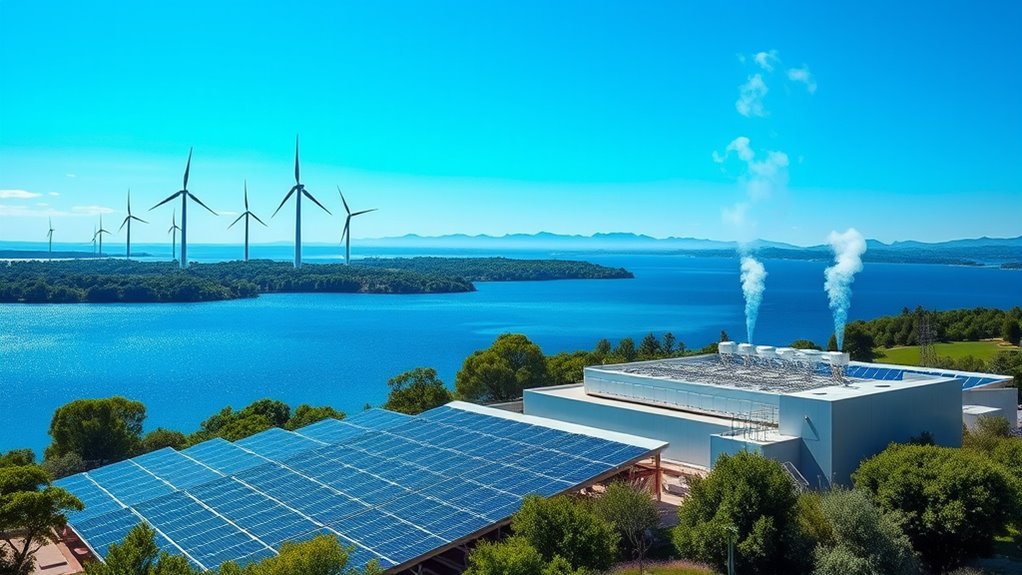

Green hydrogen is the clean energy source you need, generated from water through renewable energy methods like solar and wind. It splits water into hydrogen and oxygen, creating a sustainable fuel that’s carbon-free. This powerful energy carrier supports a cleaner future, helping reduce emissions and combat climate change. With the right infrastructure, you could see hydrogen fueling cars, heating homes, and powering industries. There’s a lot more to explore about its potential impact on our energy landscape.

Prime made for students and young adults
- Fast, free delivery for dorm and study essentials
- Prime Video and Amazon Music included
- Member-only deals
Key Takeaways
- Green hydrogen is produced through electrolysis, using renewable energy sources to split water into hydrogen and oxygen, ensuring zero carbon emissions.
- It serves as a sustainable, carbon-free energy carrier that supports the transition to renewable energy systems and reduces overall emissions.
- Investment in infrastructure, such as hydrogen fueling stations and storage solutions, is crucial for integrating green hydrogen into existing energy networks.
- Collaboration between governments, private sectors, and research institutions accelerates the development of green hydrogen technologies and promotes economic growth.
- Green hydrogen plays a vital role in creating a cleaner, efficient energy landscape, paving the way for a more sustainable future.

Green Hydrogen
What if you could fuel the future sustainably? Imagine harnessing the power of water to produce energy that’s clean, efficient, and renewable. This isn’t just a dream; it’s the promise of green hydrogen. By splitting water into hydrogen and oxygen using renewable energy sources, you’re tapping into an abundant resource that could revolutionize how we think about energy production and consumption.
Green hydrogen is created through a process known as electrolysis, where electricity generated from renewable sources like wind, solar, or hydro is used to separate water molecules. This method guarantees that the hydrogen produced is free from the carbon emissions associated with traditional fossil fuels. This means every time you use green hydrogen, you’re contributing to a more sustainable energy landscape, and that’s something you can feel good about.
Green hydrogen, produced through renewable electrolysis, offers a carbon-free energy source that supports a sustainable future.
To truly leverage green hydrogen, we need robust infrastructure development. It’s not just about producing hydrogen; it’s about creating a network that can efficiently store, transport, and utilize it. Imagine a future where hydrogen fueling stations are as common as gas stations, powering vehicles, heating homes, and even providing energy for industries. This vision isn’t far-fetched. With the right investments in infrastructure and technology, you could see a world where green hydrogen is a cornerstone of energy systems globally.
The shift to green hydrogen requires collaboration across various sectors. Governments, private industries, and research institutions must unite to develop the necessary infrastructure that supports renewable production. By investing in pipelines, storage facilities, and fueling stations, you’re enabling a shift toward a cleaner future. This infrastructure not only supports the hydrogen economy but also stimulates job creation and economic growth, providing new opportunities in the green energy sector. Furthermore, the storage and transportation of hydrogen can benefit from advancements in juice packaging and storage, ensuring it remains viable for use when needed.
As you consider your role in this transformation, think about the choices you make. Supporting policies that encourage renewable energy projects and infrastructure development is essential. By pushing for advancements in technology and sustainable practices, you’re actively participating in this significant change. You can advocate for investments in green hydrogen, ensuring it plays a prominent role in your community and beyond.
Ultimately, green hydrogen isn’t just a fuel; it’s a pathway to a sustainable future. With renewable production methods and the right infrastructure in place, you’re looking at a cleaner, more efficient energy landscape that benefits everyone. Embrace this opportunity, and you’ll be part of a movement that paves the way for generations to come.
Popular right now

Shark AI Ultra Robot Vacuum with Self-Empty Base

Dyson Big Ball Multi Floor Canister Vacuum, Yellow

Dyson Cyclone V10 Origin Cordless Vacuum
As an affiliate, we earn on qualifying purchases.
Frequently Asked Questions
What Are the Environmental Benefits of Green Hydrogen?
Green hydrogen offers significant environmental benefits. It harnesses renewable energy sources, like wind and solar, to produce clean fuel without harmful emissions. By switching to green hydrogen, you contribute to emission reduction, helping combat climate change and improve air quality. This clean energy solution can power various sectors, including transportation and industry, further decreasing reliance on fossil fuels. Embracing green hydrogen means you’re actively promoting a sustainable and healthier planet for future generations.
How Does Green Hydrogen Compare to Fossil Fuels?
Green hydrogen’s a game-changer compared to fossil fuels. Imagine powering your home with a clean, renewable energy source that doesn’t pollute the air. It’s gaining traction due to its cost competitiveness, especially as technology advances. Unlike fossil fuels, which emit greenhouse gases, green hydrogen produces only water vapor. You’re not just choosing a fuel; you’re opting for a sustainable future that benefits the environment and helps combat climate change. Isn’t that worth considering?
What Is the Current Cost of Producing Green Hydrogen?
The current cost of producing green hydrogen is around $3 to $6 per kilogram, depending on various factors. You’ll notice that ongoing advancements in production efficiency and economies of scale are driving significant cost reductions. As renewable energy sources become more prevalent and technology improves, you can expect these costs to lower even further. Investing in green hydrogen now could lead to substantial savings and environmental benefits in the near future.
How Does Green Hydrogen Storage Work?
Green hydrogen storage works by compressing the hydrogen gas and using specialized storage containment systems. You can compress hydrogen to high pressures, making it easier to store in tanks. These tanks are designed to safely hold the compressed gas, preventing leaks and ensuring stability. When you need the hydrogen, it’s released from the storage system and can be used in various applications, like fuel cells or industrial processes, efficiently and safely.
What Are the Main Challenges in Green Hydrogen Production?
The main challenges in green hydrogen production are primarily electrolysis efficiency and infrastructure development. You’ll find that improving electrolysis efficiency is essential for reducing costs and energy consumption. Additionally, developing the necessary infrastructure to produce, store, and transport hydrogen presents significant hurdles. Without a robust network, scaling up production becomes difficult, limiting the potential of green hydrogen as a viable energy source. Addressing these challenges is critical for the future of sustainable energy.
Conclusion
Green hydrogen isn’t just a trend; it’s the rocket fuel propelling us into a sustainable future. By harnessing the power of water, you’re not only reducing emissions but also reshaping energy landscapes. As we embrace this clean energy source, you’re joining a global movement that could redefine our relationship with nature. Let’s invest in green hydrogen and watch as it transforms the world, one molecule at a time. The future is bright, and it’s waiting for you!