The James Webb Space Telescope (JWST) has discovered an exciting array of Earth-like exoplanets that could change how you view life beyond our solar system. These planets are located in their stars’ habitable zones, suggesting they might have suitable conditions for liquid water. JWST’s powerful spectroscopy identifies gases like oxygen and methane, hinting at potential biological activity. This breakthrough challenges previous assumptions about habitability. There’s much more awaiting your curiosity about these fascinating worlds.
Key Takeaways
- JWST has discovered a range of Earth-like exoplanets that may support life, reshaping our understanding of the universe.
- Several of these exoplanets are located within their stars’ habitable zones, where liquid water could exist.
- Atmospheric spectroscopy conducted by JWST detects key gases, such as oxygen and methane, which may indicate biological activity.
- Recent findings have challenged previous assumptions about habitability, revealing planets once deemed uninhabitable may now have potential for life.
- The insights gained from JWST are crucial for future exploration and the search for extraterrestrial life across the cosmos.

As scientists explore deeper into the cosmos, the James Webb Space Telescope (JWST) has revealed a stunning array of Earth-like exoplanets that could reshape our understanding of potential life beyond our solar system. With its powerful instruments, JWST provides unprecedented insights into the planetary atmospheres of these distant worlds. You might be amazed to learn that some of these planets lie within their stars’ habitable zones, the regions where conditions may be just right for liquid water to exist—a vital ingredient for life as we know it.
When analyzing these exoplanets, you’ll find that the habitable zone analysis plays an essential role in identifying which planets could support life. JWST helps astronomers determine the distance of these planets from their host stars, aiding in the identification of those that might possess suitable temperatures. As you engage with the data, you’ll notice that the ideal conditions for habitability extend beyond just being in the right zone; they also depend on the composition and characteristics of the planetary atmospheres.
The habitable zone analysis is crucial for identifying exoplanets capable of supporting life, highlighting the importance of atmospheric composition.
The JWST’s ability to analyze the atmospheres of these exoplanets is groundbreaking. By using spectroscopy, it can detect various gases and chemicals present in the atmospheres, such as oxygen, methane, and carbon dioxide. These elements offer clues about the planets’ potential to support life. For instance, the presence of oxygen and methane together could suggest biological processes similar to those on Earth. As you explore deeper into these findings, it’s exhilarating to think about what they could mean for humanity’s quest to find extraterrestrial life.
Moreover, the JWST’s observations challenge our previous notions about habitability. Some planets previously deemed uninhabitable due to their size or distance from their stars are now showing promising signs. As you consider this new data, it’s clear that our understanding of what makes a planet suitable for life is evolving. The more we learn about planetary atmospheres and their compositions, the better equipped we are to redefine our search for life beyond our solar system.

Telescope Accessories, Telescope ADC Atmospheric Dispersion Corrector 1.25'' Professional Photography Part,Easy to use
SIMPLE FAST ALIGNMENT: Simplifies the telescope collimation process, saving you valuable time during setup and allowing you to…
As an affiliate, we earn on qualifying purchases.
As an affiliate, we earn on qualifying purchases.
Frequently Asked Questions
How Does JWST Differ From Previous Telescopes in Exoplanet Research?
JWST’s advanced telescope sensitivity sets it apart from previous telescopes in exoplanet research. You’ll notice its ability to conduct detailed atmospheric analysis, revealing the chemical compositions of distant worlds. Unlike older telescopes, JWST can capture faint light from exoplanets, allowing you to explore their atmospheres in unprecedented detail. This enhanced capability means you can uncover more about potential habitability and the conditions that might support life beyond our solar system.
What Are the Criteria for Classifying an Exoplanet as Earth-Like?
You might think that size alone qualifies an exoplanet as Earth-like, but it’s more complex than that. To be classified as Earth-like, an exoplanet must have habitability factors like being in the habitable zone, where liquid water can exist. Additionally, its atmospheric composition needs to support life, ideally containing oxygen and other gases similar to Earth’s. These criteria help scientists determine if an exoplanet could potentially harbor life as we understand it.
How Many Exoplanets Has JWST Discovered so Far?
As of now, JWST has discovered several exoplanets, specifically focusing on their atmospheres and star-planet interactions. While the exact number can change as new data comes in, you can expect updates that highlight significant findings. These discoveries not only enhance our understanding of potential habitability but also reveal how these planets interact with their stars, affecting their atmospheres and overall characteristics. Keep an eye on future announcements for the latest counts!
What Are the Potential Implications of Discovering Life on These Exoplanets?
Discovering life on these distant worlds could open a treasure trove of astrobiological significance. You’d witness a shift in how humanity views its place in the universe, sparking curiosity and wonder. This revelation would likely inspire scientific advancements and ethical discussions, influencing everything from education to philosophy. The societal impact could be profound, as people unite in exploring the unknown, fostering a sense of shared purpose and connection across our planet.
Can We Visit These Exoplanets With Current Technology?
You can’t visit these exoplanets with current technology. Space travel feasibility remains a significant challenge, as our fastest spacecraft would take thousands of years to reach even the nearest star systems. While exoplanet atmosphere analysis helps us understand their potential for life, we lack the means to travel there. Advances in propulsion technology and international collaboration might change this, but for now, interstellar travel is beyond our grasp.
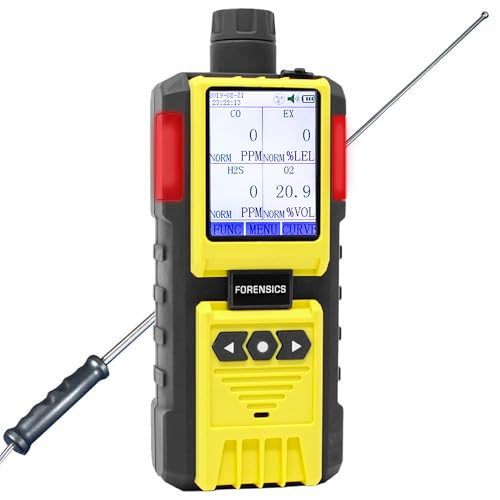
4 Gas Monitor by Forensics | Built-in Pump Multi Gas Meter | O2, CO, H2S, LEL | Color Display & Graphing | USA NIST Calibration | Computer Data Logging |
🎆 Built-in PUMP + 4 Foot Probe: Best of the best. High quality electrochemical sensors Made in the…
As an affiliate, we earn on qualifying purchases.
As an affiliate, we earn on qualifying purchases.
Conclusion
As you gaze into the vast cosmos, imagine countless Earth-like exoplanets, each a shimmering gem in the night sky. Thanks to the JWST, you can almost feel the heartbeat of these distant worlds, where oceans glisten under alien suns and lush landscapes beckon exploration. With every discovery, the universe feels a little closer, stirring your curiosity and igniting dreams of what life might thrive beyond our own blue planet. The adventure has just begun, and the stars await!

Educational Insights GeoSafari Motorized Solar System – Space Toys & STEM Learning for Kids, Model Planet Kit, Science Classroom or Bedroom Decor, Astronomy Sets and Gifts for Boys & Girls Ages 8+
SOLAR SYSTEM FOR KIDS – Introduce the wonders of outer space to little astronomers as they observe a…
As an affiliate, we earn on qualifying purchases.
As an affiliate, we earn on qualifying purchases.
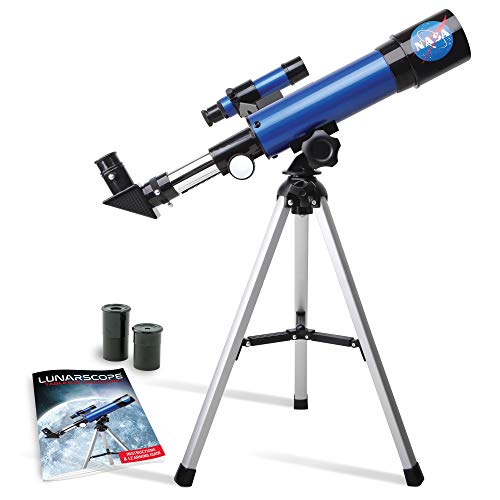
NASA Lunar Telescope for Kids – 90x Magnification, Includes Two Eyepieces, Tabletop Tripod, and Finder Scope- Kids Telescope for Astronomy Beginners, Space Toys, NASA Gifts (Amazon Exclusive)
INSPIRE CURIOSITY – The NASA Lunar Telescope allows your child to see the moon in incredible detail; the…
As an affiliate, we earn on qualifying purchases.
As an affiliate, we earn on qualifying purchases.