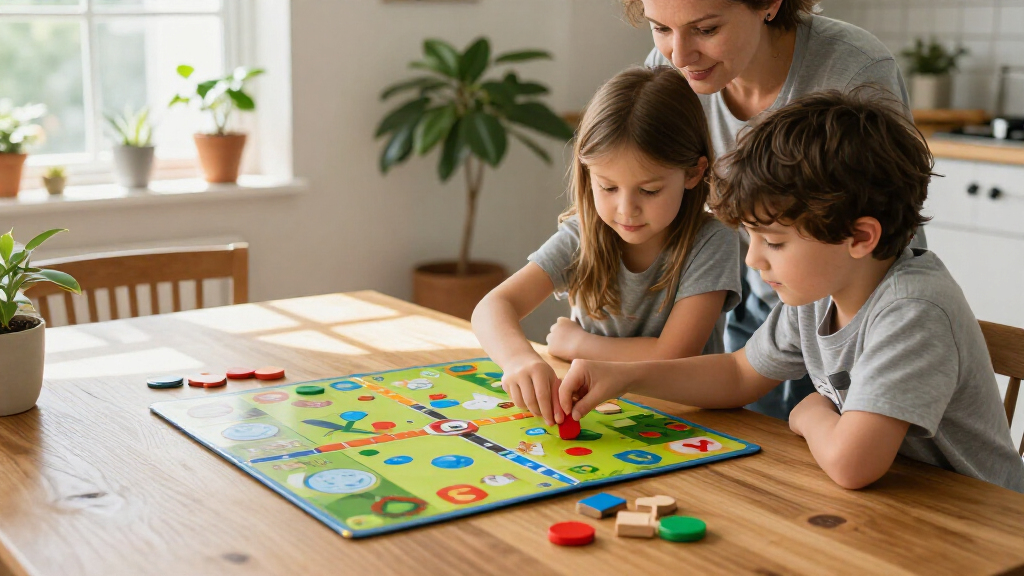
Among educational board games for kids, Outfoxed! is my best overall pick because cooperative deduction gives children a reason to share clues and think together. Zingo! is a standout for preschoolers building early reading skills, while Race Across the USA suits older kids ready to connect geography with a longer, more involved game. The main tradeoff is between games that teach a focused skill and familiar classics that are easier to bring to the table but offer less direct practice. Age, reading ability, attention span, and tolerance for competition can matter as much as the subject. Read on for the full comparison and a guide to matching a game to your child.

Prime made for students and young adults
- Fast, free delivery for dorm and study essentials
- Prime Video and Amazon Music included
- Member-only deals
Key Takeaways
- Outfoxed! ranks first because its cooperative mystery format combines clue-reading, deduction, and shared decision-making rather than relying on a single drill-style skill.
- Zingo! and Scrabble Junior approach early literacy differently: Zingo emphasizes quick picture-word matching, while Scrabble Junior gives children more exposure to spelling and letter placement.
- The math choices vary in how narrowly they focus: Matheroni Pepperoni, Number Hunter, Math Island, and Mathemagical World all support number practice, so age fit and willingness to repeat arithmetic matter when choosing among them.
- Race Across the USA and Stamp It! World Tour offer geography-focused play, while My First Safari is a cooperative animal-themed alternative for younger players.
- Familiar path-and-movement games such as Candy Land, Trouble, and Sorry! are approachable, but buyers seeking sustained academic practice may prefer a game with more explicit reading, math, or geography decisions.




| educational board games for kid | Players | Brand | Included components | Recommended age |
|---|---|---|---|---|
| Sorry! Classic Board Game for | 2–4 | Hasbro Gaming | Gameboard, 12 pawns, 45 cards, and instructions | 6 years and up |
| Matheroni Pepperoni Addition a | 1–4 | Pidoko Kids | 4 pizza slices, 1 spinner, 51 pepperoni tokens, and instructions | — |
| Hasbro Gaming Scrabble Junior | 2–4 | Hasbro Gaming | — | — |
| Number Hunter Math Board Game | 2–5 | Clever Fox Play | Game board, 5 game pieces, 2 number dice, 1 operation die, 50 challenge cards, and game rules | 5 years and up |
| Outfoxed! Cooperative Mystery | 4 | Gamewright | Board game | 5 years and up |
| National Geographic My First S | Up to 4 | Blue Marble | Game board, 5 safari explorers, sun token, 36 item cards, 13 sun cards, and learning guide | — |
| Hasbro Gaming Candy Land Board | 2–4 | Hasbro Gaming | Gameboard, 4 gingerbread pawns, card deck, and instructions | 3 years and up |
| Hasbro Gaming Trouble Board Ga | 2–4 | — | Gameboard, plastic game unit with Pop-O-Matic die roller, 16 pegs, and instructions | — |
| Stamp It! World Tour Geography | 2–6 | Clever Fox Play | Game board, 160 question cards, 6 character pieces, 6 passports, 25 stamp tokens, 30 tickets, and 1 die | 8–12 years |
| Learning Resources Math Island | 2–4 | Learning Resources | Game board, 4 character pieces, volcano popper, 2 number dice, 1 operation die, and instructions | 6–10 years |
| Hasbro Gaming Guess Who? Plus | 2 | Hasbro Gaming | 2 gameboards, 48 people face cards, 24 people mystery cards, 48 pets face cards, 24 pets mystery cards, 2 scorekeepers, and game rules | 6 years and up |
| Mathemagical World Addition an | 2–4 | Mind Inventions | Game board, 2 regular-mode dice, 2 speedy-mode dice, and 1 operational die | 5 years and up |
| ThinkFun Zingo! Bingo Preschoo | 2–6 | ThinkFun | — | — |
| Scholastic Race Across the USA | 2–4 | University Games | Game board, cards, and airplane pawns | 8+ |
| Sequence for Kids Strategy Gam | 2–4 | Jax | Folding game board, 42 playing cards, 84 playing chips, and instructions | 3–6 years |
More Details on Our Top Picks
Sorry! Classic Board Game for Kids Ages 6 and Up
Sorry! gives children a light introduction to planning ahead: card draws determine movement, while slides and send-backs make players weigh risk against progress. That makes it more interactive than a straight letter-matching game like Scrabble Junior, but its learning is indirect rather than focused on spelling or math. The rules and familiar race-to-home goal suit families who want a game children can pick up without a long lesson. The tradeoff is that a good plan can be undone by another player’s move or a card draw, which creates variety but can frustrate kids who dislike setbacks. I’d choose it for turn-taking and simple decision-making practice, not as a direct academic-skills game.
Pros:- Card draws give players choices and change the course of each game
- Slides and pawn interactions create chances to think ahead
- Supports 2–4 players for family game nights
- Familiar race-to-home goal is straightforward to explain
Cons:- Learning benefits are indirect rather than tied to a specific school subject
- A pawn can be sent back to start, which may feel discouraging
- Card draws can overturn a player’s plans
Best for: Families with children ages 6 and up who want accessible competitive play that encourages turn-taking and basic planning.
Not ideal for: Parents seeking direct practice in reading, spelling, or math, or children who find being sent back to start upsetting.
- Brand:Hasbro Gaming
- Players:2–4
- Recommended age:6 years and up
- Included components:Gameboard, 12 pawns, 45 cards, and instructions
- Language:English
- Edition:Standard
Our verdict“Choose Sorry! for family-friendly practice in turn-taking and simple strategy, but pick Scrabble Junior or a math-focused game for direct academic practice.”
Matheroni Pepperoni Addition and Subtraction Math Board Game for Kids Ages 5–7
Matheroni Pepperoni puts addition and subtraction at the center of play: children solve problems to collect tokens and fill their pizza slices. That gives it a clearer academic purpose than Sorry!, where learning comes mainly from planning and taking turns. A spinner adds special actions, helping rounds feel less like a worksheet while children practice counting and number recognition. Solo play is another useful distinction from Number Hunter, which requires at least two players. The focus is intentionally narrow, though: families wanting word skills, broader math challenges, or an outdoor game will need another option. Its cardboard pieces also call for ordinary care during repeated classroom or family use.
Pros:- Addition and subtraction problems are built into the main goal
- Pizza slices and pepperoni tokens make counting tangible
- Spinner actions add variety to math practice
- Supports solo play as well as groups of up to four
Cons:- The educational focus is limited to early addition and subtraction
- Cardboard components may need careful handling
- Designed for indoor play
Best for: Parents and early-years educators looking for a playful way for children ages 5–7 to rehearse basic addition and subtraction, including during solo play.
Not ideal for: Families looking for advanced or varied academic content, outdoor play, or a game centered on reading and vocabulary.
- Brand:Pidoko Kids
- Age range:5–7 years
- Players:1–4
- Educational objective:Teach and reinforce addition and subtraction
- Included components:4 pizza slices, 1 spinner, 51 pepperoni tokens, and instructions
- Material:Cardboard
- Weight:0.66 kg
- Model number:PKSK010
Our verdict“Pick Matheroni Pepperoni for hands-on basic math practice, especially when solo play matters more than the broader skills in Outfoxed! or Scrabble Junior.”
Hasbro Gaming Scrabble Junior Board Game, 2–4 Players, Ages 5+
Scrabble Junior earns its place by offering two ways to play as a child’s word skills develop. On the beginner side, matching letter tiles to printed words makes spelling practice more supported than the open-ended word-building in standard Scrabble; the reverse side lets children create words themselves. That progression also sets it apart from Outfoxed!, which develops deduction and teamwork rather than vocabulary. With 105 tiles and room for up to four players, it can work for siblings or a small group. The tradeoff is that the guided board can become less challenging as children advance, while the free-form side may be a jump for early readers. It focuses on English spelling, not broader subject learning.
Pros:- Double-sided board supports two stages of word-play difficulty
- Letter matching offers a gentler entry point to spelling
- Free-form side gives developing readers a next step
- Includes 105 letter tiles and supports 2–4 players
Cons:- The matching side may feel too easy as reading skills grow
- The word-building side can be challenging for early readers
- Focuses on spelling and vocabulary rather than a range of subjects
Best for: Families with children ages 5 and up who want a word game that can move from letter matching to independent word-building.
Not ideal for: Children who are not ready to recognize letters, or buyers seeking math, geography, or cooperative mystery play.
- Brand:Hasbro Gaming
- Players:2–4
- Age range:5+ years
- Components:Double-sided gameboard, 4 tokens, 105 letter tiles, and game guide
- Educational objectives:Spelling and vocabulary
- Game mechanics:Word-building and progression
- Language:English
- Dimensions:13.11 × 10.51 × 1.89 inches
- Weight:1.6 pounds
Our verdict“Choose Scrabble Junior for a flexible path into spelling and vocabulary, while Matheroni Pepperoni is the better fit when early math is the priority.”
Number Hunter Math Board Game for Kids
Number Hunter covers more ground than Matheroni Pepperoni: its dice and challenge cards bring addition, subtraction, and even-or-odd numbers into a single board game. That variety suits children who are ready to switch between different early math ideas, while the roughly 20-minute playing time keeps a session bounded. Compared with Matheroni’s pizza-token format, Number Hunter feels more like a sequence of math challenges than a themed collection activity. It supports up to five players, making it useful for a family or learning group, but it cannot be played solo. The description also gives varying age ranges, so I’d check the exact product guidance before choosing it for a child at the younger edge of the intended audience.
Pros:- Practices addition, subtraction, and even-or-odd number recognition
- Number dice, an operation die, and challenge cards vary the play
- Supports groups of 2–5 players
- Listed playing time of about 20 minutes helps set expectations
Cons:- Requires at least two players
- Age ranges vary across the product details
- Math practice is limited to the skills described
Best for: Families, homeschoolers, and small classrooms seeking screen-free practice across addition, subtraction, and even-or-odd numbers for children ages 5 and up.
Not ideal for: Children who need solo activities, or buyers who want a clearly consistent age recommendation before purchase.
- Brand:Clever Fox Play
- Players:2–5
- Recommended age:5 years and up
- Playing time:20 minutes
- Edition:Addition and subtraction
- Language:English
- Included components:Game board, 5 game pieces, 2 number dice, 1 operation die, 50 challenge cards, and game rules
Our verdict“Choose Number Hunter for group-based practice across several early math skills; choose Matheroni Pepperoni if solo play or a simpler addition-and-subtraction focus matters more.”
Outfoxed! Cooperative Mystery Board Game
Outfoxed! makes social reasoning its main lesson: players share clues, remember evidence, and work together to identify the guilty fox. Unlike the competitive races in Sorry!, nobody is trying to send another player backward, which can suit children who prefer a shared goal. Its short 15–20 minute rounds also make it easier to fit into a family game session than a longer activity. The learning is centered on deduction, memory, and teamwork rather than the explicit spelling or math practice found in Scrabble Junior and Number Hunter. One limitation is the listed player count of four, which offers less flexibility for households with smaller or larger groups. The age guidance also varies across the product details.
Pros:- Shared objective encourages cooperation rather than player-versus-player competition
- Clue gathering and evidence scanning exercise deduction and memory
- Simple rules make it accessible for young players
- Short rounds suit families with limited game time
Cons:- Listed player count is fixed at four
- Age recommendations vary across the product details
- Educational focus is reasoning and teamwork, not a specific academic subject
Best for: Families of four with children ages 5 and up who want a short cooperative game that encourages clue-sharing, memory, and deduction.
Not ideal for: Households that often have fewer or more than four players, or buyers seeking direct practice in math, spelling, or vocabulary.
- Brand:Gamewright
- Game type:Cooperative board game
- Players:4
- Recommended age:5 years and up
- Playing time:15–20 minutes
- Language:English
- Included components:Board game
- Model number:CSG-OUTF
Our verdict“Choose Outfoxed! for a short, cooperative reasoning game for a group of four; Scrabble Junior or Number Hunter is a stronger choice for direct academic practice.”
National Geographic My First Safari Cooperative Board Game for Kids
Shared goals make this a strong fit for young children learning to play together: players search for animals before the sun sets rather than competing to finish first. Along the way, the learning guide introduces facts about 21 animals, giving this more subject-specific learning than Candy Land’s focus on color matching and turn-taking. Three difficulty levels let families adjust the challenge as children gain confidence, though the youngest players may still need help with strategy and card decisions. The tradeoff is its narrower audience: it supports up to four players and its simple cooperative structure may not hold older children’s interest. Compared with Trouble, it puts teamwork and animal knowledge ahead of racing and sending opponents back.
Pros:- Cooperative objective gives young players practice working toward a shared goal.
- Three difficulty levels offer ways to adjust play as children develop.
- Learning guide shares facts about 21 animals.
- Designed for children ages 4 and up.
Cons:- Limited to four players.
- The simple play may feel too easy for older children.
Best for: Families with children ages 4 and up who want an introductory game that practices teamwork alongside animal facts.
Not ideal for: Families with more than four players or older children seeking competitive play and more complex strategy.
- Brand:Blue Marble
- Genre:Educational
- Players:Up to 4
- Age range:4 years and up
- Difficulty levels:3
- Animals featured:21
- Included components:Game board, 5 safari explorers, sun token, 36 item cards, 13 sun cards, and learning guide
- Language:English
Our verdict“Choose My First Safari for young animal fans who benefit from teamwork, but pick a more competitive game for older kids.”
Hasbro Gaming Candy Land Board Game for Kids, Ages 3 and Up
No reading required makes Candy Land an easy entry point for preschoolers who are still learning how to follow a board-game routine. Children match colored cards to spaces, move a pawn, and practice taking turns without needing to count spaces or solve questions. That makes it more accessible for very young players than My First Safari, which adds a shared objective and animal-learning decisions. The tradeoff is that the learning stays at the level of color recognition and matching; there is little strategy for children who are ready to plan ahead. With a stated playing time of about 15 minutes, it suits short sessions, but families wanting geography or math practice should choose Stamp It! World Tour or Math Island instead. English and Spanish instructions help adults set up the game in either language.
Pros:- Color-card movement requires no reading.
- Introduces color recognition, matching, and taking turns.
- Designed for children as young as 3.
- Instructions are provided in English and Spanish.
Cons:- Gameplay offers little strategic choice.
- Its early-learning focus may not interest older children.
Best for: Caregivers introducing children ages 3 and up to simple turn-taking and color matching, especially when players are not yet reading.
Not ideal for: Families with older children who want math, geography, reading practice, or choices that affect the outcome.
- Brand:Hasbro Gaming
- Players:2–4
- Recommended age:3 years and up
- Estimated playing time:15 minutes
- Skills:Color recognition, matching, and taking turns
- Included components:Gameboard, 4 gingerbread pawns, card deck, and instructions
- Instruction languages:English and Spanish
Our verdict“Choose Candy Land as a simple first game for preschoolers, not as a pick for sustained academic or strategic challenge.”
Hasbro Gaming Trouble Board Game for Kids, Ages 5 and Up
Simple race mechanics make Trouble easier to teach than Stamp It! World Tour, which asks players to plan routes and answer geography questions. Children press the Pop-O-Matic to roll, move pegs, and learn the rhythm of taking turns while following a clear goal. The roller also keeps the die attached to the game unit, a practical detail for households where loose pieces tend to wander. The educational value is more about number recognition and game routines than a specific school subject, so it is less academically focused than Math Island. Power Up spaces add a variation, but the central race remains familiar; a player can also send another’s peg back to the beginning, which may frustrate children who dislike setbacks. This is best for families seeking lively, accessible competition rather than deep learning content.
Pros:- Quick to set up and straightforward to learn.
- Pop-O-Matic roller keeps the die contained.
- Classic play and Power Up spaces offer two ways to play.
- Supports two to four players for family game sessions.
Cons:- A peg can be sent back to the beginning, which may frustrate some young players.
- Offers less direct academic instruction than Math Island or Stamp It! World Tour.
Best for: Families with children ages 5 and up who want a straightforward competitive game to practice turn-taking and follow-the-rules play.
Not ideal for: Buyers looking for explicit math, reading, or geography instruction, or children who find losing progress upsetting.
- Edition:Classic Edition
- Model:A5064
- Age range:5 years and up
- Players:2–4
- Included components:Gameboard, plastic game unit with Pop-O-Matic die roller, 16 pegs, and instructions
- Gameplay options:Classic gameplay and Power Up spaces
Our verdict“Pick Trouble for an accessible family race that builds turn-taking habits, but choose a subject-focused game for stronger academic practice.”
Stamp It! World Tour Geography Board Game for Kids
Geography meets decision-making in Stamp It! World Tour: players answer trivia, complete travel missions, and plan routes while collecting tickets and passport stamps. That gives the learning a practical frame, unlike Candy Land’s color-matching focus or Math Island’s concentrated arithmetic practice. Its range of 2–6 players also makes it a flexible option for family or group play, and 160 question cards give the game a substantial pool of prompts. The tradeoff is a higher learning curve: route planning and trivia suit the recommended ages of 8–12 better than preschoolers, and the game cannot be played solo. Compared with Race Across the USA, this pick emphasizes a wider world-map travel theme, with passports, stamps, and player-specific missions as part of the play.
Pros:- Combines country, landmark, flag, and culture trivia with travel missions.
- Route planning gives players choices beyond answering questions.
- Supports groups of two to six players.
- Includes 160 question cards, passports, stamp tokens, and tickets.
Cons:- Requires at least two players.
- The recommended 8–12 age range makes it a poor fit for younger children.
- Several game elements and mechanics may take longer to explain than a simple race game.
Best for: Families, teachers, or group leaders with children ages 8–12 who want geography trivia paired with route-planning choices.
Not ideal for: Households seeking a solo activity or a game for children younger than 8 who may need simpler rules and prompts.
- Brand:Clever Fox Play
- Players:2–6
- Recommended age:8–12 years
- Language:English
- Game mechanics:Strategy, choice, route planning, and trivia
- Educational objective:Learn geography
- Included components:Game board, 160 question cards, 6 character pieces, 6 passports, 25 stamp tokens, 30 tickets, and 1 die
- Dimensions:10.24 × 8.27 × 0.04 inches
Our verdict“Choose Stamp It! for older kids who enjoy geography questions and planning travel routes, rather than for younger beginners.”
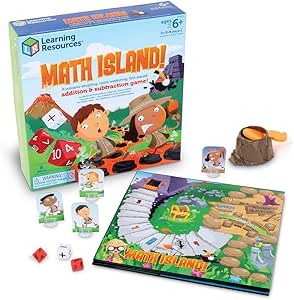
Learning Resources Math Island Addition & Subtraction Game
Focused arithmetic practice is Math Island’s clearest advantage: children count and solve addition and subtraction problems up to 20 as part of an escape-themed board game. Equation dice put the math directly into play, while the volcano popper adds a physical element that can help hold younger players’ attention. Compared with Stamp It! World Tour, which teaches through geography trivia and route choices, Math Island is narrower but more targeted for children building number skills. Its ages 6–10 range also makes it a better fit for early arithmetic than Candy Land, which concentrates on colors and turns. The tradeoff is that it requires players to be ready for basic equations, and it supports only two to four players. Buyers seeking broader subject matter or a larger group game should look elsewhere.
Pros:- Practices counting, addition, and subtraction up to 20.
- Equation dice connect arithmetic practice to each turn.
- Volcano popper adds an interactive component to the adventure theme.
- Works for family play or classroom use with two to four players.
Cons:- The math focus may not suit children who are not ready for basic equations.
- Limited to four players.
- Covers a narrower learning area than Stamp It! World Tour.
Best for: Families or educators with children ages 6–10 who need playful practice with counting, addition, and subtraction up to 20.
Not ideal for: Preschoolers not ready for equations, groups larger than four, or families who want one game to cover several subjects.
- Brand:Learning Resources
- Model:LER5025
- Recommended age:6–10 years
- Players:2–4
- Math skills:Counting, addition, and subtraction up to 20
- Included components:Game board, 4 character pieces, volcano popper, 2 number dice, 1 operation die, and instructions
Our verdict“Choose Math Island for children ready to practice arithmetic through play, but select Stamp It! for geography or Candy Land for a younger beginner.”
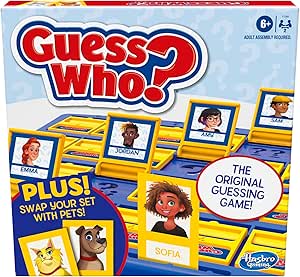
Hasbro Gaming Guess Who? Plus Board Game with People and Pet Cards
Guess Who? Plus gives kids practice asking focused yes-or-no questions, comparing clues, and eliminating possibilities—useful reasoning skills wrapped in a straightforward two-player game. Its people and pet card sets add variety without changing the basic rules, so children can reuse familiar questioning strategies with a new set of characters. Compared with ThinkFun Zingo!, which emphasizes word and picture matching for younger learners, Guess Who? asks players to form their own questions and make deductions. The tradeoff is its narrow two-player format: it suits a sibling matchup or a parent-child game, but not a whole family playing together. Fold-up cases make it easier to put away or take along, though the learning focus is reasoning rather than a school subject such as math or geography.
Pros:- People and pet sets provide two character categories for repeated play.
- Yes-or-no questions give children hands-on practice with deduction and clear communication.
- Fold-up cases support compact storage and travel.
- Simple rules make it accessible for family playdates.
Cons:- Designed for only two players, so it does not work as a group game.
- Builds reasoning skills but does not teach a specific academic subject.
Best for: Two-player households looking for a simple game that gets children ages 6 and up practicing clues, questions, and logical elimination.
Not ideal for: Families wanting one game for a group or classroom, since play is limited to two people, or buyers seeking direct practice in reading, math, or geography.
- Brand:Hasbro Gaming
- Players:2
- Recommended age:6 years and up
- Material:Plastic
- Included components:2 gameboards, 48 people face cards, 24 people mystery cards, 48 pets face cards, 24 pets mystery cards, 2 scorekeepers, and game rules
- Model number:F1360
- Model year:2021
Our verdict“Choose Guess Who? Plus for two-player clue-solving practice, but pick Zingo! or a group geography game if more children need to play at once.”
Mathemagical World Addition and Subtraction Board Game
Mathemagical World is the clearest pick here for children ready to work on several early arithmetic operations in one game: addition, subtraction, doubling, and halving. Its two difficulty levels let families adjust the challenge, while regular and speed-play dice offer a choice between a more measured pace and quicker rounds. That gives it broader math coverage than Matheroni Pepperoni, which is also centered on addition and subtraction but targets a younger age band. The eight themed worlds add visual variety, though the learning remains focused on foundational arithmetic rather than reading or geography. It requires at least two players, so it cannot fill the role of solo practice; families who want a wider subject mix might prefer a question-and-answer game such as Race Across the USA.
Pros:- Practices addition, subtraction, doubling, and halving in one game.
- Two difficulty levels can accommodate different early skill levels.
- Regular and speed-play dice let players choose a calmer or faster pace.
- Eight themed worlds offer variety across repeated sessions.
Cons:- Math practice is limited to foundational operations.
- Requires at least two players, so it is not a solo learning activity.
Best for: Families with children ages 5 and up who want a shared game for practicing more than one early arithmetic skill, with ways to adjust pace and difficulty.
Not ideal for: Children who need solo math activities, older learners seeking advanced arithmetic, or families looking for a game that covers reading or geography.
- Brand:Mind Inventions
- Players:2–4
- Recommended age:5 years and up
- Skills:Addition, subtraction, doubling, and halving
- Game worlds:Desert, Dinosaur, Pirate, Zombie, Unicorn, Ice, Dragon, and Ninja Islands
- Difficulty levels:2
- Included components:Game board, 2 regular-mode dice, 2 speedy-mode dice, and 1 operational die
- Dimensions:14.57 × 9.65 × 1.5 inches
Our verdict“Pick Mathemagical World for shared, adjustable early arithmetic practice; choose a broader subject game if math is not your main goal.”
ThinkFun Zingo! Bingo Preschool Reading Game for Ages 4 and Up
Zingo! makes early language practice feel immediate: children watch for a matching tile, connect it to a picture or word on their card, and build recognition through repeated turns. The Zinger dispenser gives the matching routine a hands-on rhythm, while double-sided cards offer two play levels as children develop. Compared with Sequence for Kids, which centers on matching animals and planning a row, Zingo! has a more direct reading and language focus. It also supports up to six players, making it easier to use with siblings or a small group than two-player Guess Who? Plus. Its main limitation is age range: the simple matching format is best for preschoolers and early readers, not children seeking deeper strategy or advanced reading practice. The tiles also need gathering and sorting after play, despite the included cleanup unit.
Pros:- Matching play supports early language and word recognition.
- Double-sided cards provide two levels of play.
- Accommodates 2–6 players for sibling or small-group use.
- Zinger and cleanup unit give tiles a defined draw and storage routine.
Cons:- The matching format may feel too simple for older or more advanced readers.
- Tiles still need collecting and organizing after play.
Best for: Families and preschool classrooms looking for a group-friendly matching game that introduces picture-word recognition and early language skills.
Not ideal for: Older children ready for more complex reading or strategy, or buyers who want a game centered on math, geography, or open-ended reasoning.
- Brand:ThinkFun
- Age range:4–10 years
- Players:2–6
- Theme:Reading
- Language:English
- Components:6 double-sided cards, 72 double-sided tiles, Zingo! Zinger with cleanup unit, and parent’s guide
- Material:Plastic
- Model:97700
Our verdict“Choose Zingo! for lively early reading practice with a small group, but look to Guess Who? Plus or Sequence for Kids for more deduction or strategy.”
Scholastic Race Across the USA Geography Board Game for Kids, Ages 8+
Race Across the USA turns geography questions into part of a clear travel goal: players visit six states, answer grade-level questions, and return home. That structure gives the facts a purpose within play, making this the most directly geography-focused choice in this group. Compared with Stamp It! World Tour, which also centers on geography, this game specifically takes players around the United States and includes questions tailored to different grades. Its listed 20-minute playing time can suit a family or classroom session without committing to a long game. The tradeoff is that progress depends on answering questions, so children who find geography unfamiliar may need adult support or may feel held back. It also supports only two to four players, unlike Zingo!, which accommodates a larger small group.
Pros:- Combines U.S. geography questions with a race across the states.
- Grade-level questions can suit players at different school stages.
- A 20-minute playing time supports shorter family or classroom sessions.
- Hundreds of questions provide replay variety.
Cons:- Players must answer geography questions to advance, which may challenge children new to the subject.
- Limited to 2–4 players.
Best for: Families or elementary classrooms with children ages 8 and up who want a structured way to practice U.S. geography through questions and movement around the map.
Not ideal for: Younger children who are not ready for geography questions, groups larger than four, or players who prefer games where academic knowledge does not affect progress.
- Brand:University Games
- Genre:Educational
- Players:2–4
- Playing time:20 minutes
- Recommended age:8+
- Language:English
- Included components:Game board, cards, and airplane pawns
- Edition:Standard Edition
Our verdict“Choose Race Across the USA when U.S. geography is the learning priority; choose Zingo! for younger learners or a larger group.”
Sequence for Kids Strategy Game
Sequence for Kids gives young players a first taste of planning: they match an animal card to the board, place a chip, and try to make four in a row. Because no reading is required, children can focus on matching and noticing how each move affects their chances. Special unicorn and dragon cards add small twists without changing the basic goal. Compared with Zingo!, which builds picture-word matching through a bingo-style routine, Sequence for Kids leans more toward spatial pattern recognition and simple strategy. It is also a better fit for children who have outgrown purely matching games but are not ready for question-heavy play like Race Across the USA. The listed age range is narrow, and the chips are small parts, so it is a poor choice around children who may put pieces in their mouths.
Pros:- No reading is required, making it accessible to preschoolers.
- Four-in-a-row play encourages pattern recognition and basic planning.
- Animal-card matching gives children a simple, repeatable turn structure.
- Unicorn and dragon cards add variation to the core game.
Cons:- Small chips may pose a choking hazard for young children.
- The age range of 3–6 may limit appeal for older siblings.
- Focuses on matching and strategy rather than a specific academic subject.
Best for: Families with children ages 3–6 who want a no-reading game that introduces matching, pattern spotting, and simple turn-by-turn planning.
Not ideal for: Households with children who may mouth small pieces, older children seeking a more demanding strategy game, or families wanting explicit reading or math instruction.
- Brand:Jax
- Players:2–4
- Recommended age:3–6 years
- Included components:Folding game board, 42 playing cards, 84 playing chips, and instructions
- Game mechanics:Card game, racing, and variable player powers
- Batteries:Not required
- Dimensions:10.5 × 2 inches
- Weight:1.5 pounds
- Material:Plastic
Our verdict“Choose Sequence for Kids for preschoolers ready to plan a few moves ahead, but select Zingo! for a stronger early reading focus.”

How We Picked
I ranked these games by how clearly play supports a learning goal, how well the format fits the listed age range, and how much meaningful participation children get on each turn. I also weighed setup and rule complexity, replay appeal, player interaction, and whether the game can work for a child who is still building reading or number skills. Familiarity alone did not earn a high place: a simple game can be easy to start, but it needs enough learning value to stand out in this roundup.
The order favors games that combine an understandable educational purpose with engaging decisions and a play style suited to children. That puts cooperative deduction and focused early-literacy play ahead of games that mainly practice turn-taking or color recognition. I kept different needs visible rather than treating every title as interchangeable: preschool learners, arithmetic practice, geography, and family-friendly classic play each have distinct strengths and limits.
Factors to Consider When Choosing Educational Board Games For Kids
Choosing well means matching the learning goal to the way your child likes to play. I would start with the child’s current skills and the kind of interaction your household wants, then use the box age range as a guide rather than the only decision rule.
Match the Learning Goal to the Practice Your Child Needs
Pick one main goal before shopping: early reading, arithmetic fluency, geography, reasoning, or social play. A game that practices one skill repeatedly may help a child who wants confidence through repetition, but it can feel like extra homework to a child who prefers varied challenges. Look at what players actually do on their turns, not only the subject named on the box. A geography theme, for example, may teach place recognition without asking children to recall much information. If your goal is broader curiosity, a theme-led game can be a better fit than a narrow drill. Avoid buying several games that teach the same skill unless your child actively enjoys that kind of practice.
Use Age Labels Alongside Reading and Number Readiness
Age guidance is a useful starting point, but children of the same age can have very different reading, counting, and rule-following skills. Check whether a child must read cards independently, recognize words, add numbers, or hold several rules in mind. A younger player may still enjoy an older-age game with an adult helping, though that changes how independently the child can play. For a group with mixed abilities, choose rules that let younger players participate without making older siblings wait through constant explanations. A game that is too easy may lose attention; one that demands too much adult support can become tiring for everyone. Consider the skills your child can use comfortably today, not only what they are expected to learn next.
Choose Cooperative or Competitive Play Deliberately
Cooperative games give children a shared goal and can reduce the sting of losing, while competitive games offer clear turns, personal choices, and a winner. Neither style is automatically better for learning: cooperation can encourage discussion, and competition can motivate some children to stay focused. Think about how your child handles setbacks before choosing a game where one unlucky move can change the outcome. In a family with a wide age range, a shared team goal may make participation feel fairer. If you choose a competitive game, look for ways an adult can keep the mood light without deciding moves for the child. The best format is the one that gets your household to play again.
Check Session Length, Setup, and Repeatability
A game that takes too long to set up or finish may be a poor match for short attention spans, even if its learning content is appealing. Consider how much sorting, reading, or adult explanation is needed before the first turn. Repeated rounds can support skill practice, but only when the format changes enough to hold a child’s interest. Ask whether the game can be shortened, whether players can join easily, and whether the rules stay manageable after a break between sessions. Families with limited table time may get more use from a quick-start game than a deeper one that requires a planned game night. Check the listed player range against your usual group so the game does not sit unused when one person is missing.
Weigh Learning Depth Against Familiar, Easy Play
Classic movement games can be useful for introducing turn-taking and shared rules, but they may offer less direct academic practice than a game built around spelling, arithmetic, or deduction. That difference matters if you are buying for a particular learning need rather than simply seeking a family activity. On the other hand, a highly focused educational game can feel repetitive if the child sees it as a lesson. Think about whether you want the game to teach a specific skill, reinforce a skill already introduced, or make family play more engaging. A strong choice often balances a clear learning purpose with enough surprise or decision-making to keep the child involved. Do not equate a larger collection of rules with greater educational value.
Plan for Adult Help and Mixed-Age Groups
Some children can learn rules from a quick explanation, while others need an adult to read prompts, model a turn, or keep the game moving. Decide whether you are happy to facilitate or need children to play more independently. Adult support can make a challenging game accessible, but it may reduce its usefulness for solo sibling play. For mixed-age groups, look for ways to adjust challenge without making one child feel singled out, such as letting younger players receive a little help or teaming them with an older player. Also consider how many players your household usually has; a game designed for a small group may not work well at a family gathering. A realistic match for your home matters more than a game that sounds ideal in theory.
Frequently Asked Questions
Which game in this roundup is best for a child who is not reading independently yet?
Zingo! is the clearest early-literacy option in this group, while Candy Land and My First Safari can suit younger children who are not ready for much reading. The right choice depends on whether you want active word matching or a gentler introduction to taking turns and following a board. An adult may still need to read or explain parts of a game, so consider how much support you can offer during play. Check the child’s comfort with matching pictures, recognizing simple words, and waiting for a turn. A game that lets the child succeed without constant correction is more likely to be played repeatedly.
Are these games a substitute for teaching reading or math?
No; board games are better treated as a way to practice and enjoy skills than as a replacement for instruction. The math-focused titles can give children repeated number encounters, while Scrabble Junior and Zingo! support different parts of early literacy. A game may not explain a concept in the same sequence or depth as a lesson, and children can sometimes make moves without understanding the underlying skill. Play alongside your child when the goal is learning, and ask them to explain a choice rather than focusing only on who wins. If a skill is causing ongoing difficulty, use the game as an engaging supplement rather than the whole plan.
What should I choose if my child gets upset when they lose?
A cooperative choice such as Outfoxed! or My First Safari may be a gentler starting point because players work toward a shared outcome. A cooperative format does not remove every frustration, but it shifts attention away from one child beating another. You can also begin with short sessions and praise thoughtful choices, not just successful outcomes. If your child wants to play a competitive game, an adult can model calm reactions to setbacks and keep the focus on the next turn. Avoid presenting a game as a test of ability; the aim is shared practice and enjoyable play.
How do I choose between the math games in this list?
Start by checking which arithmetic skills the child already knows and which ones need practice, then compare that with the game’s age guidance and turn demands. Matheroni Pepperoni, Number Hunter, Math Island, and Mathemagical World all have a math focus, but their themes and play formats differ. A child who enjoys a vivid theme may respond better to one format than another, even when the learning subject is similar. If possible, read the rules before buying so you can see how often the child must calculate and whether an adult needs to help. Pick the game the child is most likely to replay, not simply the one with the most obvious math label.
Can one game work for siblings with different ages and abilities?
Sometimes, but the best fit depends on how much the game relies on reading, arithmetic, and strategic decisions. Cooperative games can make it easier for siblings to share a goal, while a simpler turn structure can help younger players follow along. Before buying, check the age range, player count, and whether an adult can adjust the challenge without changing the whole game. Pairing siblings on a team can help a younger child contribute while an older one handles more difficult parts, though it may not suit children who want independent turns. If your children are far apart in skill, one well-matched game may not satisfy both equally; taking turns choosing the game can be a fairer approach.
Conclusion
Best overall: I recommend Outfoxed! for families who want learning through cooperative reasoning and discussion. Best for beginners: Zingo! is my pick for preschoolers starting to connect words and pictures, while best value for casual family play goes to an accessible classic such as Candy Land when simple rules and easy entry matter more than targeted academic practice. Best premium-style learning experience: choose Race Across the USA if your older child wants a more involved geography game; it is a stronger match for an extended play session than a quick preschool activity. For focused needs, compare the math titles by skill and theme, choose Stamp It! World Tour for geography variety, and favor My First Safari when cooperative animal-themed play suits a younger group. My final advice is to buy for the child’s current ability and preferred play style, not just the subject you hope they will learn.
Halloween Picks

Vexalify 11-Inch Halloween Pumpkin Fog Machine with 12-Color Lights

JOYIN 5-Foot Halloween Animatronic Drinking Skeleton

Gemmy 6.4 ft Beetlejuice Animatronic Halloween Decoration with Spinning Head
As an affiliate, we earn on qualifying purchases.