

For a science gift that balances variety, hands-on learning, and replay value, I’d start with the National Geographic Earth Science Kit. The Snap Circuits Jr. SC-100 is a standout for kids drawn to building and electronics, while the National Geographic Kids Microscope Kit suits curious observers who want to examine small specimens. The main tradeoff is choosing between guided experiments, open-ended building, and tools that need an adult’s help or ongoing supplies. I compare all 15 options by age fit, usability, variety, and how well each turns curiosity into an activity. Read on for the full breakdown and the right pick for your child.

Prime made for students and young adults
- Fast, free delivery for dorm and study essentials
- Prime Video and Amazon Music included
- Member-only deals
Key Takeaways
- The Earth Science Kit is my best overall pick because its broad activity mix offers more variety than a single-topic chemistry or construction kit.
- Snap Circuits Jr. is the clearest choice for repeatable building: its project-based electronics play differs from kits built around one-off demonstrations.
- The two microscopes serve different priorities: the National Geographic kit focuses on introductory viewing, while the BMDSAE digital model adds a screen-based way to inspect and share images.
- A large experiment count does not automatically mean the best gift; the 150-experiment UNGLINGA kit and 100-plus-experiment chemistry set may call for more setup and adult involvement than a book or logic game.
- The lineup includes useful alternatives to lab-style kits: Gravity Maze emphasizes reasoning, the terrarium kit gives science a growing outcome, and the bath bomb set makes experimenting feel more like play.
| National Geographic Science Magic Kit for Kids |  | Best for Science-Magic Variety | Brand: Blue Marble | Recommended age: 8 years and up | Experiments: 20 with included materials, plus 85+ in bonus booklet | VIEW LATEST PRICE | See Our Full Breakdown |
| Snap Circuits Jr. SC-100 STEM Electronics Kit, 100+ Projects, Ages 8+ |  | Best for Beginner Electronics | Model: SC-100 | Recommended age: 8 years and up | Projects: 100+ | VIEW LATEST PRICE | See Our Full Breakdown |
| Klutz LEGO Gear Bots STEM Activity Kit for Ages 8–12 |  | Best for Mechanical Building | Brand: Klutz | Recommended age: 8–12 years | Models: 8 | VIEW LATEST PRICE | See Our Full Breakdown |
| National Geographic Magic Chemistry Set for Kids, 10 Experiments |  | Best for a First Chemistry-Magic Set | Brand: Blue Marble | Recommended age: 8 years and up | Experiments: 10 | VIEW LATEST PRICE | See Our Full Breakdown |
| National Geographic Kids Microscope Kit, Up to 400x Magnification |  | Best for Early Microscope Exploration | Brand: Blue Marble | Recommended age: 6+ | Maximum magnification: 400x | VIEW LATEST PRICE | See Our Full Breakdown |
| UNGLINGA 150-Experiment Science Kit for Kids |  | Best for Broad Science Exploration | Brand: UNGLINGA | Number of experiments: 150 | Age range: 8 years and up | VIEW LATEST PRICE | See Our Full Breakdown |
| National Geographic Amazing Chemistry Set, 100+ Experiments |  | Best for Chemistry Beginners | Brand: Blue Marble | Age range: 8 years and up | Experiments: 15 supplied-material experiments plus 85 bonus activities | VIEW LATEST PRICE | See Our Full Breakdown |
| Tub Works Kids Bath Bomb Potion Bath Toy, Variety 6-Pack |  | Best Bath-Time Science Gift | Pack size: 6 | Activation: Add warm water | Effects: Fizzing, foaming, bubbling, and colorful eruptions | VIEW LATEST PRICE | See Our Full Breakdown |
| Creativity for Kids Grow ‘N Glow Terrarium Kit |  | Best for Young Gardeners | Recommended age: 6 years and up | Planting cycles: 2 | Seeds: Chia and wheatgrass | VIEW LATEST PRICE | See Our Full Breakdown |
| National Geographic Earth Science Kit with 100+ Activities for Kids | 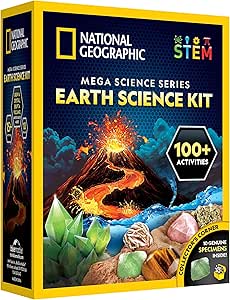 | Best for Earth Science Fans | Brand: Blue Marble | Age range: 8 years and up | Experiments and activities: Title states 100+ activities; description lists more than 15 hands-on experiments | VIEW LATEST PRICE | See Our Full Breakdown |
| National Geographic Gross Science Kit with 45 Experiments for Kids |  | Best for Gross-Out Science Fans | Brand: Blue Marble | Recommended age: 8 years and up | Experiments: 45 total: 15 with included materials and 30 using household items | VIEW LATEST PRICE | See Our Full Breakdown |
| Smartivity Robotic Mechanical Hand STEM Toy for Kids Ages 8–14 |  | Best Build-and-Learn Gift | Brand: Smartivity | Model: SMRT1135 | Recommended age: 8–14 years | VIEW LATEST PRICE | See Our Full Breakdown |
| BMDSAE 1000X Handheld Digital Microscope for Kids |  | Best for Portable Specimen Exploration | Brand: BMDSAE | Model: 382 | Magnification: Up to 1000X | VIEW LATEST PRICE | See Our Full Breakdown |
| ThinkFun Gravity Maze Marble Logic Game |  | Best Screen-Free Logic Challenge | Brand: ThinkFun | Age range: 8+ | Challenges: 60, from beginner to expert | VIEW LATEST PRICE | See Our Full Breakdown |
| National Geographic Kids Why?: Over 1,111 Answers to Everything |  | Best Science-Themed Reading Gift | Publisher: National Geographic Kids | ASIN: 1426320965 | Content: More than 1,111 answers to questions | VIEW LATEST PRICE | See Our Full Breakdown |
| science gifts for kid | Brand | Recommended age |
|---|---|---|
| National Geographic Science Ma | Blue Marble | 8 years and up |
| Snap Circuits Jr. SC-100 STEM | — | 8 years and up |
| Klutz LEGO Gear Bots STEM Acti | Klutz | 8–12 years |
| National Geographic Magic Chem | Blue Marble | 8 years and up |
| National Geographic Kids Micro | Blue Marble | 6+ |
| UNGLINGA 150-Experiment Scienc | UNGLINGA | — |
| National Geographic Amazing Ch | Blue Marble | — |
| Tub Works Kids Bath Bomb Potio | — | — |
| Creativity for Kids Grow ‘N Gl | — | 6 years and up |
| National Geographic Earth Scie | Blue Marble | — |
| National Geographic Gross Scie | Blue Marble | 8 years and up |
| Smartivity Robotic Mechanical | Smartivity | 8–14 years |
| BMDSAE 1000X Handheld Digital | BMDSAE | — |
| ThinkFun Gravity Maze Marble L | ThinkFun | — |
| National Geographic Kids Why?: | — | — |
More Details on Our Top Picks
National Geographic Science Magic Kit for Kids
Best for kids who like a performance, this kit pairs hands-on science with tricks they can show to family or friends. It supplies materials for 20 experiments, while a bonus booklet adds more than 85 further ideas, giving it a wider activity pool than the National Geographic Magic Chemistry Set, which focuses on 10 experiments. That breadth can help keep a curious child coming back after the first demonstration. The tradeoff is that the extra booklet does not mean materials are included for every listed activity, so some experiments may call for additional supplies. It is designed for one player, and adult supervision may be needed for some activities. Unlike the Snap Circuits Jr. kit, it does not introduce electronics; its appeal is science presented as a magic act, with no batteries required.
Pros:- Materials are included for 20 experiments, with 85+ additional ideas in the bonus booklet.
- Connects hands-on STEM activities with magic tricks that children can demonstrate.
- Requires no batteries.
- Ages 8 and up suits elementary-age children ready to follow activity instructions.
Cons:- Designed for one player, so it is less suited to a group activity.
- Some experiments may require adult supervision.
- The bonus booklet’s extra experiments may require supplies beyond those included.
Best for: Children aged 8 and up who enjoy performing tricks and want a broad collection of hands-on science activities to explore with occasional adult help.
Not ideal for: Kids seeking a collaborative building project or electronics lessons, and families wanting every activity in the bonus booklet to come with its own materials.
- Brand:Blue Marble
- Recommended age:8 years and up
- Experiments:20 with included materials, plus 85+ in bonus booklet
- Number of players:1
- Educational objective:STEM
- Power source:No batteries required
- Operation mode:Manual
- Dimensions:8.86 x 3.15 x 12 inches
- Weight:1.5 pounds
Our verdict“Choose this for an 8+ child who wants a sizable mix of science activities and magic-style demonstrations rather than a focused electronics or building kit.”
Snap Circuits Jr. SC-100 STEM Electronics Kit, 100+ Projects, Ages 8+
Best for a first electronics project, Snap Circuits Jr. turns basic circuitry into something children can assemble and revise without soldering or tools. Its color-coded components snap onto a grid, so kids can focus on how a circuit works instead of managing delicate connections. The illustrated manual guides more than 100 projects, including a musical doorbell and sound-activated switch. Compared with the Klutz LEGO Gear Bots, this kit teaches electrical concepts rather than mechanical motion; Gear Bots is a better fit for children drawn to moving creatures and cranks. The main tradeoff is that batteries are required, and the listed component count is inconsistent across the product information (28 in one place, 29 in another). It is also less suited to children who would rather explore specimens or perform chemistry-style experiments.
Pros:- Offers more than 100 projects for repeated circuit-building practice.
- Color-coded snap-together components avoid soldering and tools.
- Illustrated manual helps beginners follow the builds.
- Projects show practical circuit effects, including sound and motion.
Cons:- Batteries are required.
- The product information gives conflicting component counts: 28 in one section and 29 in another.
- Its electronics focus may be a poor match for children more interested in biology, chemistry, or nature.
Best for: Children aged 8 and up who want to learn basic circuits by building guided projects, especially those who prefer electronics to chemistry or mechanical models.
Not ideal for: Families avoiding battery-powered toys, or children who want open-ended specimen exploration rather than a project-by-project electronics kit.
- Model:SC-100
- Recommended age:8 years and up
- Projects:100+
- Components:28 electrical components in one section; another section lists 29
- Soldering:Not required
- Power:Batteries required
- Included:Plastic snap-grid, electrical components, and project manual
Our verdict“Pick Snap Circuits Jr. for a child ready to learn circuitry through guided builds, provided batteries and an electronics-focused activity are a good fit.”
Klutz LEGO Gear Bots STEM Activity Kit for Ages 8–12
Best for kids who learn by building, Gear Bots turns axles, cams, and cranks into eight kinetic creatures, including an octopus and pterodactyl. The included LEGO Technic elements and papercraft let children see how a simple mechanism creates movement, while the 64-page instruction book breaks each model into steps. That makes it a more focused mechanical lesson than Snap Circuits Jr., which offers a much larger project count but teaches electronics instead. The tradeoff is variety: eight models provide a defined set of builds, not the 100-plus project menu found in Snap Circuits. Each creature also needs manual cranking to move, so this is an activity kit rather than a self-running robot. Its suggested 8–12 age range is narrower than the microscope kit’s 6+ starting point.
Pros:- Builds eight kinetic creatures using LEGO Technic elements and papercraft.
- Introduces axles, cams, and cranks through visible moving models.
- Includes the LEGO elements needed for the projects.
- Step-by-step instructions in a 64-page book support independent building.
Cons:- Models require manual cranking to move.
- Eight builds offer less project variety than Snap Circuits Jr.’s 100+ projects.
- The recommended age range is limited to 8–12 years.
Best for: Children aged 8–12 who enjoy LEGO-style construction, paper crafts, and learning how gears and cranks produce motion.
Not ideal for: Kids wanting motorized movement, a broad collection of independent projects, or a kit suited to children younger than 8.
- Brand:Klutz
- Recommended age:8–12 years
- Models:8
- LEGO elements:62
- Papercraft sheets:10
- Book length:64 pages
- Operation mode:Manual
- Dimensions:10 x 1.5 x 10 inches
- Weight:16 ounces
Our verdict“Choose Gear Bots for an 8–12-year-old who wants to build and operate mechanical creatures by hand, not for a child seeking powered robotics.”
National Geographic Magic Chemistry Set for Kids, 10 Experiments
Best for a compact introduction to chemistry tricks, this set gives children 10 hands-on experiments presented as magic, from changing water color to making instant snow. Its illustrated guide explains the science behind each trick, so the performance element has a learning purpose rather than relying on surprise alone. The included wand, gloves, and experiment tools help establish a clear activity setup. Compared with the larger National Geographic Science Magic Kit, this set offers fewer experiments and a more focused chemistry theme; the larger kit makes more sense for children who want a wider activity pool. This smaller scope can be easier to approach, but it may not sustain interest as long for a child who quickly finishes a project set. The product information does not specify whether any experiments need additional household supplies or adult supervision.
Pros:- Combines 10 hands-on chemistry experiments with magic-style demonstrations.
- Illustrated guide explains the science behind each trick.
- Includes a wand, gloves, and experiment tools.
- A focused activity set can suit children who prefer a defined starting collection.
Cons:- Its 10 experiments offer less activity variety than the National Geographic Science Magic Kit.
- The supplied information does not clarify whether extra household materials are needed.
- The supplied information does not specify supervision requirements.
Best for: Children aged 8 and up who are curious about chemistry and would enjoy a manageable set of science demonstrations with explanations.
Not ideal for: Kids who want a large collection of activities or prefer electronics, mechanical building, or microscope observation to chemistry tricks.
- Brand:Blue Marble
- Recommended age:8 years and up
- Experiments:10
- Included components:Magic wand, gloves, full-color learning guide, and experiment tools
- Model number:NGSCIMAGIC
- ASIN:B085WF9CHH
Our verdict“Choose this for an 8+ child who wants a focused, explained introduction to chemistry tricks rather than a larger all-purpose experiment collection.”
National Geographic Kids Microscope Kit, Up to 400x Magnification
Best for young observers, this microscope kit makes small-scale exploration more approachable with large focus knobs, a soft-touch eyepiece, and three magnification levels up to 400x. LED lights above and below the platform help illuminate different kinds of samples, while prepared plant slides provide a starting point before children try the blank slides. The kit also includes rocks and minerals, tools, and a lab guide, giving it a more observation-led experience than the National Geographic Magic Chemistry Set, which centers on performing experiments. Its 6+ recommendation also reaches younger children than the Snap Circuits and LEGO Gear Bots kits, both aimed at ages 8 and up. The tradeoffs are battery power and a plastic enclosure; children looking for a large project count or electronic construction may find the microscope less engaging.
Pros:- Offers three magnification levels up to 400x.
- LED lighting above and below the platform supports viewing different samples.
- Includes prepared plant slides, blank slides, and rocks and minerals.
- Large focus knobs, a soft-touch eyepiece, tools, and a lab guide support beginner use.
Cons:- Requires batteries.
- The enclosure is plastic.
- Observation activities may be less engaging for children who prefer building or performing experiments.
Best for: Children aged 6 and up who enjoy looking closely at plants, rocks, and other samples and are ready for guided microscope activities.
Not ideal for: Kids who want to build moving models or circuits, or families who prefer a non-battery-powered science gift.
- Brand:Blue Marble
- Recommended age:6+
- Maximum magnification:400x
- Magnification levels:3
- Light source:LED above and below the platform
- Specimens:6 prepared plant slides and 6 rocks and minerals
- Blank slides:6
- Power source:Battery powered
- Dimensions and weight:11 x 6.7 x 12 inches; 1.8 pounds
Our verdict“Choose this for a budding young observer who wants guided specimen exploration, especially if they are not yet ready for the 8+ building and electronics kits.”
UNGLINGA 150-Experiment Science Kit for Kids
The 150-experiment range makes this the broadest sampler in this group, spanning chemistry, physics, Earth science, and surface tension rather than centering on one subject. Its illustrated, step-by-step manual, goggles, tools, and materials give kids a more complete starting setup than the National Geographic Amazing Chemistry Set, where most of the advertised activities rely on household supplies. That breadth suits children who like changing projects and families who want options for shared activity time. The tradeoff is that the large experiment count does not mean every project is ready to begin: some need extra items from home, so an adult may need to check the instructions and gather supplies. Compared with the Earth-focused National Geographic kit, this is the better choice for variety, but less focused for a child devoted to rocks and volcanoes.
Pros:- Covers chemistry, physics, Earth science, and surface tension
- Includes lab tools, materials, and goggles
- Illustrated, step-by-step instructions support independent participation
- Large range of activities offers options for family science time
Cons:- Some experiments require additional household items
- Its broad subject mix may feel less focused than a dedicated chemistry or Earth science kit
Best for: Families with children aged 8 or older who want one kit to introduce several science subjects and can help gather occasional household supplies
Not ideal for: Children who want every activity fully supplied in the box, or young experimenters who need a narrower, closely guided subject focus
- Brand:UNGLINGA
- Number of experiments:150
- Age range:8 years and up
- Topics:Chemistry, physics, Earth science, and surface tension
- Included components:Science experiment tools, materials, goggles, and illustrated manual
- Item dimensions:11.42 x 8.67 x 3.94 inches
- Material:Plastic
Our verdict“Choose this for an 8-plus child who wants variety across science topics and has an adult available to supply occasional household materials.”
National Geographic Amazing Chemistry Set, 100+ Experiments
This kit is a more focused chemistry introduction than the UNGLINGA 150-Experiment Science Kit: its test tubes, beakers, and pipettes help make simple investigations feel like lab work, while projects include a crystal tree and color-changing solutions. The key distinction is what the activity count represents. The box supplies materials for 15 experiments; the additional 85 activities use common household items. That split can stretch the learning beyond the supplied projects, but buyers looking for a box with materials for every listed activity may be disappointed. Compared with the National Geographic Earth Science Kit, this is the clearer pick for a child curious about reactions and solutions, not a general tour of geology. It suits beginners who enjoy chemistry and have an adult ready to help source extra supplies.
Pros:- Includes materials for 15 hands-on chemistry experiments
- Realistic tools include test tubes, beakers, and pipettes
- Bonus guide adds activities using common household items
- Color-changing and crystal projects give chemistry visible results
Cons:- Only 15 experiments use materials included in the kit
- The 85 bonus activities depend on supplies from home
Best for: Children aged 8 or older who are curious about chemistry and families comfortable using household materials for follow-up activities
Not ideal for: Gift buyers expecting materials for all 100 activities, or children more interested in rocks, volcanoes, and other Earth science topics
- Brand:Blue Marble
- Age range:8 years and up
- Experiments:15 supplied-material experiments plus 85 bonus activities
- Included tools:Test tubes, beakers, and pipettes
- Featured projects:Crystal tree and color-changing solutions
- Dimensions:8.78 x 3.19 x 11.93 inches
- Weight:1.8 pounds
- Model number:NGMEGACHEMAR
Our verdict“Pick this chemistry-focused starter for a child who will enjoy lab-style tools and does not expect every bonus activity to be fully supplied.”
Tub Works Kids Bath Bomb Potion Bath Toy, Variety 6-Pack
Rather than a sit-down experiment kit, this six-pack turns bath time into a quick demonstration of fizzing, foaming, and bubbling. Warm water activates the colorful potions, giving younger children an easy way to observe changes and talk about mixing without handling a set of lab tools. That makes it a more casual, routine-friendly science gift than the UNGLINGA kit, though it cannot match that kit’s range of subjects or guided experiments. The ingredients are described as nontoxic, paraben-free, and phthalate-free, and the potions dissolve fully and are designed not to stain. Still, the tub must be non-porous and in good repair, and more water may be needed to maintain or increase the eruption. This is a sensory introduction, not a substitute for sustained science projects.
Pros:- Six potions create colorful fizzing, foaming, and bubbling effects
- Warm water activation makes the activity simple to start
- Described as nontoxic and free of parabens and phthalates
- Dissolves fully and is designed not to stain
Cons:- Requires a non-porous tub in good repair
- Additional water may be needed to maintain or increase the eruption
- Offers less structured learning than experiment kits such as UNGLINGA’s
Best for: Families seeking a playful, low-preparation way for young children to notice fizzing and color changes during bath time
Not ideal for: Children seeking structured experiments, detailed explanations, or a science activity that can be done away from a suitable bathtub
- Pack size:6
- Activation:Add warm water
- Effects:Fizzing, foaming, bubbling, and colorful eruptions
- Ingredients:Nontoxic; paraben-free and phthalate-free
- Cleanup:Dissolves fully; rinse and drain the tub
- Staining:Described as non-staining
- Use condition:Requires a non-porous tub in good repair
Our verdict“Choose this for a child who enjoys bath-time sensory play and simple observations, not for a gift meant to teach a broad range of science.”
Creativity for Kids Grow ‘N Glow Terrarium Kit
The Grow ‘N Glow kit gives science a slower, living subject: children build a miniature terrarium, plant chia and wheatgrass seeds, and watch growth that can begin in as little as 3–4 days. Its mix of planting and decorating makes it a gentler fit for younger makers than the National Geographic Amazing Chemistry Set, which centers on chemistry experiments and lab tools. The included two planting cycles also allow a second try after the first round, while glow-in-the-dark figures, sand, and stickers add a craft element beyond the growing process. The tradeoff is that plants need ongoing care and may not thrive indefinitely, so this is not a set-and-forget display. Compared with UNGLINGA’s many short experiments, this kit offers fewer kinds of activity but gives children a chance to observe change over time.
Pros:- Combines planting, observation, and arts-and-crafts decoration
- Includes supplies for two planting cycles
- Chia and wheatgrass can begin growing in as little as 3–4 days
- Glow-in-the-dark decorations add a nighttime display feature
Cons:- Plants need ongoing care and may not thrive indefinitely
- The activity depends on growing conditions and is less immediate than a fizzing or chemistry experiment
Best for: Children aged 6 or older who enjoy crafts and gardening, with an adult available to help maintain the plants
Not ideal for: Children who prefer quick, repeatable experiments or families who cannot provide ongoing care for a growing project
- Recommended age:6 years and up
- Planting cycles:2
- Seeds:Chia and wheatgrass
- Growing time:As little as 3–4 days
- Container:Plastic jar with decorative lid
- Growing supplies:Potting mix, seeds, and river stones
- Decorations:Figurines, glowing sand, and stickers
Our verdict“Choose this for a younger child who will enjoy decorating a terrarium and checking on plants over several days.”
National Geographic Earth Science Kit with 100+ Activities for Kids
For a child drawn to geology and landforms, this kit offers a more coherent theme than the broad UNGLINGA 150-Experiment Science Kit. Its featured projects include crystal growing, a volcano experiment, and digging for geological specimens, so the activities connect to Earth science rather than jumping across unrelated subjects. A full-color learning guide and clear instructions help make it suitable for family, friend, or classroom activity. One buying detail needs close attention: although the title says 100+ activities, the description specifies more than 15 hands-on experiments, leaving the relationship between those counts unclear. I would choose it for the Earth science theme and guided projects, not on the assumption that the box supplies materials for 100 experiments. Compared with the chemistry-focused National Geographic set, this one is better for geology-minded kids and less suited to reaction-based projects.
Pros:- Focused selection of crystal, volcano, and geological specimen activities
- Full-color learning guide supports understanding alongside the projects
- Clear instructions suit shared family, friend, or classroom activities
- Earth science theme gives geology-curious children a focused gift
Cons:- Description lists more than 15 hands-on experiments despite the 100+ activities title
- The activity-count wording does not clarify how many projects have included materials
Best for: Children aged 8 or older who are especially interested in crystals, volcanoes, and geological specimens, including those doing projects with family or classmates
Not ideal for: Buyers who need a clearly defined count of fully supplied activities, or children who prefer chemistry demonstrations and color-changing reactions
- Brand:Blue Marble
- Age range:8 years and up
- Experiments and activities:Title states 100+ activities; description lists more than 15 hands-on experiments
- Featured activities:Crystal growing, volcano experiments, and rock collection
- Guide:Full-color learning guide with clear instructions
- Dimensions:8.66 x 3.15 x 12 inches
- Weight:2.6 pounds
- Model number:NGMEGAEARTH
Our verdict“Choose this for a geology-curious child who values a focused Earth science theme and is not relying on the title’s activity count to mean 100 fully supplied experiments.”
National Geographic Gross Science Kit with 45 Experiments for Kids
For kids who learn best when science gets messy, this kit turns polymers, chemical reactions, and pH into hands-on activities with a deliberately gross theme. It includes materials for 15 experiments and an illustrated guide; the extra booklet adds 30 more activities using household items, so the experiment count does not mean 45 fully supplied projects. Compared with the National Geographic Amazing Chemistry Set, this pick leans into silly, sensory appeal rather than a broader chemistry experience. That can make it a more inviting gift for children drawn to gross jokes, while the included materials give them a starting point without gathering everything themselves. The tradeoff is that some experiments need household supplies, and the theme may not suit every child. I’d choose it for a curious kid who enjoys playful mess, not someone seeking a tidy or fully self-contained kit.
Pros:- Includes materials for 15 experiments and a booklet with 30 additional household-item activities
- Illustrated instructions offer children a visual guide through the activities
- Uses hands-on experiments to introduce polymers, chemical reactions, and pH
- Gross-out theme can make science more appealing to kids who prefer playful activities
Cons:- Only 15 of the 45 experiments use materials included in the kit
- Some activities may be too gross for children who prefer conventional science projects
- Household-item experiments require families to supply additional materials
Best for: Children ages 8 and up who enjoy gross-out humor and want guided experiments that connect playful activities to basic science concepts.
Not ideal for: Kids who dislike messy or gross-themed activities, or gift-givers who want every experiment to use materials supplied in the box.
- Brand:Blue Marble
- Recommended age:8 years and up
- Experiments:45 total: 15 with included materials and 30 using household items
- Educational objective:STEM
- Included components:Gross Science Kit and experiment guide
- Model number:NGMEGAGRS
Our verdict“Choose this kit for an eight-and-up science fan who likes gross humor and is happy to supplement the included experiment materials with household supplies.”
Smartivity Robotic Mechanical Hand STEM Toy for Kids Ages 8–14
This kit makes the most sense for a child who wants to build a working mechanical model, rather than move from one short experiment to another. The step-by-step instructions guide kids through assembling an engineered-wood hand, linking the activity to robotics and anatomy while keeping play screen-free. Compared with ThinkFun Gravity Maze, it offers a construction project with a tangible result; Gravity Maze is the better fit for repeated logic challenges without an assembly step. The hand’s build is the main event, so it may hold less appeal for children who want many different experiments or open-ended science topics. Assembly also asks for patience and some adult help may be useful depending on the child. Replacement parts are available for the lifetime of the product, a helpful distinction for a project made from multiple pieces.
Pros:- Building a mechanical hand connects a hands-on project to robotics and anatomy
- Step-by-step instructions give kids a structured path through assembly
- Engineered-wood construction offers a screen-free alternative to app-led STEM activities
- Replacement parts are available for the lifetime of the product
Cons:- Requires assembly before the finished hand can be used
- One build may offer less variety than a multi-experiment kit such as the National Geographic Gross Science Kit
- Children who struggle with sequential building instructions may need adult support
Best for: Ages 8–14 who enjoy following build instructions, learning through a physical model, and screen-free robotics-themed play.
Not ideal for: Children who want instant play, a variety of separate experiments, or a science activity that requires no assembly.
- Brand:Smartivity
- Model:SMRT1135
- Recommended age:8–14 years
- Material:Engineered wood
- Theme:Anatomy and robotics
- Package quantity:1
- Dimensions:11.81 × 9.8 in
Our verdict“Pick this for an 8–14-year-old who enjoys building a physical STEM model more than sampling lots of separate experiments.”
BMDSAE 1000X Handheld Digital Microscope for Kids
Unlike the National Geographic Kids Microscope Kit, this handheld model includes its own screen, camera, and photo and video storage, so children can inspect and save observations without looking through a separate eyepiece. Its manual focus and eight adjustable LEDs give kids control over sharpness and lighting as they examine specimens, while the 200-gram body and lanyard support portable exploration. That makes it a strong fit for curious children who want to document what they find, not just view it. There are important limits: the listed battery life is up to two hours, and the product description does not clarify whether 1000X magnification is optical or digital. Families seeking a simple, longer-session viewing setup may prefer a conventional microscope kit; this one prioritizes portability and onboard capture.
Pros:- Built-in 2.0-inch screen lets children view specimens without a separate display
- Manual focus and adjustable LED lighting offer control over viewing conditions
- Stores photos and AVI videos and supports USB file transfer
- Lightweight 200-gram body, lanyard, and rechargeable battery support portable use
Cons:- Battery life is listed as up to two hours
- The description does not state whether 1000X magnification is optical or digital
- The 2MP camera and 32M storage may limit how much detail or video the device can save
Best for: Young explorers who want a portable microscope with a built-in screen and the ability to save specimen photos or videos.
Not ideal for: Families prioritizing clearly specified optical magnification or extended sessions without recharging.
- Brand:BMDSAE
- Model:382
- Magnification:Up to 1000X
- Camera resolution:2MP
- Screen:2.0-inch IPS
- Lighting:8 adjustable LEDs with 3 brightness modes
- Battery:600mAh; up to 2 hours of battery life
- Storage:32M; stores over 200 photos or AVI videos
- Recommended age and weight:3 years and up; 200g
Our verdict“Choose this handheld microscope for a child who values portable viewing and saved observations more than clearly specified optical magnification or long battery sessions.”
ThinkFun Gravity Maze Marble Logic Game
Gravity Maze turns spatial reasoning into a hands-on puzzle: players arrange towers on a grid, then use gravity to guide a marble to its target. Its 60 challenge cards progress from beginner to expert, giving the game more repeatable puzzle play than the single-build experience of the Smartivity Robotic Mechanical Hand. It is the stronger choice for children who like testing a plan, spotting a mistake, and trying again; it can also be played alone or collaboratively. The tradeoff is that it teaches through problem-solving rather than experiments or a finished working model, so kids looking for chemistry, biology, or construction may prefer another gift in this roundup. Some challenges call for patience, and the supplied information lists no manufacturer warranty.
Pros:- 60 challenge cards offer a range from beginner to expert
- Arranging towers and tracing marble paths exercises spatial reasoning and problem-solving
- Screen-free format gives kids a tactile logic activity
- Can be played independently or collaboratively
Cons:- Puzzle-based play may be less appealing than experiments or building projects
- Solving challenges requires patience and persistence
- No manufacturer warranty is listed in the supplied product information
Best for: Children ages 8 and up who enjoy logic puzzles, spatial challenges, and screen-free play they can tackle independently or with another person.
Not ideal for: Kids seeking hands-on experiments or a buildable model, or those who quickly lose interest when a puzzle takes repeated attempts.
- Brand:ThinkFun
- Age range:8+
- Challenges:60, from beginner to expert
- Included components:Game grid, 9 towers, 3 marbles, 1 target piece, and 60 challenge cards
- Model number:44001006
- Color:Multicolor
Our verdict“Choose Gravity Maze for a patient puzzle fan who wants repeatable, screen-free STEM challenges rather than experiments or a construction project.”
National Geographic Kids Why?: Over 1,111 Answers to Everything
For a child whose curiosity arrives as a steady stream of questions, this illustrated Q&A book offers more than 1,111 answers across a wide range of topics. It differs from the National Geographic experiment kits in this roundup: instead of supplying materials for children to handle, it gives them a browsable reference they can read in short stretches. That makes it a natural fit for quiet reading, conversation, or following a question beyond a single activity. The breadth is also its main tradeoff. The product information does not identify specific subject coverage, so buyers looking for a focused guide to chemistry, microscopy, or a particular science topic may be better served by a specialized kit such as the National Geographic Gross Science Kit. It is a reading-led gift, not a substitute for hands-on experiments.
Pros:- More than 1,111 answers give curious readers a wide pool of questions to explore
- Illustrated presentation is designed for children
- Broad topic range can suit browsing and reading in short sessions
- Offers a book-based alternative to kits that require setup and materials
Cons:- Does not provide hands-on experiments or activity materials
- The supplied description does not specify which topics are covered
- Its broad scope may be less useful than a focused resource for a child interested in one science subject
Best for: Curious young readers who like browsing illustrated answers to questions across a broad range of topics.
Not ideal for: Children who prefer hands-on experiments, or gift-givers seeking a focused science activity with specified topics and materials.
- Publisher:National Geographic Kids
- ASIN:1426320965
- Content:More than 1,111 answers to questions
- Format:Illustrated question-and-answer book
- Audience:Children
- Topic range:A wide range of topics
Our verdict“Pick this book for a question-loving child who enjoys illustrated reading, but choose a hands-on kit if the goal is doing experiments.”

How We Picked
I compared these gifts by the kind of science experience they create: guided experiments, construction, observation, logic, nature care, or reading. I weighed age fit, clarity of the activity, variety, likely repeat use, setup demands, and whether the child can take an active role rather than only watch a demonstration. I also looked at practical tradeoffs such as adult supervision, extra materials, small parts, and whether the activity depends on a particular interest.
The ranking favors gifts that combine approachable use with meaningful hands-on engagement and more than one reason to return to them. That puts the Earth Science Kit first as a broad, varied choice, with Snap Circuits close behind for kids who prefer making working builds. More specialized products rank lower not because they lack appeal, but because a microscope, terrarium, bath activity, or narrow experiment theme suits a smaller set of children. I treat the best-value choice as usefulness and variety, not a price claim.
| science gifts for kid | Brand |
|---|---|
| National Geographic Science Ma | Blue Marble |
| Snap Circuits Jr. SC-100 STEM | — |
| Klutz LEGO Gear Bots STEM Acti | Klutz |
| National Geographic Magic Chem | Blue Marble |
| National Geographic Kids Micro | Blue Marble |
| UNGLINGA 150-Experiment Scienc | UNGLINGA |
| National Geographic Amazing Ch | Blue Marble |
| Tub Works Kids Bath Bomb Potio | — |
| Creativity for Kids Grow ‘N Gl | — |
| National Geographic Earth Scie | Blue Marble |
| National Geographic Gross Scie | Blue Marble |
| Smartivity Robotic Mechanical | Smartivity |
| BMDSAE 1000X Handheld Digital | BMDSAE |
| ThinkFun Gravity Maze Marble L | ThinkFun |
| National Geographic Kids Why?: | — |
Factors to Consider When Choosing Science Gifts For Kids
Before choosing, I’d match the gift to how the child likes to learn and how much support an adult can provide. A kit with many activities can still be a poor fit if its setup, cleanup, or reading demands exceed the child’s patience.
Match the science activity to the child’s interests
Start with what the child already chooses to do: build, read, collect, make things, or ask questions about nature. An electronics kit can hold the attention of a child who likes solving construction problems, while a microscope suits someone who enjoys looking closely at everyday objects. A broad experiment kit offers variety, but that range is less useful if the child strongly prefers one subject. A common mistake is buying the gift that seems most educational to an adult rather than the one the child will want to open and use. For an uncertain interest, choose variety; for a clear hobby, a focused gift can feel more personal.
Check the age guidance against independence, not just age
Age labels provide a starting point, but reading ability, patience, and comfort with following steps affect how a kit feels in practice. Some children can handle a recommended activity independently, while others enjoy it more with an adult nearby. Consider whether the child can sort parts, follow instructions, and wait through setup without losing interest. Younger recipients may benefit from activities with visible results and fewer steps, while older children may want more control over the process. If the gift is meant for independent play, choose for the child’s current skills rather than hoping the kit will teach every prerequisite.
Think about adult help, cleanup, and storage
Hands-on science can include measuring, mixing, rinsing, sorting components, or finding a suitable work surface. Those tasks are part of the gift experience, so consider whether a caregiver is available to help before choosing a more involved kit. Small pieces may need a dedicated container, and experiments can require a clear table and cleanup time. Buyers often focus on the activity count and overlook the work between activities. For a low-prep household, a logic game, book, or simpler observation activity may get used more often than a kit with elaborate setup.
Look beyond the advertised number of activities
Experiment counts can make two kits look comparable, but the activities may differ in length, variety, and how much the child does. Look for a mix of procedures and outcomes rather than a large number of closely related demonstrations. Ask whether the child can repeat an activity, change a variable, or use the idea in a new way. A smaller set of projects can offer stronger replay value if it supports experimentation instead of following one fixed script. Also check whether materials are reusable or whether later play depends on household supplies or replacements.
Choose a format that fits your home and gifting goal
A kit is a natural fit when you want an activity to open and start, but it may need room to spread out and a place to store components. A book takes less setup and can support curiosity at the child’s own pace, though it provides less hands-on action. A microscope or other tool can invite repeated exploration, but it works best when the child has objects to examine and a place to use it. For a party or small gift, a compact logic activity may be easier to manage than a large multi-part science set. Think about whether the goal is one shared activity, a lasting hobby starter, or a quiet option for solo exploration.
Pay for fit and repeat use, not sheer complexity
A more elaborate gift makes sense when the child has a strong interest and the household can support its setup. Extra features are less valuable if they add steps without making the child more involved. For a beginner, clear instructions and quick, visible results can matter more than technical detail. For a child who already enjoys science, a specialized tool or build may offer a welcome challenge. I’d prioritize the gift the child can return to and use with confidence over one that appears advanced but stays boxed after the first session.
Frequently Asked Questions
Which science gift is the safest choice when I’m unsure what a child likes?
I’d choose a gift with more than one way to engage, such as a broad activity kit or a science book, rather than a narrowly themed experiment. The Earth Science Kit stands out in this lineup for varied activities, while the question-and-answer book suits a child who prefers reading and browsing. If the child likes building, Snap Circuits is a more focused but still flexible option. Check the age guidance and supervision needs before deciding, since a broad kit can still be a poor match if it requires more adult help than the family can offer. When possible, ask the caregiver whether the child prefers making, reading, or observing.
Are experiment kits a good gift if the child will be doing them without an adult?
Some children can work through simple activities on their own, but the gift description alone may not tell you how much setup or supervision each experiment needs. Consider the child’s reading skills, patience with instructions, and ability to handle materials responsibly. Multi-experiment chemistry kits may be more rewarding as a shared activity than as a fully independent one. If solo use is a priority, a logic game, book, or straightforward building activity may be easier to start and put away. Ask the caregiver about supervision expectations before gifting a kit with mixing, measuring, or cleanup.
Should I choose a microscope kit or a digital microscope?
Choose based on how the child is likely to use the observations. A traditional introductory microscope can make direct viewing feel tactile and focused, while a digital model can appeal to children who want to view images on a screen or share what they find. The digital option may also depend on a compatible device or a comfortable screen setup, so check what is included and what the child already has. Neither microscope replaces the need for interesting specimens and guidance on what to examine. For a beginner, a simpler viewing experience may be less distracting; for a child motivated by screens and image sharing, digital viewing may be more engaging.
Is a large experiment count better than a smaller, more focused science gift?
Not by itself. A high activity count is useful when the child enjoys variety and the instructions make it easy to choose and complete projects, but some activities may require adult help or extra materials. A focused kit can be a better gift if it matches a strong interest and encourages repeated attempts, such as changing a build or examining new specimens. Think about how much time the child has for each activity and whether the household is ready for setup and cleanup. The most useful count is the number of activities the child will actually want and be able to do.
What should I check before buying a science kit as a gift for siblings to share?
Look at whether the activities let more than one child take part at a time or whether each child must wait for a turn with one tool or build. Consider age gaps, since one sibling may be ready to follow instructions while another needs an adult to guide each step. Shared kits can work well for experiments and construction when children can divide tasks, but small components may be easy to lose in a busy household. Choose an activity with enough roles for both children, and check that its difficulty fits the younger recipient too. If their interests differ, separate gifts may avoid one child taking over the activity.
Conclusion
For the best overall mix of subject variety and hands-on activity, I recommend the National Geographic Earth Science Kit. The best value in versatility is the UNGLINGA 150-Experiment Science Kit for families who want a wide range of activities and can support the setup. For a premium-feeling focused gift, choose the BMDSAE digital microscope when screen-based observation matches the child’s interests; for beginners, the National Geographic Kids Microscope Kit offers a more straightforward introduction to looking closely. Choose Snap Circuits Jr. for aspiring builders, Gravity Maze for a child who likes logic challenges, and the terrarium kit for someone drawn to plants and ongoing care. The best fit is the one that matches the child’s curiosity and the family’s appetite for supervision, space, and cleanup.