
When it comes to understanding your home’s energy consumption, wholehome energy monitors stand out as essential tools. The Refoss Smart Home Energy Monitor takes the top spot for its comprehensive sensor coverage and ease of use. The Emporia Vue 3 impresses with its smart automation features, making it a versatile choice. Meanwhile, the Leviton LWHEM-2R offers a professional-grade solution for detailed circuit analysis. Buyers often face tradeoffs between cost, complexity, and feature set, which can make choosing the right monitor challenging. Continue reading for a detailed breakdown of these options to find the best fit for your needs.

Prime made for students and young adults
- Fast, free delivery for dorm and study essentials
- Prime Video and Amazon Music included
- Member-only deals
Key Takeaways
- Top monitors combine extensive sensor coverage with ease of installation, making them accessible for most homeowners.
- Features like real-time tracking, automation integration, and open APIs set the best options apart from basic models.
- Higher-priced models typically offer more detailed circuit-level data and more reliable connectivity options.
- Compatibility and integration with existing smart home systems are critical for maximizing value.
- Many budget models sacrifice some accuracy or expandability, making them less suitable for detailed energy management.
| Refoss Smart Home Energy Monitor with 16 60A Circuit Sensors |  | Best Overall for Customization and Privacy | Sensor Count: 16 branch sensors + 2 main sensors | Sensor Current Rating: Up to 60A per branch, 200A for main sensors | Supported Systems: Single-phase, Split-phase, 3-phase 4-wire Wye | VIEW ON AMAZON | See Our Full Breakdown |
| Emporia Vue 3 Home Energy Monitor – Smart Home Automation Module and Real-Time Electricity Usage Monitor |  | Best for Real-Time Monitoring and Automation | Certification: UL Listed | System Support: Single phase, Single-split phase, 2-wire, 3-wire, 3-phase, 4-wire Wye | Sensors: Sixteen 50A branch sensors | VIEW ON AMAZON | See Our Full Breakdown |
| Leviton LWHEM-2R Whole Home Energy Monitor with CTs |  | Best for Integration with Leviton Smart Systems | Connectivity: Wi-Fi | Inputs: Up to three pairs of optional LSMMA CTs | Control: Remote control of smart circuit breakers | VIEW ON AMAZON | See Our Full Breakdown |
| WiFi Home Energy Monitor with 3 80A CT Clamps |  | Best for High-Power Circuit Monitoring | Panel-Level Monitoring: Yes | Number of CT Clamps: 3 | Clamp Current Rating: 80A | VIEW ON AMAZON | See Our Full Breakdown |
| Refoss Smart Home Energy Monitor with Open API, Home Assistant Integration, No Cloud |  | Best for Privacy and Open-Source Integration | Model: EM16P | Weight: 4.24 pounds | Dimensions: 4.5 x 3.5 x 1.1 inches | VIEW ON AMAZON | See Our Full Breakdown |
| Eyedro Smart Home Energy Monitor 200A WiFi/Ethernet |  | Best Overall for Versatile Whole-Home and Solar Monitoring | Sensor Count: 2 x 200A sensors | Connectivity: WiFi 2.4 GHz, Ethernet | Power Source: AC | VIEW ON AMAZON | See Our Full Breakdown |
| Emporia Energy Monitor with 16 Sensors and 4 Smart Plugs Bundle |  | Best Value for Complete Home Monitoring and Automation | Sensors: 16 | Smart Plugs: 4 | Compatibility: iOS, Android, Alexa | VIEW ON AMAZON | See Our Full Breakdown |
| Smart Home Energy Monitor with 16 50A Circuit Sensors, Real-Time Power Usage & Cost Tracking |  | Best for Rental Homes and Shared Spaces with Local Monitoring | Sensor Count: 16 | Sensor Current: 50A | Supported Voltages: 120/240VAC, up to 415Y/240VAC | VIEW ON AMAZON | See Our Full Breakdown |
| Meross Smart Home Energy Monitor |  | Best for Accurate, Local, and Subscription-Free Monitoring | Certification: ETL, UL 61010 | Supported Systems: Single-phase 2-wire, Single-split phase 3-wire, 3-phase 4-wire Wye | Maximum Current: 200A main, 60A branch | VIEW ON AMAZON | See Our Full Breakdown |
| SIEMENS Inhab Smart Home Energy Monitor with Circuit Level Sensors |  | Best for Professional-Grade, Accurate Circuit-Level Data | Circuit Sensors: 16-50A | Main Sensors: 2 x 200A | Compatibility: USA and Canada | VIEW ON AMAZON | See Our Full Breakdown |
| Smart Home Energy Monitor 2×80A, Dual-Channel WiFi Electricity Usage Tracker with App Control |  | Best for Targeted Circuit Monitoring and Solar Integration | Channels: 2 | Current: 80A per channel | Connectivity: WiFi | VIEW ON AMAZON | See Our Full Breakdown |
| Emporia Vue 3 Home Energy Monitor – Smart Home Automation Module and Real-Time Electricity Usage Monitor |  | Best for Whole-Home Monitoring with Automation Support | Part Number: EMV3A-2P-8 | Item Weight: 3.36 pounds | Product Dimensions: 10 x 5 x 5 inches | VIEW ON AMAZON | See Our Full Breakdown |
| wholehome energy monitor | Connectivity |
|---|---|
| Refoss Smart Home Energy Monit | Wi-Fi with external antenna |
| Emporia Vue 3 Home Energy Moni | 2.4 GHz Wi-Fi |
| Leviton LWHEM-2R Whole Home En | Wi-Fi |
| WiFi Home Energy Monitor with | WiFi 2.4GHz |
| Refoss Smart Home Energy Monit | Web UI, Open API, MQTT |
| Eyedro Smart Home Energy Monit | WiFi 2.4 GHz, Ethernet |
| Emporia Energy Monitor with 16 | — |
| Smart Home Energy Monitor with | WiFi 2.4GHz |
| Meross Smart Home Energy Monit | Home Assistant, Open API, Web |
| SIEMENS Inhab Smart Home Energ | — |
| Smart Home Energy Monitor 2×80 | WiFi |
| Emporia Vue 3 Home Energy Moni | 2.4 GHz WiFi |
More Details on Our Top Picks
Refoss Smart Home Energy Monitor with 16 60A Circuit Sensors
The Refoss Smart Home Energy Monitor stands out for its high-precision ±1% accuracy and local data storage, making it ideal for users who prioritize privacy and detailed energy insights. Unlike the Emporia Vue 3, which relies on cloud-based data, Refoss keeps everything on-site, ensuring no subscription fees and full control. Its support for various wiring systems and ability to handle solar ROI optimization make it versatile for different home setups. However, the installation demands some technical knowledge, and connectivity issues reported by some users can be a hurdle for non-technical homeowners. This monitor suits those comfortable with electrical wiring who want detailed, private monitoring without ongoing cloud costs.
Pros:- Highly accurate circuit monitoring with professional ±1% precision
- Local control ensures data privacy and no subscription fees
- Supports automation and solar energy optimization
Cons:- Requires technical knowledge for installation
- Limited to specific wiring configurations
Best for: Homeowners with technical experience seeking detailed, private energy data and solar optimization.
Not ideal for: DIYers or less tech-savvy users who prefer plug-and-play devices with simpler setup.
- Sensor Count:16 branch sensors + 2 main sensors
- Sensor Current Rating:Up to 60A per branch, 200A for main sensors
- Supported Systems:Single-phase, Split-phase, 3-phase 4-wire Wye
- Connectivity:Wi-Fi with external antenna
- Data Storage:5 years of usage data, exportable via CSV
- Warranty:2 years
Our verdict“This pick is best for technically skilled users who want detailed, privacy-focused energy monitoring without cloud reliance.”
Emporia Vue 3 Home Energy Monitor – Smart Home Automation Module and Real-Time Electricity Usage Monitor
The Emporia Vue 3 is a versatile, UL-listed energy monitor that excels in real-time data and automation, making it ideal for tech-savvy homeowners looking for comprehensive control. Compared with the Refoss, which focuses on detailed circuit-level data, Vue 3 offers easier app integration and supports solar and net metering with a user-friendly interface. Its sensors are suitable for most single-phase homes but require Wi-Fi for the full feature set, and data retention is limited for real-time use. This device suits those who want to monitor multiple aspects of their energy use quickly and easily, especially if automation integration with solar systems is a priority.
Pros:- UL-certified for safety and reliability
- Supports detailed real-time energy monitoring and automation
- Compatible with solar and net metering
Cons:- Requires Wi-Fi for full functionality
- Limited data retention for real-time monitoring
Best for: Smart homeowners wanting real-time data and automation with solar support.
Not ideal for: Homeowners without stable Wi-Fi or those seeking offline privacy-focused solutions.
- Certification:UL Listed
- System Support:Single phase, Single-split phase, 2-wire, 3-wire, 3-phase, 4-wire Wye
- Sensors:Sixteen 50A branch sensors
- Connectivity:2.4 GHz Wi-Fi
- Data Retention:7 days for 1-minute data
- Warranty:1 year
Our verdict“This model is well-suited for users who want straightforward, real-time energy insights combined with automation capabilities.”
Leviton LWHEM-2R Whole Home Energy Monitor with CTs
The Leviton LWHEM-2R delivers comprehensive real-time energy data for the entire home and excels in integrating with Leviton’s smart circuit breakers. Compared to the Emporia Vue 3, it offers deeper integration with Leviton’s smart home ecosystem, making it ideal for users already invested in Leviton devices. Its remote control of breakers and support for load management are significant advantages for those seeking load shedding or backup power integration. However, setup can be complex for non-technical users, and full functionality depends on compatible Leviton breakers. This monitor is best for existing Leviton smart home users wanting centralized control and detailed energy insights.
Pros:- Provides real-time, whole-home energy monitoring
- Remote control and scheduling of Leviton smart circuit breakers
- Supports load management and backup power integration
Cons:- Requires Leviton smart circuit breakers for full features
- Setup may be complex for non-technical users
Best for: Homeowners with Leviton smart panels seeking integrated control and energy management.
Not ideal for: Users without Leviton breakers or those new to smart home systems, due to setup complexity.
- Connectivity:Wi-Fi
- Inputs:Up to three pairs of optional LSMMA CTs
- Control:Remote control of smart circuit breakers
- Integration:My Leviton app, compatible with ATS
- Real-Time Data:Yes
- Additional Features:Scheduling, alerts
Our verdict“Ideal for Leviton system owners wanting seamless control and detailed energy data within their existing smart home setup.”
WiFi Home Energy Monitor with 3 80A CT Clamps
The WiFi Home Energy Monitor with 3 80A CT Clamps offers a straightforward approach to monitoring high-power circuits like HVAC and water heaters. Compared with the Refoss and Emporia Vue, which are more circuit-specific or detailed, this device is designed for quick installation on main circuits and provides real-time voltage, current, and power data. Its compatibility with apps like Tuya and Smart Life makes it accessible but limits integration depth compared to more advanced systems. The main drawback is its limited number of circuits and the need for professional wiring, which might discourage casual DIY users. This device suits homeowners needing to monitor a few high-power circuits without extensive setup.
Pros:- Supports monitoring multiple high-power circuits simultaneously
- Real-time data via smartphone app
- Includes temperature alerts and remote control
Cons:- Installation requires electrical wiring and professional help
- Limited to 3 circuits
Best for: Homeowners wanting to track major circuits like HVAC or water heaters with real-time data.
Not ideal for: Users seeking detailed circuit-level data or multi-circuit monitoring beyond three circuits.
- Panel-Level Monitoring:Yes
- Number of CT Clamps:3
- Clamp Current Rating:80A
- Input Voltage:AC 100–240V
- Connectivity:WiFi 2.4GHz
- App Compatibility:Smart Life, Tuya
Our verdict“Best suited for users who need reliable, high-power circuit monitoring without extensive setup or multiple circuits.”
Refoss Smart Home Energy Monitor with Open API, Home Assistant Integration, No Cloud
The Refoss EM16P shines for its focus on local control and open APIs, making it perfect for advanced users who prioritize privacy and custom automation. Unlike the Emporia Vue 3, which offers cloud connectivity, this device supports MQTT and integrates seamlessly with Home Assistant, providing circuit-level insights with high accuracy. Its support for maximizing solar energy use and reducing bills makes it suitable for energy-conscious homeowners comfortable with some technical setup. The main limitation is the installation complexity and the lack of built-in cloud access, which might limit remote viewing for less experienced users. This monitor is ideal for tech-savvy users aiming for privacy-centric, highly customizable energy management.
Pros:- Supports local control, open API, MQTT for privacy-focused automation
- Seamless integration with Home Assistant and OpenClaw AI
- High accuracy and detailed circuit-level insights
Cons:- Installation may require technical knowledge
- Limited to home circuit panel compatibility
Best for: Home automation enthusiasts seeking local control and open API access without relying on cloud services.
Not ideal for: Users who prefer simple, plug-and-play solutions or lack technical expertise for setup.
- Model:EM16P
- Weight:4.24 pounds
- Dimensions:4.5 x 3.5 x 1.1 inches
- Current Sensors:2 main (200A each), 16 branch (1–60A each)
- Accuracy:±1%
- Connectivity:Web UI, Open API, MQTT
Our verdict“This is a top choice for users wanting privacy-focused, open-source energy monitoring with advanced automation capabilities.”
Eyedro Smart Home Energy Monitor 200A WiFi/Ethernet
The Eyedro Smart Home Energy Monitor stands out for its combination of real-time data and flexible connectivity options, supporting both WiFi and Ethernet. Compared with the Emporia Energy Monitor with 16 Sensors and 4 Smart Plugs, it offers more detailed, circuit-level insights tailored for solar and net metering setups, making it ideal for users with renewable energy systems. However, the need for two sensors for certain measurements and its more complex setup can be barriers for less technical users. This monitor is best suited for homeowners seeking comprehensive, customizable energy tracking with high compatibility, even if setup takes extra effort.
Pros:- Provides granular real-time energy data for both consumption and production
- Supports WiFi and Ethernet, offering flexible installation options
- Compatible with solar and grid-tied systems for comprehensive tracking
Cons:- Requires two sensors for certain measurements, increasing cost and complexity
- Setup can be challenging for users unfamiliar with electrical systems
- Customer reviews indicate mixed satisfaction with ease of use
Best for: Homeowners with solar installations or net metering setups who want detailed, real-time energy data.
Not ideal for: Casual users or renters who prefer plug-and-play solutions with minimal setup complexity.
- Sensor Count:2 x 200A sensors
- Connectivity:WiFi 2.4 GHz, Ethernet
- Power Source:AC
- Item Weight:1.54 pounds
- Dimensions:8 x 8 x 3 inches
- Compatibility:Supports solar, grid, net metering
Our verdict“This monitor suits tech-savvy homeowners with renewable energy systems who need detailed data and flexible connectivity, despite some setup complexity.”
Emporia Energy Monitor with 16 Sensors and 4 Smart Plugs Bundle
The Emporia Vue Energy Monitor Bundle offers extensive coverage with 16 sensors and 4 smart plugs, making it ideal for those who want detailed circuit-level insights combined with device automation. Compared to the Meross Smart Home Energy Monitor, which focuses more on simple circuit monitoring, this bundle provides a comprehensive view of the entire home’s energy use. Its integration with popular smart home platforms and solar net metering supports a versatile setup, though its reliance on a smartphone app can complicate initial setup for some users. This pick is best for homeowners who want both detailed monitoring and remote control features in one package.
Pros:- Offers detailed real-time monitoring of entire home and individual circuits
- Includes smart plugs for remote control and automation
- Compatible with smart home platforms and supports solar net metering
Cons:- Setup can be complex, requiring smartphone app configuration
- Price is not specified, which may be a concern for budget-conscious buyers
- Requires smartphone for full functionality, potentially limiting users without compatible devices
Best for: Tech-savvy homeowners looking for detailed energy data plus device automation and integration.
Not ideal for: Users seeking a straightforward plug-and-play monitor without the need for app-based setup.
- Sensors:16
- Smart Plugs:4
- Compatibility:iOS, Android, Alexa
- Supports Solar Net Metering:Yes
Our verdict“Ideal for homeowners who want a comprehensive energy monitoring system with automation capabilities, accepting some setup complexity.”
Smart Home Energy Monitor with 16 50A Circuit Sensors, Real-Time Power Usage & Cost Tracking
This energy monitor is designed for easy installation in circuit panels, providing real-time power data via WiFi while supporting multiple phases and appliances. Compared with the SIEMENS Inhab Smart Home Energy Monitor, it emphasizes local operation without relying on cloud services, appealing to users prioritizing privacy. Its support for LAN operation allows use in rental or shared settings where internet access or cloud reliance is limited. However, the installation process may be intimidating for those unfamiliar with electrical systems, and its WiFi 2.4GHz support might limit compatibility with newer networks. This device suits property managers or renters needing accurate, private energy data collection.
Pros:- Supports multiple phases and appliances for thorough monitoring
- Operates locally without cloud dependency, ensuring privacy
- Provides real-time energy and cost tracking through app
Cons:- Installation requires electrical expertise, potentially challenging for novices
- Limited to WiFi 2.4 GHz, may face network compatibility issues
- Some users might find setup complex without professional help
Best for: Rental property managers or shared living spaces where privacy and local control are priorities.
Not ideal for: Homeowners seeking a simple, plug-and-play energy monitor or users without electrical panel access.
- Sensor Count:16
- Sensor Current:50A
- Supported Voltages:120/240VAC, up to 415Y/240VAC
- Connectivity:WiFi 2.4GHz
- Compatibility:Home Assistant, MQTT
- Warranty:1 year
Our verdict“Best suited for users needing detailed, private energy data in rental or shared homes, despite a technically demanding setup.”
Meross Smart Home Energy Monitor
The Meross Smart Home Energy Monitor offers precise real-time data on power, voltage, current, and energy costs, making it a solid choice for users who want circuit-level insights without cloud subscriptions. Compared to the Eyedro Monitor, which emphasizes solar and net metering, Meross focuses more on straightforward, circuit-specific data collection. Its support for various electrical systems and local data storage enhances privacy and control, but it relies on compatible electrical standards and doesn’t include cloud features. This monitor is ideal for users who prefer a simple, reliable, and privacy-conscious energy tracking device.
Pros:- Provides detailed real-time energy data and circuit-level insights
- Supports local data storage for privacy and long-term tracking
- Easy clamp-on installation with broad electrical system compatibility
Cons:- Limited to US electrical standards, restricting international use
- Requires compatible electrical systems for full functionality
- No integrated cloud or remote access without Home Assistant setup
Best for: Homeowners seeking accurate, circuit-level monitoring with local data storage and no ongoing costs.
Not ideal for: Users with non-standard electrical systems or those desiring cloud-based remote access without additional setup.
- Certification:ETL, UL 61010
- Supported Systems:Single-phase 2-wire, Single-split phase 3-wire, 3-phase 4-wire Wye
- Maximum Current:200A main, 60A branch
- Data Storage:Up to 5 years
- Connectivity:Home Assistant, Open API, Web
- Warranty:2 years
Our verdict“Best for users who value local privacy and accurate circuit monitoring over cloud connectivity and international compatibility.”
SIEMENS Inhab Smart Home Energy Monitor with Circuit Level Sensors
The SIEMENS Inhab Energy Monitor installs directly into electrical panels to deliver precise, circuit-level energy data, supporting advanced energy management features through a dedicated mobile app. Compared with the Meross Monitor, it offers a more professional-grade solution with direct measurement and higher accuracy, making it suitable for detailed energy audits. Its installation, however, requires access to the electrical panel and some technical skill, which may be a barrier for casual homeowners. This product is best suited for electrical professionals or diligent homeowners who want highly accurate, detailed data for comprehensive energy management.
Pros:- Provides real-time, highly accurate circuit-level data
- Supports advanced energy management features via mobile app
- Easy to install in existing electrical panels
Cons:- Requires access to the electrical panel, which can be complex
- Limited to North American markets for app functionality
- Potentially complex setup for non-technical users
Best for: Electrical professionals or homeowners comfortable with panel access seeking highly accurate, circuit-level data.
Not ideal for: Casual users or renters without panel access or technical skills to handle installation.
- Circuit Sensors:16-50A
- Main Sensors:2 x 200A
- Compatibility:USA and Canada
- Item Weight:4.8 pounds
- Dimensions:1.1 x 5.71 x 2.76 inches
- Model Number:INHEM1216
Our verdict“This monitor offers professional-grade accuracy for those comfortable with electrical panel installation, ideal for detailed energy management.”
Smart Home Energy Monitor 2×80A, Dual-Channel WiFi Electricity Usage Tracker with App Control
This dual-channel monitor excels for households that want detailed, real-time insights into specific circuits, especially if they have solar panels or backup power systems. Compared with the Emporia Vue 3, which installs in the main panel and supports multiple configurations, this monitor offers a more straightforward setup for individual circuits but limits overall home monitoring scope. Its support for bi-directional energy tracking makes it ideal for managing solar generation and storage, yet it requires a 2.4GHz Wi-Fi network and doesn’t integrate with broader smart home systems, which might be a drawback for those seeking a more unified automation setup. The clamp sensors make installation easier for DIYers but are external attachments, which can be less tidy than in-panel solutions. This pick makes the most sense for homeowners who want circuit-level data with solar compatibility, but not for those seeking complete whole-home monitoring or smart home integration.
Pros:- Real-time monitoring of individual circuits for targeted energy management
- Supports bi-directional energy flow, ideal for solar and storage systems
- Easy clamp-style installation with app guidance and detailed historical data
Cons:- Requires 2.4GHz Wi-Fi network, which could be limiting in some setups
- Limited to specific electrical configurations, not a full home solution
- No integration with other smart home platforms like Alexa or Google Home
Best for: Homeowners with solar panels or backup systems who want precise circuit-level energy data without extensive smart home integration.
Not ideal for: Users seeking a comprehensive, whole-home energy solution or those who prefer fully integrated smart home systems, as this device is limited to specific circuits and lacks broader system connectivity.
- Channels:2
- Current:80A per channel
- Connectivity:WiFi
- App Compatibility:Tuya/Smart Life
- Installation:Clamp-style sensors
- Supports solar and backup power systems:Yes
Our verdict“This monitor is best suited for users who want detailed circuit data and solar support without the complexity of whole-home systems.”
Emporia Vue 3 Home Energy Monitor – Smart Home Automation Module and Real-Time Electricity Usage Monitor
The Emporia Vue 3 stands out for its comprehensive approach, installing directly into your circuit panel and supporting a variety of electrical configurations, making it an ideal choice for full-home energy tracking. It surpasses smaller, circuit-specific monitors like the Smart Home Energy Monitor 2×80A by offering a broader perspective on your entire household’s energy use, with detailed data export capabilities. While it requires a Wi-Fi connection and additional sensors for some 3-phase setups, its UL certification and support for automation make it reliable and versatile. Data retention for up to seven days allows for trend analysis, but real-time data access depends on app connectivity, which can be limiting if the network is unstable. This device makes the most sense for homeowners who want a reliable, whole-home system that supports automation and detailed energy analysis, even if it involves more complex installation.
Pros:- UL-listed for safety and reliability in diverse electrical systems
- Supports multiple configurations including three-phase and earthed neutral systems
- Provides detailed energy data export and automation capabilities
Cons:- Requires Wi-Fi for real-time data, which could pose issues in unstable networks
- Additional sensors needed for some 3-phase setups without neutral connections
- Data access limited when app is not actively connected or browser is closed
Best for: Homeowners seeking a comprehensive, whole-house energy monitor with automation features and detailed data analysis.
Not ideal for: Those with limited electrical systems, or who prefer a plug-and-play device with minimal installation, as this requires circuit panel access and proper configuration.
- Part Number:EMV3A-2P-8
- Item Weight:3.36 pounds
- Product Dimensions:10 x 5 x 5 inches
- Supported Systems:Single phase, 3-phase, 2/3-wire
- Connectivity:2.4 GHz WiFi
- Data Retention:7 days for 1-minute data
Our verdict“This monitor is best suited for homeowners who want a reliable, full-home energy management system with automation and detailed reporting, despite a more involved installation process.”
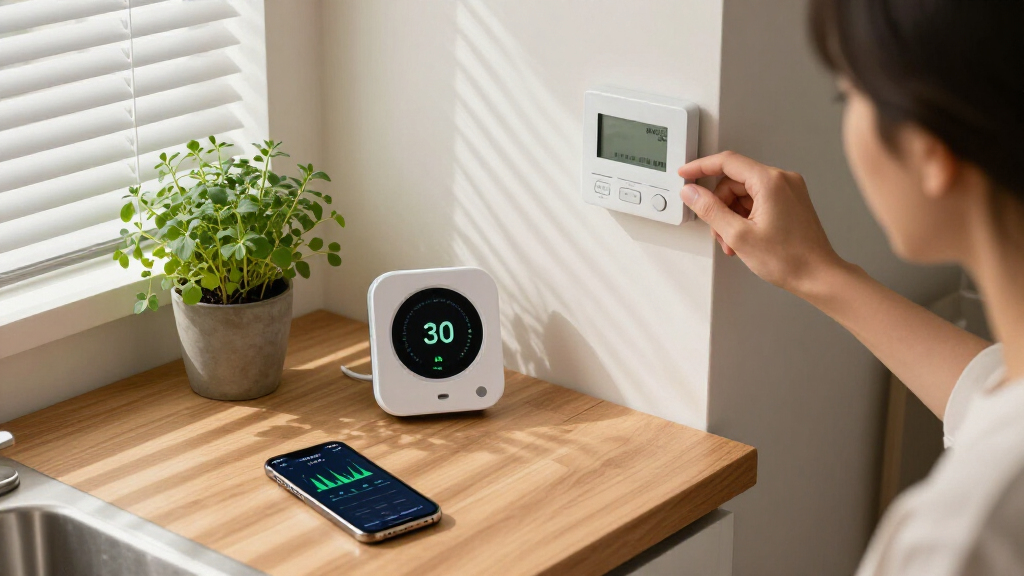
How We Picked
Products were evaluated based on sensor coverage, ease of installation, connectivity options, data accuracy, and integration capabilities. We prioritized devices that balance performance with user-friendly setup, especially for non-technical homeowners. Cost was also a factor, but more advanced features and build quality placed higher in our rankings. This approach ensures we recommend monitors that offer real value and reliable performance across different user needs.Factors to Consider When Choosing Wholehome Energy Monitors
Choosing the right wholehome energy monitor involves balancing several factors. First, consider sensor coverage—more sensors mean more detailed data across your circuits. Next, evaluate connectivity options, such as WiFi or Ethernet, which influence reliability and ease of access. Compatibility with smart home systems can unlock automation benefits, so check for open APIs or integrations. Price versus features is a common tradeoff; higher-end models typically provide more comprehensive insights but cost more. Lastly, think about installation complexity and whether professional help might be needed, especially for circuit-level devices.Sensor Coverage and Circuit Compatibility
More sensors typically translate into more precise and comprehensive data, especially for large or complex homes. Some monitors offer circuit-level sensors, which provide detailed insights into individual appliances or zones, but these can be more challenging to install. Consider how many circuits you want to monitor and whether your home’s electrical system supports the sensors offered by each device. Over- or under-specifying can lead to either unnecessary expense or insufficient data for effective management.
Connectivity and Data Accessibility
Reliable connectivity ensures your energy data is always accessible when you need it. WiFi is common and generally sufficient, but Ethernet connections can offer more stability in some cases. Some monitors also support cellular backup or mesh networks for added reliability. Data accessibility through mobile apps or web dashboards determines how easily you can review your energy consumption patterns and make adjustments. Devices with open APIs or integrations allow for custom automation, which can significantly enhance their utility.
Integration with Smart Home Ecosystems
If you already have a smart home system, choosing a monitor that integrates seamlessly can unlock automation features like scheduling, alerts, or appliance control. Look for compatibility with platforms like Google Home, Alexa, or proprietary APIs. Be cautious of models that claim broad compatibility but have limited third-party support, as this can restrict your automation options. Integration also affects the long-term value, especially if you plan to expand your smart home ecosystem.
Price, Features, and Future-proofing
While budget models can provide basic insights, they often lack advanced features like real-time data, detailed circuit analysis, or automation integrations. Investing in a higher-priced model generally offers more comprehensive data, better build quality, and longer-term support. Consider your future needs—if you plan to expand your monitoring or integrate with other systems, choosing a more versatile device now can save money later. Balance your budget against the benefits of more extensive features to find the best value.
Installation Complexity and Support
Some monitors are straightforward plug-and-play devices, while others require wiring into your electrical panel, which might necessitate professional help. Evaluate your comfort level with electrical work or whether you will need a licensed electrician. Also, consider the availability of customer support and detailed setup guides, as these can ease installation challenges. Proper installation is key to accurate data collection and long-term device reliability.
Frequently Asked Questions
Can I install a wholehome energy monitor myself?
Many smart energy monitors designed for plug-and-play setup are accessible for DIY installation, especially those with clamp sensors that attach to your main breaker. However, models that require wiring into your electrical panel or circuit-level sensors often demand professional installation to ensure safety and accuracy. If you are comfortable with basic electrical work and follow the manufacturer’s instructions carefully, some monitors can be installed by homeowners. For complex setups, hiring a licensed electrician is usually the safest choice.
Will a wholehome energy monitor work with my existing smart home system?
Most modern energy monitors support integration with popular platforms like Google Home, Amazon Alexa, or Apple HomeKit, but compatibility varies by model. Check the specifications for each device to confirm whether it supports your preferred ecosystem. Devices with open APIs or dedicated smart home modules tend to offer more flexible integration options. Matching a monitor to your existing system can enable automation, alerts, and more comprehensive energy management.
How accurate are these energy monitors, and does that matter?
Accuracy varies among models, with higher-end devices generally providing more precise readings that closely match your utility meter. For most homeowners, slight inaccuracies won’t significantly impact overall energy management, but if you’re aiming for detailed analysis or specific savings, higher accuracy becomes more important. Consider reviews and specifications—look for models with calibration options or proven measurement standards. Remember, even less precise monitors can offer valuable insights into consumption trends and potential savings.
Are there privacy concerns with smart energy monitors?
Smart monitors that connect to the internet can collect and transmit detailed usage data, which raises privacy considerations. Devices with open APIs or local-only operation reduce exposure, but those relying on cloud services may store your data remotely, potentially exposing it to breaches. Review each manufacturer’s privacy policies and data encryption practices carefully. If privacy is a top concern, opt for models with local data storage and limited cloud connectivity.
What features are worth paying extra for?
Features like real-time updates, circuit-level monitoring, open API access, and seamless smart home integration typically justify higher prices. These capabilities provide more detailed insights and greater flexibility for automation and analysis. If you’re serious about optimizing energy use and integrating with other smart devices, investing in a monitor with these advanced features can pay off in long-term savings and convenience. However, for basic monitoring, simpler models often suffice and cost less.
Conclusion
For most homeowners seeking a reliable, easy-to-install solution that offers solid data, the Refoss Smart Home Energy Monitor stands out as the best overall choice. Those interested in automation and detailed circuit analysis should consider the Emporia Vue 3 for its feature-rich platform. If budget is a priority, simpler models like the Meross Smart Home Energy Monitor provide basic insights at a lower cost. For users with advanced smart home setups, models with open APIs and robust integrations will deliver the most value. Evaluate your technical comfort level, desired features, and long-term goals to select the monitor that best fits your needs.
Halloween Picks

Haunted Hill Farm 2-Ft. Zombie Raccoon Halloween Animatronic

Kalolary 11 ft Halloween Inflatable Archway Ghost House Tunnel

Panefright Halloween Window Projector
As an affiliate, we earn on qualifying purchases.