
Choosing the right educational science kit for students involves balancing engagement, educational value, and complexity. The UNGILINGA 150 Experiments Science Kit stands out as the best overall for its comprehensive experiment range and STEM focus. For those interested in earth science, the National Geographic Ultimate Volcano Science Kit offers dramatic, hands-on volcanic eruptions that captivate. Meanwhile, the Carson Dellosa STEM Challenges excel for developing problem-solving skills through challenging projects. Most options face tradeoffs between depth, ease of use, and cost—continue reading for a complete breakdown of these kits and how to pick the right one for your needs.

Prime made for students and young adults
- Fast, free delivery for dorm and study essentials
- Prime Video and Amazon Music included
- Member-only deals
Key Takeaways
- Top kits balance educational depth with ease of use, making them suitable for various age groups.
- Experiment variety and hands-on activities are key factors that differentiate the most engaging kits.
- Price often correlates with scope—more comprehensive kits tend to cost more but offer richer experiences.
- Materials quality and durability impact long-term value, especially for kits meant for frequent use.
- Some kits excel in specific science areas (like earth or chemistry), so matching the kit to the child’s interests improves engagement.
| UNGILINGA 150 Experiments Science Kits for Kids – Chemistry Lab & STEM Toys |  | Best Overall for Versatility and Depth | Number of Experiments: 150 | Age Range: 8 years and up | Includes: Science tools and materials | VIEW LATEST PRICE | See Our Full Breakdown |
| National Geographic Ultimate Volcano Science Kit for Kids Ages 8-12 |  | Best for Hands-On Geology and Eruptions | Brand: Blue Marble | Age Range: 8 years and up | Educational Objective: STEM | VIEW LATEST PRICE | See Our Full Breakdown |
| Carson Dellosa STEM Challenges, Hands-On Science Kits |  | Best for Classroom and Homeschool STEM Challenges | Number of Cards: 30 | Dimensions of Each Card: 7 ¾ inches x 5 ½ inches | Includes Divider: Yes | VIEW LATEST PRICE | See Our Full Breakdown |
| STEM Electric Circuit Kit for Kids Ages 8-15 |  | Best for Physics and Practical Electricity Learning | Age Range: 8-15 years | Number of Experiments: 7 | Components: Manual, Storage box | VIEW LATEST PRICE | See Our Full Breakdown |
| 58-Piece Kids Microscope Kit – 100X-1200X Magnification, Metal Body, LED Light, Carrying Box |  | Best for Microscopy and Close-Up Exploration | Magnification: 100X-1200X | Number of Pieces: 58 | Body Material: Metal | VIEW LATEST PRICE | See Our Full Breakdown |
| National Geographic Earth Science Kit with 100+ Activities for Kids 8-12 | 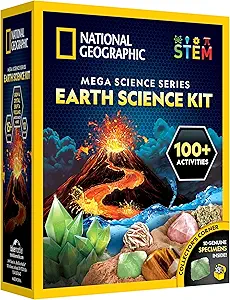 | Best Overall | Brand: Blue Marble | Age Range: 8 years and up | Objective: STEM | VIEW LATEST PRICE | See Our Full Breakdown |
| Science Kit for Kids – 80 Science Lab Experiments with Scientist Role Play |  | Best for Beginners | Number of Experiments: 80 | Age Range: 6+ years | Includes: goggles, chemical materials, petri dishes, test tubes, gloves, droppers, balloons | VIEW LATEST PRICE | See Our Full Breakdown |
| National Geographic Gross Science Kit with 45 Experiments for Kids 8-12 |  | Best for Gross Science Fun | Brand: Blue Marble | Age Range: 8 years and up | Educational Objective: STEM | VIEW LATEST PRICE | See Our Full Breakdown |
| 4M Clean Water Science – Climate Change, Global Warming, Lab |  | Best for Environmental Science Enthusiasts | Recommended Age: 8 years and up | Includes: Plastic filter system, active carbon, sand, rock, filter paper, instructions | VIEW LATEST PRICE | See Our Full Breakdown | |
| Structural Engineering: Bridges & Skyscrapers Science & Engineering Kit |  | Best for Intermediate Builders | Number of Models: 20 | Building Pieces: 285+ | Manual Pages: 36 | VIEW LATEST PRICE | See Our Full Breakdown |
| EUDAX School Physics Labs Basic Electricity Discovery Circuit and Magnetism Experiment Kits for High School Students |  | Best for High School Students Interested in Electricity and Magnetism | Items for Electricity: 56 | Items for Magnetism: 21 | Repair Tools: 2 pcs | VIEW LATEST PRICE | See Our Full Breakdown |
| Thames & Kosmos Simple Machines Science Experiment & Model Building Kit |  | Best for Mechanical Physics and Engineering Enthusiasts | Number of Models: 26 | Included Machines: Wheels and axles, levers, pulleys, inclined planes, screws, wedges | Manual Pages: 32 | VIEW LATEST PRICE | See Our Full Breakdown |
| educational science kits for student | Age Range |
|---|---|
| UNGILINGA 150 Experiments Scie | 8 years and up |
| National Geographic Ultimate V | 8 years and up |
| Carson Dellosa STEM Challenges | — |
| STEM Electric Circuit Kit for | 8-15 years |
| 58-Piece Kids Microscope Kit | — |
| National Geographic Earth Scie | 8 years and up |
| Science Kit for Kids | 6+ years |
| National Geographic Gross Scie | 8 years and up |
| 4M Clean Water Science | — |
| Structural Engineering: Bridge | — |
| EUDAX School Physics Labs Basi | — |
| Thames & Kosmos Simple Machine | — |
More Details on Our Top Picks
UNGILINGA 150 Experiments Science Kits for Kids – Chemistry Lab & STEM Toys
This kit stands out for offering an impressive array of 150 experiments across chemistry, physics, and earth science, making it a comprehensive option compared to the narrower focus of the National Geographic Ultimate Volcano Kit. Its extensive variety supports sustained engagement and broad learning, although the need for household items can introduce some unpredictability. It includes high-quality tools and a clear, illustrated manual, which simplifies complex experiments for children aged 8 and up. The main tradeoff is that some experiments require adult supervision and additional household materials, which could be inconvenient for independent learners. Overall, this kit is best suited for families or educators seeking a flexible, all-encompassing STEM experience at home or in the classroom.
Pros:- Offers an extensive variety of 150 engaging experiments across multiple science disciplines
- Includes high-quality, kid-friendly tools and materials for safe experimentation
- Step-by-step illustrated manual facilitates independent learning and confidence
Cons:- Some experiments depend on household items, requiring adult preparation
- Certain tools may need adult supervision for younger children
Best for: Parents or teachers wanting a wide-ranging, durable kit for ongoing science exploration
Not ideal for: Younger children who need more guided, simplified experiments or for those seeking a ready-to-play, low-prep option
- Number of Experiments:150
- Age Range:8 years and up
- Includes:Science tools and materials
- Set Name:150 Experiments
Our verdict“This kit makes the most sense for motivated families or educators seeking a comprehensive and adaptable science set.”
National Geographic Ultimate Volcano Science Kit for Kids Ages 8-12
Compared with the UNGILINGA 150 Experiments, this volcano kit specializes in a captivating, focused experience that emphasizes geology and eruption science. Its inclusion of real volcanic rocks, extra eruption powder, and educational guides makes it ideal for hands-on learning about Earth’s processes. The reusable mold and detailed instructions support repeated experiments, fostering a deeper understanding of volcanology. However, it requires adult supervision during assembly and has some fragile parts, limiting its use for very young children or independent play. This set makes the most sense for learners interested specifically in earth science phenomena and who appreciate a more targeted, immersive experience.
Pros:- Includes extra eruption powder and crystals for exciting, realistic eruptions
- Contains real volcanic rocks and comprehensive educational guides for in-depth learning
- Reusable mold and detailed instructions support multiple experiments
Cons:- Requires adult supervision during assembly
- Some parts may be fragile and need careful handling
Best for: Kids aged 8-12 with a keen interest in geology and volcanic activity
Not ideal for: Parents seeking a broad science kit or children who need a low-maintenance, all-in-one set
- Brand:Blue Marble
- Age Range:8 years and up
- Educational Objective:STEM
- Set Name:Ultimate Volcano Kit
- Number of Items:1
- Included Components:Volcano Plaster, Volcano Mold, Volcano Paints and Paint Brush, Full-color learning guide
Our verdict“This volcano kit offers an immersive, geology-focused experience for curious learners interested in Earth’s dynamic processes.”
Carson Dellosa STEM Challenges, Hands-On Science Kits
This set is tailored for structured settings, offering 30 challenge cards that cover diverse science topics, similar to the UNGILINGA 150 Experiments but in a more curated, activity-based format. Its organized storage and clear challenge instructions make it perfect for classroom, homeschool, or STEM center use. While it excels in engaging students with varied activities, it is limited to the topics on the cards and relies on common household materials, which could restrict creative scope. It also requires supervision for younger children, because some activities involve small parts or delicate steps. This kit makes the most sense for educators or parents seeking a guided, challenge-based approach to STEM learning.
Pros:- Engages students with diverse, hands-on STEM challenges
- Includes organized storage with divider and challenge cards for easy use
- Suitable for classroom, centers, or homeschool environments
Cons:- Requires common household materials for many activities
- Limited scope to science topics on the challenge cards
Best for: Teachers or homeschool parents looking for structured, challenge-oriented STEM activities for grades 2-5
Not ideal for: Children seeking open-ended experiments or advanced independent science projects
- Number of Cards:30
- Dimensions of Each Card:7 ¾ inches x 5 ½ inches
- Includes Divider:Yes
- Recommended Grades:2-5
Our verdict“This kit is perfect for educators or parents who want a structured, challenge-based approach to introduce STEM concepts.”
STEM Electric Circuit Kit for Kids Ages 8-15
Compared with the more general UNGILINGA 150 Experiments, this electricity kit offers a focused, skill-building experience centered on physics and circuit concepts. Its 7 experiments, detailed manual, and reusable components make it ideal for students eager to understand energy flow and conductivity practically. However, the limited number of experiments and the need for additional batteries (not included) mean it might not satisfy learners craving broader science exploration. It’s best suited for those interested specifically in electricity and hands-on physics rather than a wide-ranging science curriculum. The challenge here is that some assembly may be tricky for younger children, and the scope is narrower than the all-in-one kits.
Pros:- Includes a comprehensive 7-in-1 experiment set focused on electricity
- Detailed step-by-step instructions suitable for independent or guided learning
- Durable, reusable components support repeated experiments
Cons:- Batteries are not included, requiring additional purchase
- Limited to basic electrical experiments, lacking broader science topics
Best for: Students aged 8-15 interested in exploring physics, circuits, and energy concepts with guided experiments
Not ideal for: Parents or educators seeking a broad science kit covering multiple disciplines beyond electricity
- Age Range:8-15 years
- Number of Experiments:7
- Components:Manual, Storage box
- Batteries Included:No
Our verdict“This kit provides a solid, focused introduction to electrical physics for students interested in hands-on circuitry.”
58-Piece Kids Microscope Kit – 100X-1200X Magnification, Metal Body, LED Light, Carrying Box
This microscope kit excels as an entry-level, hands-on tool for biological and material exploration, similar to the UNGILINGA 150 Experiments but with a specific focus on microscopy. Its 58 pieces, including prepared specimens and slides, support detailed investigations of plants, insects, and objects, fostering STEM skills through close-up observation. The metal body ensures durability, and the LED light provides clear illumination. The main tradeoff is that the magnification range, while suitable for beginners, may feel limited for more advanced users, and the need for 2 AA batteries adds an extra step. This kit makes the most sense for young explorers eager to see the tiny details of the natural world up close, especially in a home or classroom setting.
Pros:- Includes 58 pieces, such as specimens, slides, and tools for hands-on learning
- Durable metal body enhances longevity and quality
- LED light provides bright, adjustable illumination for clear viewing
Cons:- Requires 2 AA batteries, not included
- Magnification range may be limited for advanced research or detailed scientific work
Best for: Children interested in biological sciences, microscopy, and detailed observation, ages 8 and up
Not ideal for: Advanced students or those seeking high-magnification research-grade microscopes
- Magnification:100X-1200X
- Number of Pieces:58
- Body Material:Metal
- Light Source:LED
- Batteries Required:2 AA (not included)
- Size:4.6″L x 2.75″W x 8.15″H
Our verdict“This microscope kit is perfect for young STEM enthusiasts eager to explore the microscopic world around them.”
National Geographic Earth Science Kit with 100+ Activities for Kids 8-12
This comprehensive Earth science kit stands out for its extensive collection of over 100 experiments, such as volcano eruptions and crystal growing, making it ideal for children eager to explore multiple facets of geology and Earth sciences. Compared with the National Geographic Gross Science Kit, which focuses on gross and yucky science, this kit offers a broader educational scope, fostering curiosity through varied activities. The inclusion of a detailed learning guide and easy-to-follow instructions ensures children gain confidence in conducting experiments independently. However, some experiments may require adult supervision, and the durability of materials isn’t specified, which could impact long-term use. This kit is perfect for motivated young scientists ready for in-depth exploration of Earth science topics, but less suitable for casual or very young learners who need simpler setups.
Pros:- Over 100 engaging experiments covering various Earth science topics
- Includes a detailed learning guide to build understanding
- Encourages independent exploration and STEM learning
- Award-winning product from a reputable brand
Cons:- Some experiments may require adult supervision
- Limited info on the durability of included materials
Best for: Children aged 8+ with a strong interest in Earth sciences and hands-on learning.
Not ideal for: Parents seeking a quick, low-maintenance activity set for very young children or casual curiosity.
- Brand:Blue Marble
- Age Range:8 years and up
- Objective:STEM
- Set Name:Earth Science Kit
- Number of Items:1
- Included Components:100+ Science Experiments & Activities
- UPC:816448027611
- Model Number:NGMEGAEARTH
- Manufacturer:JMW Sales, Inc.
Our verdict“This kit is best suited for dedicated young geologists eager for a comprehensive, educational experience in Earth sciences.”
Science Kit for Kids – 80 Science Lab Experiments with Scientist Role Play
This kit offers a solid entry point into science with 80 experiments suitable for children over 6, emphasizing fun and safety. Unlike the National Geographic Earth Science Kit, which covers broad Earth sciences, this set focuses on engaging experiments like rainbow rain and erupting volcanoes that spark curiosity and critical thinking early on. It includes safety gear such as goggles and gloves, making it accessible for young learners, but the wide variety means some small parts could pose choking hazards for very young children. The chemical materials are limited, so sustained experimentation might require additional supplies, and adult supervision remains necessary for safe handling. This makes it ideal for parents and teachers looking to introduce basic scientific concepts with a playful approach, but less suitable for children who need more complex or extensive kits.
Pros:- Wide variety of 80 experiments to stimulate curiosity
- Includes comprehensive safety gear and instructions
- Encourages hands-on exploration and critical thinking
- Suitable for young children with parental supervision
Cons:- Small parts may be a choking hazard for younger children
- Limited chemical materials; additional supplies may be needed
Best for: Families or educators seeking a beginner-friendly kit that combines fun with foundational science skills for children aged 6+.
Not ideal for: More advanced young scientists or those seeking extensive, long-term experiments, as the chemical supply is limited.
- Number of Experiments:80
- Age Range:6+ years
- Includes:goggles, chemical materials, petri dishes, test tubes, gloves, droppers, balloons
Our verdict“This kit is excellent for introducing young children to science through safe, engaging experiments, especially for beginners.”
National Geographic Gross Science Kit with 45 Experiments for Kids 8-12
Focusing on the gross and yucky side of science, this kit includes 45 experiments like boiling boogers and glowing worms, making it perfect for kids who are fascinated by the gross and bizarre. Compared to the National Geographic Earth Science Kit, which emphasizes geology and environmental science, this set leans into entertainment with educational value. The instructions are clear and illustrated, making it accessible for children, but the experiments tend to be messy, requiring adult supervision to manage the cleanup. While engaging, some children might find the gross experiments too yucky or not age-appropriate for delicate sensibilities. This kit is ideal for kids aged 8 and up who love gross science, but less suited for those who prefer neat or more serious scientific explorations.
Pros:- 45 gross and fun science experiments that engage curiosity
- Easy-to-follow instructions with illustrations
- Uses household items, making experiments accessible
- Highly entertaining for kids who enjoy gross science
Cons:- Experiments can be messy and require supervision
- Some children may find the gross topics too yucky
Best for: Kids aged 8-12 who love gross, messy science and fun, hands-on experiments.
Not ideal for: Younger children or families seeking neat, less messy science activities, as experiments can be quite messy and yucky.
- Brand:Blue Marble
- Age Range:8 years and up
- Educational Objective:STEM
- Set Name:Gross Science Kit
- Number of Experiments:45
- Included Components:Gross Science Kit with 45 experiments
- UPC:816448029912
- Model Number:NGMEGAGRS
Our verdict“This kit is perfect for kids who thrive on gross science and want fun, messy experiments that spark curiosity.”
4M Clean Water Science – Climate Change, Global Warming, Lab
This desalination kit offers an engaging way to teach children about water purification and environmental science, making it ideal for students interested in climate change topics. Unlike the National Geographic Earth Science Kit, which covers broad geology, this set zeroes in on water treatment processes with a practical desalination experiment. It includes key materials like a filter system, active carbon, and sand, along with detailed instructions that guide young scientists through the process. The need for an additional water glass and the limited scope—focused mainly on desalination—are tradeoffs that might limit its versatility. Suitable for children 8 and up with an interest in environmental issues, this kit provides a hands-on approach to understanding a critical global challenge, though it may require adult supervision for safe handling.
Pros:- Teaches water purification and environmental science concepts
- Includes comprehensive filtering materials
- Hands-on experiment that demonstrates desalination
- Detailed instructions for guided learning
Cons:- Requires additional water glass for operation
- Limited to basic desalination demonstration
Best for: Kids and teens fascinated by environmental science and climate change, seeking a focused, practical experiment.
Not ideal for: Young children or those seeking broad science kits, as it emphasizes a specific desalination process and needs additional supplies.
- Recommended Age:8 years and up
- Includes:Plastic filter system, active carbon, sand, rock, filter paper, instructions
Our verdict“This kit is ideal for young environmental enthusiasts ready to explore water science through a practical desalination experiment.”
Structural Engineering: Bridges & Skyscrapers Science & Engineering Kit
This kit is designed for budding engineers who want to understand structural principles by building 20 models like bridges and skyscrapers. Compared with the National Geographic Earth Science Kit or the gross science kits, this set focuses on engineering concepts such as tension, compression, and shear, providing hands-on experience with real-world structures. The inclusion of over 285 pieces and a detailed manual makes it suitable for children with some prior experience or older children ready for a moderate challenge. However, the intermediate skill level means it may be frustrating for beginners and requires careful supervision during assembly. For families or educators with children interested in engineering, this kit offers a substantial introduction, but those seeking simple or quick activities should look elsewhere.
Pros:- Builds understanding of structural engineering principles
- Includes over 285 interchangeable pieces for diverse models
- Manual provides clear, step-by-step instructions
- Award-winning design suitable for motivated learners
Cons:- Requires intermediate skill level, not ideal for beginners
- Assembly can be time-consuming and needs supervision
Best for: Children with some prior STEM experience or older kids interested in building and engineering concepts.
Not ideal for: Very young children or complete beginners who might find the assembly complex and challenging.
- Number of Models:20
- Building Pieces:285+
- Manual Pages:36
- Skill Level:Intermediate
- Awards:Parents’ Choice Gold Award
Our verdict“This kit is best suited for children interested in engineering who can handle a moderate building challenge with detailed guidance.”
EUDAX School Physics Labs Basic Electricity Discovery Circuit and Magnetism Experiment Kits for High School Students
This kit stands out for providing a comprehensive, hands-on approach to exploring electricity and magnetism, making it ideal for high school students who want to grasp fundamental physics concepts through practical experiments. Compared with simpler kits, this set offers a broader range of components—56 items for electricity and 21 for magnetism—and includes a detailed, full-color manual that guides students through building circuits, electromagnets, and generators. However, the necessity of purchasing batteries separately and some assembly work might challenge beginners or those seeking a plug-and-play experience. The variety and depth make it a strong choice for high school learners craving a thorough, experiment-based understanding of core physics topics, though it may be less suitable for younger children or casual learners.
Pros:- Extensive collection of components for electricity and magnetism experiments
- Includes detailed, colorful manual for guided learning
- Encourages practical understanding of fundamental physics concepts
- All necessary parts provided except batteries
Cons:- Batteries are not included, requiring an additional purchase
- Some assembly required, which could deter less experienced users
Best for: High school students with a serious interest in physics and hands-on experiments
Not ideal for: Younger children or beginners who prefer ready-to-use, battery-powered kits without assembly
- Items for Electricity:56
- Items for Magnetism:21
- Repair Tools:2 pcs
- Manual:Color page manual
- Batteries Included:No (3 AA batteries needed)
- Target Age:High school
Our verdict“This kit is best suited for high school students eager to explore physics through detailed, hands-on experimentation and learning.”
Thames & Kosmos Simple Machines Science Experiment & Model Building Kit
This kit excels at demonstrating the principles of simple machines through 26 different models, making it perfect for learners interested in mechanical physics and engineering. It includes a variety of models—wheels and axles, levers, pulleys, inclined planes, screws, and wedges—each designed to illustrate how forces work in real-world applications. The inclusion of a spring scale adds a valuable measurement aspect, and the manual provides clear, step-by-step instructions along with scientific explanations, enhancing understanding. Compared to more electronics-focused kits, this one emphasizes mechanical concepts, though some models can be complex for younger children or beginners who might need more guidance. Its durable, modular construction system makes it suitable for repeated experiments and extended exploration.
Pros:- 26 diverse models covering all classic simple machines
- Includes a spring scale for force measurement and understanding
- Comprehensive, illustrated manual with scientific explanations
- Durable, modular construction system for repeated use
Cons:- Requires adult supervision for younger or less experienced children
- Some models may be too complex for complete beginners
Best for: Students and hobbyists interested in learning about mechanical physics and simple machines, especially those with some experience or patience for complex models
Not ideal for: Very young children or absolute beginners who may find some models too intricate without adult help
- Number of Models:26
- Included Machines:Wheels and axles, levers, pulleys, inclined planes, screws, wedges
- Manual Pages:32
- Compatibility:Other Thames & Kosmos construction kits
Our verdict“This kit is ideal for learners eager to explore mechanical physics through building and measuring, with a focus on understanding forces and simple machines.”
How We Picked
These science kits were selected based on a combination of factors including experiment diversity, educational value, build quality, ease of setup, and user reviews. I prioritized kits that offer a mix of guided activities and open-ended exploration, ensuring they are suitable for different skill levels. Kits that provide durable, safe materials and clear instructions received higher ratings. The ranking reflects a balance between affordability and comprehensive STEM learning, helping buyers find options that deliver both value and educational impact.Factors to Consider When Choosing Educational Science Kits For Students
When choosing an educational science kit for students, consider several key factors that influence how well the kit will meet learning goals and user expectations. The right kit should align with the child’s age, interests, and skill level, while also offering enough variety to sustain engagement. Being aware of common pitfalls—such as kits that are too simplistic or overly complex—can help you avoid disappointment. Here are the main criteria to keep in mind:Age and Skill Level
Matching the kit to the child’s age ensures the activities are challenging yet achievable. Kits designed for younger children often feature simpler experiments with larger components, while those for older students include more complex procedures and scientific concepts. Choosing appropriately prevents frustration and encourages continued interest in STEM subjects.
Experiment Variety and Educational Scope
Look for kits that cover a broad range of topics or provide deep focus in a specific area. A variety of experiments keeps children engaged and exposes them to multiple scientific disciplines. Conversely, a narrowly focused kit may be better for students with particular interests, but may lack the breadth to maintain sustained curiosity.
Materials Quality and Safety
Durable, non-toxic, and safe materials are essential for a positive experience. High-quality components reduce the likelihood of breakage and improve the longevity of the kit. Always verify that the materials meet safety standards, especially for younger users, to prevent accidents and ensure peace of mind.
Ease of Use and Instructions
Clear, detailed instructions are vital for independent or guided learning. Kits with confusing or overly complex directions can discourage users and diminish educational value. Consider whether the kit offers additional support like online tutorials or step-by-step videos, especially for beginners.
Cost and Value
Higher-priced kits often include more experiments and better materials, but there are also excellent budget options. Evaluate whether the scope and quality justify the price. Remember, a more comprehensive kit may offer better long-term educational value, especially if it can be used repeatedly or expanded upon.
Frequently Asked Questions
Are educational science kits suitable for children of all ages?
Most science kits are designed with specific age ranges in mind, reflecting the complexity of experiments and safety considerations. Kits for younger children typically focus on basic concepts with simpler materials, while those for older students include advanced experiments that require more skill and understanding. Always check the recommended age range to ensure the kit matches the child’s developmental level, which helps maximize both safety and educational value.
Can I find science kits that cover multiple disciplines like chemistry, physics, and earth science?
Yes, many comprehensive kits include experiments across various scientific fields, providing a broad STEM experience. However, such kits tend to be more expensive and may require more space and materials. If your goal is to introduce a child to multiple disciplines, look for kits explicitly labeled as multi-topic or versatile, but be mindful of complexity and safety considerations as the scope broadens.
Are digital or app-supported science kits more effective than traditional ones?
Digital or app-supported kits can enhance traditional experiments by providing interactive guidance, additional information, and troubleshooting support. They often appeal to tech-savvy children and can make learning more engaging. Nevertheless, they should complement hands-on activities rather than replace them, as tactile experience remains central to effective STEM learning. Consider your child’s preferences and the quality of digital content when choosing such kits.
How important is the scope of experiments included in a science kit?
The scope of experiments directly impacts the educational depth and engagement level. Kits with a larger variety of experiments can keep children interested over a longer period and provide a more comprehensive understanding of scientific principles. However, a very broad scope might sacrifice depth or simplicity, so balance your choice based on the child’s learning goals and patience for complexity.
Should I prioritize kits that focus on specific science areas or multi-topic kits?
This depends on your child’s interests and your educational goals. If they show a strong preference for a particular subject like chemistry or geology, a focused kit will deepen their understanding and enjoyment. Conversely, multi-topic kits offer a well-rounded STEM experience, ideal for early exposure or broad curiosity. Evaluate whether your child prefers specialization or exploration before making a choice.
Conclusion
For those seeking the best overall experience, the UNGILINGA 150 Experiments Science Kit offers unmatched variety and educational depth. Budget-conscious buyers will appreciate the Carson Dellosa STEM Challenges for their affordability and challenge level. Beginners or younger children should consider kits like the National Geographic Ultimate Volcano Science Kit for its engaging, straightforward experiments. For advanced students or those interested in earth science, the National Geographic Earth Science Kit provides extensive activities. Lastly, parents looking for a specialized focus might opt for engineering or physics kits, such as the Thames & Kosmos Simple Machines. Choose based on your child’s interests, skill level, and your educational priorities.Fall Picks
fall essentials
As an affiliate, we earn on qualifying purchases.