
The best kids science experiment kits pair clear instructions with activities children can actually complete, and my best overall pick is the National Geographic Earth Science Kit for its broad activity range and subject variety. For young beginners, Doctor Jupiter My First Science Experiments Kit is a more age-focused starting point, while the UNGLINGA 250+ Science Experiments Kit stands out for families seeking a large activity count. The main tradeoff is breadth versus focus: a big experiment list may offer variety, while a chemistry or earth-science set can give a child a clearer theme. Age guidance, adult help, and whether activities need extra household supplies also affect the fit. Read on for the full comparison and advice on choosing a kit your child will want to use.

Prime made for students and young adults
- Fast, free delivery for dorm and study essentials
- Prime Video and Amazon Music included
- Member-only deals
Key Takeaways
- The Earth Science Kit leads for variety with a coherent theme: its 100+ activities span earth-science topics, unlike chemistry-only sets.
- High experiment counts are not the whole story: UNGLINGA‘s 250+ kit offers breadth, but parents should check instruction clarity, supply needs, and how much of the list suits their child.
- Age fit separates beginner options from larger sets: Doctor Jupiter, Smartivity, and Melican are positioned for younger children, while several National Geographic chemistry kits target ages 8–12.
- Focused chemistry kits suit children with a clear interest: the 45-experiment, 50-experiment, and 100+ chemistry sets trade subject variety for deeper chemistry emphasis.
- Magic-themed kits prioritize presentation: the Science Magic Kit and 10-trick Magic Chemistry Set may appeal to children who enjoy demonstrations, but they serve a different purpose than broad experiment labs.
| National Geographic Earth Science Kit with 100+ Activities for Kids | 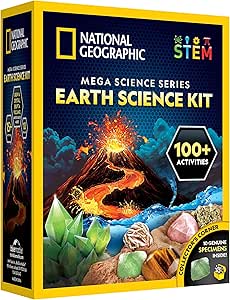 | Best for Earth Science | Brand: Blue Marble | Age range: 8 years and up | Activities: 100+ | VIEW LATEST PRICE | See Our Full Breakdown |
| National Geographic Science Magic Kit for Kids |  | Best for Science-Magic Demonstrations | Brand: Blue Marble | Age range: 8 years and up | Experiments and tricks: 100 | VIEW LATEST PRICE | See Our Full Breakdown |
| Smartivity My First Science Experiment Kit for Kids |  | Best for Problem-Solving Practice | Brand: Smartivity | Recommended age: 8–14 years | Experiments: 50+ | VIEW LATEST PRICE | See Our Full Breakdown |
| National Geographic Amazing Chemistry Set for Kids, 100+ Experiments |  | Best for Guided Chemistry | Brand: Blue Marble | Age range: 8 years and up | Experiments: 100+ total: 15 with included materials and 85 bonus experiments | VIEW LATEST PRICE | See Our Full Breakdown |
| UNGLINGA 250+ Science Experiments Kit for Kids |  | Best for Topic Variety | Brand: UNGLINGA | Experiments: 250+ | Educational objective: STEM | VIEW LATEST PRICE | See Our Full Breakdown |
| UNGLINGA 40+ Experiments Science Kit for Kids |  | Best for Creative Variety in a Compact Kit | Brand: UNGLINGA | Experiments: 40+ | Recommended age: 8 years and up | VIEW LATEST PRICE | See Our Full Breakdown |
| Doctor Jupiter My First Science Experiments Kit for Kids Ages 4+ |  | Best for Preschool and Early Elementary Beginners | Brand: Doctor Jupiter | Recommended age: 4–8 years | Number of experiments: 50+ | VIEW LATEST PRICE | See Our Full Breakdown |
| National Geographic Chemistry Set with 45 Experiments for Kids Ages 8–12 |  | Best for Chemistry-Focused Projects | Brand: National Geographic | Age range: 8 years and up | Number of experiments: 45 | VIEW LATEST PRICE | See Our Full Breakdown |
| Kuovei Science Kit for Kids with 80 Experiments |  | Best for Activity Count and Included Gear | Brand: Kuovei | Experiments: 80 | Recommended age: Over 6 years | VIEW LATEST PRICE | See Our Full Breakdown |
| UNGLINGA 70-Experiment Science Kit for Kids |  | Best for Broad STEM Exploration | Brand: UNGLINGA | Number of experiments: 70 | Recommended age: 8 years and up | VIEW LATEST PRICE | See Our Full Breakdown |
| National Geographic Junior Chemistry Set with 50 Experiments |  | Best for Younger Beginners | Brand: Blue Marble | Age range: 4 years and up | Experiments: 50 | VIEW LATEST PRICE | See Our Full Breakdown |
| National Geographic Mega Science Lab: 75 Experiments for Kids Ages 8–12 |  | Best Multi-Subject Kit | Brand: Blue Marble | Age range: 8 years and up | Experiments: 75 | VIEW LATEST PRICE | See Our Full Breakdown |
| Melican 60+ Science Experiment Kit for Kids Ages 4 and Up |  | Best for Playful Activity Variety | Brand: Melican | Age range: 4 years and up | Experiment count: 60+ | VIEW LATEST PRICE | See Our Full Breakdown |
| UNGLINGA 150 Experiments Science Kit for Kids | 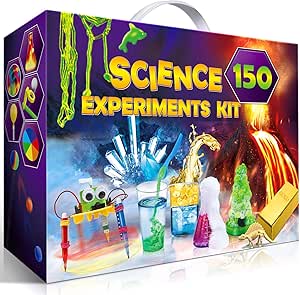 | Best for Broad Experiment Coverage | Number of experiments: 150 | Recommended age: 8 years and up | Topics: Chemistry, physics, Earth science, and surface tension | VIEW LATEST PRICE | See Our Full Breakdown |
| National Geographic Magic Chemistry Set with 10 Tricks for Kids Ages 8–12 |  | Best for Science Demonstrations | Brand: Blue Marble | Sub-brand: National Geographic | Age range: 8 years and up | VIEW LATEST PRICE | See Our Full Breakdown |
| kids science experiment kit | Brand | Included components | Experiments | Age range |
|---|---|---|---|---|
| National Geographic Earth Scie | Blue Marble | Science experiments and activities | More than 15 | 8 years and up |
| National Geographic Science Ma | Blue Marble | Materials for 20 magic experiments and a booklet with 85+ additional experiments | — | 8 years and up |
| Smartivity My First Science Ex | Smartivity | Parts and instruction manual | 50+ | — |
| National Geographic Amazing Ch | Blue Marble | — | 100+ total: 15 with included materials and 85 bonus experiments | 8 years and up |
| UNGLINGA 250+ Science Experime | UNGLINGA | Science experiment kit | 250+ | — |
| UNGLINGA 40+ Experiments Scien | UNGLINGA | Science experiments | 40+ | — |
| Doctor Jupiter My First Scienc | Doctor Jupiter | Food essences, cups, stirring sticks, spatula, beaker, test tube, mini volcano, tray, spray bottle, funnel, dinosaur mold, dropper, food colors, experiment ingredients, instruction manual | — | — |
| National Geographic Chemistry | National Geographic | — | — | 8 years and up |
| Kuovei Science Kit for Kids wi | Kuovei | — | 80 | — |
| UNGLINGA 70-Experiment Science | UNGLINGA | — | — | — |
| National Geographic Junior Che | Blue Marble | Test tubes, goggles, and other lab tools | 50 | 4 years and up |
| National Geographic Mega Scien | Blue Marble | Earth science kit, chemistry kit, science magic kit, and experiment guide | 75 | 8 years and up |
| Melican 60+ Science Experiment | Melican | Experiment materials, tools, manual, and safety goggles | — | 4 years and up |
| UNGLINGA 150 Experiments Scien | — | Science experiment tools and materials | — | — |
| National Geographic Magic Chem | Blue Marble | Experiment materials, full-color learning guide, magic wand, and gloves | 10 | 8 years and up |
More Details on Our Top Picks
National Geographic Earth Science Kit with 100+ Activities for Kids
This kit is the clearest choice for children drawn to rocks, volcanoes, and crystals rather than broad, unrelated STEM activities. Its more than 15 supplied experiments include a volcano build, crystal growing, and rock exploration, while the full-color guide links each activity to the science behind it. Compared with the National Geographic Amazing Chemistry Set, this one trades test tubes and color-changing reactions for geology-focused activities, making it a better fit for nature-minded kids. The main caveat is the difference between the title’s 100+ activities and the description’s more than 15 hands-on experiments; the supplied materials appear to cover a smaller set, with the wider activity count not clearly explained. It also suits guided projects better than children seeking an expansive range of experiment types.
Pros:- Combines volcano building, crystal growing, and rock exploration in one earth science-focused kit.
- Full-color guide explains the science behind activities, not only the steps.
- Geology emphasis makes it a more focused alternative to the chemistry-centered National Geographic Amazing Chemistry Set.
- Activities are described as suitable for sharing with family, friends, or classmates.
Cons:- The listing does not clearly explain how 100+ activities relate to the more than 15 experiments.
- Earth science focus offers less chemistry and physics variety than a multi-topic kit such as the UNGLINGA 250+ Science Experiments Kit.
- Age guidance starts at 8, so younger children may need substantial adult help.
Best for: Families with children ages 8 and up who are especially interested in rocks, volcanoes, crystals, and geology-themed projects.
Not ideal for: Kids who want chemistry-focused experiments or a clearly itemized selection of many supplied activities; the 100+ activity claim is not reconciled with the more than 15 experiments described.
- Brand:Blue Marble
- Age range:8 years and up
- Activities:100+
- Experiments:More than 15
- Dimensions:8.66 x 3.15 x 12 inches
- Weight:2.6 pounds
- Included components:Science experiments and activities
Our verdict“Choose this for an 8-and-up geology enthusiast who values guided volcano, crystal, and rock activities over a broad mix of science topics.”
National Geographic Science Magic Kit for Kids
For a child who likes performing as much as experimenting, this kit makes science tricks the main event. It supplies materials for 20 magic experiments and adds a booklet with more than 85 ideas, pairing hands-on activities with a performance angle. That gives it a different purpose from the National Geographic Earth Science Kit, which centers on geology and explaining natural processes rather than presentation. No batteries are needed, and the manual format keeps the activities simple to set up. The tradeoff is that the listing specifies one player, so it is less naturally suited to group experimentation than kits designed for sharing. Also, only 20 experiments have listed included materials; the additional ideas may call for resources beyond the box. It is a focused pick, not a broad science survey.
Pros:- Blends science activities with magic tricks, giving experiments a clear presentation purpose.
- Supplied materials cover 20 magic experiments, with more than 85 additional ideas in the booklet.
- Manual operation requires no batteries.
- Offers a more performance-focused experience than the earth science activities in the National Geographic Earth Science Kit.
Cons:- Listed as designed for one player, limiting its fit for group experimentation.
- Materials are specified for 20 experiments, so the additional booklet ideas may require household supplies.
- The magic theme narrows its appeal for children who want traditional science investigations.
Best for: Children ages 8 and up who enjoy performing tricks and want science activities they can present to family or friends.
Not ideal for: Families seeking a collaborative kit with materials for every listed activity, or children who prefer geology, chemistry, or physics experiments without a magic-performance theme.
- Brand:Blue Marble
- Age range:8 years and up
- Experiments and tricks:100
- Included components:Materials for 20 magic experiments and a booklet with 85+ additional experiments
- Number of players:1
- Power:No batteries required
- Weight:1.5 pounds
- Dimensions:8.86 x 3.15 x 12 inches
Our verdict“Pick this for a solo-minded young performer who wants science-based tricks, rather than a kit centered on collaborative or topic-focused experiments.”
Smartivity My First Science Experiment Kit for Kids
The strongest reason to choose this kit is its emphasis on hands-on problem-solving, with more than 50 experiments and an instruction manual for children ages 8–14. Its 26 parts make the kit’s contents more concrete than the broader activity counts advertised for the National Geographic Earth Science Kit, though the listing does not name the specific experiments. That lack of detail makes it harder to tell whether the activities match a child’s interests before buying. Compared with the National Geographic Amazing Chemistry Set, which identifies tools such as test tubes, beakers, and pipettes, Smartivity provides less information about the kinds of investigations or equipment involved. It may suit families comfortable with an open-ended STEM set, but shoppers who want to select by topic or see exactly what is included have less to work with.
Pros:- More than 50 hands-on experiments provide a substantial set of activities.
- Problem-solving and STEM learning are explicit educational aims.
- The 26-part count gives buyers a clearer sense of the physical kit contents than an activity count alone.
- The 8–14 age range covers a wider span than kits limited to a narrower age bracket.
Cons:- The listing provides little detail about the specific experiments.
- The 26 parts may leave buyers unsure which tools or materials are included.
- Less topic-specific than the National Geographic Amazing Chemistry Set, which identifies its chemistry tools and sample activities.
Best for: Families with children ages 8–14 who want a manual-led set of hands-on activities framed around STEM and problem-solving, without needing a specific science theme.
Not ideal for: Buyers who want a detailed experiment list or clearly specified tools before choosing; the available description does not identify the activities.
- Brand:Smartivity
- Recommended age:8–14 years
- Experiments:50+
- Number of parts:26
- Included components:Parts and instruction manual
- Educational objective:Problem-solving skills and STEM
- Model number:SMRT1276
Our verdict“Choose Smartivity when problem-solving and a broad age range matter more than knowing the exact experiment topics in advance.”
National Geographic Amazing Chemistry Set for Kids, 100+ Experiments
This is the more focused choice for children who want to work with basic chemistry tools rather than sample several branches of science. The included test tubes, beakers, and pipettes support 15 supplied experiments, including crystal growing and color-changing solutions. A bonus guide adds 85 more activities that use common household items, so the large total does not mean every experiment comes with dedicated materials. Compared with the UNGLINGA 250+ Science Experiments Kit, this set offers a more clearly defined chemistry starter experience, but far fewer listed topics and supplied experiments. It suits families who prefer a manageable, tool-based introduction; those expecting materials for all 100+ activities may find the distinction frustrating. The age guidance begins at 8, and the experiments may call for adult oversight depending on the child and activity.
Pros:- Includes test tubes, beakers, and pipettes for hands-on chemistry activities.
- Supplied materials support 15 experiments, including crystal growing and color-changing solutions.
- Bonus guide adds 85 experiments using common household items.
- More clearly chemistry-focused than the multi-topic UNGLINGA 250+ Science Experiments Kit.
Cons:- Most of the 100+ activities require common household items rather than supplied materials.
- The listed set of 15 supplied experiments is narrower than the headline total suggests.
- Chemistry focus provides less topic variety than kits covering earth science and physics.
Best for: Families with children ages 8 and up who want a chemistry-focused starter set with recognizable lab tools and a smaller supplied activity selection.
Not ideal for: Buyers expecting materials for every one of the 100+ experiments, or children who want earth science and physics alongside chemistry.
- Brand:Blue Marble
- Age range:8 years and up
- Experiments:100+ total: 15 with included materials and 85 bonus experiments
- Educational objective:STEM
- Included tools:Test tubes, beakers, and pipettes
- Dimensions:8.78 x 3.19 x 11.93 inches
- Weight:1.8 pounds
- Model number:NGMEGACHEMAR
Our verdict“Choose this for a child ready to explore chemistry with lab-style tools, provided your family is comfortable sourcing supplies for many bonus activities.”
UNGLINGA 250+ Science Experiments Kit for Kids
Among these five, this kit makes the broadest promise: 250+ experiments across chemistry, earth science, and physics. Its pipettes and test tubes give children some tangible chemistry tools, while the color manual offers step-by-step directions across the different subjects. That breadth distinguishes it from the National Geographic Amazing Chemistry Set, which is more tightly centered on chemistry and names a smaller set of activities with supplied materials. The wider scope may keep a curious child moving between topics, but the headline count does not tell buyers how many activities have dedicated kit materials. The listing notes that some experiments require household items, so the experience depends partly on what is already at home. At 12 x 10.8 x 3.9 inches, it also takes more storage space than the compact boxed National Geographic kits listed here.
Pros:- Covers chemistry, earth science, and physics in one kit.
- More than 250 listed experiments offer a large range of activities.
- Includes pipettes and test tubes for hands-on investigations.
- Color manual provides step-by-step instructions.
Cons:- Some experiments require common household items, and the listing does not identify which ones.
- The broad activity count does not specify how many experiments have dedicated materials in the kit.
- Larger stated dimensions make it less compact than the National Geographic Amazing Chemistry Set.
Best for: Families with children ages 8 and up who want to rotate among chemistry, earth science, and physics activities and are comfortable supplying some household materials.
Not ideal for: Buyers who want a narrowly focused kit or need every activity’s materials included; the listing does not specify which experiments require household supplies.
- Brand:UNGLINGA
- Experiments:250+
- Educational objective:STEM
- Themes:Chemistry, Earth Science, and Physics
- Included components:Science experiment kit
- Recommended age:8 years and up
- Dimensions:12 x 10.8 x 3.9 inches
Our verdict“Pick this for a child who wants variety across three science subjects and whose family can supply household items for some experiments.”
UNGLINGA 40+ Experiments Science Kit for Kids
The UNGLINGA 40+ Experiments Science Kit suits families who want a broad mix of activities without storing a large set. Its illustrated, step-by-step instructions support independent participation, while projects such as bouncy balls and lava lamps give kids visible results to observe and discuss. Compared with the Doctor Jupiter My First Science Experiments Kit, this one is aimed at older children, with a recommended age of 8 and up rather than preschool and early elementary ages. Its 40-plus activity count is also more modest than the Kuovei kit’s 80 experiments, so the appeal is easier-to-manage variety rather than maximum volume. The compact dimensions make storage simpler, but the included components are described generally, and some experiments need household supplies. Families should check activity requirements before starting.
Pros:- More than 40 experiments provide a range of hands-on activities.
- Illustrated instructions make activity steps easier to follow.
- Projects such as bouncy balls and lava lamps offer visible outcomes to observe.
- Compact listed dimensions make the kit easier to store than larger sets.
Cons:- Some experiments require common household items that are not included.
- Its 40-plus activity count is lower than the 70-experiment UNGLINGA set and 80-experiment Kuovei kit.
- The listed components do not identify the specific materials supplied.
Best for: Families with children 8 and older who want varied, guided projects in a compact kit and can supply some household materials.
Not ideal for: Caregivers seeking a kit with every material included or activities tailored to children under 8.
- Brand:UNGLINGA
- Experiments:40+
- Recommended age:8 years and up
- Educational objectives:Creative skills, imagination development, observation skills
- Material:Plastic
- Dimensions:8 x 5.7 x 2.7 inches
- Weight:0.32 kg
- Included components:Science experiments
Our verdict“Choose this compact UNGLINGA kit for guided creative projects with an 8-and-up child if you are comfortable gathering some extra supplies.”
Doctor Jupiter My First Science Experiments Kit for Kids Ages 4+
The Doctor Jupiter My First Science Experiments Kit is the clearest age-specific choice here: its activities are designed for children ages 4–8, with illustrated instructions and named supplies such as cups, a beaker, a dropper, and a mini volcano. That makes it a more approachable starting point than the National Geographic Chemistry Set, which is recommended for ages 8 and up. Oobleck, volcanoes, dinosaur squishies, and perfumes offer varied ways to explore rather than concentrating on chemistry alone. The set lists more than 50 experiments, but a large count does not mean every activity will be independent; younger children may need adult help. Compared with the Kuovei kit, this one’s specified age range and component list make the intended audience clearer, though Kuovei lists more activities and protective gear.
Pros:- Designed specifically for children ages 4–8.
- More than 50 hands-on experiments span several kinds of activities.
- Illustrated step-by-step instructions support shared adult-child use.
- The listed components include tools and ingredients for activities such as volcanoes and dinosaur molds.
Cons:- Young children may need adult support for some experiments.
- Its age focus makes it a less suitable choice for older children seeking more advanced chemistry activities.
- Unlike the Kuovei kit, the listed components do not include goggles or gloves.
Best for: Adults choosing a guided first science kit for a child ages 4–8, especially when an adult can join activities that need assistance.
Not ideal for: Older children seeking a chemistry-focused challenge or families who need every activity to be completed without adult support.
- Brand:Doctor Jupiter
- Recommended age:4–8 years
- Number of experiments:50+
- Set name:My First Science Kit
- Included components:Food essences, cups, stirring sticks, spatula, beaker, test tube, mini volcano, tray, spray bottle, funnel, dinosaur mold, dropper, food colors, experiment ingredients, instruction manual
- Safety standard:ASTM F963-17
- Model number:DJ MFSK Starter
Our verdict“Pick Doctor Jupiter for a young beginner who benefits from illustrated guidance and an adult nearby to help with selected activities.”
National Geographic Chemistry Set with 45 Experiments for Kids Ages 8–12
For families who want a clearer chemistry theme rather than the broad activity mix of the UNGLINGA 70-Experiment Science Kit, this National Geographic set centers on experiments such as an erupting volcano, a geyser, and a rocket launch. The illustrated instructions introduce chemistry concepts, the scientific process, and safe experiment practices, which can give projects more context than a simple sequence of steps. Its 45 experiments are fewer than the Kuovei kit’s 80, but the narrower focus may suit children who would rather explore a related subject than sample a larger assortment. The key limitation is that the description does not specify all included materials, making it harder to know how much preparation or extra shopping each activity may involve. It is listed for ages 8 and up, not preschool beginners.
Pros:- A chemistry-centered selection includes volcano, geyser, and rocket activities.
- Illustrated instructions explain experiment steps in kid-friendly language.
- Introduces scientific process and safe experiment practices alongside activities.
- No batteries are required.
Cons:- The description does not specify all included experiment materials.
- Its 45 experiments are fewer than those listed for the Kuovei and UNGLINGA 70-experiment kits.
- Recommended for ages 8 and up, so it is not tailored to younger beginners.
Best for: Families with children 8 and older who prefer guided chemistry activities and explanations of the scientific process.
Not ideal for: Buyers who need a fully itemized materials list, or caregivers looking for a kit designed for children under 8.
- Brand:National Geographic
- Age range:8 years and up
- Number of experiments:45
- Educational objective:STEM
- Item dimensions:8.78 x 3.19 x 11.93 inches
- Item weight:2.9 pounds
- Battery required:No
- Model number:NGMEGACHEMX
Our verdict“Choose this National Geographic set for an older child who wants chemistry-centered experiments and can work with a materials list that is not fully specified.”
Kuovei Science Kit for Kids with 80 Experiments
The Kuovei Science Kit is the high-volume choice in this group: it lists 80 experiments and names a wide range of supplies, including goggles and gloves. That makes its contents more explicit than the National Geographic Chemistry Set, whose description does not identify all experiment materials. Guidance cards cover activities such as rainbow rain, volcanoes, and balloon inflation, giving children varied ways to follow procedures and encounter scientific principles. The tradeoff is that breadth brings more handling and storage responsibility: the kit includes chemical materials, and the listing gives conflicting age guidance, recommending children over 6 while also stating a manufacturer age range starting at 36 months. I would follow the over-6 recommendation and supervise handling rather than treating the lower listed age as a green light.
Pros:- Lists 80 experiments, more than the other kits in this batch.
- Names a broad assortment of included supplies, including measuring tools and experiment materials.
- Goggles and gloves are included for activities that call for protective gear.
- Guidance cards provide step-by-step procedures and explain scientific principles.
Cons:- The age information conflicts: the recommendation says over 6, while the manufacturer range starts at 36 months.
- Chemical materials call for careful adult supervision and storage.
- The listed dimensions of 1 x 1 x 1 inches do not provide useful context for planning storage.
Best for: Families with children over 6 who want a high number of varied activities, a named supply assortment, and protective gear.
Not ideal for: Caregivers of children under 6, or households unable to supervise chemical handling and store materials carefully.
- Brand:Kuovei
- Experiments:80
- Recommended age:Over 6 years
- Manufacturer recommended age:36 months–12 years
- Included items:Goggles, chemical materials, petri dishes, ping-pong ball, pigments, effervescent tablets, measuring cups, test tubes, gloves, rubber bands, droppers, straws, toothpicks, rotary needles, measuring spoons, balloons, twisting rods, rainbow candy, color-changing flower, guidance cards
- Item dimensions:1 x 1 x 1 inches
- Item weight:0.75 kg
- Material:Plastic
- Number of packs:1
Our verdict“Pick Kuovei for an older child who wants many different activities and can use the kit with adult oversight for handling and storage.”
UNGLINGA 70-Experiment Science Kit for Kids
The UNGLINGA 70-Experiment Science Kit earns its place through subject variety: crystal growing, volcanoes, balloon rockets, and fruit circuits bring together chemistry-style reactions, building, and simple electrical concepts. Its illustrated guide explains both the steps and the science behind them, so it offers more context than the UNGLINGA 40+ kit’s description, which emphasizes illustrated procedures and creative skills. The 70-activity count also exceeds that smaller UNGLINGA set, though it is below Kuovei’s 80. Child-friendly ingredients are described, but that does not remove the need for adult supervision on some projects. The kit is recommended for ages 8 and up, so it is a better match for school-age children than Doctor Jupiter’s kit for ages 4–8. Families should be ready to stay involved when an experiment calls for it.
Pros:- Seventy experiments provide a broad selection of hands-on activities.
- Projects cover several STEM areas, including fruit circuits, crystals, rockets, and volcanoes.
- Illustrated instructions explain both procedures and the science behind them.
- Ingredients are described as child-friendly.
Cons:- Some experiments require adult supervision.
- Recommended for ages 8 and up, unlike Doctor Jupiter’s kit for younger children.
- It lists fewer experiments than Kuovei’s 80-activity set.
Best for: Families with children 8 and older who want one kit to span several STEM themes, including crystals, reactions, and simple circuits.
Not ideal for: Preschool families or buyers seeking activities that children can complete without adult supervision.
- Brand:UNGLINGA
- Number of experiments:70
- Recommended age:8 years and up
- Set name:Comprehensive Science Experiment Set
- Theme:Fruit
- Material:Plastic
- Dimensions:11 x 8.66 x 3.54 inches
- Model number:HZDZKH030
Our verdict“Choose this UNGLINGA kit for an 8-and-up child who wants varied STEM projects and has an adult available for supervised activities.”
National Geographic Junior Chemistry Set with 50 Experiments
For a child just starting to explore chemistry, this set keeps the focus on approachable, hands-on activities rather than a broad mix of science subjects. Its 50 experiments, illustrated instructions, and more than 20 child-friendly tools give families plenty of ways to practice following steps and observing results. The age guidance starts at 4, making it a younger-child alternative to the National Geographic Mega Science Lab, which is aimed at ages 8 and up and spans several science areas. The tradeoff is that some activities call for household items not included, so the experiment count does not mean every activity is ready to start straight from the box. Adult help may also be needed to manage materials and instructions for younger children.
Pros:- Includes 50 hands-on chemistry experiments
- More than 20 child-friendly lab tools are included
- Illustrated, step-by-step instructions support following along
- Some activities use common household items
Cons:- Some experiments require household items that are not included
- Younger children may need adult help to follow instructions and handle materials
Best for: Families introducing children ages 4 and up to simple chemistry activities, especially when an adult can help gather household supplies.
Not ideal for: Buyers seeking experiments that use only included materials or a kit suitable for older children who want varied subjects like Earth science and physics.
- Brand:Blue Marble
- Age range:4 years and up
- Experiments:50
- Lab tools:20+
- Included components:Test tubes, goggles, and other lab tools
- Educational objective:STEM
- Battery required:No
- Item dimensions:11 x 4.22 x 9.64 inches
- Item weight:0.72 kg
Our verdict“Choose this set for a young beginner who wants a substantial chemistry-focused activity collection and has an adult available to help.”
National Geographic Mega Science Lab: 75 Experiments for Kids Ages 8–12
This kit suits families who want more than a chemistry-only activity set: its 75 experiments cover Earth science, chemistry, and science magic, with rock, mineral, and crystal specimens adding a tangible collection element. Compared with the National Geographic Junior Chemistry Set, it asks for an older audience, but gives children a wider range of subjects to explore. The included guide also adds 30 experiments using household items, extending the activity options beyond the core kit. That variety is the main reason to choose it, though a three-part set may feel less focused for a child who wants to spend time on one kind of experiment. Its 8-and-up age guidance also makes it a poor fit for preschoolers who need simpler activities.
Pros:- Combines Earth science, chemistry, and science magic activities
- Includes a guide with 30 additional experiments using household items
- Rock, mineral, and crystal specimens make Earth science activities more tangible
- Activities support critical thinking and observation skills
Cons:- Recommended for children ages 8 and up
- Its broad subject mix may be less appealing to children who want a focused chemistry kit
Best for: Families with children ages 8 and up who want chemistry, Earth science, and science-magic activities in one kit.
Not ideal for: Younger children or buyers looking for a narrowly focused chemistry set rather than a mix of science topics.
- Brand:Blue Marble
- Age range:8 years and up
- Experiments:75
- Activities:Earth science, chemistry, and science magic
- Educational objectives:Critical thinking, observation skills, and STEM
- Included components:Earth science kit, chemistry kit, science magic kit, and experiment guide
- Model number:NGMEGASCIKIT
Our verdict“Pick this for an older child who would benefit from switching among several science subjects instead of repeating one type of experiment.”
Melican 60+ Science Experiment Kit for Kids Ages 4 and Up
Volcanoes, dinosaur egg excavation, milk animation, and lava lamps give this kit a play-led mix of activities that can help younger children stay curious while meeting basic STEM ideas. It includes experiment materials, tools, goggles, and illustrated instructions, so families get more than a booklet of suggestions. Compared with the National Geographic Junior Chemistry Set, Melican lists more than 60 experiments and names several vivid activities, while the Junior set specifies more than 20 lab tools. The key tradeoff is supervision: the description calls for adult assistance, so the age range should not be read as a promise of independent play. Buyers should also expect a chemistry-centered kit rather than the multi-subject coverage offered by the National Geographic Mega Science Lab.
Pros:- Offers more than 60 hands-on experiments
- Includes experiment materials, tools, and safety goggles
- Illustrated instructions support activity setup
- Named activities include volcanoes, dinosaur egg excavation, and lava lamps
Cons:- Experiments require adult assistance
- The listed theme is chemistry, so it offers less subject variety than the National Geographic Mega Science Lab
Best for: Caregivers of children ages 4 and up who want varied, visually engaging activities and can participate in the experiments.
Not ideal for: Families seeking a kit children can use independently or one with detailed subject coverage across chemistry, physics, and Earth science.
- Brand:Melican
- Age range:4 years and up
- Experiment count:60+
- Included components:Experiment materials, tools, manual, and safety goggles
- Educational objective:Logical thinking
- Theme:Chemistry
- Material:Plastic
- Model number:SYTZ2
Our verdict“Choose Melican when a younger child wants playful experiment variety and an adult can join in rather than supervise from a distance.”
UNGLINGA 150 Experiments Science Kit for Kids
With 150 experiments spanning chemistry, physics, Earth science, and surface tension, this is the broadest-count option in this five-kit group. It makes sense for families who want a long menu of activities and a chance to move between topics, rather than the focused chemistry approach of the National Geographic Junior Chemistry Set. The illustrated step-by-step manual can help children follow procedures, while included tools and materials provide a starting supply of equipment. The tradeoff is that some activities still need household items, so buyers should expect occasional preparation outside the kit. Its recommended age of 8 and up also puts it closer to the Mega Science Lab than to the age-4 options, and the listed information does not specify how many activities use only included components.
Pros:- Lists 150 experiments across several science topics
- Covers chemistry, physics, Earth science, and surface tension
- Includes an illustrated step-by-step manual
- Some activities use common household items
Cons:- Some experiments require additional household items
- Recommended for children ages 8 and up
- The large activity count may involve more preparation than a smaller, focused kit
Best for: Families with children ages 8 and up who want a large, cross-topic activity selection and are comfortable supplying occasional household materials.
Not ideal for: Preschool families or buyers who want a compact, narrowly focused set with every activity’s materials supplied.
- Number of experiments:150
- Recommended age:8 years and up
- Topics:Chemistry, physics, Earth science, and surface tension
- Educational objective:Creative skills
- Included components:Science experiment tools and materials
- Item dimensions:11.42 x 8.67 x 3.94 inches
- Material:Plastic
- Manufacturer part number:HZDZKH038
Our verdict“Choose this for an older child who values topic variety and a long activity list more than a fully self-contained kit.”
National Geographic Magic Chemistry Set with 10 Tricks for Kids Ages 8–12
This compact activity concept puts chemistry in a performance format: kids can make instant snow, float a coin, or change liquid colors, then use the illustrated guide to explain the science behind each effect. The included materials, wand, and gloves make it more presentation-oriented than the National Geographic Junior Chemistry Set, which offers 50 experiments and more than 20 lab tools for broader practice. That focus is useful for a child who enjoys showing experiments to others, but the set has only 10 tricks, so it offers less repeat-play breadth than the Mega Science Lab’s 75 activities. It is also intended for ages 8 and up, not the younger beginners served by the age-4 kits. Choose it for a specific interest in science tricks, not as a full science curriculum.
Pros:- Frames chemistry experiments as magic tricks
- Includes materials for the experiments
- Full-color illustrated guide explains the science in kid-friendly language
- Wand and gloves support the performance theme
Cons:- Includes 10 experiments, fewer than the other featured kits
- Recommended for children ages 8 and up
- The narrow magic-trick format may not suit children seeking broad science exploration
Best for: Children ages 8 and up who enjoy performing demonstrations and want kid-friendly explanations of the chemistry behind the tricks.
Not ideal for: Families wanting a large collection of varied experiments or a kit for children under 8.
- Brand:Blue Marble
- Sub-brand:National Geographic
- Age range:8 years and up
- Experiments:10
- Included components:Experiment materials, full-color learning guide, magic wand, and gloves
- Model number:NGSCIMAGIC
- ASIN:B085WF9CHH
Our verdict“Pick this for an older child who is motivated by performing science tricks, not for a family seeking the broadest experiment collection.”
How We Picked
I compared these 15 kits as hands-on learning choices, focusing on the factors that shape whether a child can start an activity and stay interested: stated age range, subject focus, experiment variety, and the apparent scope of the activity collection. I also considered how the kit’s theme may suit different interests, from earth science and chemistry to magic-style demonstrations, and whether its intended age makes independent use more plausible or adult participation more likely.
The ranking favors versatility and a clear use case over a high activity count alone. That puts the National Geographic Earth Science Kit first as a broad, themed option, while age-specific beginner kits and focused chemistry sets rank higher for readers with those particular needs. Larger UNGLINGA collections earn attention for breadth, but activity counts do not tell buyers how much setup, supervision, or extra material each experiment needs. Product information supplied here does not establish full contents or instruction quality, so I avoid treating those details as verified; buyers should check the current package and manual before purchase.
Factors to Consider When Choosing Kids Science Experiment Kits
A kit’s headline activity count is only one part of the decision. I’d start with the child’s age and interests, then check what the activities ask of the adult, the household, and the available workspace.
Match the kit to the child’s real age and attention span
Use the stated age range as a starting point, not a guarantee that every activity will suit every child in that bracket. Younger children often benefit from short steps, visible results, and an adult who can help handle setup; older children may want more explanation and room to repeat or adapt an activity. A kit marked for ages 4+ can still involve materials or steps that need close supervision. Check whether the instructions distinguish adult tasks from child tasks, especially if you expect mostly independent play. Choosing a set that is too advanced can turn a science activity into a parent-led project, while a very simple set may lose an older child’s interest. The age-focused beginner kits in this lineup make sense when accessibility matters more than a long list of activities.
Choose a subject that can hold attention beyond the first activity
Broad kits can suit children whose interests change from week to week, while a chemistry or earth-science theme may be a better fit for a child already drawn to that subject. A focused theme also gives parents a simple way to connect activities with books, school topics, or outdoor observations. Do not assume that a larger number of experiments means more meaningful variety; many activities may share materials or produce similar results. Look for a range of activity types and concepts in the product instructions, not just a prominent total on the box. Magic-themed kits are a distinct choice for children motivated by performing a trick, while a conventional science set may better support open-ended exploration. Let the child’s curiosity guide the theme rather than buying the broadest box by default.
Check what the activity count leaves out
A high count is useful only if the activities are practical for your home and child. Before buying, inspect the included-items list and look for any note about common household supplies, refills, or materials that must be sourced separately. A kit that relies on familiar items can be easy to start, but multiple missing components may create frustration if you expected everything in one box. Consider how many activities can be completed with the supplied materials and whether supplies are single-use or reusable. A lower-count kit with a clear, repeatable set of projects can provide more usable play than a much larger list that requires extra shopping. This is especially relevant when comparing broad collections such as the UNGLINGA sets.
Plan for supervision, cleanup, and workspace
Science activities can involve liquids, powders, small parts, or surfaces that need protection, so think about where the kit will be used before opening it. The product description and instructions should clarify which steps require an adult and what cleanup involves; if those details are unclear, treat the set as a shared activity rather than assuming independent use. A kitchen table with a washable cover may work better than a bedroom desk for messy projects. Storage matters too: parts that are easy to sort and put away are more likely to be available for another session. Ask whether your household has the time and space for several short activities or would prefer occasional adult-led projects. A kit that fits your routines is more useful than one that simply promises the most experiments.
Decide when a focused or premium-style set is worth choosing
Paying for a larger or more specialized set makes sense when the child has a lasting interest and the kit offers activities they can use over multiple sessions. A broad lab may suit siblings with different interests, while a chemistry-focused set can be more satisfying for a child who repeatedly asks for chemistry projects. On the other hand, a large collection can take up storage space and may include activities your child never tries. For a first kit, a more age-focused option can be a lower-risk way to learn whether the child enjoys following experiment instructions. Compare the actual activity themes, age guidance, and supply list rather than treating a bigger box as an automatic upgrade. The best choice is the one that matches the child’s interests and your household’s capacity to participate.
Frequently Asked Questions
Is a kit with more experiments always a better buy?
No. The number on the package does not show how varied, repeatable, or practical the activities are. A large collection such as the UNGLINGA 250+ kit may appeal to families who want many options, but buyers should check whether activities rely on extra household materials and whether the child can follow the instructions. A smaller themed set may be a better match when a child is excited by one subject and is more likely to use those activities. Compare the activity list and supply requirements, not just the headline count.
Can a young child use these kits without an adult?
Do not assume so, even when a kit is labeled for young children. Age guidance indicates the intended audience, but setup, measuring, reading instructions, and handling materials may still call for adult help. Beginner-oriented options such as Doctor Jupiter, Smartivity, and Melican are positioned for younger users, yet parents should read the current instructions before letting a child work independently. Plan to supervise until you understand the steps and any safety guidance. If independent use is the priority, look for explicit age and supervision details rather than relying on the product name.
Should I choose a broad science kit or a chemistry-only set?
Choose based on the child’s current interests and how much variety your household wants. Broad options such as the Earth Science Kit or a large UNGLINGA collection can expose a child to more than one kind of activity, which helps when interests are still developing. Chemistry-focused sets make more sense for a child who already asks for reactions and chemistry projects. A narrow theme can support sustained interest, but it may feel repetitive if the child wants to explore several branches of science. Checking the included activity list is the best way to judge whether the theme has enough range for your child.
What should I check if I want a kit to work as a gift?
Start with age fit, then check whether the package includes the materials needed to begin or calls for items the recipient’s family may not have. A themed kit is often a safer choice when you know the child likes chemistry, earth science, or magic-style demonstrations; a broader set can suit a child whose interests are less specific. Consider the recipient’s available space and whether an adult will be able to join in. Avoid relying on the activity count as a proxy for gift appeal, since a child may prefer a smaller set built around a favorite subject. When details about supplies or supervision are missing, verify them before buying.
How do I choose between the National Geographic chemistry kits?
Compare their stated activity counts, age guidance, and presentation rather than treating the brand name as the deciding factor. The lineup includes a 45-experiment chemistry set for ages 8–12, a Junior Chemistry Set with 50 experiments, an Amazing Chemistry Set with 100+ experiments, and a Magic Chemistry Set centered on 10 tricks for ages 8–12. The larger activity count may suit a child seeking more chemistry projects, while the magic-focused set is aimed at performance and demonstrations. Check each current activity list and materials information to see what is included and how much adult help may be needed. Match the format to whether the child wants broad chemistry practice or a trick-oriented experience.
Conclusion
For most families seeking a versatile starting point, I’d choose the National Geographic Earth Science Kit as best overall because its 100+ activities sit within a clear subject theme. The UNGLINGA 40+ Experiments Science Kit is my best value-style pick for buyers who prefer a more contained activity list over the biggest collection, while the National Geographic Amazing Chemistry Set is the best premium-style choice for a child who wants a larger chemistry-focused program. For beginners, I’d start with Doctor Jupiter My First Science Experiments Kit or compare it with the age-positioned Smartivity and Melican sets. For a child drawn to demonstrations, the National Geographic Science Magic Kit or 10-trick Magic Chemistry Set fits that specific interest better than a general lab. Before deciding, match the age guidance and subject to the child, then check supplies and supervision needs so the kit suits your home as well as your child.