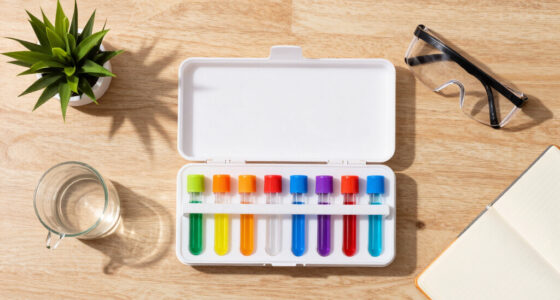
Educational science kits for kids range from simple first experiments to focused chemistry, earth science, energy, and microscope sets. I would put the UNGLINGA 150-Experiment Science Kit first for families seeking broad activity variety, while the National Geographic Earth Science Kit stands out for topic-focused exploration and the Doctor Jupiter My First Science Experiments Kit for younger beginners. The main tradeoff is breadth versus depth: a large activity count offers variety, while a focused kit can give children a clearer path into one subject. Age fit, adult setup, and whether the kit includes the needed materials also shape the choice. Read on for a ranked comparison and practical guidance for matching a kit to your child.

Prime made for students and young adults
- Fast, free delivery for dorm and study essentials
- Prime Video and Amazon Music included
- Member-only deals
Key Takeaways
- UNGLINGA’s 150-experiment set leads on activity breadth, but a high experiment count does not automatically mean deeper learning or less adult help.
- Doctor Jupiter’s beginner kit is the clearest age-4-plus starting point in this lineup; it is a more approachable choice than chemistry-heavy sets aimed at older children.
- National Geographic’s Earth science and chemistry kits offer stronger subject direction than broad experiment collections, making them better fits when a child already has a topic in mind.
- The microscope kits serve a different purpose from experiment boxes: Uarzt emphasizes a portable kit with accessories, while National Geographic specifies 400x magnification.
- Several products overlap in audience or format, including two listings for Doctor Jupiter’s beginner kit, so buyers should compare the specific contents rather than treat every listing as a distinct learning path.
| UNGLINGA 150-Experiment Science Kit for Kids | 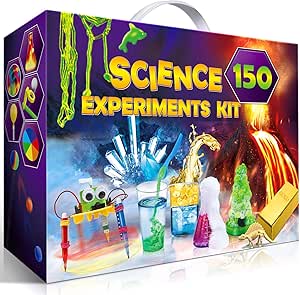 | Best for Broad Science Exploration | Brand: UNGLINGA | Experiment count: 150 | Recommended age: 8 years and up | VIEW LATEST PRICE | See Our Full Breakdown |
| Doctor Jupiter My First Science Experiments Kit for Kids Ages 4+ |  | Best for Preschool STEM Beginners | Brand: Doctor Jupiter | Age range: 4–8 years | Experiments: 50+ | VIEW LATEST PRICE | See Our Full Breakdown |
| SolarBots Cosmic Explorers Sustainable Energy Set |  | Best for Renewable Energy and Building | Brand: Thames & Kosmos | Model number: 665083 | Age guidance: 6+ with adult help; 9+ for independent use | VIEW LATEST PRICE | See Our Full Breakdown |
| National Geographic Earth Science Kit with 100+ Activities for Kids | 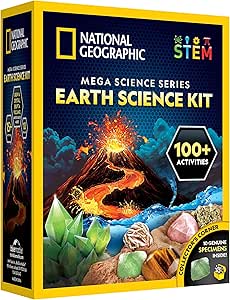 | Best for Earth Science Projects | Brand: Blue Marble | Age range: 8 years and up | Advertised activities: 100+ | VIEW LATEST PRICE | See Our Full Breakdown |
| Uarzt 58-Piece Kids Microscope Kit with Carrying Case |  | Best for Introductory Microscopy | Brand: Uarzt | Piece count: 58 | Prepared slides: 13 | VIEW LATEST PRICE | See Our Full Breakdown |
| UNGLINGA 40+ Experiments Science Kit for Kids |  | Best for Broad, Hands-On Variety | Brand: UNGLINGA | Recommended age: 8 years and up | Experiments: More than 40 | VIEW LATEST PRICE | See Our Full Breakdown |
| National Geographic Kids Microscope Kit, 400x Magnification |  | Best for First Microscope Exploration | Brand: Blue Marble | Recommended age: 6+ | Maximum magnification: 400x | VIEW LATEST PRICE | See Our Full Breakdown |
| Doctor Jupiter My First Science Experiments Kit for Kids Ages 4+ |  | Best for Preschool Science Beginners | Brand: Doctor Jupiter | Age range: 4 years and up | Experiments: 100+ | VIEW LATEST PRICE | See Our Full Breakdown |
| Kuovei Science Kit for Kids with 80 Experiments |  | Best for Guided Variety with Lab-Style Tools | Brand: Kuovei | Experiments: 80 | Recommended age: Over 6 years; manufacturer listing also states 36 months–12 years | VIEW LATEST PRICE | See Our Full Breakdown |
| National Geographic Science Magic Kit for Kids |  | Best for Science-Minded Show-and-Tell | Brand: Blue Marble | Recommended age: 8 years and up | Experiments: 20 with included materials; booklet lists 85+ additional experiments | VIEW LATEST PRICE | See Our Full Breakdown |
| Doctor Jupiter Ultimate Science Experiments Kit for Kids Ages 8+ |  | Best for Experiment Variety | Brand: Doctor Jupiter | Recommended age: 8+ years | Experiment count: Over 50 | VIEW LATEST PRICE | See Our Full Breakdown |
| National Geographic Junior Chemistry Set with 50 Experiments |  | Best for Young Beginners | Brand: Blue Marble | Recommended age: 4 years and up | Experiment count: 50 | VIEW LATEST PRICE | See Our Full Breakdown |
| Melican 60+ Science Experiment Kit for Kids Ages 4 and Up |  | Best for Broad Family Activities | Brand: Melican | Recommended age: 4 years and up | Experiment count: 60+ | VIEW LATEST PRICE | See Our Full Breakdown |
| Creativity for Kids Grow ‘N Glow Terrarium Kit |  | Best for Plant Science and Crafting | Recommended age: 6+ | Planting cycles: 2 | Seeds: Chia and wheatgrass | VIEW LATEST PRICE | See Our Full Breakdown |
| National Geographic Amazing Chemistry Set with 100+ Experiments |  | Best for Older Kids Who Like Independent Exploration | Brand: Blue Marble | Recommended age: 8 years and up | Experiments with included materials: 15 | VIEW LATEST PRICE | See Our Full Breakdown |
| educational science kits for kid | Brand | Recommended age | Included components |
|---|---|---|---|
| UNGLINGA 150-Experiment Scienc | UNGLINGA | 8 years and up | Science experiment tools and materials |
| Doctor Jupiter My First Scienc | Doctor Jupiter | — | Food essences, cups, stirring sticks, spatula, beaker, test tube, mini volcano, tray, spray bottle, funnel, dinosaur mold, dropper, food colors, ingredients, and instruction manual |
| SolarBots Cosmic Explorers Sus | Thames & Kosmos | — | Metal rods for gearbox, plastic building parts, solar panel, and motor |
| National Geographic Earth Scie | Blue Marble | — | Science experiments and activities |
| Uarzt 58-Piece Kids Microscope | Uarzt | 5–12 years | — |
| UNGLINGA 40+ Experiments Scien | UNGLINGA | 8 years and up | Science experiment materials |
| National Geographic Kids Micro | Blue Marble | 6+ | — |
| Doctor Jupiter My First Scienc | Doctor Jupiter | — | — |
| Kuovei Science Kit for Kids wi | Kuovei | Over 6 years; manufacturer listing also states 36 months–12 years | Goggles, chemical materials, petri dishes, measuring cups, test tubes, gloves, droppers, balloons, and other experiment supplies |
| National Geographic Science Ma | Blue Marble | 8 years and up | Materials for 20 magic experiments and a booklet with 85+ additional experiments |
| Doctor Jupiter Ultimate Scienc | Doctor Jupiter | 8+ years | Baking soda, citric acid, Epsom salt, crystal powder, glow powder |
| National Geographic Junior Che | Blue Marble | 4 years and up | Test tubes, goggles, and other lab tools |
| Melican 60+ Science Experiment | Melican | 4 years and up | Manual, experimental materials, tools, safety goggles |
| Creativity for Kids Grow ‘N Gl | — | 6+ | — |
| National Geographic Amazing Ch | Blue Marble | 8 years and up | Chemistry experiments, crystal growing, chemical reactions |
More Details on Our Top Picks
UNGLINGA 150-Experiment Science Kit for Kids
With 150 experiments spanning chemistry, physics, Earth science, and surface tension, this kit offers the broadest subject mix among these five picks. I’d choose it for families who want a single box to support varied projects over time, rather than a focused introduction to one area like the National Geographic Earth Science Kit. Its illustrated, step-by-step manual and child-friendly tools help make activities approachable for kids ages eight and up, while household-item experiments can connect kit activities to everyday materials. That flexibility has a tradeoff: some experiments need supplies that are not included, so parents may need to check instructions and gather extras ahead of a project. The plastic tools also suit guided home activities better than a durable classroom lab setup.
Pros:- Covers chemistry, physics, Earth science, and surface tension
- Includes 150 experiment ideas for extended project variety
- Illustrated, step-by-step manual supports guided activities
- Child-friendly tools make hands-on exploration accessible
Cons:- Some experiments require household supplies that are not included
- The broad activity range may require adult help choosing and preparing projects
Best for: Families with children eight and older who want a varied, reusable set of guided projects across several science subjects.
Not ideal for: Buyers who want every project’s materials included or prefer a focused kit with a narrower subject and fewer supply checks.
- Brand:UNGLINGA
- Experiment count:150
- Recommended age:8 years and up
- Topics:Chemistry, physics, Earth science, and surface tension
- Educational objective:Creative skills
- Included components:Science experiment tools and materials
- Dimensions:11.42 x 8.67 x 3.94 inches
- Material:Plastic
Our verdict“Choose this kit for a wide-ranging science activity library, provided you are comfortable sourcing a few household materials.”
Doctor Jupiter My First Science Experiments Kit for Kids Ages 4+
Designed for ages 4–8, this kit makes early science feel hands-on through activities such as oobleck, volcanoes, and dinosaur squishies. Its illustrated instructions and included tools give families a clearer starting point than the UNGLINGA 150-Experiment Science Kit, which targets older children and includes projects that may call for household supplies. Doctor Jupiter’s more than 50 experiments also give young learners plenty of chances to practice observing, following steps, and asking what happens next. The compromise is that some activities may need adult guidance, so it is not a set-and-forget choice for preschoolers. Its age range and introductory focus also make it less suited to older kids ready for more demanding experiments.
Pros:- Offers more than 50 experiments for repeat hands-on learning
- Includes child-oriented tools and materials for activities
- Illustrated, step-by-step manual helps guide young learners
- Activities support observation, problem solving, and early STEM concepts
Cons:- Adult guidance may be needed for some experiments
- The introductory age range may feel limiting to older children
Best for: Parents of children ages 4–8 seeking guided, tactile STEM activities with many of the basic tools and ingredients supplied.
Not ideal for: Older children who want more advanced experiments or families looking for activities a young child can complete without adult involvement.
- Brand:Doctor Jupiter
- Age range:4–8 years
- Experiments:50+
- Included components:Food essences, cups, stirring sticks, spatula, beaker, test tube, mini volcano, tray, spray bottle, funnel, dinosaur mold, dropper, food colors, ingredients, and instruction manual
- Educational skills:Concentration, concept development, critical thinking, exploration, logical thinking, observation, problem solving, and STEM
- Safety standard:ASTM F963-17
Our verdict“Pick this as a guided first science kit for ages 4–8, especially if an adult can join some activities.”
SolarBots Cosmic Explorers Sustainable Energy Set
This is the most focused engineering choice in the group: kids build five solar-powered robots and can move the main robot between vehicle bases. The click-and-go format makes changing configurations less involved than assembling a new project from scratch, while the included solar panel and motor give the activity a direct link to renewable energy. Compared with the experiment variety of the UNGLINGA 150-Experiment Science Kit, SolarBots offers fewer kinds of science activity but a more concrete build-and-observe experience. Its limits matter: indoor use calls for a strong light source, and children under nine may need adult help with assembly. Families seeking chemistry or Earth science projects should choose a broader kit instead.
Pros:- Solar panel and motor power the builds without batteries
- Five robot configurations offer variety within a focused theme
- Click-and-go modular design makes swapping vehicle bases easier
- 36-page full-color guide supports building and learning
Cons:- Indoor operation needs a strong light source of 50 W or higher
- Younger children need adult assistance with assembly
- Limited to five robot configurations rather than a broad range of experiments
Best for: Families with children around nine and up who enjoy building models and want a hands-on introduction to solar power.
Not ideal for: Buyers seeking a large selection of experiment types, or children who lack a bright workspace and adult support for assembly.
- Brand:Thames & Kosmos
- Model number:665083
- Age guidance:6+ with adult help; 9+ for independent use
- Robot count:5
- Power:Solar panel and motor; no batteries required
- Included components:Metal rods for gearbox, plastic building parts, solar panel, and motor
- Manual:36-page full-color guide
- Indoor lighting guidance:Strong light source of 50 W or higher
Our verdict“Choose SolarBots for an engaging solar-energy build, not as a replacement for a general experiment kit.”
National Geographic Earth Science Kit with 100+ Activities for Kids
Volcanoes, crystal growing, water tornadoes, and geologic dig kits give this set a clear Earth science identity, unlike the wider subject mix in the UNGLINGA 150-Experiment Science Kit. I’d favor it for a child drawn to rocks, landforms, and dramatic demonstrations rather than a general sampler of science topics. The full-color guide explains the ideas behind the activities, which can help turn a fun result into a learning conversation. One point to check before buying is the activity count: the title claims 100+ activities, while the description names a more limited set of examples. The product data does not clarify how the advertised total is counted, so buyers seeking a verified, extensive project list may prefer a kit with a more specific breakdown.
Pros:- Earth science activities include volcanoes, crystals, and geologic digs
- Full-color guide explains the science behind projects
- Clear instructions support independent exploration
- Activities can be shared with family, friends, or classmates
Cons:- The listed activity count is unclear: the title says 100+ but the description names a more limited set
- Its Earth science focus offers less subject variety than a broad kit such as UNGLINGA 150-Experiment
Best for: Children ages eight and up who are especially interested in geology, volcanoes, crystals, and other Earth science demonstrations.
Not ideal for: Families who want a clearly itemized activity count or a kit covering several science fields equally.
- Brand:Blue Marble
- Age range:8 years and up
- Advertised activities:100+
- Example activities:Volcano building, crystal growing, water tornadoes, and two geologic dig kits
- Included components:Science experiments and activities
- Dimensions:8.66 x 3.15 x 12 inches
- Weight:2.6 pounds
- Model number:NGMEGAEARTH
Our verdict“Choose this for a geology-minded child, but look for a clearer activity list if the advertised count is a deciding factor.”
Uarzt 58-Piece Kids Microscope Kit with Carrying Case
Prepared slides, blank slides, and lab tools make this a practical starting point for looking closely at specimens, rather than repeating demonstrations from a general experiment set. Its carrying case helps keep the small pieces together, while the LED light and listed 1200× maximum magnification give children a simple way to explore microscope use. Compared with the National Geographic Earth Science Kit, Uarzt is narrower in subject but offers a more direct route into observation and slide preparation. The tradeoff is that this is an introductory tool, not professional lab equipment; the magnification figure alone does not indicate image quality. Two AA batteries are also required and not included, so families should have them ready before the first session.
Pros:- Includes 13 prepared slides and 31 blank slides
- Carrying case provides organized storage for small components
- LED light supports viewing specimens
- Colorful guide introduces beginner microscope activities
Cons:- Requires two AA batteries, which are not included
- Designed for introductory use rather than professional lab work
- The listed 1200× maximum magnification does not establish image quality
Best for: Families or teachers introducing children ages 5–12 to microscope handling, prepared slides, and basic specimen observation.
Not ideal for: Buyers expecting professional laboratory optics, or anyone who needs a ready-to-use kit without supplying batteries.
- Brand:Uarzt
- Piece count:58
- Prepared slides:13
- Blank slides:31
- Microscope dimensions:4.6 × 2.75 × 8.15 inches
- Batteries:2 AA, not included
- Light source:LED
- Maximum magnification:1200×
- Recommended age:5–12 years
Our verdict“Choose this for a child curious about microscopy, as long as you treat it as an introductory tool and provide batteries.”
UNGLINGA 40+ Experiments Science Kit for Kids
With materials for more than 40 experiments, this UNGLINGA kit suits children who want to try a range of activities rather than focus on one science topic. Projects such as bouncy balls and lava lamps give kids visible results to discuss, while the illustrated, step-by-step manual helps them follow a process and observe what changes. Compared with the National Geographic Science Magic Kit, this set is more centered on general experiments than demonstrations designed as tricks. It also offers fewer listed activities than the Doctor Jupiter My First Science Experiments Kit, but its compact 8 x 5.7 x 2.7-inch package may be easier to store. The tradeoff is that some activities require household items not included, so not every experiment is ready to start straight from the box.
Pros:- Includes materials for more than 40 experiments
- Illustrated, step-by-step instructions support independent participation
- Activities such as bouncy balls and lava lamps make results easy to observe
- Compact dimensions make the kit easier to store than larger experiment sets
Cons:- Some experiments require common household items that are not included
- The broad activity mix may provide less depth in any single science topic
- The listed age guidance starts at 8, so it is not aimed at younger beginners
Best for: Families with children 8 and up who want varied, guided experiments and have common household supplies available.
Not ideal for: Buyers seeking a fully self-contained kit or a tightly focused introduction to one subject, since some supplies must be sourced separately and the activities cover a broad mix.
- Brand:UNGLINGA
- Recommended age:8 years and up
- Experiments:More than 40
- Item dimensions:8 x 5.7 x 2.7 inches
- Item weight:0.32 kg
- Material:Plastic
- Included components:Science experiment materials
Our verdict“Choose this kit for an 8-and-up child who wants varied experiments and can share the preparation with an adult.”
National Geographic Kids Microscope Kit, 400x Magnification
This microscope kit gives young learners a more focused route into science than activity bundles such as the UNGLINGA 40+ Experiments Science Kit. Its three magnification settings, reaching 400x, let children compare prepared plant slides with their own samples, while upper and lower LED illumination can help with different kinds of specimens. The included rocks, minerals, blank slides, and basic tools add variety beyond looking through the eyepiece, and the learning guide provides direction for getting started. At a recommended age of 6+, it is also aimed at younger users than kits designed for ages 8 and up, such as the National Geographic Science Magic Kit. The tradeoff is a narrower activity range: this is for examining specimens, not a collection of unrelated experiments. It also runs on batteries and has a plastic enclosure.
Pros:- Three magnification levels reach up to 400x
- LED lights above and below the platform support different viewing setups
- Includes prepared and blank slides plus rock and mineral specimens
- Large focus knobs and a soft-touch eyepiece are designed for easier handling
Cons:- Battery power means batteries may need replacement
- Microscope work is a narrower activity format than general experiment kits
- Plastic enclosure may not appeal to buyers looking for a more durable-feeling instrument
Best for: Families with children 6 and up who want a guided introduction to microscopes, prepared slides, and simple specimen collection.
Not ideal for: Children who prefer varied chemistry or demonstration activities, or families who want a microscope kit that does not rely on replaceable batteries.
- Brand:Blue Marble
- Recommended age:6+
- Maximum magnification:400x
- Magnification levels:3
- Light source:LED, above and below
- Power source:Battery powered
- Included items:6 prepared plant slides, 6 rocks and minerals, 6 blank slides, pipette, specimen dish, tweezers, and learning guide
- Dimensions:11 x 6.7 x 12 inches
- Weight:1.8 pounds
Our verdict“Pick this for a child curious about viewing plants and minerals up close, rather than a broad menu of experiments.”
Doctor Jupiter My First Science Experiments Kit for Kids Ages 4+
For children just starting to follow simple science activities, this kit pairs 100+ experiments with illustrated, step-by-step instructions and a broad set of basic tools. Projects such as Walking Water and Water Fireworks offer visible changes that can prompt questions about what happened, while the beakers, funnel, spray bottles, and tray help make the activities feel like a small science workspace. The 4+ age guidance sets it apart from the microscope kit and the UNGLINGA kit, both of which are aimed at older children or more specific interests. The large activity count is appealing, but it does not mean every project will be independent play: young children may need adult help, and some activities can call for materials beyond the listed kit contents. Its broad beginner focus may also feel less targeted than a microscope or topic-specific set.
Pros:- More than 100 listed experiments provide substantial activity variety
- Illustrated instructions make the steps easier for young children to follow with help
- Includes beakers, a flask, spray bottles, a funnel, and a tray
- Designed for hands-on, screen-free learning from age 4
Cons:- Young children may need adult assistance during experiments
- The wide activity range offers less focus on one science topic than a microscope kit
- The listed components do not establish that every activity is fully self-contained
Best for: Caregivers introducing children ages 4 and up to supervised, screen-free science activities with visual results.
Not ideal for: Families looking for unsupervised projects for preschoolers or a focused kit built around one science discipline.
- Brand:Doctor Jupiter
- Age range:4 years and up
- Experiments:100+
- Included tools:2 beakers, 1 conical flask, 1 spatula, 2 stirring sticks, 2 spray bottles, 2 cups, 1 funnel, 1 pair of safety goggles, and 1 tray
- Additional included components:Food essences, food additives, dried leaves, food colors, instruction manual, and bonus experiment booklet
- Safety standard:ASTM F963-17
- Set name:My First Science Kit
Our verdict“Choose this as a supervised first science kit for a young child who enjoys varied, visual activities.”
Kuovei Science Kit for Kids with 80 Experiments
Kuovei’s kit is a fit for children who want a sizable set of experiments alongside tools that evoke a small lab: the package lists 80 activities plus goggles, test tubes, petri dishes, measuring cups, gloves, and droppers. Illustrated guidance is described as explaining both procedures and scientific principles, giving it a more instructional feel than the UNGLINGA 40+ Experiments Science Kit, whose main distinction is its broad mix of hands-on projects. The included supplies also make Kuovei more tool-heavy than the National Geographic Science Magic Kit, which pairs supplied materials with a booklet of additional activities. There are two caveats that matter for parents: the listing gives inconsistent age guidance (over 6 and 36 months–12 years), and some experiments use chemical materials that call for careful handling. I would check activity supervision needs before choosing it for a younger child.
Pros:- Includes materials and illustrated guidance for 80 experiments
- Goggles, gloves, test tubes, and droppers support lab-style activities
- Instructions are described as explaining procedures and principles
- Activities encourage hands-on exploration and observation
Cons:- Age information conflicts between over 6 years and 36 months–12 years
- Some chemical materials require careful handling and adult oversight
- Listed dimensions of 1 x 1 x 1 inches do not give a useful sense of the kit’s actual storage footprint
Best for: Families with school-age children who want guided experiments using lab-style tools and are prepared to supervise materials carefully.
Not ideal for: Parents seeking clear, consistent age guidance or an activity set for a young child to use with little supervision.
- Brand:Kuovei
- Experiments:80
- Recommended age:Over 6 years; manufacturer listing also states 36 months–12 years
- Included components:Goggles, chemical materials, petri dishes, measuring cups, test tubes, gloves, droppers, balloons, and other experiment supplies
- Item dimensions:1 x 1 x 1 inches (as listed)
- Item weight:0.75 kg
- Material:Plastic
- Set name:Single Set
Our verdict“Pick Kuovei for a school-age child who wants tool-rich experiments and will have an adult nearby to supervise.”
National Geographic Science Magic Kit for Kids
This kit makes science feel performative: children learn through magic-style demonstrations rather than a conventional sequence of experiments. It supplies materials for 20 magic experiments and adds a booklet with 85+ more activities, so there is a mix of ready-to-run projects and ideas that may call for other supplies. Compared with the Doctor Jupiter My First Science Experiments Kit, it targets older children and puts more emphasis on presenting an effect; unlike the UNGLINGA 40+ Experiments Science Kit, its central hook is the connection between science and magic. No batteries are needed, which keeps setup simple. The tradeoff is the kit’s age range of 8 and up and its one-player listing, so it is less suited to younger children or a group activity. Buyers should also note that only 20 experiments have materials included.
Pros:- Combines science activities with magic-style demonstrations
- Includes materials for 20 experiments and a booklet with 85+ additional activities
- Manual operation means no batteries are required
- The demonstration format can give children a reason to explain the science behind an effect
Cons:- Recommended for ages 8 and up, limiting its fit for younger beginners
- Listed for one player, making it less suited to group activity
- Materials are provided for 20 experiments, not the full booklet of additional activities
Best for: Children ages 8 and up who enjoy magic tricks and want science activities they can demonstrate to family or friends.
Not ideal for: Younger beginners, group-focused families, or buyers who expect materials for all 100 listed tricks and experiments.
- Brand:Blue Marble
- Recommended age:8 years and up
- Experiments:20 with included materials; booklet lists 85+ additional experiments
- Included components:Materials for 20 magic experiments and a booklet with 85+ additional experiments
- Educational objective:STEM
- Number of players:1
- Power:Manual; no batteries required
- Item dimensions:8.86 x 3.15 x 12 inches
- Item weight:1.5 pounds
Our verdict“Choose this for an older child who likes performing tricks and is comfortable sourcing supplies for some booklet activities.”
Doctor Jupiter Ultimate Science Experiments Kit for Kids Ages 8+
More than 50 experiments give this kit an unusually broad menu for children ready to follow multi-step science activities. Its illustrated manual makes projects easier to approach independently, while ingredients such as citric acid, Epsom salt, and glow powder support activities involving reactions, crystals, and visual effects. Compared with the National Geographic Amazing Chemistry Set, Doctor Jupiter emphasizes a larger supplied experiment selection, while that set offers 15 activities with included materials plus 85 household-item variations. The tradeoff is that small chemical components can create mess and call for adult supervision; this is less self-contained than a kit with all materials ready for every activity. I’d choose it for an older child who enjoys trying a range of experiments, not for a child who needs close-to-mess-free play.
Pros:- More than 50 experiments offer varied activities for repeated use.
- Illustrated, step-by-step instructions support children as they follow projects.
- Includes materials such as baking soda, citric acid, Epsom salt, crystal powder, and glow powder.
- Meets ASTM F963-17 safety standards, according to the product description.
Cons:- Small chemical components can be messy and need adult supervision.
- The product description does not specify that every experiment has all required materials included.
Best for: Families with children aged 8 and up who want a varied set of guided experiments and can supervise handling small components.
Not ideal for: Caregivers seeking low-mess, independent activities or a kit that supplies every material needed for every experiment.
- Brand:Doctor Jupiter
- Recommended age:8+ years
- Experiment count:Over 50
- Included components:Baking soda, citric acid, Epsom salt, crystal powder, glow powder
- Dimensions:10.96 x 9.81 x 1.65 inches
- Weight:0.73 kg
- Material:Cardboard
- Model number:USK Starter
Our verdict“Choose this for an 8+ child who wants many guided experiments and has an adult available to supervise the messier activities.”
National Geographic Junior Chemistry Set with 50 Experiments
Age-appropriate introductions are the point of this chemistry set: it is listed for children as young as four and pairs 50 activities with 20-plus lab tools and illustrated directions. Test tubes and goggles can make simple experiments feel like a first lab session, while household-item ingredients give families ways to continue without relying only on supplied materials. Compared with the Melican 60+ Science Experiment Kit, this set has fewer listed experiments but a more clearly stated tool count and a simple junior-chemistry focus. The limitation is also its audience: older children may find the activities too basic, and some projects call for items that are not in the box. I’d pick it for an adult-supported first science kit, rather than for a child seeking more challenging chemistry.
Pros:- Includes 50 hands-on experiments.
- More than 20 child-friendly lab tools are listed, including test tubes and goggles.
- Illustrated step-by-step instructions help guide young participants.
- Many activities use common household items, extending use beyond the included tools.
Cons:- Activities may be too simple for older children.
- Some experiments require household items that are not included.
Best for: Caregivers introducing preschool and early-elementary children to simple chemistry with hands-on tools and adult guidance.
Not ideal for: Older children who want deeper chemistry challenges, or families who need every experiment’s materials supplied in the kit.
- Brand:Blue Marble
- Recommended age:4 years and up
- Experiment count:50
- Lab tools:20+
- Included components:Test tubes, goggles, and other lab tools
- Educational objective:STEM
- Battery required:No
- Dimensions:11 x 4.22 x 9.64 inches
Our verdict“Choose this as a first chemistry set for a young child if you are comfortable supplying household materials and helping with activities.”
Melican 60+ Science Experiment Kit for Kids Ages 4 and Up
More than 60 activities make this a flexible pick for families who want to move between different kinds of hands-on science, from volcanoes and lava lamps to dinosaur egg digs and milk animations. The supplied tools, materials, goggles, and illustrated instructions give younger children a more tangible starting point than the household-item-heavy approach of the National Geographic Junior Chemistry Set. That breadth comes with a supervision tradeoff: the recommended age begins at four, but parent guidance is specifically advised, so younger kids should not be expected to manage projects alone. Its chemistry theme also means it is less focused on a single subject than the Grow ‘N Glow Terrarium Kit, which concentrates on planting and observing growth. I’d choose Melican for shared activity time, not for independent play or a narrowly focused science lesson.
Pros:- Offers more than 60 hands-on experiments across several activity styles.
- Includes experimental materials and tools alongside the manual.
- Safety goggles are included for a more lab-like activity setup.
- Illustrated instructions support guided projects and encourage logical thinking.
Cons:- Parent assistance is recommended, limiting independent use for younger children.
- The product data does not specify the quantity or types of included experimental materials.
Best for: Families with children aged four and up who want varied science activities to do together, with an adult guiding younger participants.
Not ideal for: Buyers seeking independent projects for preschoolers or a kit focused on one topic such as plant growth.
- Brand:Melican
- Recommended age:4 years and up
- Experiment count:60+
- Included components:Manual, experimental materials, tools, safety goggles
- Theme:Chemistry
- Material:Plastic
- Model number:SYTZ2
Our verdict“Pick Melican for families who value a wide mix of guided experiments and can make adult participation part of the activity.”
Creativity for Kids Grow ‘N Glow Terrarium Kit
Growing plants becomes the experiment here: children assemble and decorate a mini terrarium, then observe chia and wheatgrass seeds as they develop. That slower, ongoing activity offers a different kind of science learning from the quick reactions in the Doctor Jupiter Ultimate Science Experiments Kit; it suits kids who like making something and returning to it over several days. Supplies for two planting cycles give families another chance to try after the first round, while glowing sand, figurines, and stickers make the container feel like a craft project too. The tradeoff is that results depend on suitable light and care, and the terrarium dimensions are not provided. I’d choose this for a child drawn to plants and decorating, rather than someone seeking a broad set of chemistry experiments.
Pros:- Combines a decorative craft with an observation-based plant activity.
- Includes supplies for two planting cycles.
- Chia and wheatgrass seeds offer visible growth to follow.
- Glow-in-the-dark sand and decorations add a nighttime display element.
Cons:- Seeds need suitable light and care to grow successfully.
- Terrarium dimensions are not specified in the product data.
Best for: Children aged six and up who enjoy crafts, can check on a growing project over time, and are curious about seeds and plant growth.
Not ideal for: Families wanting quick, varied experiments or a project that does not depend on light and ongoing plant care.
- Recommended age:6+
- Planting cycles:2
- Seeds:Chia and wheatgrass
- Terrarium material:Plastic
- Included materials:Potting mix, glowing sand, river stones, figurines, stickers, decorative lid
- Seed origin:USA
Our verdict“Choose this for a craft-oriented child who will enjoy tending plants over time more than completing a series of one-session experiments.”
National Geographic Amazing Chemistry Set with 100+ Experiments
Structured chemistry plus room to extend gives this set a different balance from the Doctor Jupiter Ultimate Science Experiments Kit. It supplies materials for 15 experiments, then points children toward 85 additional activities using household items; that format can suit an older child who likes following a guided reaction and then exploring related ideas. Test tubes, beakers, and pipettes provide useful tools for handling small quantities, while crystal growing adds an activity that unfolds over time. The headline count needs context, though: only 15 experiments have their materials included, so the other activities depend on what is available at home. Compared with Doctor Jupiter’s more than 50 listed experiments, this is a less ready-to-run choice but offers a larger set of suggested follow-on activities. I’d select it for curious 8+ learners comfortable with that distinction.
Pros:- Includes materials for 15 hands-on experiments.
- Lists 85 additional activities using common household items.
- Tools include test tubes, beakers, and pipettes.
- Covers chemical reactions and crystal growing.
Cons:- Only 15 experiments have all their materials included.
- The 85 additional activities require household items not supplied in the kit.
Best for: Children aged eight and up who enjoy chemistry, can follow instructions, and have an adult who can help source household items for extra activities.
Not ideal for: Families looking for a large set of experiments with all materials supplied and ready to use from the box.
- Brand:Blue Marble
- Recommended age:8 years and up
- Experiments with included materials:15
- Additional activities:85 using common household items
- Educational objective:STEM
- Included components:Chemistry experiments, crystal growing, chemical reactions
- Dimensions:8.78 x 3.19 x 11.93 inches
- Weight:1.8 pounds
- Model number:NGMEGACHEMAR
Our verdict“Choose this for an older child who wants chemistry tools and can use household supplies to extend the included experiments.”

How We Picked
I compared these kits as learning tools for children, not simply by experiment count. The main criteria were age fit, clarity of the subject focus, range of activities, likelihood that children can follow the steps, equipment or materials included, and how much adult preparation a family may need. I also looked at whether a kit offers a distinct learning experience—such as microscopy, growing a terrarium, or exploring sustainable energy—rather than another general collection of experiments.
The ranking favors kits that combine accessible activities with a clear reason to choose them over the alternatives. Broad sets rank well for families who want variety, while focused kits can rank higher for a specific interest or age group. I treat duplicate or closely related listings cautiously: the two Doctor Jupiter beginner entries are the same named kit, so they do not represent two separate strengths. Product details supplied here do not establish the exact contents of every set, so buyers should check the included materials, instructions, and age guidance before choosing.
Factors to Consider When Choosing Educational Science Kits For Kids
Before choosing among educational science kits for kids, I would match the kit to the way a child likes to learn. A large activity count can be appealing, but it matters less than clear instructions, suitable materials, and a subject that holds the child’s attention. These checks can help avoid a set that looks ambitious but proves hard to use at home.
Match the Age Label to the Child’s Actual Independence
Age guidance is a starting point, not a promise that a child can complete every activity alone. Younger children often benefit from short steps, visible results, and an adult nearby to measure, pour, or explain what happened. Older children may want more room to make predictions and repeat an experiment with a changed variable. A common mistake is buying for the child’s future skill level instead of their current patience and reading ability. Check whether the instructions rely on independent reading, fine motor tasks, or careful measurement. If the kit’s age range is broad, plan to choose activities that suit the child rather than assuming every activity will fit.
Choose Breadth or a Subject the Child Already Loves
Broad experiment collections are useful when a child enjoys trying different activities but has not settled on a favorite topic. Focused sets can be a better match when they are already curious about rocks, chemistry, plants, energy, or magnification. More activities do not always mean more educational value: a child may learn more from revisiting a small number of experiments and asking what changes the result. Before buying, ask whether the goal is variety, a first introduction, or a longer exploration of one subject. Avoid choosing solely by the activity count if many activities depend on the same type of setup or materials. A clear subject can make it easier to connect kit activities with books, school lessons, or outdoor observations.
Check What the Kit Requires Outside the Box
Some experiments may depend on household supplies, adult preparation, or materials that need replacing, even when the kit includes specialized tools. Read the contents and activity instructions where available, then separate included equipment from everyday items the family must supply. This matters especially when a child expects to start immediately after opening the box. A kit with fewer activities but more self-contained setups may be easier for a busy household than a larger set with frequent preparation. Also check whether consumables are used once or can support repeat experiments. Planning for cleanup and storage is part of the real effort, not a minor detail.
Treat Safety and Supervision as Part of the Age Fit
Science activities can involve liquids, small components, fragile tools, or steps that call for adult oversight. Read the safety guidance before purchase, especially for younger children or homes with siblings who may handle loose parts. Do not assume that a child-friendly label means every activity is suitable for unsupervised use. Think about where experiments will happen and whether the work surface, cleanup, and storage are manageable. For microscope kits, also consider how easily the child can handle and store the equipment. The right kit is one the family can use safely and consistently, not merely one with the most ambitious activities.
Pay More for a Better Fit, Not Just a Bigger Kit
A larger or more specialized set can make sense when its contents support a genuine interest or offer equipment the child can keep using. A premium choice is less compelling if the child is still unsure about the subject or if the kit asks for more adult involvement than the family can provide. Compare the learning experience, durability, reusable tools, and availability of replacement supplies rather than relying on box size or activity totals. For a first science kit, a simple format may be the safer choice because it lets a child discover what they enjoy before moving to a deeper set. When the child has a defined interest, a focused kit can provide more value than a broad collection of unrelated activities.
Frequently Asked Questions
Which science kit makes the most sense for a child who has never used one?
I would start with a kit labeled for younger beginners, such as Doctor Jupiter’s My First Science Experiments Kit for Kids Ages 4+. Its intended audience makes it a more natural starting point than older-child chemistry sets or equipment-focused microscope kits. Still, check the instructions and supervision needs, since an age label does not mean every activity is independent. If the child is older but new to science kits, choose based on reading confidence and patience rather than age alone. A manageable first experience is more useful than the largest activity count.
Is a kit with more experiments always the better buy?
No. A high activity count can offer variety, but it does not tell you how many activities are repeatable, how much setup they require, or how clearly they teach a concept. A focused chemistry or earth science set may suit a child better if they want to explore one subject in more depth. Before choosing, check which materials are included and whether the child can follow the activity steps at their age. If the kit depends on many household supplies, the advertised count may involve more preparation than expected. Think about the child’s interest and your available time as well as the number of activities.
Should I choose a general experiment set or a subject-specific kit?
Choose a general set when the child is curious about many things or has not yet found a favorite branch of science. A subject-specific option makes more sense when a clear interest is already there, such as chemistry, earth science, plants, energy, or microscopy. Focused kits can give activities a more connected feel, while broad collections let children sample different types of experiments. Neither format guarantees a stronger learning experience; the instructions and fit matter too. If you are unsure, notice which questions the child asks most often and use that interest to guide the choice.
How do I decide between the two microscope kits in this roundup?
Start by comparing the details that matter for the child’s use: the stated magnification, included accessories, ease of handling, and storage. National Geographic’s microscope kit identifies 400x magnification, while Uarzt’s listing highlights a 58-piece set with a carrying case. Those details point to different comparison priorities, but they do not by themselves establish image quality or ease of use. Check the product contents and instructions before buying, especially if the child will use the microscope without much help. If the goal is broader hands-on experiments rather than repeated specimen viewing, a general science kit may be a better match.
What should I check before buying a kit for a younger child who needs supervision?
Read the age guidance, activity steps, safety notes, and list of required materials before choosing. Look for activities with clear instructions and consider whether an adult must handle measuring, setup, or cleanup. Also check for small parts or equipment that need careful storage around younger siblings. A kit can still be a good fit when it requires supervision, as long as that level of involvement works for your household. If regular adult help is unlikely, favor a simpler beginner format over a set whose appeal depends on complicated preparation.
Conclusion
For the widest range of activities, I would choose the UNGLINGA 150-Experiment Science Kit as the best overall option, while keeping in mind that activity volume is not the same as depth. The best value depends on which activities and materials the child will actually use; compare included supplies and repeatability rather than choosing by count alone. For a premium or more specialized learning path, I would look at the National Geographic Earth Science Kit or a chemistry set when the child already has a strong subject interest. The Doctor Jupiter My First Science Experiments Kit is my pick for beginners and younger children. For specific needs, choose the SolarBots set for sustainable energy, a microscope kit for specimen viewing, or the Grow ‘N Glow Terrarium Kit for a plant-growing activity. Match the kit to the child’s age, interest, and the amount of adult help your family can offer.
Fall Picks
fall essentials
As an affiliate, we earn on qualifying purchases.