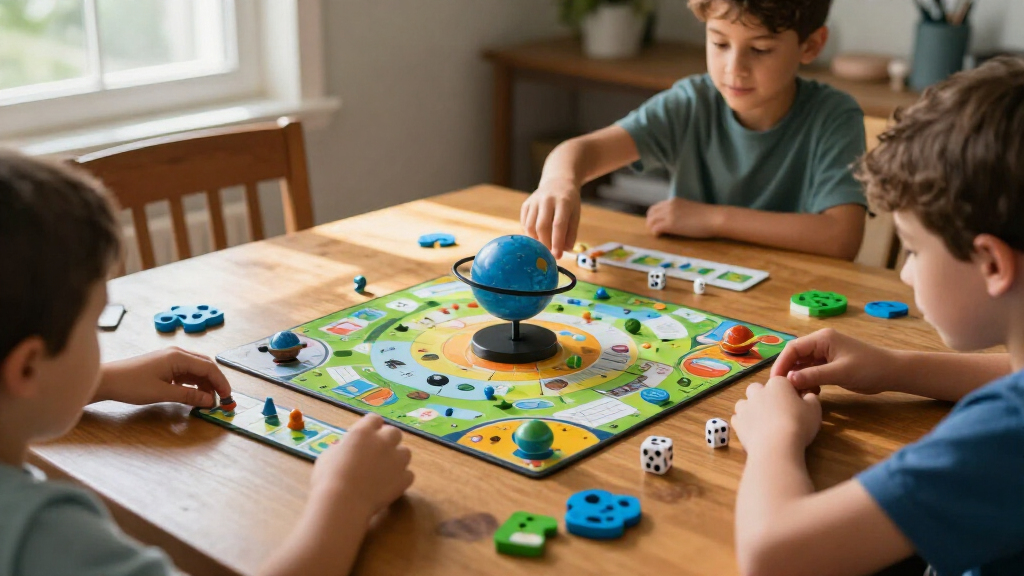

The best science board games for families balance genuine learning with rules and turns that keep different ages involved. I’d choose Ecosystem as the best overall pick for its approachable habitat-building play, while Cytosis stands out for families who want a deeper biology game and Science Higher or Lower Trivia for quick, low-prep rounds. The main tradeoff is between easy entry and scientific depth: lighter games are simpler to teach, while specialized strategy games ask players to absorb more concepts and rules. Age range, play time, and how much reading your group enjoys can matter as much as the topic. Read on for the full breakdown and help finding the right fit for your family.

Prime made for students and young adults
- Fast, free delivery for dorm and study essentials
- Prime Video and Amazon Music included
- Member-only deals
Key Takeaways
- Ecosystem is the strongest all-around fit for family play because habitat-building offers a shared science theme without requiring players to specialize in one branch of biology.
- Science Higher or Lower Trivia and Go Fish Science suit short, accessible sessions better than the more involved cell, genetics, and protein-building games.
- Cytosis, Cellulose, Genotype, and Peptide put specific biology concepts at the center, making them better matches for families who welcome focused learning and more involved play.
- Photosynthesis and On the Origin of Species connect science to systems and long-term choices, while Power Failure shifts the focus to energy decisions.
- The best choice depends on the family’s tolerance for rules and subject-specific detail; scientific specificity does not automatically make a game the most accessible pick.
| Science Higher or Lower Trivia Card Game |  | Best for Quick, Mixed-Age Play | Brand: QUOKKA | Players: 2 or more | Questions: 500+ | VIEW LATEST PRICE | See Our Full Breakdown |
| Cytosis: A Cell Biology Board Game |  | Best for Strategic Cell Biology | Brand: Genius Games | Players: Listed as 2, 3, 4, or 10+ | Playing time: 90 minutes | VIEW LATEST PRICE | See Our Full Breakdown |
| Ecosystem: A Family Card Game About Building Habitats |  | Best for Short Ecology Games | Brand: Genius Games | Game type: Card drafting game | Players: 2–6 | VIEW LATEST PRICE | See Our Full Breakdown |
| Subatomic: An Atom Building Game (2nd Edition) |  | Best for Older Deck-Building Fans | Brand: Genius Games | Players: 2–4 | Playing time: 40–60 minutes | VIEW LATEST PRICE | See Our Full Breakdown |
| Periodic: A Game of the Elements |  | Best for Chemistry-Minded Families | Brand: Genius Games | Genre: Strategy | Players: 2–6 | VIEW LATEST PRICE | See Our Full Breakdown |
| Photosynthesis Strategy Board Game |  | Best for Nature-Themed Strategy | Players: 2–4 | Recommended age: 8 years and up | Genre: Nature | VIEW LATEST PRICE | See Our Full Breakdown |
| The Awkward Yeti Organ Attack Card Game |  | Best for Lighthearted Anatomy Learning | Players: 2–6 | Recommended age: 8 years and up | Playing time: About 30 minutes | VIEW LATEST PRICE | See Our Full Breakdown |
| Cellulose: A Plant Cell Biology Board Game |  | Best for Older Science-Minded Families | Players: 1–5 | Playing time: 60–90 minutes | Minimum age: 14 years | VIEW LATEST PRICE | See Our Full Breakdown |
| Genotype: A Mendelian Genetics Board Game |  | Best for Genetics Strategy | Players: 1–5 | Game time: 45–75 minutes | Recommended age: 8 years and up | VIEW LATEST PRICE | See Our Full Breakdown |
| Peptide: A Protein Building Strategy Card Game |  | Best for Faster Molecular Biology Play | Players: 2–5 | Recommended age: 8–15 years listed; description says 10 and up | Play time: 30–45 minutes | VIEW LATEST PRICE | See Our Full Breakdown |
| Go Fish Science Card Game |  | Best for Younger Beginners | Brand: KosoGames | Age range: 7 years and up | Players: 2–6 | VIEW LATEST PRICE | See Our Full Breakdown |
| Power Failure Energy Strategy Card Game |  | Best for Energy Strategy | Brand: Genius Games | Game type: Strategy card game | Players: 2–4 | VIEW LATEST PRICE | See Our Full Breakdown |
| On the Origin of Species Board Game |  | Best for Natural History | Game type: Board game | Players: 2–4 | Recommended age: 8 years and up | VIEW LATEST PRICE | See Our Full Breakdown |
| science board games for familie | Players | Included components | Recommended age | Brand |
|---|---|---|---|---|
| Science Higher or Lower Trivia | 2 or more | Cards | 5 years and up (age guidance also listed as 8–12) | QUOKKA |
| Cytosis: A Cell Biology Board | Listed as 2, 3, 4, or 10+ | Cytosis: A Cell Biology Game | — | Genius Games |
| Ecosystem: A Family Card Game | 2–6 | Game | 12 years and up | Genius Games |
| Subatomic: An Atom Building Ga | 2–4 | Game | 14 years and up | Genius Games |
| Periodic: A Game of the Elemen | 2–6 | Game | — | Genius Games |
| Photosynthesis Strategy Board | 2–4 | Game board, sun segment, 4 player boards, tokens, seeds, and small, medium, and big trees | 8 years and up | — |
| The Awkward Yeti Organ Attack | 2–6 | Cards | 8 years and up | — |
| Cellulose: A Plant Cell Biolog | 1–5 | Cards | — | — |
| Genotype: A Mendelian Genetics | 1–5 | Game components and a 12-page science booklet | 8 years and up | — |
| Peptide: A Protein Building St | 2–5 | — | 8–15 years listed; description says 10 and up | Genius Games |
| Go Fish Science Card Game | 2–6 | Cards and instructions | — | KosoGames |
| Power Failure Energy Strategy | 2–4 | Cards | 14 years and up | Genius Games |
| On the Origin of Species Board | 2–4 | — | 8 years and up | — |
More Details on Our Top Picks
Science Higher or Lower Trivia Card Game
This is the easiest pick here to bring out when family members span a wide range of ages: players compare science facts using quick higher-or-lower questions, so there is little strategy or setup to explain. Its 500+ questions give it more variety than a short quiz deck, while the compact card format suits trips and waits as well as game night. Compared with Cytosis or Periodic, it trades board-game depth for speed and flexible conversation; those games offer more sustained strategy and a closer link between decisions and scientific systems. The age guidance is inconsistent, listed as both 5+ and 8–12, so I would check whether the youngest players can enjoy trivia without frequent help. It also needs at least two players, making it a poor fit for solo play.
Pros:- More than 500 questions support repeated play
- Compact dimensions make it easy to pack for trips
- Simple comparison-based play is accessible to mixed-age groups
- Prompts conversation and science-related reasoning
Cons:- Requires at least two players
- Age information is inconsistent, which makes suitability for younger children harder to judge
Best for: Families seeking a portable, easy-to-teach science activity for mixed-age gatherings and travel
Not ideal for: Solo players or families wanting a longer strategic game with a detailed science simulation
- Brand:QUOKKA
- Players:2 or more
- Questions:500+
- Recommended age:5 years and up (age guidance also listed as 8–12)
- Included components:Cards
- Material:Sustainable renewable cardstock
- Language:English
- Dimensions:4.13 × 2.75 inches
Our verdict“Choose this for quick, portable science trivia with a group, but pick Cytosis or Periodic for a more strategic game.”
Cytosis: A Cell Biology Board Game
Cytosis makes cell biology the engine of play: players use worker placement and resource collection to build enzymes, hormones, and receptors. That gives science-minded families a clearer connection between choices and biological processes than the rapid fact comparisons in Science Higher or Lower Trivia Card Game. A peer-reviewed science booklet adds context beyond the game, which can help older children connect the mechanics to the subject. The tradeoff is commitment: the listed play time is 90 minutes, and the recommended minimum age is 10, so this is better suited to a planned game night than an impromptu family round. The player-count data is also unclear, listing 2, 3, 4, or 10+, so I would verify the intended count before choosing it for a large group.
Pros:- Connects cell biology concepts to resource and construction choices
- Worker placement gives strategic decisions a direct role in play
- Peer-reviewed booklet provides additional science context
- Designed for both family and classroom settings
Cons:- Listed play time of 90 minutes may be too long for younger or casual players
- Player-count listing is unclear, including an unusual 10+ entry
- Recommended minimum age of 10 limits its fit for families with younger children
Best for: Families with players aged 10 and up who enjoy worker-placement strategy and want cell biology woven into play
Not ideal for: Families looking for a short, lightweight activity or relying on a clearly stated player limit
- Brand:Genius Games
- Players:Listed as 2, 3, 4, or 10+
- Playing time:90 minutes
- Recommended minimum age:10 years
- Genre:Educational, family
- Included components:Cytosis: A Cell Biology Game
- Model number:GOT1006
Our verdict“Choose Cytosis for an older family group ready for a long, strategic cell-biology game and use its booklet to extend the learning.”
Ecosystem: A Family Card Game About Building Habitats
Ecosystem is a good match for families who want ecology to shape their choices without setting aside a full evening. Players draft and arrange wildlife and habitat cards, with biodiversity and ecological relationships guiding how they build their tableau. At roughly 15–20 minutes, it is a much shorter commitment than Cytosis, and its 2–6 player range accommodates a larger family group. The main limitation is age and decision style: the recommended age is 12+, and balancing an ecosystem through card drafting asks for more planning than the quick prompts in Science Higher or Lower Trivia Card Game. Families with younger children may need to simplify or play alongside them. It is best for players who enjoy building and refining a plan, not those expecting a simple nature-themed quiz.
Pros:- Makes biodiversity and ecological relationships part of card choices
- Supports 2–6 players
- Short listed playing time suits weeknight sessions
- Card format is more compact than the longer strategy games in this lineup
Cons:- Recommended for ages 12 and up, limiting its fit for younger family members
- Drafting and ecosystem balancing require more planning than a casual quiz
- Players seeking a detailed science simulation may find the card-based approach too light
Best for: Families with ecology-curious players aged 12 and up who want a compact drafting game for up to six people
Not ideal for: Families with younger children or players who prefer trivia and low-strategy card games
- Brand:Genius Games
- Game type:Card drafting game
- Players:2–6
- Recommended age:12 years and up
- Playing time:15–20 minutes
- Material:Cardboard
- Included components:Game
- Model year:2019
Our verdict“Choose Ecosystem for a short, thoughtful ecology game with older children, rather than a simple all-ages trivia session.”
Subatomic: An Atom Building Game (2nd Edition)
Subatomic stands apart from the lighter family options by turning atom construction into a deck-building strategy game. Players improve their decks with particle and Scientist cards, so the science theme affects both what they build and how their tactics develop. Its Science Behind the Game booklet offers extra explanation, while the 40–60 minute play time gives decisions more room than Science Higher or Lower Trivia Card Game. This is not the easiest entry for a family with younger children: the recommended age is 14+, and the deck-building format asks players to track plans over several turns. Compared with Periodic, it has a narrower player range and a higher listed age threshold, but it gives older players a more focused atom-building challenge.
Pros:- Atom construction is integrated into the deck-building decisions
- Scientist cards add varied strategic options
- Science booklet explains concepts behind the game
- Provides a more involved science challenge than a trivia card game
Cons:- Recommended age of 14 and up excludes many younger family players
- 40–60 minute play time is a substantial commitment
- Supports only 2–4 players, fewer than Ecosystem or Periodic
Best for: Families with teens aged 14 and up who already enjoy deck-building and want atomic science tied to strategy
Not ideal for: Families with younger children, larger groups, or players seeking a quick and casual science game
- Brand:Genius Games
- Players:2–4
- Playing time:40–60 minutes
- Recommended age:14 years and up
- Edition:2nd Edition
- Material:Cardboard
- Included components:Game
- Model year:2019
Our verdict“Choose Subatomic for a smaller group of teens who want a longer deck-building game centered on atomic science.”
Periodic: A Game of the Elements
Periodic turns the periodic table into a playing space: players move across it to discover elements and use periodic trends for points. That gives chemistry an active strategic role, rather than relying on question prompts like Science Higher or Lower Trivia Card Game. Its 2–6 player range and age recommendation of 10+ make it more accommodating to family groups than the teen-focused Subatomic, which is limited to 2–4 players and ages 14+. The tradeoff is thematic: players need at least some interest in chemistry to appreciate why movement across the table matters. Families after an accessible science game with no subject-specific pull may prefer Ecosystem, whose habitat-building theme is easier to connect to familiar wildlife.
Pros:- Uses periodic table structure and trends as part of gameplay
- Tactical movement and set collection add strategic choices
- Supports 2–6 players
- Recommended age of 10 and up makes it more accessible than Subatomic
Cons:- The chemistry theme may not engage players without an interest in the subject
- Strategic movement and set collection may be less approachable than quick trivia
- No playing-time information is provided in the supplied product data
Best for: Families with players aged 10 and up who enjoy chemistry, tactical movement, and learning how the periodic table is organized
Not ideal for: Groups with little interest in chemistry or players who want a very short, low-strategy activity
- Brand:Genius Games
- Genre:Strategy
- Players:2–6
- Minimum age:10 years
- Edition:Standard Edition
- Included components:Game
- Model number:GOT1008
- UPC:653341735102
Our verdict“Choose Periodic for a family that wants chemistry concepts built into a strategy game and has enough interest to enjoy the theme.”
Photosynthesis Strategy Board Game
Sunlight becomes the strategy in Photosynthesis: players plant, grow, and position trees to collect light points, while the moving sun changes which spaces receive light. That gives families a visual way to explore how shade and competition affect plant growth, with more tactical choices than a simple science quiz. Compared with Ecosystem: A Family Card Game About Building Habitats, Photosynthesis focuses tightly on sunlight and tree placement rather than building a broader food web. Its detailed trees also make the changing canopy easy to follow on the board. The tradeoff is that blocked sunlight can frustrate younger or more casual players, and planning where and when to grow matters throughout the game. I’d pick it for families who enjoy strategic turns as much as the nature theme, not for those seeking a quick, low-conflict introduction to science.
Pros:- Makes sunlight, shade, and plant growth part of the central strategy.
- Tree pieces and board layout give players a clear visual sense of the canopy.
- Supports two to four players, including adults and children.
- Offers more tactical positioning than a straightforward science trivia game.
Cons:- Trees blocking sunlight can make a growth plan less effective than expected.
- Careful placement and timing may be demanding for younger or less strategic players.
Best for: Families with children eight and older who enjoy spatial strategy and want a nature game centered on sunlight, shade, and tree growth.
Not ideal for: Families looking for a short, forgiving science game; trees can block one another, so players need to plan placements and accept competition.
- Players:2–4
- Recommended age:8 years and up
- Genre:Nature
- Edition:Standard Edition
- Language:English
- Included components:Game board, sun segment, 4 player boards, tokens, seeds, and small, medium, and big trees
- Item length:9.5 inches
Our verdict“Choose Photosynthesis for a family that wants a visually rich nature strategy game and is happy to trade simplicity for planning.”
The Awkward Yeti Organ Attack Card Game
Humor is the hook in Organ Attack, where players use afflictions against opponents’ organs and protect themselves with immunity cards. That playful conflict makes basic anatomy and health feel more approachable than the denser biology in Cellulose: A Plant Cell Biology Board Game, which is built around longer, more involved strategy. Organ Attack also plays in about 30 minutes and supports up to six people, so it suits a lively family table better than a solo or small-group science game. The tradeoff is depth: this is an anatomy-themed card game, not a detailed lesson in how the body works, and the humor may not appeal to every household. It also needs at least two players. I’d choose it when shared laughs and a simple science theme matter more than sustained strategy or extensive biology content.
Pros:- Uses humorous organ attacks and immunity cards to make anatomy approachable.
- Plays in about 30 minutes, fitting more easily into a family game night than longer strategy games.
- Supports two to six players, accommodating a larger group than several science games in the roundup.
- Box format is portable for taking along to family gatherings.
Cons:- Requires at least two players, so it cannot serve as a solo science activity.
- The light, humorous approach offers less depth in anatomy than a more focused educational game.
Best for: Families with children eight and older who want a short, humorous anatomy game for a group of two to six players.
Not ideal for: Solo players or families seeking detailed anatomy instruction and deeper strategy; it requires a group and uses humor as a central part of its appeal.
- Players:2–6
- Recommended age:8 years and up
- Playing time:About 30 minutes
- Educational objective:Learn about human anatomy and health
- Style:Humor
- Included components:Cards
- Dimensions:8 × 6 inches
- Container type:Box
Our verdict“Pick Organ Attack for a group that wants quick, funny anatomy-themed card play rather than a detailed biology lesson.”
Cellulose: A Plant Cell Biology Board Game
Plant cell biology drives the strategy in Cellulose, where players manage resources and use organelle actions rather than simply answering science questions. Its Cactus and Mangrove scenarios, solo mode, and included science booklet give it more ways to explore the subject than Photosynthesis Strategy Board Game, which centers on tree growth and sunlight competition. That added scope makes Cellulose a stronger fit for older players who want biology woven into decisions, but the listed minimum age is 14 and play lasts 60–90 minutes. Shared resources also mean players must weigh competing needs instead of following an easy, independent path. Compared with the lighter, roughly 30-minute Organ Attack, this is a bigger commitment with more strategic weight. I’d choose it for a science-interested household ready to spend a full session on plant cells, not for families seeking a quick game for younger children.
Pros:- Builds plant cell biology into resource management and organelle actions.
- Includes Cactus and Mangrove scenarios for varied play.
- Solo mode allows play without assembling a family group.
- Science booklet can support learning beyond the game session.
Cons:- The 60–90-minute playtime asks for a longer family game session.
- Managing scarce shared resources adds complexity and competition.
- Its listed minimum age of 14 makes it a less suitable pick for families with younger children.
Best for: Science-minded families with teens aged 14 and older who want a longer strategic game about plant cell biology, plus a solo option.
Not ideal for: Families with younger children or limited game-night time; the listed minimum age is 14, play lasts 60–90 minutes, and players must manage scarce shared resources.
- Players:1–5
- Playing time:60–90 minutes
- Minimum age:14 years
- Language:English
- Genre:Educational, Strategy
- Scenarios:Cactus and Mangrove
- Solo mode:Included
- Included components:Cards
Our verdict“Choose Cellulose for older players who want a substantial plant-cell strategy game and have time for a longer session.”
Genotype: A Mendelian Genetics Board Game
Genetics is the game’s working puzzle: players draft dice and use worker placement to pursue pea plant traits while recreating Mendel’s research. That makes it a more direct choice for families curious about inheritance than Peptide: A Protein Building Strategy Card Game, which connects biology to amino acids, mRNA, and protein chains. Genotype supports one to five players and includes a solo mode and a 12-page science booklet, so it can work for independent play as well as a group. Its 45–75-minute sessions are shorter than Cellulose’s 60–90 minutes, though still a substantial commitment for a family night. The dice-drafting and worker-placement decisions may also feel complex to players who want a light introduction. I’d put it ahead of Peptide for a family focused on genetics, but not for those who want the fastest or simplest science game.
Pros:- Centers play on genetics and pea plant traits rather than using science as a surface theme.
- Combines dice drafting and worker placement for players who enjoy strategic choices.
- Supports one to five players, including solo play.
- Includes a 12-page science booklet alongside the game.
Cons:- Play can take 45–75 minutes, which may be long for a casual family session.
- Strategic mechanics may be complex for players seeking an easy first science game.
Best for: Families with children eight and older who want a strategic introduction to Mendelian genetics and value solo play or a science booklet.
Not ideal for: Families seeking a quick, uncomplicated game; its 45–75-minute sessions and worker-placement and dice-drafting decisions ask for more attention.
- Players:1–5
- Game time:45–75 minutes
- Recommended age:8 years and up
- Material:Cardboard
- Edition:Standard Edition
- Included components:Game components and a 12-page science booklet
- Awards:2022 Mensa Select winner; ATTA finalist
Our verdict“Pick Genotype for a family ready to spend a focused session exploring Mendelian genetics through strategic play.”
Peptide: A Protein Building Strategy Card Game
Protein building gives Peptide its focus: players collect amino acids and matching mRNA nucleotides, then assemble protein chains to score. Its open card-drafting format and 30–45-minute playtime offer a more compact route into molecular biology than Genotype, which uses worker placement and dice drafting in sessions lasting 45–75 minutes. Peptide also accommodates two to five players, making it a practical fit for family game nights and classroom groups. The tradeoff is that players need to engage with science terms such as mRNA, tRNA, and ATP for the theme to land; this may be less approachable than the humor-led Organ Attack. Age guidance is also inconsistent in the supplied listing: one field says 8–15 years, while the description says 10 and up. I’d choose Peptide for families ready to learn molecular vocabulary through card play, not those seeking a purely casual game.
Pros:- Connects amino acids and mRNA nucleotides to building protein chains.
- Open card drafting gives players interactive strategic choices.
- 30–45-minute playtime is shorter than Genotype or Cellulose.
- Supports two to five players and is suited to family or classroom play.
Cons:- Players need to engage with biology terms, including mRNA, tRNA, and ATP.
- Age guidance varies between the listed 8–15 range and the description’s 10-and-up guidance.
Best for: Families with children comfortable engaging with biology vocabulary who want a card-based game about protein synthesis in a 30–45-minute session.
Not ideal for: Families seeking a science game without terminology or for children whose age falls in the gap between the conflicting age suggestions; the listing gives both 8–15 and 10 and up.
- Players:2–5
- Recommended age:8–15 years listed; description says 10 and up
- Play time:30–45 minutes
- Game type:Open card drafting strategy game
- Science concepts:mRNA translation, proteins, amino acids, organelles, ATP, and tRNA
- Brand:Genius Games
- Model number:GOT1003
Our verdict“Choose Peptide for a family that wants a shorter, interactive card game about protein synthesis and is ready to engage with biology terminology.”
Go Fish Science Card Game
Go Fish Science is the most approachable pick here for families who want science in a familiar, low-pressure card game. Players collect sets of four across 13 categories, while facts on the cards can prompt extra guessing games; that gives curious kids a way to revisit topics such as planets, sharks, and gems without learning a complex system of rules. Compared with Power Failure Energy Strategy Card Game, it asks for less strategic planning and suits a wider age range, though it offers less depth for teens who want sustained tactical choices. The compact, laminated deck also makes it easier to bring along than a board game. Its main tradeoff is the Go Fish format: families seeking a more involved science simulation may find the set-collecting play repetitive, and the stated age range starts at seven.
Pros:- Familiar set-collecting rules make it accessible to younger players
- Thirteen science categories offer variety across natural and space topics
- Facts on the cards create opportunities for follow-up guessing games
- Laminated 52-card deck is compact and supports two to six players
Cons:- Go Fish mechanics may feel repetitive to players who want more strategic decisions
- The recommended age begins at seven, limiting its fit for younger children
- Broad topic coverage offers less focused exploration than games such as Photosynthesis Strategy Board Game
Best for: Families with children aged seven and up who want a simple, portable first science game for mixed-age card-game sessions.
Not ideal for: Families seeking deeper strategy, a specific science simulation, or gameplay aimed at children under seven.
- Brand:KosoGames
- Age range:7 years and up
- Players:2–6
- Cards:52
- Science categories:13
- Material:Laminated playing cards
- Included components:Cards and instructions
- Dimensions:3.8 × 2.35 × 0.75 inches
Our verdict“Choose this compact, easy-to-teach deck for younger families who value varied science facts over complex strategy.”
Power Failure Energy Strategy Card Game
Power Failure gives energy education a tactical focus: players build power plants, secure fuel, and try to meet a growing city’s demand while weighing the effects of different energy sources. Its mix of planning and a dexterity-based risk challenge makes the topic feel more active than a straightforward facts game like Go Fish Science Card Game. That added decision-making suits families with older children and adults who enjoy managing competing goals. The tradeoff is its audience: a recommended age of 14 and up puts it beyond the reach of many family game nights, while the Carbon Tower collapse can undo progress for everyone. Those sudden setbacks add tension, but may frustrate players who prefer steady, predictable strategy. It is also more focused on energy than the broader science topics covered by Go Fish Science.
Pros:- Covers fossil fuels, nuclear power, and renewable energy sources in one game
- Combines resource decisions with a physical risk challenge
- Supports two to four players, including two-player games
- Simple rules make the central game system approachable
Cons:- Recommended age of 14 and up excludes many younger family members
- A Carbon Tower collapse can set all players back, which may feel punishing
- Its energy focus is narrower than the range of topics in Go Fish Science Card Game
Best for: Families with teens aged 14 and up who want strategic play centered on energy sources and their impacts.
Not ideal for: Households with younger children or players who dislike dexterity challenges and shared setbacks that can erase progress.
- Brand:Genius Games
- Game type:Strategy card game
- Players:2–4
- Recommended age:14 years and up
- Energy sources:Coal, natural gas, nuclear, wind, solar, and hydroelectric
- Included components:Cards
- Educational objective:Learn about energy sources and their impacts
- Item weight:0.27 kg
Our verdict“Pick Power Failure for teen-and-adult game nights that welcome energy tradeoffs and the risk of shared setbacks.”
On the Origin of Species Board Game
On the Origin of Species makes the Beagle voyage and Galápagos species discovery the center of a family strategy game. Players research habitats, collect cards, and score points as the ship advances, giving the science-history theme a stronger narrative anchor than the broad topic sampler in Go Fish Science Card Game. With a recommended age of eight and up, it also reaches younger players than Power Failure Energy Strategy Card Game, although tracking habitats, points, cards, and the final objective calls for more attention than simple set collection. The Beagle’s progress sets the game’s endpoint, so sessions have a built-in finish, but that can limit play length for groups who want a longer campaign. This is the better match for families interested in natural history and structured choices, not quick, casual card play.
Pros:- Builds the game around Darwin’s Beagle voyage and Galápagos exploration
- Research and species discovery actions connect gameplay to natural history
- Includes evolution, character, and object cards
- Supports two to four players and is recommended for ages eight and up
Cons:- Tracking habitats, points, cards, and the final goal may burden casual players
- The game ends when the Beagle reaches the final space, limiting session length
- Its natural-history theme is more specific than the broad science coverage in Go Fish Science Card Game
Best for: Families with children aged eight and up who enjoy natural history themes and can manage several connected goals during play.
Not ideal for: Players looking for a very simple, fast card game or a long-form strategy game with no fixed ending trigger.
- Game type:Board game
- Players:2–4
- Recommended age:8 years and up
- Edition:Standard Edition
- Language:English
- Theme:Science history; HMS Beagle and Charles Darwin
- Designer/publisher:Artana Games
- Model number:AAX6001
Our verdict“Choose this for an older-child family group that wants natural-history strategy, and skip it if simple, open-ended play matters more.”
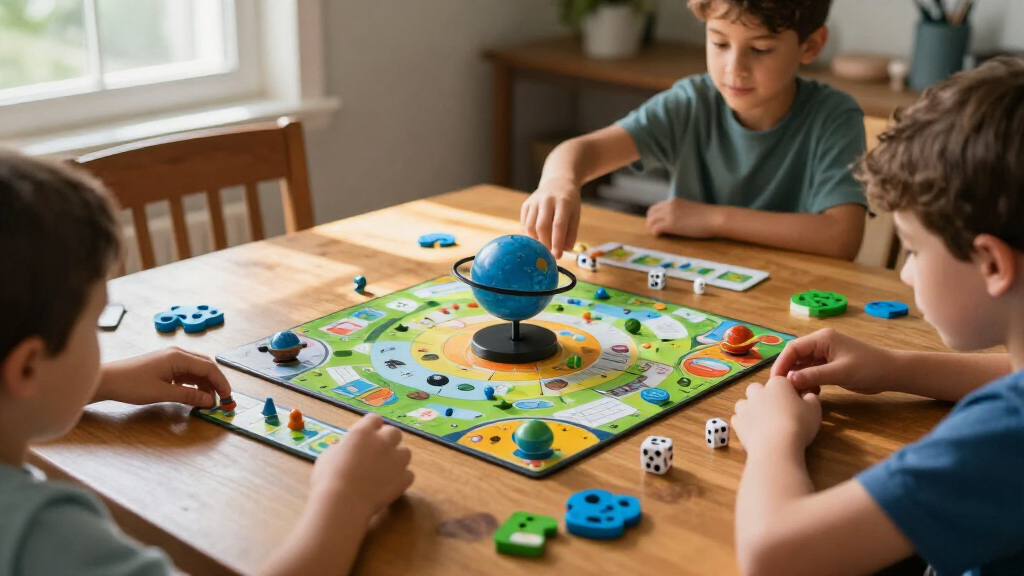
How We Picked
I compared the 13 games by how well their science theme fits a family game night, looking at teachability, age flexibility, interaction, and replay value. I also weighed whether the subject is woven into meaningful decisions or appears mainly as trivia, since those approaches suit different players. A game that is easy to start can be a better family fit than a denser strategy title, even when the latter explores its topic in more depth.
The order reflects those tradeoffs. Ecosystem leads as a balanced entry point, with accessible science and room for strategic choices; lighter card games follow for families prioritizing quick play. More specialized titles earn their place for groups seeking particular fields, but their narrower topics and learning demands make them less universal picks. I considered the distinct role each game can fill rather than treating every educational game as interchangeable.
| science board games for familie | Brand | Included components |
|---|---|---|
| Science Higher or Lower Trivia | QUOKKA | Cards |
| Cytosis: A Cell Biology Board | Genius Games | Cytosis: A Cell Biology Game |
| Ecosystem: A Family Card Game | Genius Games | Game |
| Subatomic: An Atom Building Ga | Genius Games | Game |
| Periodic: A Game of the Elemen | Genius Games | Game |
| Photosynthesis Strategy Board | — | Game board, sun segment, 4 player boards, tokens, seeds, and small, medium, and big trees |
| The Awkward Yeti Organ Attack | — | Cards |
| Cellulose: A Plant Cell Biolog | — | Cards |
| Genotype: A Mendelian Genetics | — | Game components and a 12-page science booklet |
| Peptide: A Protein Building St | Genius Games | — |
| Go Fish Science Card Game | KosoGames | Cards and instructions |
| Power Failure Energy Strategy | Genius Games | Cards |
| On the Origin of Species Board | — | — |
Factors to Consider When Choosing Science Board Games For Families
Before choosing a science game, I’d match its play style to the people at your table—not just the science topic that sounds most appealing. These factors help avoid a game that is interesting on the shelf but mismatched to your family’s attention span, reading comfort, or appetite for strategy.
Match Science Depth to Your Group
Start by asking whether your family wants to recognize facts, use scientific ideas to make choices, or learn a particular subject in detail. Trivia and simple card games can make science approachable without asking players to remember a sequence of specialized terms. Strategy games centered on cells, genetics, atoms, or proteins can offer more subject focus, but that focus may slow down a casual family session. A common mistake is choosing the game with the most advanced-sounding topic and assuming it will be the most rewarding for everyone. Look for a level of detail that invites questions without making each turn feel like a lesson. If players have different interests, a broad theme such as habitats or energy may bring more of them along.
Check Who Can Play Independently
Age guidance is only part of family fit; reading ability, comfort with taking turns, and familiarity with strategy also shape who can participate. A younger player may enjoy a science theme but need help interpreting cards or planning several steps ahead. That support can be fun when adults are happy to coach, but it can leave children watching rather than making their own choices. Consider whether the game lets new players learn by watching a round or whether everyone needs a full rules explanation before starting. Mixed-age groups often benefit from clear actions and visible choices. If your family wants children to play without constant adult help, prioritize straightforward turn structure over complexity.
Decide How Much Setup and Session Time You Want
A game’s table footprint and setup can determine how often it gets played, especially on busy evenings. Card games and trivia formats tend to be easier to bring out for a short session, while games with boards, pieces, or several rule systems may need more preparation. Do not judge only by the advertised play time: teaching unfamiliar rules can add a substantial first-session cost. Ask whether your family is happy to set a game aside and resume later, or prefers a complete experience in one sitting. More elaborate setup can be worthwhile for a planned game night, but it is a poor trade if the group usually has limited time. A quick-start option may see more regular use than a deeper game that rarely reaches the table.
Choose the Kind of Interaction Your Family Enjoys
Science themes do not guarantee a cooperative experience. Some games ask players to build their own systems or compete for better outcomes, while others lean on shared discussion, questions, or matching. Think about whether your family enjoys direct competition, quiet planning, or talking through ideas together. A highly strategic game can be engaging for players who like to optimize, but less fun if younger participants feel outmatched. Conversely, a lighter format may feel too luck-driven or simple for adults seeking sustained decision-making. Try to match interaction style to the group’s habits, not just the subject printed on the box. This can matter more for repeat play than whether the theme is space, biology, or ecology.
Look Beyond the Educational Label
When a game is marketed around learning, check what players actually do with the information. Science can shape meaningful choices, appear as facts to recall, or serve mainly as a setting; none is automatically better, but each creates a different experience. A common buying error is expecting a game to replace a lesson or deliver the same depth as a dedicated science resource. Instead, think about whether you want conversation starters, practice with concepts, or a game that rewards planning. Also consider how comfortable your family is checking unfamiliar terms or discussing questions after play. The strongest educational fit is the one that sparks interest without making fun depend on getting every answer right.
Balance Replay Value Against Topic Specificity
A narrowly focused game can be an excellent purchase when someone at home is fascinated by its subject, but that interest may not be shared by the whole group. Broader games can appeal across interests, while a dedicated biology or chemistry title may offer a more distinctive experience for its fans. Ask whether the family will want to revisit the same subject repeatedly or would rather rotate among different themes. More specialized content can justify a deeper rules commitment when it supports genuine curiosity and discussion. It may not be the right choice if the science topic is only a passing interest. For a collection, mixing one accessible all-rounder with one focused title can cover different moods better than buying several games with similar learning demands.
Frequently Asked Questions
Which of these games is the easiest place to start with younger or science-shy players?
I’d begin with a lighter format such as Go Fish Science or Science Higher or Lower Trivia, especially if your group prefers short turns and familiar card-game structure. These can introduce a science theme without asking everyone to learn a specialized strategy system first. Trivia may still favor players who already know more facts, so keep the mood conversational rather than treating it like a test. If your family wants a board-game feel with more choices, Ecosystem is a stronger next step. Let the players’ reading comfort and interest guide the choice, not age alone.
Should I choose a broad science game or one focused on a single subject?
Choose a broad theme when your family has mixed interests or you want one game that feels welcoming across different ages and knowledge levels. A focused title can be more satisfying if someone is especially curious about cells, genetics, atoms, or another specific subject. The tradeoff is that topic-specific games may ask players to absorb more terminology and may appeal to a narrower group. Consider whether that subject is likely to hold attention beyond the first play. If you are unsure, a broad game makes a safer shared starting point, while a specialized game is a better match for an existing interest.
Are science trivia games fair for players with different knowledge levels?
Trivia games can highlight knowledge gaps, so they may feel uneven if one player already knows many answers and others are still learning. Families can reduce that pressure by playing cooperatively, discussing guesses, or treating surprising answers as conversation starters. A game built around choices or building systems may offer a more balanced experience because success is not based only on recalling facts. Before choosing trivia, think about whether your group enjoys friendly quizzing or gets frustrated by uneven expertise. If confidence is a concern, start with a format where everyone can contribute ideas rather than relying on a single right answer.
Does a more detailed science game make a better learning choice?
Not by itself. A detailed game can suit players who want to spend time with a specific subject, but extra rules and terminology can also distract from the fun or make it harder for younger players to participate. A lighter game may spark curiosity more effectively if it prompts questions and leaves players wanting to learn more. Decide whether your goal is focused practice, broad exposure, or an enjoyable shared activity with a science theme. The right depth is the one your family can engage with willingly. More complexity is useful only when the group enjoys the decisions it adds.
Is it better to buy one versatile game or several games about different sciences?
One versatile game is a sensible starting point if you do not yet know which subjects or play styles your family will revisit. It also limits the chance of buying a specialized game that only one person wants to play. A small mix makes more sense when family members have distinct interests or when you want a quick option alongside a longer strategy session. Build around use: one accessible game for casual evenings and one focused title for players keen on a particular subject can cover different occasions. Avoid choosing several games solely because they share an educational label; their rules and interaction may feel too similar to justify the variety.
Conclusion
For most families, I’d start with Ecosystem as the best overall: it pairs an approachable theme with meaningful building decisions. For best value in family-friendly simplicity, look to Go Fish Science or Science Higher or Lower Trivia for compact, easy-to-start play; choose between them based on whether your group prefers card matching or questions. Cytosis is my best premium-style pick for families ready to give a more involved biology game a place at game night, while Go Fish Science is the best beginner choice for players who want familiar card-game structure. For specific interests, choose Photosynthesis for plant growth and planning, Power Failure for energy decisions, or one of the focused cell, genetics, atom, or protein games for biology and chemistry fans. The best fit is the one your family will want to play again, not simply the one with the densest science content.
Fall Picks
fall essentials
As an affiliate, we earn on qualifying purchases.