
📊 Full opportunity report: Best AI-Enabled Microphones For Studio Recording In 2026 on ThorstenMeyerAI.com — validation score, market gap, and execution plan.

Prime made for students and young adults
- Fast, free delivery for dorm and study essentials
- Prime Video and Amazon Music included
- Member-only deals
TL;DR
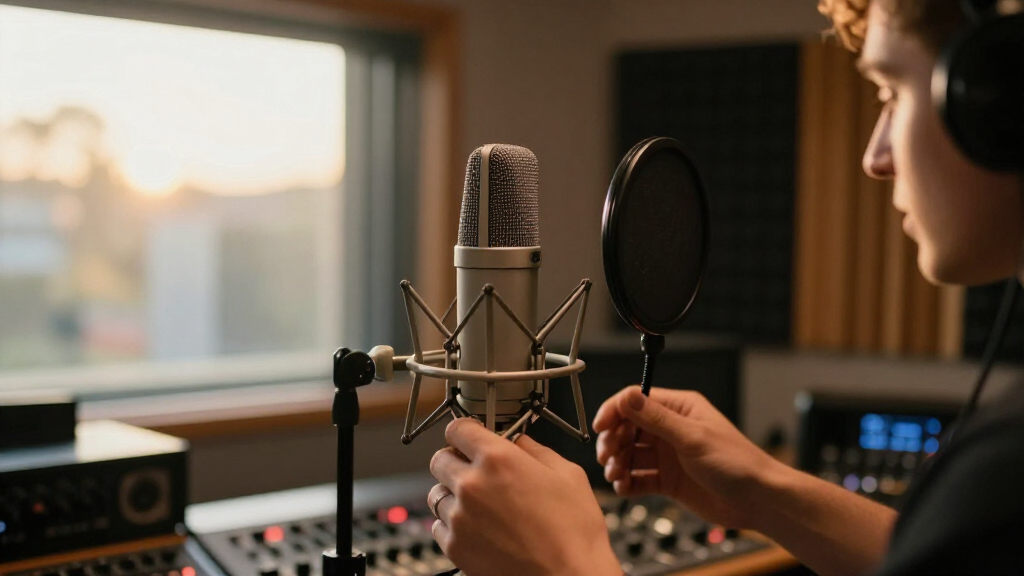
In 2026, AI-enabled microphones are transforming studio recording with features like noise reduction and adaptive sound optimization. The top models combine low self-noise, durability, and AI-driven enhancements, making them essential tools for professionals and enthusiasts alike.
Multiple manufacturers introduced new AI-enabled studio microphones in 2026, offering advanced features such as real-time noise suppression and adaptive sound tuning. These developments aim to enhance recording clarity and workflow efficiency for professionals and hobbyists, making AI integration a key trend in audio technology.
Leading brands like RØDE, Audio-Technica, and Shure have released models equipped with AI-driven features that automatically optimize sound quality based on the recording environment. The RØDE NT1 Signature Series remains popular for its low self-noise, but now includes AI-based noise filtering options. The Audio-Technica AT2035 has incorporated AI algorithms for adaptive equalization, while the Shure SM4 emphasizes durability with AI-enhanced vocal clarity.
Industry experts highlight that these microphones leverage AI to provide real-time feedback, automatic gain adjustments, and background noise suppression, significantly improving studio recording quality. While most models still rely on traditional XLR connectivity, some now feature hybrid options integrating AI software with USB interfaces for easier setup.
The 8 picks
- 1
 Shure SM4 XLR Studio Condenser Microphone Kit for RecordingView on Amazon →
 - 2
 Audio-Technica AT2035 Cardioid Condenser Microphone with Shock Mount and Acce…View on Amazon →
 - 3
 RØDE NT1 Signature Series Large-Diaphragm Condenser Microphone with Shock Mou…View on Amazon →
 - 4
 Audio-Technica AT2020 Cardioid Condenser Studio XLR MicrophoneView on Amazon →
 - 5
 AKG Pro Audio P120 Condenser MicrophoneView on Amazon →
 - 6
 MAONO A04 Gen2 XLR/USB Condenser Microphone Kit for PC and Content CreationView on Amazon →
 - 7
 Mackie EM-Series Large-Diaphragm Condenser Microphone (EM-91C)View on Amazon →
 - 8
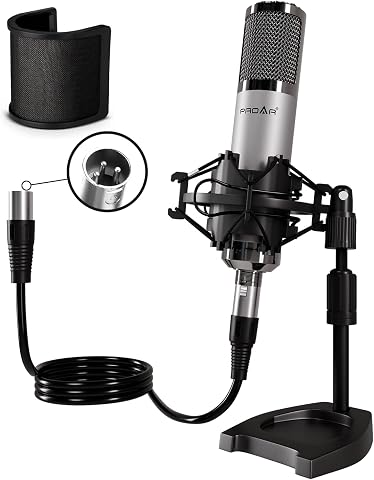 XLR Condenser Microphone with Desktop Stand for Vocals and PodcastingView on Amazon →
Impact of AI-Enabled Microphones on Studio Recording
The integration of AI into studio microphones in 2026 marks a major advancement in recording technology, offering enhanced sound clarity, reduced post-production editing, and greater ease of use. These features can significantly benefit professional studios by improving efficiency and sound quality, while also lowering barriers for amateurs and semi-professionals seeking high-quality recordings.
Furthermore, AI features such as real-time noise cancellation and adaptive sound tuning could redefine best practices in studio environments, influencing both hardware design and recording workflows. Industry analysts suggest that AI-enabled microphones will become a standard component in future professional setups, driving innovation and competition among manufacturers.
Development of AI Microphones in Studio Recording
Over the past few years, microphone manufacturers have progressively integrated AI features into their products, initially focusing on consumer and streaming microphones. By 2026, these innovations have matured, with high-end models now incorporating sophisticated AI algorithms for real-time sound optimization. This evolution follows broader trends in AI-driven audio processing, driven by advances in machine learning and digital signal processing.
Previous models relied on manual equalization and noise reduction, but recent developments enable automatic adjustments based on environmental feedback, reducing the need for extensive post-production editing. Industry sources note that this shift is driven by increasing demand for high-quality, efficient recording solutions in both professional and home studio markets.
Uncertainties and Challenges in AI Microphone Adoption
While AI-enabled microphones are gaining popularity, it is still unclear how widespread adoption will be across different segments, especially among budget-conscious consumers. Some industry insiders question whether AI features will be fully reliable in all environments or if they will require frequent updates and calibration. Additionally, concerns about data privacy and software security related to AI processing remain unaddressed.
Furthermore, the long-term durability of AI components and their integration with existing studio setups are still being evaluated, with some experts warning of potential compatibility issues or increased costs for future upgrades.
Future Developments and Market Trends in AI Microphones
In the coming months, manufacturers are expected to release firmware updates and new models that expand AI capabilities, including more advanced noise cancellation, automatic room adaptation, and integration with digital audio workstations. Industry analysts predict that AI features will become standard in mid-range and high-end microphones, further pushing innovation in studio recording technology.
Additionally, ongoing research aims to improve AI algorithms’ reliability and security, addressing current limitations and ensuring seamless integration into professional workflows. Consumers and professionals should monitor upcoming product launches and software updates for the latest advancements.
Key Questions
Are AI-enabled microphones better than traditional models?
AI-enabled microphones offer real-time noise reduction and adaptive sound features that can improve recording quality, especially in challenging environments. However, their effectiveness depends on the quality of the AI algorithms and implementation, so they complement rather than replace traditional high-quality microphones.
Can I use an AI-enabled microphone for live performances?
While some AI microphones are designed for studio use, certain models are suitable for live settings, providing noise suppression and feedback reduction. It is important to verify the specifications and suitability for live applications before purchase.
Will AI features require ongoing software updates?
Yes, AI-driven features typically depend on firmware and software updates to improve performance, add new capabilities, and address security concerns. Regular updates are expected as the technology evolves.
Are AI microphones more expensive than traditional models?
Generally, AI-enabled microphones tend to be priced higher due to their advanced features and processing capabilities. However, prices vary depending on brand, model, and included features, with some mid-range options offering good value.
What should I consider when choosing an AI-enabled microphone?
Consider your recording environment, compatibility with existing gear, specific AI features needed, and budget. Look for models with proven AI algorithms, good build quality, and suitable connectivity options.
Source: ThorstenMeyerAI.com
Fall Picks
fall essentials
As an affiliate, we earn on qualifying purchases.