
📊 Full opportunity report: Nine AI Trends Set To Disrupt 2026 on ThorstenMeyerAI.com — validation score, market gap, and execution plan.

Get school and study supplies delivered free — and shop member deals
- Fast, free delivery on millions of items
- Access to Prime Big Deal Days deals on October 6–7
- Prime Video, Amazon Music and more included
TL;DR
Nine AI trends are confirmed to significantly impact 2026, including breakthroughs in generative AI, increased automation, and evolving ethical standards. These developments will influence various sectors, from tech to healthcare.
Nine AI trends are expected to significantly influence the technological and economic landscape in 2026, according to recent forecasts by industry analysts and AI experts. These trends include advancements in generative AI, increased automation across sectors, and evolving ethical and regulatory frameworks. Understanding these developments is crucial for stakeholders across tech, business, and policy domains.
Experts from ThorstenMeyerAI.com and other industry sources identify nine key trends set to reshape AI in 2026. These include the maturation of generative AI models, which will become more sophisticated and integrated into everyday applications, and the expansion of automation in industries such as manufacturing, healthcare, and customer service. Additionally, there is a growing focus on AI ethics and regulation, driven by concerns over bias, transparency, and accountability.
While these trends are grounded in current technological trajectories and expert opinions, some aspects—such as the precise regulatory landscape and the pace of adoption—remain uncertain. For more insights, see the original analysis. Industry leaders emphasize that the actual impact will depend on technological breakthroughs, policy decisions, and market dynamics over the coming years.
The 9 picks
- 1
 Bambu Lab P1S Combo 3D Printer with Auto Bed Leveling and Multi-Color PrintingView on Amazon →
 - 2
 Creality K2 Combo 3D Printer with Multicolor Printing, Auto Leveling, and Sma…View on Amazon →
 - 3
 FlashForge Adventurer 5M Pro 3D Printer with Auto Printing System, 600mm/s Hi…View on Amazon →
 - 4
 Anycubic Kobra X Multicolor 3D Printer with 19-Color Capability and AI Monito…View on Amazon →
 - 5
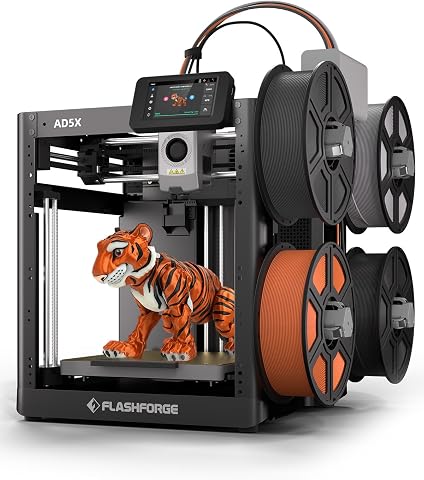 FLASHFORGE AD5X Multi-Color 3D Printer, CoreXY, 600mm/s High-Speed, Auto Leve…View on Amazon →
 - 6
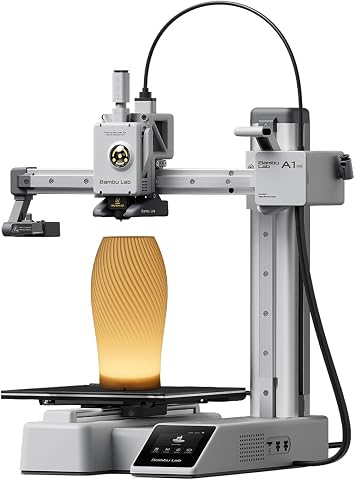 Bambu Lab A1 Mini 3D Printer + LED Lamp Kit, Beginner-Friendly, Quiet OperationView on Amazon →
 - 7
 FlashForge Adventurer 5M 3D Printer with Auto Leveling and High-Speed PrintingView on Amazon →
 - 8
 Creality Ender 3 V3 SE 3D Printer, 250mm/s Faster Print Speed, CR Touch Auto…View on Amazon →
 - 9
 3D Printer with Auto Leveling, 280°C Direct Extruder, CoreXY Metal Structure,…View on Amazon →
Implications of AI Trends for Industry and Society
The confirmed emergence of these nine AI trends in 2026 signals a transformative period for multiple sectors. Businesses that adapt early can gain competitive advantages, while policymakers face the challenge of establishing effective regulations. For society, these trends could influence employment, privacy, and ethical standards, making it essential for stakeholders to stay informed and prepared for ongoing changes.
Current State and Forecasts of AI Development
AI technology has rapidly evolved over the past decade, with notable milestones like GPT-4 and widespread automation adoption. Industry forecasts suggest that by 2026, AI will be even more embedded in daily life and business operations. Experts predict that generative AI will move beyond text generation to complex tasks like coding, design, and scientific research. Concurrently, regulatory frameworks are beginning to take shape, aiming to address ethical concerns and ensure responsible AI deployment.
These developments are based on current technological trends, ongoing research, and policy discussions, but the exact trajectory remains subject to technological breakthroughs and societal responses.
“Regulatory frameworks are catching up with technological advances, but the pace of policy development remains a challenge for responsible AI deployment.”
— Dr. Jane Liu, AI Ethics Researcher
Unconfirmed Aspects of the 2026 AI Disruption
While the nine trends are widely predicted, the exact timeline and scope of their impact remain uncertain. Factors such as breakthrough innovations, regulatory responses, and market acceptance could accelerate or slow their adoption. Additionally, unforeseen ethical or technical challenges may alter the trajectory of these trends.
Next Steps for Stakeholders in AI Evolution
Industry leaders, policymakers, and researchers should monitor ongoing developments, invest in responsible AI research, and prepare adaptive regulatory frameworks. Collaboration across sectors will be essential to harness AI’s benefits while mitigating risks. Key milestones include the release of new AI models, updates in regulations, and adoption benchmarks over the next 12 to 24 months.
Key Questions
What are the most impactful AI trends expected in 2026?
Experts forecast that advancements in generative AI, automation, AI ethics, and regulatory frameworks will be most impactful, transforming industries and societal norms.
How might these AI trends affect jobs and employment?
Increased automation could displace some jobs but also create new roles in AI development, oversight, and ethical management. The overall impact will depend on how businesses and governments manage the transition.
What challenges could slow down AI progress in 2026?
Technical hurdles, ethical concerns, regulatory delays, and societal resistance could impede the rapid deployment of new AI technologies.
Are there risks associated with these AI trends?
Yes, including issues related to bias, privacy, security, and misuse. Responsible development and regulation are essential to mitigate these risks.
Source: ThorstenMeyerAI.com
Evergreen bestsellers Picks
bestsellers
As an affiliate, we earn on qualifying purchases.