📊 Full opportunity report: Adopting Phone-Photo Technology For Accurate Gauge Readings on IdeaNavigator AI — validation score, market gap, and execution plan.

Prime made for students and young adults
- Fast, free delivery for dorm and study essentials
- Prime Video and Amazon Music included
- Member-only deals
TL;DR
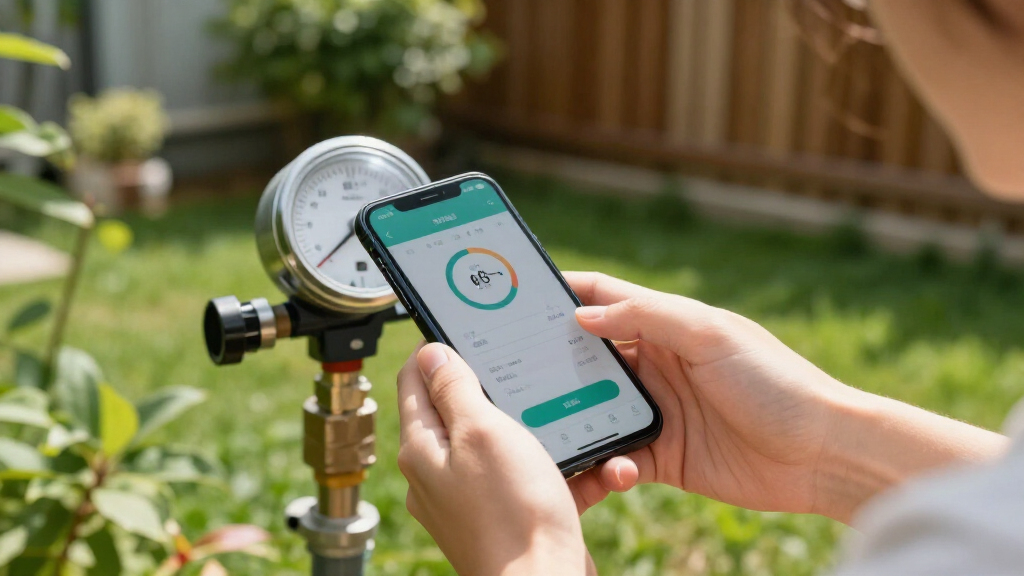
Facilities are piloting a phone-photo technology to replace manual gauge readings, aiming to reduce errors and enable better trend analysis without costly sensor retrofits. Early tests show promise for industrial use.
Industrial facilities are testing a new phone-photo technology that automatically reads analog gauges during routine inspections, replacing traditional manual transcription methods. This development could improve measurement accuracy, reduce errors, and streamline maintenance workflows, making legacy equipment data more reliable without installing costly sensors.
The pilot involves technicians photographing each analog gauge during their daily rounds using a dedicated app. The app employs vision models to accurately interpret the gauge readings from the photos, comparing them against expected ranges, and logging the data with timestamps and location tags. Immediate alerts flag anomalies for maintenance teams, enabling faster response times.
This approach aims to address longstanding issues in industrial operations, where manual transcription of gauge readings often results in errors that obscure developing failures. Currently, most plants rely on clipboard methods, with data stored on paper that is rarely analyzed for trends or early warning signs. Retrofitting legacy equipment with IoT sensors is expensive and often impractical, especially for older machinery.
According to project sources, the pilot is being conducted at three facilities, with plans to compare error rates and early detection capabilities against traditional methods over a one-month period. If successful, the technology could be offered as a subscription service, charging per facility based on the number of gauges monitored.
Potential Impact on Industrial Maintenance Accuracy
This technology could significantly improve the reliability of gauge readings, enabling facilities to detect issues earlier and reduce unplanned downtime. By digitizing and automating data collection from legacy gauges, companies can build more accurate trend histories without costly sensor installations. The approach also has the potential to standardize data collection across diverse facilities, improving maintenance planning and operational efficiency.
industrial gauge photo reading app
As an affiliate, we earn on qualifying purchases.
As an affiliate, we earn on qualifying purchases.
Legacy Equipment and Manual Data Collection Challenges
Many industrial plants rely on analog gauges and manual transcription for daily inspections. These methods are prone to human error, often leading to inaccurate data that can hide early signs of equipment failure. Retrofitting legacy machinery with IoT sensors is costly and disruptive, especially in older facilities where wiring and integration are complex. As a result, plants seek low-cost, scalable solutions to improve data accuracy and maintenance responsiveness.
Recent advances in computer vision and machine learning have made it feasible to interpret analog gauges from simple photographs. Pilot projects in other sectors have demonstrated that vision models can reliably read dials, counters, and sight glasses, opening new possibilities for industrial data collection without hardware upgrades.
As an affiliate, we earn on qualifying purchases.
Uncertainties in Pilot Results and Adoption Barriers
It is not yet clear how accurately the vision models will perform across different types of gauges and lighting conditions in real-world settings. The pilot’s success depends on consistent image quality and the app’s ability to handle various gauge designs. Additionally, there are questions about the scalability of the solution, integration with existing maintenance systems, and long-term cost-effectiveness.
As an affiliate, we earn on qualifying purchases.
Next Steps for Validation and Broader Deployment
The ongoing pilot will compare error rates, anomaly detection, and workflow efficiency against traditional methods over the next month. If results are favorable, the developers plan to refine the app, expand testing to additional facilities, and prepare for commercial rollout. Further studies may explore integration with existing maintenance management systems and potential automation enhancements.
industrial maintenance inspection tools
As an affiliate, we earn on qualifying purchases.
As an affiliate, we earn on qualifying purchases.
Key Questions
How accurate are the vision models in reading gauges?
Preliminary tests indicate high accuracy in controlled conditions, but real-world performance during the pilot will determine overall reliability. The goal is to achieve error rates comparable to or better than manual readings.
Can this technology replace all manual gauge readings?
Initially, the focus is on a narrow workflow—replacing clipboard rounds for legacy gauges. Broader adoption depends on pilot success, gauge types, and integration capabilities.
What are the costs involved for facilities?
The model proposes a tiered monthly subscription based on the number of gauges monitored, which could be more cost-effective than retrofitting sensors, especially for older equipment.
How does this improve early failure detection?
Automated, frequent readings and immediate anomaly alerts enable maintenance teams to identify developing issues sooner, potentially preventing costly failures.
What challenges could hinder wider adoption?
Technical variability, accuracy under diverse conditions, and integration with existing systems are potential hurdles that need addressing during further testing.
Source: IdeaNavigator AI
Evergreen bestsellers Picks
bestsellers
As an affiliate, we earn on qualifying purchases.